
The best weight lifting grip depends entirely on whether your primary goal is maximizing raw pulling power, protecting your palms from painful calluses, or maintaining a quick, versatile transition between different exercises. For heavy, slow pulling movements like deadlifts and heavy rows, lifting straps offer the highest mechanical advantage by locking your wrists directly to the bar. If you prioritize hand hygiene, skin protection, and wrist stability during high-rep dumbbell or machine workouts, traditional lifting gloves are the most suitable choice. Meanwhile, lifting hooks provide immediate, wrap-free assistance for heavy static pulls, and minimalist grip pads offer a lightweight, breathable alternative for dynamic functional fitness routines.
Selecting the right accessory requires evaluating how your hands interact with the barbell, dumbbell, or cable attachment during your specific workouts. A mismatch can lead to premature fatigue, reduced mechanical leverage, or even safety hazards if you cannot release the bar quickly during a failed lift. By understanding the mechanical differences between straps, hooks, gloves, and pads, you can select an aid that complements your natural grip strength rather than hindering your athletic development.
Understanding Your Training Style and Grip Needs
Before purchasing any grip accessory, you must analyze the specific biomechanics of your training routine and identify exactly where your hands or wrists begin to fail. Weight training movements generally fall into two categories: pulling and pushing. Pulling exercises, such as deadlifts, pull-ups, and barbell rows, place the entire load on your fingers and forearms as they fight gravity to hold the weight. Pushing exercises, such as bench presses and shoulder presses, compress the weight directly into your palms and wrists, requiring stability rather than holding power.
Products mentioned in this guide
Prices are valid at publication and may change. Please refer to the product page for the latest price.
Grip failure typically manifests in three distinct ways, each requiring a different solution. First, your holding capacity might fail during heavy lifts, meaning your target muscles (like your back or hamstrings) could handle more weight, but your fingers slip open. Second, friction can cause palm skin tearing, blisters, or painful calluses, which is common in high-repetition training. Third, a lack of wrist support can cause your wrists to bend backward under heavy loads, leading to discomfort and poor force transfer.
Your overall training style dictates which of these issues you need to address. Powerlifters focus on maximum single-rep strength and must train their raw grip to meet competition standards, using straps primarily as a training tool for high-volume accessory work. Bodybuilders aim for muscle hypertrophy, meaning they want to isolate target muscles without their forearms becoming the limiting factor. Functional fitness athletes require rapid transitions between gymnastics, cardiovascular equipment, and weightlifting, making bulky or slow-to-wrap accessories highly impractical.
Lifting Straps: Maximum Pulling Capacity
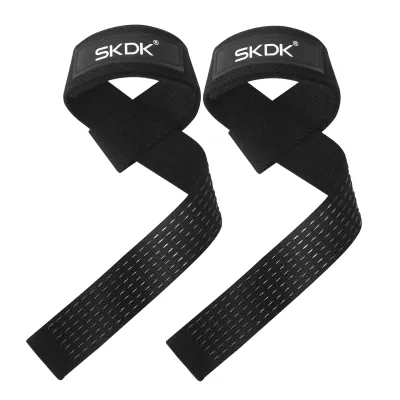
Lifting straps are the gold standard for lifters who want to eliminate grip strength as a limiting factor during heavy pulling movements. These accessories consist of a strip of durable material—typically cotton, nylon, or leather—that loops around your wrist and wraps tightly around the barbell. By transferring the weight of the bar directly to your wrists, straps allow you to maintain your hold on the weight even when your fingers and forearms are completely fatigued.

The primary use case for lifting straps is heavy, compound pulling exercises such as deadlifts, Romanian deadlifts, shrugs, and heavy dumbbell rows. In these movements, your posterior chain and upper back muscles are often significantly stronger than your hands’ ability to hold onto a heavy bar for multiple repetitions. Using straps allows you to stimulate these larger muscle groups fully without ending the set prematurely due to slipping fingers.
However, lifting straps have distinct limitations that make them unsuitable for certain exercises. They offer no benefit for pushing movements like presses, where the bar is already resting in the palm of your hand. Additionally, they are highly discouraged for dynamic Olympic lifts, such as cleans and snatches, unless you are using specialized, short straps. Standard lasso straps wrap tightly around the bar and do not allow for a quick, safe release if you need to dump a failed lift behind or in front of you.
When shopping for lifting straps, you should perform several key checks to ensure safety and comfort. Inspect the material durability; heavy-duty nylon is incredibly strong but can be harsh on the skin, while cotton is softer but may stretch over time under extreme loads. Check the length of the strap to ensure it can wrap around the bar at least once and a half for a secure hold. Finally, look for integrated neoprene padding around the wrist loop to prevent the material from digging painfully into your skin during heavy pulls.
Lifting Hooks: Quick Engagement for Heavy Pulls
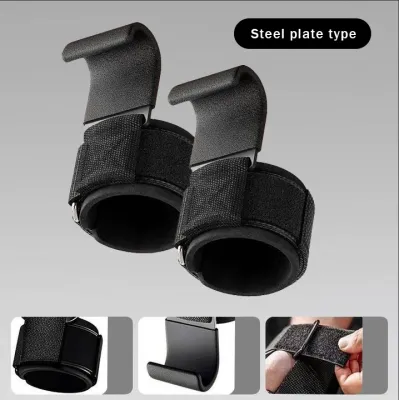
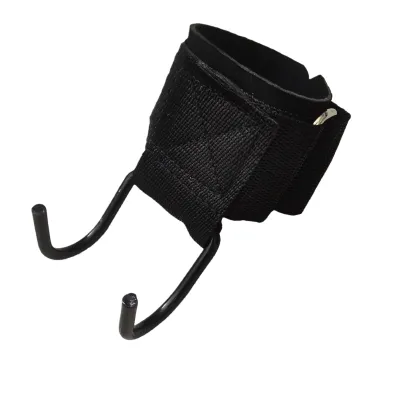
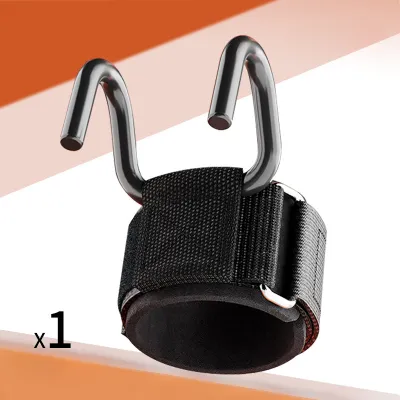
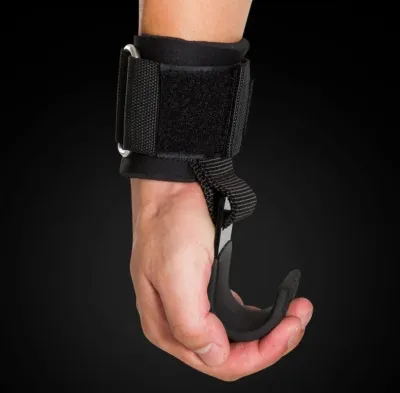
Lifting hooks offer a mechanical alternative to traditional straps, designed for lifters who want immediate grip assistance without the hassle of wrapping material around the bar before every set. These accessories feature a heavy-duty steel hook covered in a non-slip coating, attached to a thick, padded wrist wrap. Instead of wrapping fabric, you simply place the hooks under the barbell or pull-up bar and let the metal hooks support the weight.
This design is exceptionally beneficial for heavy, static pulling exercises like shrugs, lat pulldowns, and rack pulls. Lifters with smaller hands, or those recovering from hand injuries that prevent them from fully closing their fingers around a thick barbell, often find hooks to be an invaluable tool. Because you do not need to grip the bar tightly, hooks allow you to isolate your back muscles more effectively by reducing forearm engagement.
Despite their convenience, lifting hooks have notable limitations. The metal hook has a fixed curve, which may not align perfectly with very thick barbells, fat grips, or non-standard gym equipment. This mismatch can cause the bar to sit awkwardly, reducing stability. Furthermore, hooks are entirely unsuitable for dynamic or transitional movements; any sudden change in bar angle or explosive movement can cause the hook to slip off the bar, creating a severe safety hazard.
To select a reliable pair of lifting hooks, you must verify several specifications. Check the manufacturer-indicated weight capacity limits to ensure they can safely support your target lifting loads. Examine the hook angle and width to confirm they will accommodate standard barbell diameters. Lastly, inspect the wrist strap padding and the strength of the hook-to-strap attachment point, as this connection bears the entire weight of the lift.
Weight Lifting Gloves: Palm Protection and Wrist Support
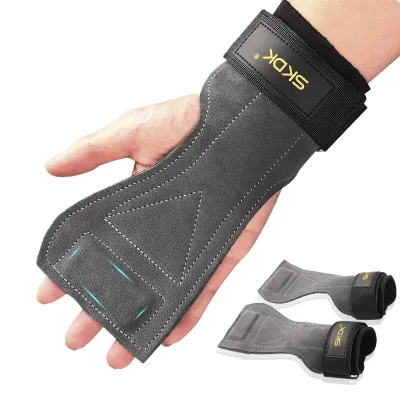
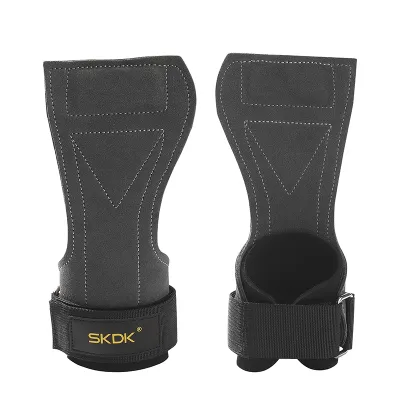
Weight lifting gloves are designed primarily for comprehensive hand protection, hygiene, and wrist stability rather than maximizing raw pulling power. Covering the palms and often extending down the fingers, gloves act as a protective barrier between your skin and the rough knurling of metal barbells and dumbbells. Many models also feature integrated, adjustable wrist wraps that help keep the joint aligned during heavy pressing movements.
Gloves are highly effective for high-repetition dumbbell workouts, machine-based training, and general fitness routines where preventing calluses and blisters is a priority. In humid training environments, such as non-air-conditioned gyms or outdoor fitness corners, sweaty hands can easily slip on metal surfaces. Gloves with textured palms help manage moisture and maintain a consistent grip on dumbbells and pull-up bars.
However, gloves have a significant mechanical drawback when it comes to heavy barbell lifting. The padding on the palm artificially increases the effective diameter of the bar. A thicker bar is significantly harder to grip, which can actually reduce your raw grip strength and mechanical advantage during heavy deadlifts or rows. Additionally, some lifters find that gloves reduce their bar feel, making it harder to adjust their hand positioning precisely during technical lifts.
When evaluating weight lifting gloves, check the thickness and material of the palm padding; thinner padding preserves more bar feel, while thicker padding offers greater comfort against heavy pressure. Ensure the material is highly breathable or features mesh panels to prevent excessive sweat buildup inside the glove. Finally, inspect the integrated wrist wrap to verify that the hook-and-loop fastener provides sufficient tension and support for your wrists.
Grip Pads: Minimalist Protection for Versatility
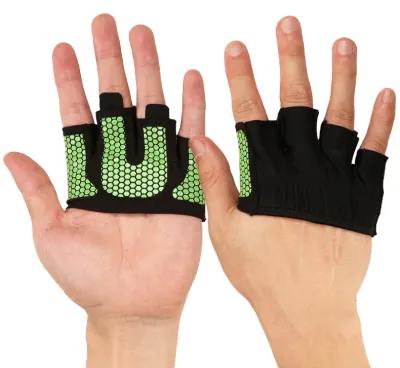
Grip pads are a minimalist alternative to traditional gloves, offering targeted palm protection without the bulk, heat, and restriction of a full glove. These accessories are typically small, flat pads made of rubber, neoprene, or textured silicone that sit directly over your palms. They are held in place by simple finger loops or a minimalist backing, leaving the back of your hand completely open to the air.
This design makes grip pads exceptionally well-suited for functional fitness, kettlebell training, and high-intensity interval workouts. They allow you to maintain a natural bar feel because there is no material wrapping around your fingers or wrists. When you transition from a barbell movement to a bodyweight exercise like push-ups or burpees, you can easily let go of the pads or slide them off without having to unstrap or remove a full glove.
The primary limitation of grip pads is their lack of structural support. They do not provide any wrist stabilization, nor do they mechanically lock the weight to your hands like straps or hooks do. If your forearms fatigue during a heavy set, grip pads will not prevent your fingers from slipping open. They are strictly a friction-enhancing and skin-protecting accessory rather than a mechanical lifting aid.
Before choosing grip pads, check the pad material thickness and surface texture to ensure they provide adequate traction against sweat and metal knurling. Look for ergonomic shaping that conforms naturally to the curve of your hand when gripping a bar. Additionally, verify that the finger loops or attachment straps are comfortable and do not pinch or restrict blood flow during repetitive movements.
Decision Matrix: Choosing the Right Grip for Your Routine
To help you select the ideal accessory for your training style, use the following decision framework based on your primary workout goals and exercise selection:
- Choose Lifting Straps if: Your main goal is maximizing your pulling capacity on heavy compound lifts like deadlifts and Romanian deadlifts, and you want to ensure your target muscles are fully stimulated even after your grip fatigues.
- Choose Lifting Hooks if: You perform heavy, slow pulling movements like shrugs or lat pulldowns and prefer an immediate, wrap-free setup, or if you have smaller hands and struggle to wrap your fingers securely around thick bars.
- Choose Weight Lifting Gloves if: You prioritize palm protection against calluses and blisters during high-rep dumbbell or machine workouts, require integrated wrist support for pressing movements, or train in humid conditions where sweat compromises your grip.
- Choose Grip Pads if: You want a minimalist, breathable barrier to protect your palms during versatile functional fitness or kettlebell workouts, and you prefer to maintain a natural bar feel without the bulk of a full glove.
Before purchasing or using any grip aid in a structured environment, verify first if your specific gym has policies regarding accessory usage, as some facilities restrict the use of chalk or certain types of straps. If you plan to compete in organized sports, always check the official rulebook of your federation. For example, raw powerlifting federations strictly prohibit the use of straps or hooks during competition lifts, meaning you must balance your training with barehanded grip development to ensure you can perform on the platform.
Frequently Asked Questions (FAQ)
Do weight lifting grips weaken your natural grip strength?
Using weight lifting grips or straps does not inherently weaken your natural grip strength, provided you use them strategically. If you rely on straps or hooks for every single exercise, including light warm-up sets, your forearm muscles and grip endurance will likely lag behind. To prevent this, perform your warm-up sets and lighter accessory work barehanded to actively train your natural grip. Reserve your grip aids specifically for your heaviest top sets or high-volume working sets where your target muscles would otherwise be under-stimulated due to grip fatigue.
Are lifting straps allowed in powerlifting competitions?
In almost all raw and equipped powerlifting federations, lifting straps and hooks are strictly prohibited during competition lifts, including the deadlift. Competitors must rely entirely on their bare hands, though they are generally permitted to use sports chalk to manage sweat and improve friction. If you plan to compete in powerlifting, it is essential to train your raw grip using techniques like the mixed grip or hook grip during your heavy training sessions, using straps only for non-competition accessory movements.
Community discussion
Share your experience or ask a question. Comments are reviewed before publication.