
Starting tennis is an exciting journey, but walking into a sports store or browsing online marketplaces can quickly become overwhelming. Among the vast array of tennis rackets available, the Wilson Clash series frequently stands out as a top recommendation for beginners.
This reputation is largely built on the line’s unique combination of flexibility and stability, which provides a forgiving learning curve for players developing their swing mechanics. However, because the Clash lineup includes several models with varying weights and head sizes, finding the right match requires looking closely at your own physical profile.
Choosing a racket is not about finding a universally “perfect” model, as no single frame suits every player. Instead, the goal is to match the racket’s physical specifications to your current strength, swing speed, and hand size.
Products mentioned in this guide
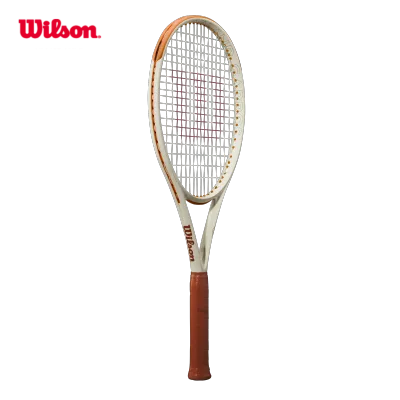
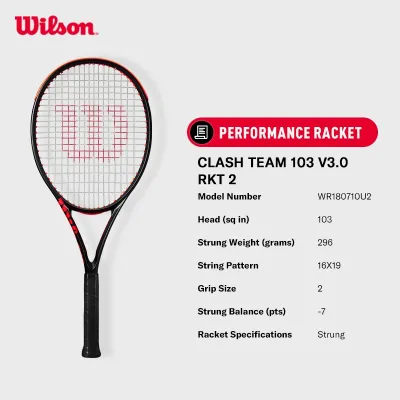
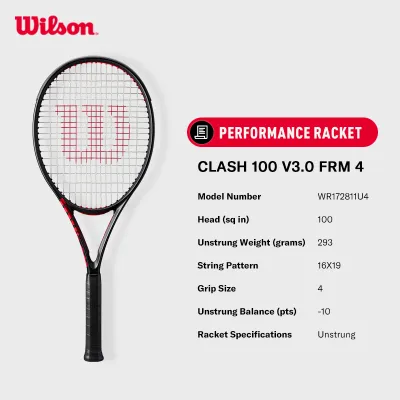
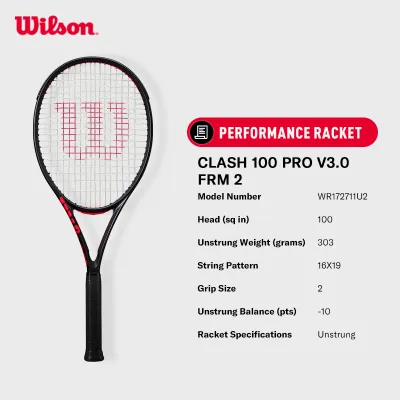
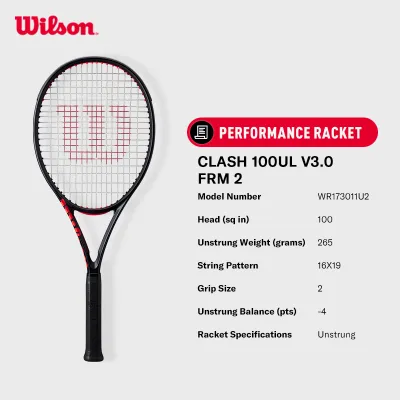
Prices are valid at publication and may change. Please refer to the product page for the latest price.
A model that feels effortless to swing for one player might cause early fatigue or joint strain for another. By understanding how different Clash models behave on the court, you can make an informed decision that supports your skill development and keeps you playing comfortably.
Decoding the Wilson Clash Lineup for Beginners
The Wilson Clash series was designed with a specific philosophy in mind: to deliver a racket that bends dynamically with your swing while remaining stable enough to control the ball. In traditional racket design, high flexibility often meant a loss of power and stability, while stiff frames offered power at the expense of comfort.
The Clash series attempts to bridge this gap by utilizing proprietary frame geometry and carbon mapping. For a beginner, this design translates directly into arm comfort and a highly forgiving feel, as the frame absorbs a significant portion of the shock when you do not hit the ball directly in the center of the strings.
Understanding the naming conventions of the Clash lineup is the first step in narrowing down your options. The numbers in the model names, such as 100 or 98, refer to the head size of the racket in square inches. A larger head size provides a larger hitting surface and a more generous sweet spot, which is highly beneficial when you are still learning to time your contact.
The letters following the numbers indicate the weight class of the racket. For instance, “UL” stands for Ultra Light, “L” stands for Light, and models without a letter suffix represent the standard, baseline weight for that head size.
These design features are particularly advantageous for beginners who are building muscle memory. When you are first learning the forehand, backhand, and serve, your stroke mechanics will naturally be inconsistent.
A racket that minimizes harsh vibrations on off-center hits allows you to practice longer without developing early fatigue or minor joint irritation. This comfort helps you focus entirely on your footwork and swing path rather than worrying about the physical feedback of a missed sweet spot.
Matching Racket Specifications to Your Strength and Skill
To select the right Clash model, you must understand how key specifications influence your performance and physical comfort on the court. The first specification to consider is head size.

For almost all beginners, a head size of 100 square inches is the recommended starting point. This mid-plus size offers an optimal balance, providing enough surface area to limit clean-missed shots while still offering enough control to help you direct the ball inside the court boundaries. Smaller head sizes require highly precise timing, which can frustrate new players and slow down their skill progression.
Racket weight is another critical factor that must align with your physical strength and endurance. Unstrung racket weights in the Clash lineup generally range from approximately 265 grams to over 300 grams.
A lighter racket is easier to maneuver, allowing you to react quickly at the net and swing the frame with minimal effort. However, lighter rackets also absorb less shock from incoming balls, transferring more vibration to your arm.
Conversely, a heavier racket provides more stability and plow-through power, but it requires greater shoulder and forearm strength to swing consistently over the course of a full match.
Grip size is a specification that directly impacts your hand health and control over the racket. If a grip is too small, you will find yourself squeezing the handle too tightly to prevent the racket from twisting on impact, which can lead to forearm strain.
If the grip is too large, you will struggle to snap your wrist naturally during serves and overheads. You can determine your grip size by measuring the distance from the middle crease of your palm to the tip of your ring finger, or by performing a quick physical check with a racket in hand.
Finally, balance and swing weight dictate how heavy the racket actually feels when you are in motion. Most models in the Clash family feature a head-light balance, meaning more of the racket’s physical weight is distributed toward the handle rather than the hoop.
This design choice enhances maneuverability, making it easier for beginners to get the racket into position quickly. Swing weight, which measures how heavy the racket feels during a full swing, is kept relatively moderate across the beginner-friendly Clash models to ensure you can develop a smooth, continuous stroke without feeling held back by the frame’s mass.
Comparing Popular Wilson Clash Models for New Players
To help you visualize the differences between the primary options, the table below outlines the typical specifications and target player profiles for the most common Wilson Clash models available.
| Model | Head Size (sq in) | Weight Class (Unstrung) | Target Player Profile |
|---|---|---|---|
| Clash 100UL | 100 | Ultra Light (~265g) | Juniors, smaller-framed players, or those with limited upper-body strength |
| Clash 100L | 100 | Light (~280g) | Average beginners, players seeking high maneuverability, or those prone to arm fatigue |
| Clash 100 | 100 | Standard (~295g) | Athletic beginners, active adults, or those with prior racket sports experience |
| Clash 98 | 98 | Control-Oriented (~310g) | Advanced beginners or intermediate players prioritizing precision over forgiveness |
The standard Wilson Clash 100 is the benchmark model of the line. Weighing around 295 grams unstrung, it is best suited for beginners who possess average to above-average physical strength or those who have an athletic background in other sports.
This weight provides excellent stability when defending against faster shots from your opponents, ensuring the racket does not twist easily in your hand. It also offers a solid blend of natural power and depth, allowing you to hit deep groundstrokes with a relatively relaxed swing.
For players who find a standard-weight racket tiring after a short period, the Wilson Clash 100L is an exceptional alternative. At approximately 280 grams unstrung, this light version offers a noticeable increase in maneuverability.
It is highly suited for players with moderate upper-body strength, transitioning junior players, or anyone who prefers a faster, whippy swing style. The lighter weight makes it easier to practice repetitive swing paths without sacrificing form as you tire toward the end of a practice session.
The Wilson Clash 100UL is the lightest option in the 100-square-inch category, weighing in at roughly 265 grams unstrung. This ultra-light model is specifically designed for younger players moving up to adult rackets, seniors, or individuals recovering from shoulder or wrist injuries.
While it is incredibly easy to swing, keep in mind that its lower mass means it will provide less stability against heavy, fast-paced incoming balls. It is a highly specialized choice for those who prioritize ease of movement above all else.
Lastly, the Wilson Clash 98 is a model that beginners should approach with caution. With a smaller 98-square-inch head size and a heavier unstrung weight of around 310 grams, this racket is built for precision and control rather than forgiveness.
It features a smaller sweet spot, meaning off-center hits will feel less comfortable and carry less depth. This model is generally only suitable for beginners who already possess highly consistent ball-striking skills from other racket sports and specifically want a more controlled, traditional feel.
Verifying Fit and Comfort Before You Buy
Before finalizing your purchase, it is highly recommended to verify the exact specifications of the model you are considering. Manufacturers occasionally update their product lines, meaning the weight, balance, or technology of a Clash model can vary slightly between different release generations.
Checking the official manufacturer specification sheet or consulting with an authorized retailer ensures you are getting the exact weight and balance profile that matches your physical needs.
When you receive a racket or test one in a physical store, you can perform a simple index finger test to verify the grip size. Hold the racket in your dominant hand using an Eastern forehand grip (where your palm is flat against the same plane as the string bed).
Slide the index finger of your non-dominant hand into the space between your ring finger and your palm. If there is not enough room for your finger, the grip is too small; if there is a large gap remaining, the grip is too large. If you are between sizes, it is generally safer to choose the smaller size, as you can easily increase the grip size using an inexpensive overgrip.
Utilizing a demo program is one of the most effective ways to ensure a racket is right for you. Many local pro shops, tennis clubs, and online specialty retailers offer demo services that allow you to rent or borrow a racket for a small fee, which is often creditable toward a purchase.
Spending an hour hitting balls on the court will give you a realistic sense of how the swing weight and vibration dampening behave under actual playing conditions, helping you avoid buyer’s remorse.
While the Clash series is designed to maximize comfort, equipment cannot replace proper technique or physical conditioning. If you experience persistent joint discomfort, wrist pain, or shoulder fatigue while playing, stop immediately and assess your setup.
You may need to consult a certified tennis coach to review your swing mechanics, or a professional stringer to check if your string tension is too high. Always prioritize your physical health and seek professional guidance when experiencing pain on the court.
Frequently Asked Questions (FAQ)
Do I need to buy a pre-strung Wilson Clash racket as a beginner?
Buying a pre-strung racket is highly convenient for beginners because it allows you to take the racket straight to the court without waiting for a custom stringing service. Pre-strung models are typically set up with a versatile, durable synthetic gut string at a moderate tension, which is perfectly adequate for learning basic strokes and assessing your initial preferences.
However, purchasing an unstrung frame and having it customized by a professional stringer offers significant long-term benefits. A professional can help you select a soft multifilament string and set it at a lower tension, such as 50 to 53 pounds, which enhances the natural comfort and shock-absorbing qualities of the Clash frame. This custom setup is highly recommended if you are prone to arm discomfort or want to maximize the racket’s forgiving feel from day one.
How often should a beginner restring a Wilson Clash racket?
A common rule of thumb in tennis is to restring your racket as many times per year as you play per week. For example, if you play twice a week, you should aim to restring your racket at least twice a year. Even if you play less frequently, strings naturally lose their elasticity and tension over time just by sitting in your bag, so restringing at least once every six months is a good practice to maintain consistent performance.
You should also inspect your strings regularly for physical signs of wear and degradation. If you notice deep notches where the main and cross strings intersect, visible fraying on multifilament strings, or if your shots are suddenly flying long despite using the same swing, these are clear indicators that the strings have lost their tension and need to be replaced. Taking your racket to a local shop for a fresh set of strings can cost around S$20 to S$40 for labor, plus the cost of the strings, and will instantly restore the control and comfort of your frame.
Community discussion
Share your experience or ask a question. Comments are reviewed before publication.