
Finding the most suitable Yonex tennis racket as a beginner requires looking past professional endorsements and focusing on how a frame’s physical characteristics align with your current physical development, swing mechanics, and learning goals. Yonex is highly regarded for its signature Isometric head shape, which modifies the traditional round hoop to create a larger, more square-shaped sweet spot. This design provides extra forgiveness on off-center hits, making the brand highly attractive to players who are still developing consistent ball-striking habits. However, because Yonex designs its rackets across distinct product families with contrasting performance goals, selecting the right frame involves matching your personal physical profile to the specific engineering of each series.
Rather than searching for a single universal beginner racket, you should evaluate how different frames support your learning curve. A racket that is too heavy can lead to early fatigue and poor technique, while a frame that is too light or stiff might transmit excessive vibration to your arm. By understanding your physical capabilities and analyzing how Yonex structures its key product lines, you can make an informed decision that protects your joints, accelerates your skill acquisition, and ensures your first major equipment investment remains relevant as your game improves.
Assessing Your Physical Profile and Learning Goals
Before comparing specific racket models, you must conduct an honest assessment of your physical strength, fitness level, and natural swing speed. Tennis is a physically demanding sport that places repetitive stress on the shoulder, elbow, and wrist. If you are starting with limited upper-body strength or are returning to active sports after a long hiatus, your primary need will be a lightweight frame that is easy to maneuver. Conversely, if you already possess excellent natural athletic strength or have a background in other racket sports, you may comfortably handle a slightly heavier frame that offers more built-in stability.
Products mentioned in this guide
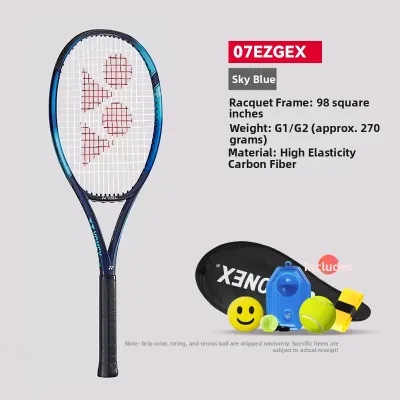
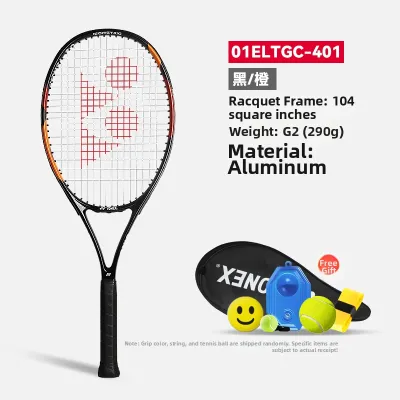
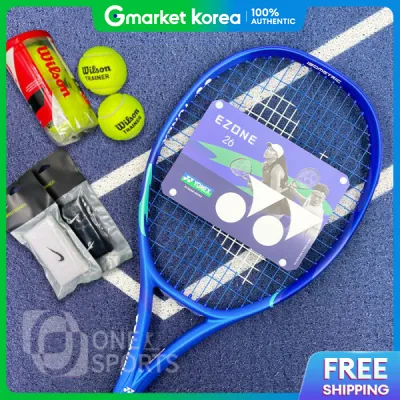
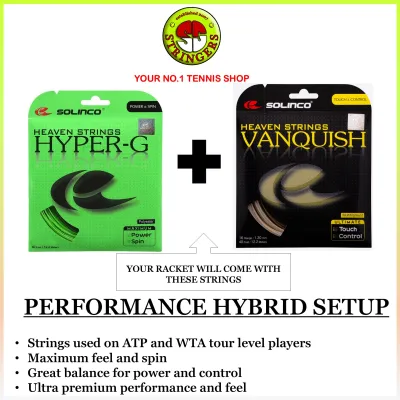
Prices are valid at publication and may change. Please refer to the product page for the latest price.
Your natural swing speed also dictates the type of racket assistance you require. Beginners with slower, shorter swings often struggle to hit the ball deep into the opponent’s court, making power-assisting frames highly beneficial. If your swing is naturally fast but erratic, you will benefit more from a frame designed to offer control and predictability. Identifying these tendencies early prevents you from buying a racket that fights against your natural mechanics, allowing you to focus on developing clean, relaxed strokes.
Your immediate learning goals should also guide your selection process. If your priority is to enjoy casual weekend rallies with maximum comfort and minimal physical strain, a highly forgiving, arm-friendly frame is your best option. If you are committed to taking regular coaching sessions with the intent of developing a modern, spin-heavy baseline game, you will want a frame that accommodates rapid swing speeds and encourages spin generation. Aligning your equipment with your personal roadmap ensures you do not outgrow your racket within the first few months of play.
Finally, physical attributes such as height and hand size play a practical role in your decision. Taller players with longer arms naturally generate more leverage but may find highly head-heavy rackets difficult to control in quick net exchanges. Shorter players often benefit from slightly lighter frames that allow them to generate competitive head speed without straining. Hand size directly dictates your grip size, which is a critical factor in preventing repetitive strain injuries like tennis elbow.
Exploring the Core Yonex Tennis Racket Lines
The Yonex tennis lineup is organized into distinct families, each engineered to emphasize specific playing characteristics. For beginners, the EZONE series is widely considered the most accessible starting point. Designed with a focus on power assistance and comfort, the EZONE features a slightly thicker, more rigid beam structure that maximizes energy return to the ball. This means you do not have to swing exceptionally hard to achieve depth, which is highly advantageous when you are still learning to time your contact point. The plush feel of the EZONE also helps absorb harsh vibrations, offering excellent arm protection during off-center hits.

In contrast, the VCORE series is engineered primarily for spin potential and aerodynamic efficiency. These frames feature specialized grommet technologies and streamlined hoop profiles designed to reduce air resistance, allowing you to swing the racket faster through the air. While spin is a skill that develops over time, a beginner with a naturally upward swing path may find the VCORE helps pull the ball down into the court. However, because the VCORE is slightly stiffer and more technique-dependent than the EZONE, it requires a more active, consistent swing to unlock its full benefits.
For players seeking ultimate control and classic feel, Yonex offers the Percept series, which replaced the legacy VCORE PRO line. These rackets feature thinner, highly flexible beams designed to bend slightly upon impact, providing maximum feedback and precision. While advanced players cherish this connection to the ball, the Percept line is generally not recommended for beginners. The flexible frame provides very little power assistance, meaning off-center hits will land short and transmit significant shock to an undeveloped arm if the player tries to force the ball deep.
Because tennis technology and model names evolve over time, it is essential to check the manufacturer’s current specifications before making a purchase. Yonex regularly updates its frames with new material layups and dampening polymers. When browsing, look for models designated with terms like “Ace,” “Team,” “Feel,” or “Game,” as these versions are specifically engineered with lighter static weights and more forgiving balances than the heavier tour-level models used by professionals.
Matching Racket Specifications to Your Swing
To find the most forgiving and effective racket for your developing skill level, you must learn to interpret key technical specifications. The first metric to evaluate is head size, which is measured in square inches. For beginners, a head size of 100 square inches or larger is highly recommended. A larger head size not only expands the physical sweet spot but also increases the trampoline effect of the string bed, providing easy depth and reducing the physical effort required to clear the net. Avoid mid-sized frames under 98 square inches, as they require highly precise centering that can frustrate a developing player.
Static weight and balance are equally critical to how the racket feels in motion. Beginners should generally target an unstrung static weight between 270 and 290 grams. A frame in this weight range is heavy enough to provide stability against incoming balls without causing shoulder fatigue during extended play. The balance point—whether the weight is concentrated in the head or the handle—also affects maneuverability. A head-light balance makes the racket feel nimble and easy to position, while an even or slightly head-heavy balance provides more plow-through power on groundstrokes. For most beginners, a neutral or slightly head-light balance offers the best compromise.
String pattern density is another specification that directly influences playability. Rackets typically feature either an open pattern, such as 16×19, or a dense pattern, such as 18×20. An open pattern has fewer, more widely spaced strings, which allows the strings to deflect more upon impact. This deflection generates easy power and allows the strings to grip the ball, making it much easier for beginners to generate spin and depth. Dense patterns offer exceptional control and durability but require a fast, highly developed swing to prevent the ball from landing short.
Finally, pay close attention to the manufacturer’s recommended string tension range, which is typically printed on the inside of the racket throat. For beginners, planning a setup at the lower end of this recommended range—usually between 45 and 50 pounds—is highly beneficial. Lower tension increases the elasticity of the string bed, which provides a softer feel, better shock absorption, and more effortless depth. Stiff, high-tension setups should be avoided until your technique is consistent enough to generate your own power safely.
Finalizing Your Fit and Pre-Purchase Checks
Once you have identified a promising Yonex series and weight class, you must verify the physical fit of the racket before completing your purchase. Selecting the correct grip size is paramount for both performance and injury prevention. A grip that is too small forces you to squeeze the handle excessively tight to keep the racket from twisting, which can lead to wrist strain and tennis elbow. A grip that is too large prevents you from naturally snapping your wrist during serves and overheads. To check your size, hold the racket in an Eastern grip; you should be able to fit the index finger of your non-dominant hand comfortably in the space between your ring finger and palm.
In Singapore’s warm and highly humid climate, sweat can quickly compromise your hold on the racket. It is often wise to select a grip size that is slightly smaller (such as G2 instead of G3) if you fall between sizes, as this allows you to wrap a sweat-absorbing overgrip over the factory grip without making the handle feel too bulky. Overgrips are inexpensive, easily replaceable, and essential for maintaining a secure, slip-free hold during long sessions in tropical conditions.
Before finalizing your purchase, inspect the racket thoroughly for structural integrity and authenticity. If buying from a local specialty shop or an online marketplace, check for the official Yonex holographic sticker near the handle cone and ensure the serial numbers on the shaft are cleanly laser-engraved rather than printed. Counterfeit rackets often feature uneven paint finishes, misaligned grommets, and a hollow, metallic sound when tapped. Purchasing from authorized local retailers ensures you receive a genuine product backed by a valid manufacturer’s warranty.
Lastly, take advantage of professional expertise before hitting the court. If you are unsure about the initial string setup, consult a certified stringer or a local coach. Many beginners make the mistake of using stiff polyester strings because they see professional players using them. A professional stringer will guide you toward a soft multifilament or synthetic gut string, which offers superior comfort, better tension maintenance, and a much more forgiving learning experience for your first few months of play.
Frequently Asked Questions (FAQ)
Is a heavier or lighter Yonex racket better for a beginner?
For most beginners, a lighter Yonex racket weighing between 270 and 290 grams unstrung is highly recommended. Lighter frames are much easier to swing, allowing you to focus on learning correct stroke mechanics without straining your shoulder or wrist. They also offer excellent maneuverability at the net, which is helpful when you are still developing your reaction times.
However, it is important not to go too light, as frames under 260 grams can struggle to absorb the shock of fast incoming balls, transmitting that vibration directly into your arm. A slightly heavier racket within the recommended beginner range provides a stable platform that absorbs impact shock better, provided you have the physical conditioning to swing it comfortably. Testing different weights during a demo session is the most reliable way to find your personal limit.
Do I need to buy a pre-strung Yonex racket?
Buying a pre-strung Yonex racket is highly convenient and cost-effective for casual beginners who want to start playing immediately. These rackets come pre-installed with basic synthetic gut strings at a mid-range tension, which is perfectly adequate for learning the basic rules and stroke shapes. It eliminates the immediate need to select string types and pay additional labor fees.
However, if you are committed to playing regularly or have a history of joint discomfort, opting for an unstrung frame and having it custom-strung is highly beneficial. Custom stringing allows you to choose a soft, arm-friendly multifilament string and set it at a lower tension. This tailored setup provides significantly better shock absorption, comfort, and playability than standard factory strings, which may have lost tension while sitting in storage.

Community discussion
Share your experience or ask a question. Comments are reviewed before publication.