
To maintain a secure hold on a badminton racket during intense rallies, selecting the right overgrip is critical. For players who experience heavy hand perspiration, this choice becomes even more vital to prevent the racket from slipping or twisting during high-speed shots. A slipping racket not only ruins your shot accuracy but also poses a safety risk to other players on the court if it flies out of your hand during a high-impact smash. Yonex, a leading name in racket sports, offers several “wet” (tacky) overgrip models designed to enhance friction. The best model for sweaty hands depends on your specific sweat volume: moderate sweaters will find the classic Yonex Super Grap (AC102) ideal, those needing mechanical moisture channeling should look to the textured Yonex Wave Grip (AC133), while extreme sweaters will get the most security from the Yonex Towel Grip (AC402) paired with grip powder.
Quick Recommendations: Matching Yonex Grips to Your Sweat Level
Finding the right overgrip is a balance between your personal sweat rate and how much racket feedback you prefer. Here is a quick guide to matching your sweat level with the most suitable Yonex grip model:
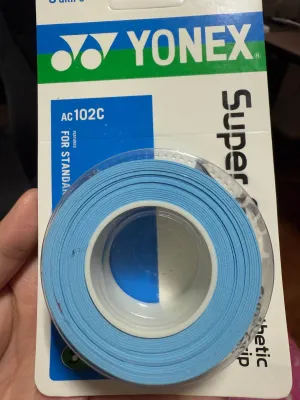
- Moderate Sweat: Yonex Super Grap (AC102). This is the gold standard for players who need a balanced, tacky feel. It provides excellent initial tackiness and mild absorption, making it perfect for indoor air-conditioned halls or players with light to moderate hand dampness.
- Moderate to Heavy Sweat: Yonex Wave Grip (AC133). Featuring a built-in rubber strip that creates a raised ridge and a textured surface, this model physically channels sweat away from your palm. It is ideal for players who want a physical contour to lock their fingers in place and prevent slipping.
- Extreme Sweat: Yonex Towel Grip (AC402). Made of 100% cotton, this grip acts like a sponge. It is the ultimate choice for players whose hands drip with sweat, particularly in humid climates. However, it must be paired with a high-quality grip powder to activate its slip-resistant properties.
How to Choose the Right Yonex Overgrip for Humid Conditions
Selecting an overgrip requires understanding how materials interact with moisture, heat, and your physical grip style. In tropical environments like Singapore, where badminton is highly popular but often played in non-air-conditioned community club halls or school courts, the ambient humidity prevents sweat from evaporating naturally. This causes overgrips to saturate rapidly, making material choice a primary performance factor.
Products mentioned in this guide
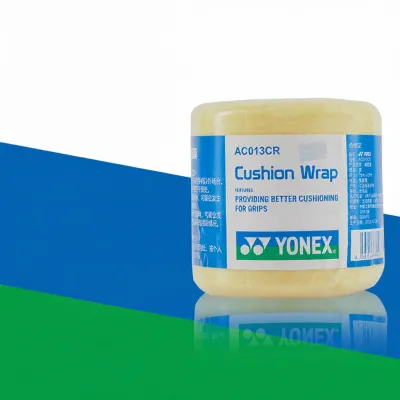
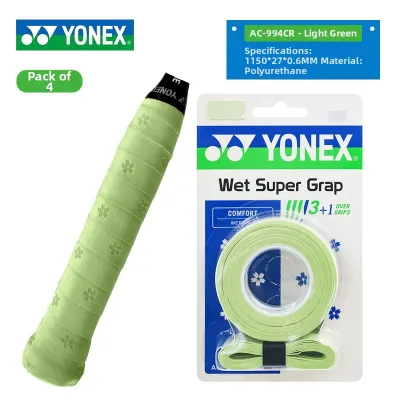
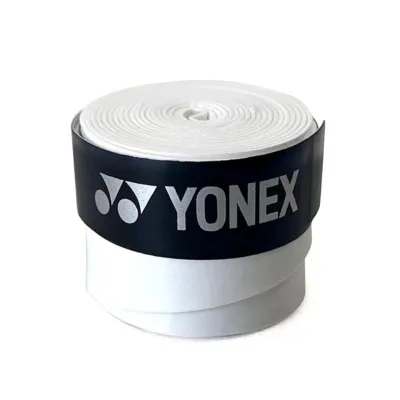
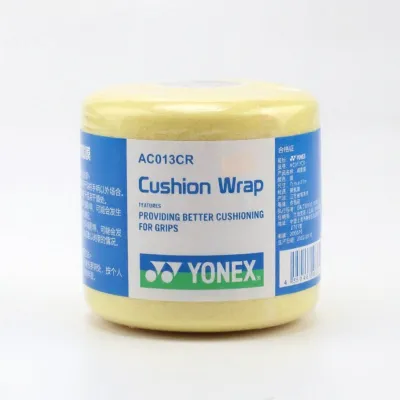
Prices are valid at publication and may change. Please refer to the product page for the latest price.

Material Texture: Polyurethane vs. Cotton
Polyurethane (PU) grips rely on chemical tackiness. When dry or slightly damp, the polyurethane material adheres slightly to the skin, offering high friction. This is what Yonex refers to as a “wet” feel—not because it is wet with sweat, but because it feels slightly moist and sticky to the touch. Cotton towel grips, on the other hand, rely on mechanical absorption. The cotton fibers pull moisture away from the surface, but require a drying agent (grip powder) to maintain a textured, high-friction surface.
Thickness and Feel
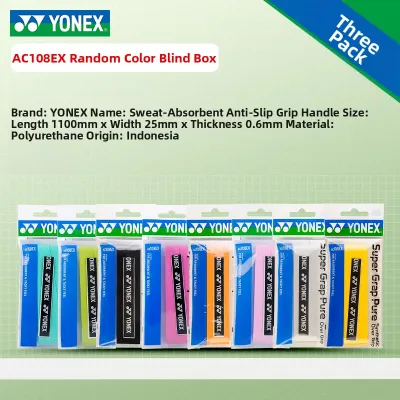
Standard PU overgrips are typically thin (around 0.6mm). This thin profile ensures you can feel the bevels of the racket handle clearly, which is crucial for quick grip transitions between forehand and backhand. Thicker options or textured options like the Wave Grip add bulk, which cushions the hand but slightly dampens the raw feedback from the shaft. Towel grips are significantly thicker, which can alter the effective grip size of your racket (e.g., turning a G5 handle into a G4 feel). You must decide whether you prioritize a thin, responsive handle or maximum moisture absorption.
Moisture Management in High Humidity
In high-humidity climates, the chemical breakdown of polyurethane is accelerated. When PU grips get fully saturated, a thin barrier of water forms between your hand and the grip surface, eliminating all friction. Cotton grips do not suffer from this chemical breakdown, but they do become heavy and soggy if they absorb too much moisture without being dried out. Therefore, players must assess their playing environment alongside their physiological sweat rate. If you play in closed, humid halls, your grip selection must lean heavily toward moisture dispersion or high-volume absorption.
Self-Assessment Framework
To determine your category, observe your grip after one hour of play. If the grip is damp but still holds its tack, you are a moderate sweater. If you find yourself wiping your hands on your shorts before every serve because the racket feels like it might fly out of your hand, you fall into the heavy or extreme category.
Top Yonex Wet Grip Models for Heavy Sweaters
To help you compare the top options, the table below summarizes the key differences among the primary Yonex models suitable for managing perspiration.
| Model Name | Best For (Sweat Level) | Primary Feel | Moisture Handling | Relative Thickness |
|---|---|---|---|---|
| Yonex Super Grap (AC102) | Moderate | Tacky & Smooth | Low to Moderate | Standard |
| Yonex Wave Grip (AC133) | Moderate to Heavy | Textured & Ridged | Moderate (Channeled) | Medium |
| Yonex Towel Grip (AC402) | Extreme | Soft & Fibrous | High (Absorbent) | Thick |
Yonex Super Grap (AC102)
The Yonex Super Grap (AC102) is one of the most popular overgrips in the world, celebrated for its balanced tackiness, comfort, and durability. Made from high-quality polyurethane, it provides a secure, rubbery feel that adheres comfortably to the hand. For players with moderate sweat, it offers a secure, cushioned feel that enhances confidence during fast-drive exchanges.
However, its polyurethane surface is non-porous. Once your sweat volume exceeds its surface-absorption capacity, a thin layer of moisture forms between your skin and the grip, causing it to lose its tackiness and become highly slippery. If you find your hand sliding down the handle during high-impact smashes, this is a clear sign that you have surpassed the limits of the AC102 and need to transition to a textured or absorbent alternative. It is best suited for players who play in air-conditioned environments or those who do not experience excessive hand perspiration.
Yonex Wave Grip (AC133)
The Yonex Wave Grip (AC133) addresses the saturation issue of standard PU grips by introducing physical architecture. It features a central rubber strip running along the underside, which creates a raised spiral ridge when wrapped. Additionally, the surface is perforated. These perforations and the physical valleys created by the wave pattern act as channels, allowing sweat to migrate away from the primary contact points of your fingers.
This mechanical friction ensures that even if the polyurethane material becomes damp, your fingers remain locked against the physical ridges. It is an excellent intermediate solution for players who dislike the bulk of towel grips but find standard flat overgrips too slippery in high-humidity environments. The trade-off is that the raised ridge alters the feel of the racket handle bevels, which may require an adjustment period for players accustomed to flat grips.
Yonex Towel Grip (AC402)
For players facing extreme perspiration, the Yonex Towel Grip (AC402) is the traditional choice of many professional competitors. Made from 100% cotton, it functions exactly like a towel, drawing moisture deep into its fibers to keep the surface dry.
However, a critical safety and performance condition applies: a dry or wet towel grip without grip powder is exceptionally slippery. The cotton fibers require a magnesium carbonate or rosin-based grip powder to create a high-friction, tacky interface. When sweat mixes with the powder on the cotton surface, it forms a highly secure, non-slip paste that locks the hand in place.
The trade-off is substantial. The towel grip adds significant thickness to the handle, which can reduce your ability to feel the handle’s bevels, and it requires constant reapplication of powder during matches. It also requires frequent replacement to maintain hygiene, as the cotton fibers harbor bacteria and odors when repeatedly soaked.
Wet Grip vs. Dry Grip: Clearing Up the Confusion
There is a common misconception among badminton players regarding the terminology used for overgrips. Many players assume that if they have sweaty hands, they should purchase a “dry” overgrip, while those with dry hands should purchase a “wet” overgrip. In reality, these terms describe the tactile feel of the grip when it is fresh out of the package, not their performance under wet conditions.
Understanding the Terminology
Yonex categorizes its overgrips primarily into “Wet” and “Dry” categories based on their surface texture:
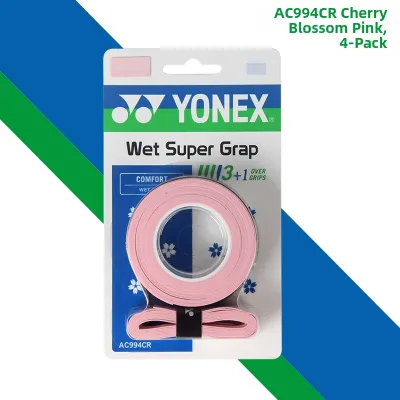
- Wet Grips: These have a tacky, rubbery, and slightly moist feel. They are designed to cling to your hand, providing friction through material adhesion. The Yonex Super Grap is the classic example of a wet grip.
- Dry Grips: These have a velvety, powdery, or paper-like matte finish. They do not feel sticky to the touch. Instead, they rely on a dry texture to prevent the hand from slipping.
Why Dry Grips Can Fail Heavy Sweaters
When a player with heavily sweating hands uses a standard dry-feel polyurethane grip, the material quickly becomes overwhelmed by moisture. Unlike cotton, dry polyurethane has limited absorption capacity. Once saturated, the powdery surface texture breaks down, often turning into a slick, clay-like paste that offers virtually zero friction. This can cause the racket to twist in your hand during off-center hits or fly out of your hand entirely during a smash.
For moderate sweat, a high-quality wet grip is actually more resilient because its inherent tackiness can tolerate a small amount of dampness before failing. For extreme sweat, skipping polyurethane entirely in favor of a cotton towel grip is the most reliable path. Understanding this distinction prevents players from buying dry-feel grips that fail within minutes of a high-intensity session.
Maintenance and Replacement Tips for Sweaty Players
Proper maintenance is essential to extend the life of your overgrip, protect your racket, and maintain hygiene. In humid climates, sweat-soaked grips become breeding grounds for bacteria and mold if left unattended.
Post-Play Care
After a session, never immediately store your racket inside a sealed thermal bag. The trapped moisture will seep through the overgrip and the replacement grip, eventually rotting the wooden handle underneath. Instead, follow these steps:
- Wipe down the grip with a clean, dry microfiber cloth to remove excess surface moisture.
- Allow the racket to air-dry in a well-ventilated indoor space, away from direct sunlight.
- If you use a towel grip, brush out the dried grip powder occasionally to prevent it from hardening into a stiff, crusty layer.
When to Replace Your Overgrip
Do not wait for the grip to unravel before changing it. Look for these visual and tactile signs that indicate it is time to replace your overgrip:
- Loss of Tackiness: The grip feels smooth, slippery, or plastic-like rather than rubbery.
- Peeling Edges: The material begins to wear thin or peel away, especially near the thumb and index finger contact points.
- Hardening: The grip loses its cushioning and feels stiff or compressed.
- Visible Wear and Odor: Dark discoloration from sweat and dirt, or a persistent sour smell.
For safety, if you feel the racket slipping slightly during overhead swings, replace the overgrip immediately to avoid throwing the racket and injuring other players or damaging your equipment.
Buying in Bulk
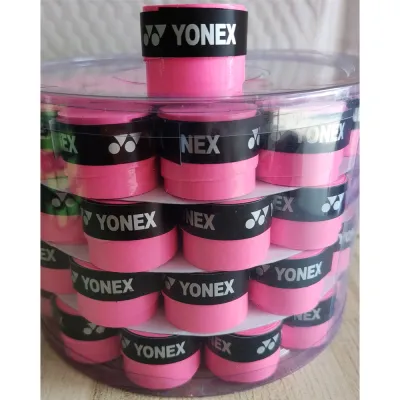
To manage costs, frequent players should avoid buying single overgrips. Opting for bulk packaging, such as Yonex 3-packs (AC102-3) or larger multi-packs, offers a significantly lower cost per grip, allowing you to maintain a fresh, safe playing surface without excessive expense.
Frequently Asked Questions (FAQ)
Can I use a Yonex towel grip without grip powder?
While physically possible, playing with a bare towel grip is highly discouraged. Without grip powder (rosin or chalk), dry cotton fibers offer very little friction against the skin, and wet cotton fibers become slick and heavy. Applying grip powder is essential to bind the fibers and create the necessary tackiness for secure racket control.
How often should I change my Yonex overgrip if I sweat heavily?
There is no fixed calendar schedule, as replacement frequency depends on your sweat volume, play frequency, and local humidity. Instead, monitor physical signs: replace the overgrip as soon as you notice a loss of tackiness, visible wear patches, or if you find yourself squeezing the handle harder than usual to prevent slipping.
Community discussion
Share your experience or ask a question. Comments are reviewed before publication.