
Before purchasing a doorframe pull-up bar for your HDB flat, you must verify whether your specific doorframe can safely support the equipment. While many standard pull-up bars are designed for common residential doorways, compatibility depends on exact dimensions, frame materials, and structural integrity. This guide will help you measure your doorframe, match it with the right product specifications, and identify safe installation practices or alternative options if your doorframe is unsuitable.
How to Measure Your HDB Doorframe for Compatibility
To determine if a doorframe pull-up bar will fit your HDB flat, you must start with precise measurements. HDB doorframes vary significantly by flat age. Older resale flats often feature thick, solid timber frames, while newer Build-To-Order (BTO) flats typically come with metal frames or slim timber architraves. These structural differences mean a single measurement is rarely enough to ensure a safe fit.
First, measure the clear width of your doorway. Use a metal measuring tape to find the distance between the inner edges of the door jambs at three distinct points: the top, middle, and bottom. Doorframes in older flats can warp or settle over time. If your measurements differ, rely on the narrowest width when checking compatibility with adjustable pull-up bars.
Products mentioned in this guide
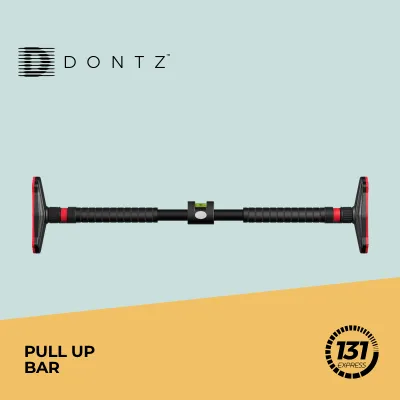
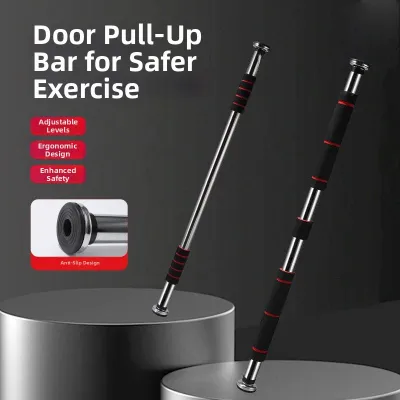
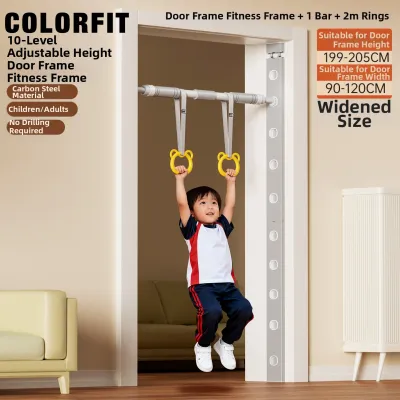
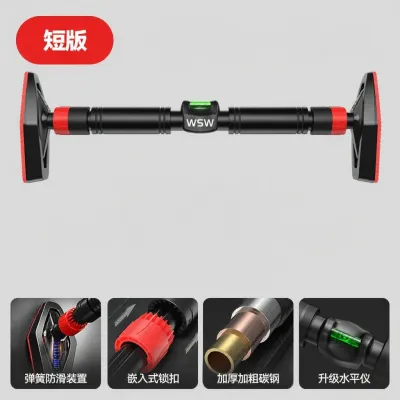
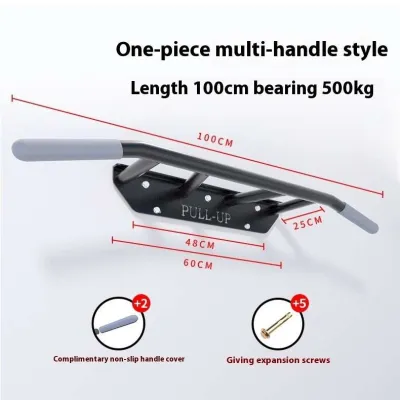
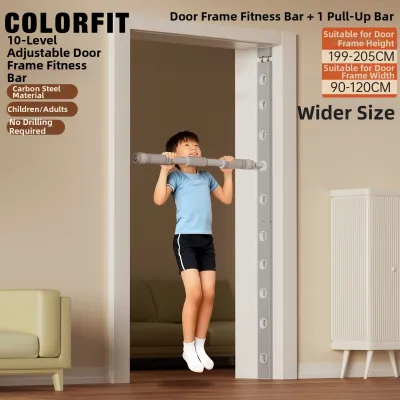
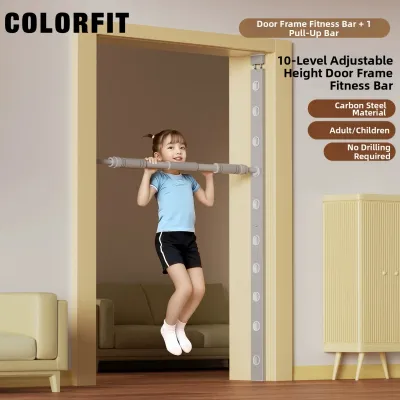
Prices are valid at publication and may change. Please refer to the product page for the latest price.
Next, measure the depth of the doorframe from the front face to the back face. Lever-style pull-up bars rely on this depth to hook securely over the top trim. You must also measure the width and height of the architrave (the decorative trim). If the trim is too thin, shallow, or flush with the wall, a lever-style bar will not have enough ledge to rest upon safely.
Finally, identify the frame material and check for nearby obstructions. Knock on the frame to determine if it is solid wood, hollow metal, or thin MDF. Look closely for light switches, electrical trunking, door hinges, or door closers. In Singapore’s compact HDB layouts, electrical casing often runs close to doorframes, which can block the wide plastic pads or curved arms of a pull-up bar.
Matching Your Measurements to Pull-Up Bar Specifications
Once you have your exact doorframe dimensions, compare them against the specifications of various doorframe pull-up bars available on online marketplaces. Do not rely on generic product descriptions that claim a bar fits all standard doors. Instead, look for the manufacturer’s detailed sizing diagram to verify every point of contact.

Begin by matching your doorway’s width to the bar’s adjustable range. For telescopic or thread-lock bars, the width of your doorframe must fall comfortably within the middle of the bar’s extension range. Extending a telescopic bar to its maximum limit can reduce its structural rigidity, making it less stable under load.
Next, verify the required depth and trim clearance. Leverage bars typically require a minimum trim protrusion (often around 1 to 2 centimeters) to hook onto the top of the frame. If your BTO flat has a modern, flush doorframe with no protruding architrave, a standard leverage bar will not work. In such cases, look for models designed for flush frames or opt for a high-friction telescopic bar.
Additionally, check the manufacturer’s stated maximum weight capacity. Treat this specification as a strict limit under static conditions. Because dynamic movements generate forces that exceed your static weight, choose a bar with a rated capacity that comfortably exceeds your body weight. If you plan to use weighted vests or resistance bands, factor these additions into your calculations.
Safety Checks and Installation Limits for HDB Flats
Installing fitness equipment in a residential space requires a thorough safety assessment of the supporting structure. Before mounting any doorframe pull-up bar, inspect the frame and the surrounding wall for signs of wear or structural weakness. Look for hairline cracks in the plaster, loose joints in the timber, or peeling paint that might indicate moisture damage from Singapore’s humid climate.
Friction-based and lever-based bars exert different physical forces. Telescopic bars rely on outward lateral pressure. If installed inside a hollow metal frame or a thin timber frame, this pressure can bow the frame outward, preventing the door from closing properly. Lever-style bars place downward and pulling forces on the top architrave. If the trim is only held by finishing nails, the weight of a user can pull the trim off the wall.
To minimize these risks, always follow the manufacturer’s installation instructions precisely. If the product includes safety brackets or screws, use them. Many users avoid drilling into their doorframes to preserve their home’s aesthetic, but skipping these safety components significantly increases the risk of the bar slipping during exercise. Ensure all locking collars, spring pins, or thread locks are fully engaged before every workout.
Establish a strict routine of checking the equipment before each use. Give the bar a firm downward tug before hanging your full weight on it. If you hear creaking, notice the frame shifting, or see the bar sliding even slightly, stop immediately. Do not attempt to tighten a friction bar indefinitely to solve a slipping issue, as excessive force can permanently warp your doorframe.
Alternative Pull-Up Bar Solutions for Incompatible Doorframes
If your measurements or safety checks reveal that your HDB doorframe cannot support a standard pull-up bar, several alternative solutions can help you build strength at home without risking structural damage. You do not have to compromise your fitness goals due to architectural limitations.
One alternative is a heavy-duty telescopic doorway bar with large, non-slip silicone pads. These pads distribute pressure over a wider surface area, reducing localized frame damage. However, they still require a solid, non-hollow frame. If your interior doorframes are unsuitable, check if your kitchen or utility yard entrance has a solid concrete opening where a pressure bar can be safely mounted.
For a more permanent setup, consider a wall-mounted or ceiling-mounted pull-up bar. Because HDB flats are constructed primarily of reinforced concrete, mounting a bar directly into a structural concrete wall provides high stability. Before drilling, consult HDB renovation guidelines to avoid drilling into structural columns or beams. Use a rotary hammer drill and heavy-duty masonry wall plugs to secure the brackets, avoiding partition walls or drywall.
If drilling is not an option, a freestanding pull-up station or power tower is an excellent zero-drill alternative. These units stand on the floor and do not require attachment to walls or frames. While they offer good stability, they require a larger footprint. Measure your room’s floor space and ceiling height carefully to ensure you have enough clearance to perform exercises comfortably.
Finally, do not overlook outdoor options. Most HDB estates in Singapore feature well-equipped outdoor fitness corners with pull-up bars, parallel bars, and other bodyweight training equipment. Utilizing these public spaces or visiting a local ActiveSG gym provides a safe, structurally sound environment for your workouts without any risk to your home’s interior.
Frequently Asked Questions (FAQ)
Can I use a doorframe pull-up bar on a sliding door or glass frame?
No, you should never install a doorframe pull-up bar on a sliding door track, glass door frame, or aluminum frame. These structures are designed solely to guide lightweight doors and lack the structural integrity to withstand the intense lateral pressure or downward leverage exerted by a pull-up bar. Attempting to install a bar on these frames can cause the glass to shatter, warp the aluminum tracks, or lead to a sudden equipment failure, resulting in severe physical injury.
Will a pull-up bar damage the paint or wood trim on my doorframe?
Yes, doorframe pull-up bars can cause cosmetic or structural damage over time. Friction pads can leave dark scuff marks, indentations, or peel away paint, especially in Singapore’s humid climate which can make paint finishes softer and more prone to lifting. Lever-style bars can compress the wood trim or crack thin MDF architraves under the weight of the user. To minimize damage, look for bars with thick, high-density foam padding, or place protective cloths between the bar’s contact points and your doorframe.
Do I need to remove the door to install a doorframe pull-up bar?
In most cases, you do not need to remove the door to install or use a doorframe pull-up bar, provided there is sufficient clearance. Most standard leverage and telescopic bars are designed to fit within the frame while the door remains open. However, you must ensure that the door hinges, handle, or door closer do not interfere with the bar’s mounting brackets or safety pads. Some leverage-style bars may require the door to remain fully open during your workout to allow proper clearance.
Community discussion
Share your experience or ask a question. Comments are reviewed before publication.