
Using a walking treadmill (often referred to as a walker treadmill) is an excellent way to stay active in the comfort of your home, but in a high-density Housing & Development Board (HDB) flat, noise is a valid concern. The short answer is yes, a walking treadmill can disturb your neighbours if it is placed directly on bare flooring or used during quiet hours. However, because walking involves much lower impact forces than running, you can easily prevent complaints by understanding how sound travels and taking a few simple preventative steps.
Understanding Treadmill Noise and Vibration Transfer
To address potential disturbances, you must first distinguish between two types of sound: airborne noise and structure-borne vibration. Airborne noise refers to the sound traveling through the air, such as the hum of the electric motor, the whirring of the cooling fan, and the physical sliding of the belt across the deck. While this noise can be annoying inside your own room, it rarely penetrates thick concrete walls or floors deeply enough to bother your neighbours, provided your doors and windows are closed.
Structure-borne vibration, on the other hand, is the primary source of neighbour disputes in multi-storey concrete buildings. When your foot strikes the treadmill deck, the kinetic energy creates a low-frequency impact wave. HDB flats are constructed with reinforced concrete floor slabs. While concrete is highly effective at blocking high-frequency airborne sounds, it acts as an efficient conductor for low-frequency structural vibrations. Without mitigation, these vibrations travel down the machine’s legs, enter the floor slab, and radiate into the ceiling of the unit directly below you, often manifesting as a repetitive, bass-heavy thudding sound.
Products mentioned in this guide
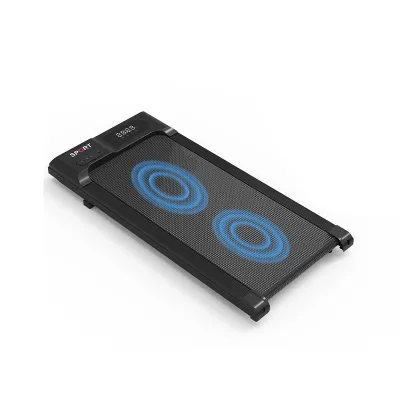
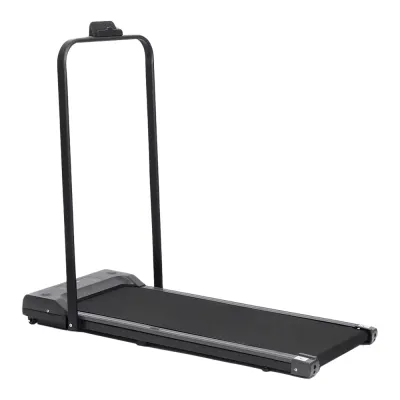

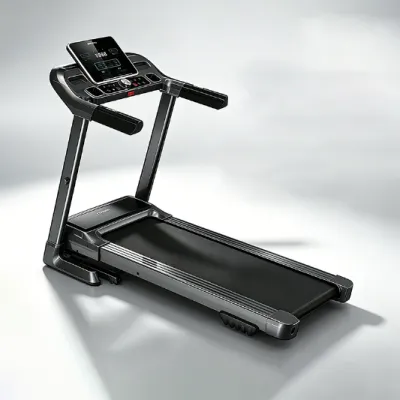

Prices are valid at publication and may change. Please refer to the product page for the latest price.
Fortunately, walking speeds—typically ranging from 1 km/h to 6 km/h—generate significantly less downward impact force than running. When running, a person’s entire body weight momentarily leaves the ground and lands with up to three times their body weight in force. Walking keeps at least one foot on the deck at all times, which drastically reduces the peak impact energy and makes structure-borne vibration much easier to manage.
Key Factors That Influence Disturbance Levels
Several variables determine whether your indoor walking sessions will go unnoticed or trigger a knock on your door.

User Variables Your body weight, stride mechanics, and walking pace play a major role in noise generation. A heavier user naturally exerts more downward force on the treadmill deck with each step. Additionally, a hurried, heavy-heeled walking style transfers more sudden impact energy into the floor than a smooth, rolling heel-to-toe stride. Brisk power walking at higher speeds also increases the frequency and intensity of these impacts.
Equipment Variables The design and condition of your walking treadmill are equally critical. Smaller, lower-quality motors often have to work harder, resulting in a louder, high-pitched operational whine. Loose belt tension can cause the belt to slip or squeak against the rollers, while dry, unlubricated decks increase friction, leading to a loud scraping sound and putting extra strain on the motor.
Environmental Variables The structural layout and finishes of your home dictate how sound behaves. Hard flooring surfaces common in Singapore, such as ceramic, homogenous, or porcelain tiles, offer zero acoustic dampening. They reflect airborne noise back into the room and transfer the impact energy directly into the concrete slab. Furthermore, placing your treadmill in a small room close to shared party walls, or directly above a neighbour’s bedroom, increases the likelihood that the transmitted vibrations will disrupt their sleep or quiet time.
Practical Mitigation Strategies for Considerate Use
Maintaining harmony in your HDB block does not mean you have to give up your daily steps. Implementing a few practical, low-risk adjustments can dramatically lower the acoustic footprint of your machine.
Decouple the Machine from the Floor The single most effective step you can take is to decouple the treadmill from the concrete floor slab. Placing a high-density rubber mat or specialized anti-vibration pads under the treadmill’s contact points absorbs the kinetic energy of your footsteps before it can enter the building’s structure. Look for mats specifically rated for heavy exercise equipment, as thin yoga mats will quickly compress under the weight and fail to dampen low-frequency vibrations.
Schedule Workouts Wisely Even a quiet treadmill can feel loud during the dead of night when ambient neighborhood noise drops. Establish considerate workout hours, strictly avoiding early mornings before 8:00 AM and late nights after 10:00 PM. Walking during the late morning, afternoon, or early evening ensures that any minor residual noise is masked by daily household activities and traffic.
Perform Regular Maintenance A well-maintained treadmill is a quiet treadmill. Periodically check the alignment of the walking belt to ensure it is not rubbing against the side rails. Tighten any loose frame screws or bolts that could cause rattling, and apply 100% silicone treadmill lubricant under the belt according to the manufacturer’s instructions to keep friction noise to a minimum.
Optimize Treadmill Placement If your home layout permits, position the treadmill along a load-bearing wall or directly over structural beams rather than in the middle of a room. The floor slab is stiffest and least prone to flexing near these structural supports, which significantly reduces the trampoline effect that amplifies low-frequency vibrations.
What to Look for in an Apartment-Friendly Walking Treadmill
If you are shopping for a new walking treadmill, selecting a model designed with noise reduction in mind will save you significant effort later.
Motor Type and Noise Ratings Look for models equipped with brushless DC motors. Brushless motors operate with less friction, making them inherently quieter and more durable than traditional brushed motors. While you should treat manufacturer decibel claims with caution—as they are measured in optimized, soundproof testing environments—they can still serve as a useful relative point of comparison.
Shock-Absorption Systems Prioritize treadmills that feature built-in deck cushioning, rubber dampers, or multi-layered, flexible walking belts. These integrated systems are designed to compress slightly under your feet, absorbing a portion of the impact energy before it ever reaches the frame or the floor.
Frame Stability and Weight Capacity A flimsy, lightweight frame is highly prone to lateral shaking, swaying, and rattling. Choose a machine with a sturdy steel frame and a maximum weight capacity that comfortably exceeds your actual body weight. A wider, longer walking belt also provides a more stable platform, reducing the need to constantly adjust your stride to avoid stepping on the side rails.
Frequently Asked Questions (FAQ)
Can I use a walking treadmill on an upper floor without a mat?
Operating a walking treadmill directly on a hard floor without a protective mat is highly discouraged. Without a dampening layer, the raw impact of your footsteps will transfer directly into the concrete slab, almost certainly causing noticeable thudding in the unit below. Additionally, the vibration and slight shifting of the machine can scratch, scuff, or indent ceramic tiles, vinyl, or laminate flooring, and many manufacturers require the use of an equipment mat to keep the product warranty valid.
Do under-desk treadmills make more noise than standard walking pads?
Not by design, but their overall noise level depends heavily on how they are integrated into your workspace. Under-desk treadmills often feature compact motors that may run at higher RPMs, producing a slightly higher-pitched hum than larger standalone walking pads. Furthermore, if the treadmill frame accidentally comes into direct contact with your standing desk legs, the motor’s vibrations can transfer to the desk, causing loose items, monitors, or the desk frame itself to rattle and amplify the sound. Checking specific model dimensions and user reviews regarding motor noise is essential before purchasing.
Community discussion
Share your experience or ask a question. Comments are reviewed before publication.