
Quick Answer: Which Wilson Grip Should You Choose?
Choosing between the Wilson Pro Overgrip and the Wilson Super Grip depends primarily on your sweat levels, your preference for handle feedback, and how frequently you are willing to change your grip. Both of these products are thin overgrips designed to be wrapped over an existing base grip, rather than serving as thick replacement grips themselves.
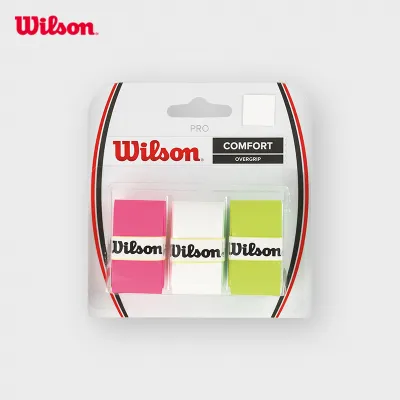
You should choose the Wilson Pro Overgrip if you want a classic, polyurethane-based wrap that offers a balanced, velvety tackiness with moderate cushioning. It is the preferred choice for players who want a reliable, slightly thicker feel that helps prevent blisters during long matches.
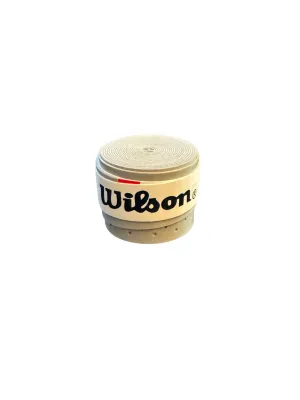
You should choose the Wilson Super Grip if you prioritize a thinner profile that maximizes your feel of the racket handle’s bevels. This grip is ideal for players who make rapid grip transitions and prefer a highly direct, tactile connection to the frame, often at a more budget-friendly price point.
Products mentioned in this guide
![Wilson Pro Overgrip Perforated [Suitable for tennis badminton pickleball padel]](https://img.lazcdn.com/g/p/948efaeebcfcd9666ff027b8536e59b9.jpg_400x400q80.jpg_.webp)
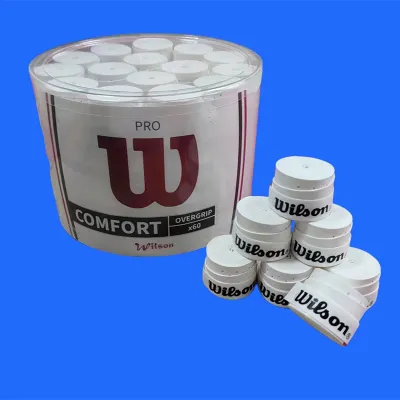
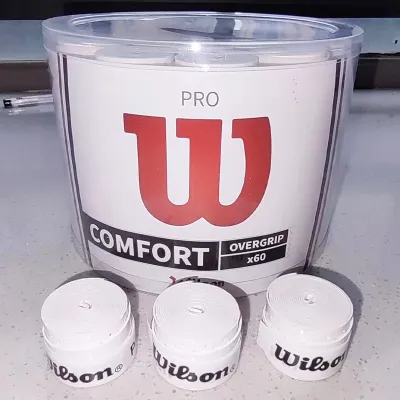
Prices are valid at publication and may change. Please refer to the product page for the latest price.
Material, Thickness, and Comfort Breakdown
To understand how these two overgrips perform on the court, you must first look at their physical construction and how they alter the dimensions of your racket handle. Most modern overgrips utilize a polyurethane (PU) top layer bonded to a non-woven microfiber or elastomer base. This chemical composition determines how the grip feels when you first wrap it and how much vibration is transmitted to your hand.

The Wilson Pro Overgrip is manufactured with a high-quality polyurethane blend designed to offer a soft, supple feel. It features a standard manufacturer-specified thickness of approximately 0.55 mm. While this may sound incredibly thin, wrapping it around your handle with a standard overlap will increase your overall grip size by about half a size (roughly 1.1 mm in diameter). This extra layer provides a noticeable dampening effect, absorbing high-frequency vibrations from off-center hits and reducing muscle fatigue in your forearm.
In contrast, the Wilson Super Grip is designed with a focus on a thinner, highly elastic polyurethane formulation. While you should always verify the exact package specifications before purchasing, this model typically sits at a slightly lower thickness profile. The reduction in material thickness means less cushioning, but it prevents the racket handle from feeling bulky or rounded off. For players who use precise bevel alignment to transition between an eastern backhand and a semi-western forehand, this thinner profile keeps the bevels sharp and distinct.
Out of the package, the Pro Overgrip delivers an immediate, velvety tackiness that feels secure without sticking aggressively to your skin. The Super Grip offers a more immediate, rubbery stretch during installation, resulting in a firm, snug fit around the handle. If you prefer a plush, comfortable feel that cushions the hand, the Pro Overgrip has a clear advantage; if you prefer a streamlined, raw handle feel, the Super Grip is the better starting point.
On-Court Performance: Tackiness, Absorption, and Durability
Once you step onto the court, environmental factors and physical exertion will test the limits of your overgrip. A grip that feels excellent in an air-conditioned shop can perform quite differently during an intense third set.
Tackiness and Dry Feel
The initial tackiness of the Wilson Pro Overgrip is highly adhesive, giving you the confidence that the racket will not slip out of your hand during high-speed serves. As you play, this intense tackiness gradually transitions into a smooth, high-friction matte feel. It does not become slick immediately; instead, it relies on the natural friction of the polyurethane surface to maintain security.
The Wilson Super Grip maintains a more consistent, rubbery tack throughout its initial hours of play. It relies less on a chemical adhesive feel and more on the physical grip of the elastomer material. Over time, however, both grips will collect dust, skin cells, and lint from tennis balls, which gradually degrades their surface friction and requires replacement.
Sweat Absorption in Humid Conditions
Singapore’s tropical climate presents a severe challenge for tennis overgrips, with relative humidity levels frequently exceeding 80% and temperatures hovering around 31°C. Under these conditions, sweat does not evaporate off your skin or the grip; instead, it pools on the handle surface.
The Wilson Pro Overgrip features micro-pores that help channel moisture away from the surface layer into the inner microfiber core. However, because it is a smooth, non-perforated grip, it can reach a saturation point during heavy perspiration, causing it to feel somewhat slippery. To combat this, many local players pair the Pro Overgrip with wristbands to stop sweat from traveling down the arm.
The Wilson Super Grip, being thinner, has less internal material volume to store moisture. If you are a heavy sweater playing in high humidity, you may find that this grip reaches its saturation point more quickly than the Pro Overgrip. When saturated, a thin grip can lose its traction rapidly, making it essential to dry the handle between games or swap rackets entirely.
Durability and Wear Indicators
Durability is not just about how long a grip lasts before it tears, but how long it maintains its playability. The polyurethane layer on any overgrip will eventually degrade under the friction of your hand.
The Wilson Pro Overgrip tends to show wear through gradual peeling. You will first notice the smooth top layer beginning to wear away, particularly around the bevels where your palm rubs hardest, exposing the grey or white microfiber base beneath. Once this base is exposed, the grip loses its tackiness and begins to absorb dirt rapidly.
The Wilson Super Grip, due to its thinner profile, is more susceptible to physical tearing and fraying along the edges of the wrap. If you wrap the grip with high tension, the material is under constant stress, and the friction of frequent grip changes can cause the edges to roll up or split. Observable indicators that you need a replacement include visible dirt buildup, a slick surface that requires excessive hand pressure to hold, or physical separation of the wrap layers.
Price and Value Comparison in Singapore
When evaluating the cost-effectiveness of these grips, you must consider both the initial purchase price and the frequency of replacement. In Singapore, tennis gear is widely available through local pro shops, specialty tennis retailers, and authorized sporting goods stores.
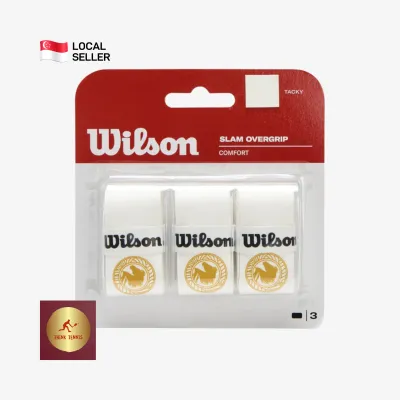
Typically, a standard 3-pack of Wilson Pro Overgrip retails for approximately S$12.00 to S$15.00. For frequent players, purchasing in bulk is highly recommended; a 12-pack or a 30-pack can bring the cost per individual grip down significantly, often saving you up to 30% per wrap. The Wilson Super Grip is frequently packaged in value multi-packs, making its cost per individual unit slightly lower than the premium Pro Overgrip.
To calculate the true cost per playing session, you can use a simple framework:
- Cost per Grip: Divide the total pack price by the number of grips included.
- Lifespan: Estimate the number of hours or sessions you play before the grip loses its secure feel (typically 4 to 8 hours of play in humid conditions).
- Cost per Session: Divide the cost per grip by the average number of sessions it lasts.
For example, if a single Pro Overgrip costs S$4.00 and lasts for 3 sessions, your cost is roughly S$1.33 per session. If a Super Grip costs S$3.00 but needs replacement after 2 sessions due to sweat saturation in local humidity, the cost is S$1.50 per session. We advise verifying current retail pricing and pack options at your local tennis pro shops or authorized distributors to find the best current value.
Decision Framework: Match Your Grip to Your Playstyle
To help you make the right choice for your next training session or tournament, use this structured decision framework to align your grip selection with your specific playing style and physical needs.
Choose Wilson Pro Overgrip if:
- You want balanced comfort: The 0.55 mm thickness provides a cushioned barrier that helps prevent painful friction blisters during long matches.
- You play long sessions in high humidity: The slightly thicker microfiber core offers better overall moisture storage capacity compared to ultra-thin alternatives.
- You want a soft, velvety feel: The initial dry-tack feel is comfortable and secure without feeling overly rubbery.
Choose Wilson Super Grip if:
- You prefer maximum handle feedback: The thinner profile ensures you can feel every edge of the racket handle bevels clearly, which is critical for precise grip adjustments.
- You prefer a highly direct, responsive contact: You want to minimize the dampening effect and feel the ball impact directly through the frame.
- You are on a budget: You want a reliable, tacky overgrip packaged in cost-effective multi-packs for frequent replacements.
Verify First if:
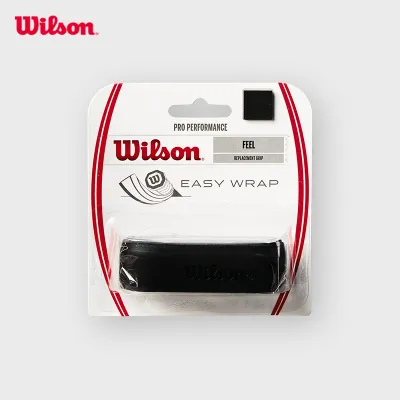
- You actually need a replacement base grip: If the wooden or composite pallet of your racket handle is visible, or if the original factory grip is completely compressed and disintegrating, you must purchase a thick replacement base grip first, then wrap your overgrip on top of it.
- Your racket handle size is already too large: If your racket handle feels slightly too big for your hand, wrapping a thicker overgrip like the Pro Overgrip will compound the issue. Opt for the thinner Super Grip to keep the handle size as close to original as possible.
| Feature / Dimension | Wilson Pro Overgrip | Wilson Super Grip |
|---|---|---|
| Typical Thickness | 0.55 mm (Verify on packaging) | Thinner profile (Verify on packaging) |
| Surface Texture | Smooth, velvety dry-tack | Elastic, rubbery tack |
| Vibration Dampening | Moderate (Good arm comfort) | Minimal (High feedback) |
| Moisture Absorption | Moderate capacity (Micro-pores) | Lower capacity (Thinner material) |
| Best Player Profile | Players seeking comfort & cushion | Players seeking precise bevel feel |
Installation and Maintenance for Maximum Lifespan
Proper installation and storage are critical to getting the most value out of your tennis overgrip, especially in warm, humid environments.
When wrapping your overgrip, start from the butt cap of the racket. Maintain consistent, firm tension as you wrap upward, overlapping the layers by approximately 2 mm to 3 mm (about 1/8 inch). Overlapping too much will make the handle excessively thick and uneven, while overlapping too little can cause the grip to slide apart during play, exposing the base grip beneath. Secure the top of the grip firmly with the provided adhesive finishing tape.
Always store your spare overgrips in a cool, dry place away from direct sunlight. Leaving your tennis bag in the trunk of a car or exposing unused grips to Singapore’s high humidity will cause the polyurethane material to degrade, dry out, or become brittle before you even apply them to your racket.
Finally, monitor the condition of your grip to protect your physical health. Playing with a worn-out, slippery overgrip forces you to squeeze the handle much harder to keep the racket from twisting on impact. This constant muscle tension increases the strain on your forearm tendons, significantly raising the risk of developing lateral epicondylitis, commonly known as tennis elbow. Replacing your grip regularly is a cheap and highly effective way to maintain proper, relaxed stroke mechanics.
Frequently Asked Questions (FAQ)
How often should I replace my tennis overgrip?
There is no fixed timeframe for replacing an overgrip, as it depends on how often you play, how much your hands sweat, and the local humidity. Instead of counting weeks, look for clear physical and tactile indicators. You should replace your overgrip immediately if you notice visible tearing or fraying along the bevels, a slick or slimy feel when your hand is sweaty, dark dirt discoloration, or if you find yourself squeezing the handle harder than usual to maintain control.
What is the difference between an overgrip and a replacement base grip?
An overgrip is a thin, inexpensive layer (typically 0.5 mm to 0.6 mm thick) designed to be wrapped over an existing grip to manage sweat and provide tackiness. It is meant to be replaced frequently. A replacement base grip is a much thicker, cushioned foundational layer (typically 1.5 mm to 2.0 mm thick) that is applied directly to the racket’s handle pallet. Always check the product packaging before purchasing to ensure you do not accidentally buy a replacement base grip when you only need a thin overgrip.
Community discussion
Share your experience or ask a question. Comments are reviewed before publication.