
Selecting the ideal Wilson basketball size 5 for play in Singapore requires looking closely at where the game takes place. If you are training in air-conditioned indoor halls or school sports complexes, your equipment needs will differ dramatically from someone playing on neighborhood outdoor concrete courts. Choosing the wrong ball can ruin its grip within a few sessions, turning a premium piece of equipment into a slippery, unusable sphere.
To make the right choice, you must match the ball’s outer cover material to the specific friction and debris levels of your playing environment. For indoor wooden courts, a premium composite leather or genuine leather Wilson size 5 ball delivers the soft feel and moisture control needed for optimal handling. For the abrasive concrete or asphalt surfaces typical of Singapore’s outdoor community courts, a rugged rubber or heavy-duty outdoor composite ball is essential to withstand friction and maintain grip.
Why the Court Surface Changes Everything
The physical interaction between a basketball and the playing surface dictates how the ball bounces, how much grip it retains, and how long it lasts. Indoor wooden floors, such as those found in ActiveSG sports halls or private clubhouses, are designed to be smooth, clean, and slightly forgiving. Because these polished surfaces offer consistent, uniform friction, they allow manufacturers to design indoor basketballs with softer, highly tactile outer covers that prioritize player control over raw durability.
Products mentioned in this guide
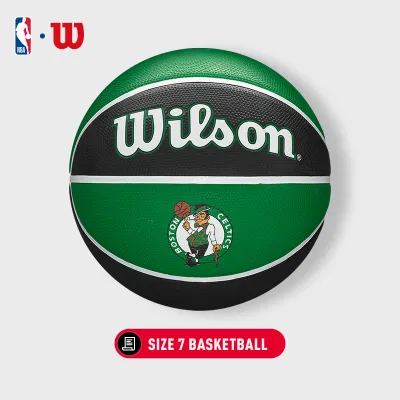
Prices are valid at publication and may change. Please refer to the product page for the latest price.
In stark contrast, outdoor courts in Singapore—whether they are concrete neighborhood courts or asphalt school yards—are highly abrasive and unforgiving. The rough texture acts like sandpaper against the ball, scraping away soft materials with every bounce, pass, and shot. Additionally, outdoor environments are exposed to wind, dust, fine grit, and moisture, all of which settle on the court surface and transfer directly to the ball during play.
When dust and debris coat a basketball, they fill the tiny microscopic crevices of the outer cover, dramatically reducing the friction between your hands and the ball. Moisture from Singapore’s high humidity or sudden tropical downpours further compounds this issue, making smooth surfaces incredibly slick. Using a basketball designed for clean indoor wood on a dusty outdoor concrete court leads to rapid degradation; the soft cover will scuff, peel, and lose its grip within days, resulting in wasted money and poor performance.
Indoor Halls: Prioritizing Grip and Feel on Wood
When playing inside Singapore’s indoor halls, the primary performance goals are maximum grip, consistent bounce, and superior hand feel. To achieve this, Wilson utilizes premium composite leather or genuine leather for its top-tier indoor size 5 basketballs. These materials are engineered to mimic the natural texture of leather while offering advanced moisture-wicking properties that help manage player sweat during intense sessions.

The cover of a high-quality indoor ball features a soft, cushioned feel that allows for deep finger indentation, giving young players better control when dribbling and shooting. This tactile feedback is crucial for players using a size 5 ball, as they are typically still developing their hand strength and shooting mechanics. The moisture-wicking technology in composite covers actively absorbs sweat from the players’ hands, ensuring the ball remains dry and tacky even in humid indoor environments without air conditioning.
Another key design feature of indoor basketballs is the channel system. Indoor balls typically feature deep, narrow channel grooves that run across the surface. On a clean wooden floor, these narrow channels allow players to find consistent finger alignment quickly, enhancing rotational control and shooting accuracy. When shopping, always check the product specifications, labels, and packaging for an explicit “Indoor” designation to ensure you are getting a ball optimized for these conditions.
However, it is vital to keep these premium indoor balls strictly off outdoor surfaces. The soft composite leather and delicate cushioning that make them feel so exceptional on wood are highly susceptible to damage on concrete or asphalt. Taking a pure indoor leather or soft composite ball outdoors will cause the outer layer to scuff, tear, and peel away rapidly, permanently destroying the ball’s grip and aerodynamic balance.
Outdoor Courts: Demanding Durability on Concrete
Outdoor basketball courts demand a completely different set of engineering priorities, focusing heavily on abrasion resistance, debris management, and structural durability. For these rugged concrete or asphalt surfaces, Wilson designs size 5 basketballs using highly durable cover materials, primarily premium rubber or rugged, deeply pebbled outdoor composite leather. These materials are specifically formulated to withstand the constant grinding action of rough concrete without wearing down or tearing.
Rubber basketballs are the traditional choice for outdoor play because they are incredibly tough, highly resistant to punctures, and cost-effective. Modern outdoor composite balls offer a middle ground, providing a slightly softer feel than pure rubber while still maintaining the necessary resilience to survive abrasive courts. The pebbled texture on these outdoor covers is often more pronounced and aggressive, ensuring that players can still maintain a secure grip even when the ball becomes dusty or dirty.
To combat the inevitable accumulation of dust, dirt, and grit on outdoor courts, outdoor-specific basketballs often feature wider and deeper channel grooves than their indoor counterparts. These wider channels act as escape pathways for dust and debris, preventing dirt from building up on the contact points and allowing the player’s fingers to make direct contact with the ball’s surface. This design ensures consistent handling and control, even on neglected or wind-swept neighborhood courts.
When selecting an outdoor ball, look for “Outdoor” or “All-Surface” ratings in the manufacturer’s product specifications. Additionally, pay close attention to the ball’s internal carcass and bladder construction. Quality outdoor balls often utilize a reinforced butyl bladder wrapped in nylon or polyester windings, which provides excellent air retention and structural integrity. This heavy-duty internal construction ensures the ball maintains its round shape and consistent bounce despite hard impacts against concrete backboards and metal rims.
The "Indoor/Outdoor" Compromise: Do You Need Two Balls?
For many players and parents in Singapore, buying separate basketballs for indoor and outdoor use may not fit their budget or storage space. This is where “Indoor/Outdoor” (I/O) crossover composite basketballs come into play. These versatile balls are engineered as a compromise, attempting to blend the soft feel of an indoor ball with the rugged durability required for outdoor environments.
The cover material of an Indoor/Outdoor basketball is typically a specialized composite leather that is tougher than pure indoor composite but softer than standard outdoor rubber. While they offer a highly functional middle ground, it is important to understand the inherent trade-offs. An I/O ball will feel noticeably firmer and slightly less tacky on an indoor wooden floor than a premium, dedicated indoor ball. Conversely, when used outdoors, it will wear down faster than a pure rubber ball, though it will last significantly longer than an indoor-only model.
To decide whether you should invest in one crossover ball or two specialized balls, evaluate your typical playing habits:
- Predominantly Indoor (80% or more): If you play almost exclusively in indoor halls and only occasionally step onto an outdoor court, buy a dedicated indoor composite ball to maximize your performance and skill development.
- Predominantly Outdoor (80% or more): If your games are mostly on concrete neighborhood courts, opt for a durable outdoor rubber or rugged outdoor composite ball to ensure longevity.
- Evenly Split or Budget-Conscious: If you split your time evenly between indoor CC halls and outdoor courts, or if you want a single, cost-effective option, a high-quality Wilson Indoor/Outdoor composite ball is the most practical choice. Keep in mind that no single ball can perfectly maximize both indoor tactile feel and outdoor lifespan simultaneously.
Maintaining Your Ball in Singapore's Tropical Climate
Singapore’s tropical climate—characterized by high relative humidity, high temperatures, and sudden rain showers—presents unique challenges for basketball maintenance. Excessive moisture can cause composite and genuine leather covers to degrade, lose their tackiness, or even warp over time. On the other hand, intense heat can expand the air inside the ball, putting unnecessary stress on the internal bladder and seams.
To extend the lifespan of your Wilson size 5 basketball, establish a simple post-game cleaning routine. After playing, especially on humid days or outdoor courts, wipe the ball down thoroughly with a clean, dry microfiber cloth to remove sweat, dirt, and moisture. Allow the ball to air dry naturally in a well-ventilated indoor space, keeping it away from direct sunlight, heaters, or damp bags.
Never leave your basketball inside a hot car trunk or exposed to direct sunlight on a balcony for extended periods. The extreme heat buildup can weaken the adhesives holding the cover panels together, warp the internal carcass, and damage the butyl bladder, leading to unsightly lumps or a permanently distorted bounce.
Lastly, monitor and adjust the ball’s air pressure regularly. Temperature fluctuations between air-conditioned indoor sports halls and hot outdoor environments naturally cause the air inside the bladder to contract and expand. Use a reliable pressure gauge and hand pump to maintain the manufacturer’s recommended inflation pressure (usually printed near the inflation valve), ensuring a consistent bounce and preventing over-inflation that could stretch the seams.
Frequently Asked Questions (FAQ)
What age group is a size 5 basketball designed for?
A size 5 basketball, which typically measures 27.5 inches (approximately 70 centimeters) in circumference, is the standard youth size designed for boys and girls aged 9 to 11. Using this size helps young players develop proper shooting mechanics, passing accuracy, and ball-handling skills without straining their muscles or joints with a heavier, adult-sized ball.
How do I know if my basketball is losing its grip?
You can identify a worn-out basketball through both visual and tactile checks. Look for a pebbled texture that has become smooth, shiny, or bald, particularly on the areas that make frequent contact with your hands. If the black channel grooves have become shallow or flush with the cover, or if the ball consistently slips from your hands during basic dribbling drills, it is time to replace it.
Can I wash my basketball with soap and water?
You should never submerge a basketball in water or use harsh chemical cleaners, as this can ruin the cover adhesives and damage the internal bladder. For stubborn dirt, wipe the surface with a lightly damp microfiber cloth and a drop of mild dish soap, then immediately dry it thoroughly with a clean towel. Always check the manufacturer’s care label and instructions before cleaning.
Community discussion
Share your experience or ask a question. Comments are reviewed before publication.