
Quick Answer: Which World Cup Size 1 Ball is Right for You?
A World Cup size 1 ball, commonly referred to as a mini ball or skills ball, measures approximately 15 to 17 inches (38 to 43 cm) in circumference. This is roughly the size of a large grapefruit. Despite its small stature, this category of football serves three distinct and highly practical purposes: introducing toddlers under the age of three to the basic mechanics of kicking, helping older players and adults refine their close-control footwork and juggling skills, and serving as a compact, collectible piece of tournament history.
To choose the right option, you must first define your primary use case. If you are a collector looking for authentic tournament memorabilia or an advanced freestyler who requires a true, consistent bounce, you should invest in an official licensed match-grade mini ball. If you are looking for a durable, budget-friendly ball for a toddler to kick around the house, or a reliable tool for casual outdoor skills practice, an official replica is the most practical choice. You should generally avoid unlicensed generic options, as they lack predictable performance characteristics and do not guarantee the material safety standards required for toys and sports equipment.
Official Licensed vs. Replica: Quality and Construction Differences
Understanding the terminology used by manufacturers is essential before making a purchase. An “Official Licensed” premium mini ball is designed to mimic the exact visual design and high-end technology of the match balls used by professionals on the pitch. These balls feature premium materials, highly accurate tournament graphics, and advanced assembly methods. “Official Replicas” are also licensed by the tournament organizers but are built with simplified materials and construction methods to keep costs down. “Unlicensed” or generic mini balls are produced by third-party manufacturers without any official association with the tournament, often using cheap materials and omitting official logos entirely.
Products mentioned in this guide
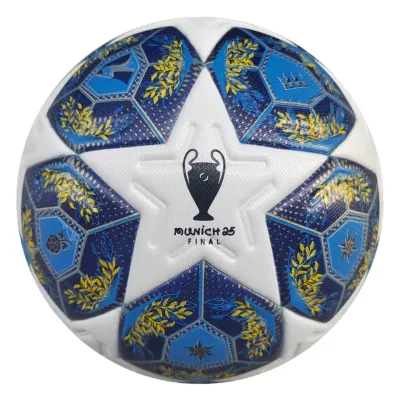
Prices are valid at publication and may change. Please refer to the product page for the latest price.

The assembly of the outer panels plays a critical role in how the ball performs and how long it lasts. Premium official licensed mini balls frequently utilize thermal bonding. This process uses heat and pressure to fuse the synthetic panels together on a mold, creating a seamless surface. Thermally bonded balls are highly water-resistant, maintain their roundness over time, and provide a highly consistent bounce. In contrast, official replicas are typically machine-stitched or glued. Machine stitching leaves visible seams and tiny gaps between the panels. While machine-stitched balls are highly durable and can withstand rough play, they can absorb water if the outer protective coating wears off, which increases the weight of the ball and degrades its performance.
The bladder inside the ball dictates how well it retains air and how responsive it feels when kicked. Most official replica mini balls use a butyl bladder. Butyl is a synthetic rubber copolymer that is highly impermeable to gas, meaning it can retain air for weeks or even months without needing to be pumped up. This makes it incredibly low-maintenance for casual users and parents. On the other hand, high-end official licensed mini balls sometimes feature latex or premium synthetic bladders. Latex is highly elastic and provides a much softer touch and a more responsive, lively bounce. However, latex is naturally porous and slowly leaks air, requiring you to inflate the ball almost every time you want to use it.
The outer casing’s surface texture is another major point of differentiation. Premium official versions often feature a micro-textured casing, which mimics the aerodynamic dimples or ridges found on full-sized match balls. This texture provides excellent grip, allowing freestylers and players to perform precise close-control drills even when their shoes or the ball are slightly damp. Replicas and unlicensed options usually feature a completely smooth, glossy plastic finish. While this smooth surface is easy to wipe clean, it can become incredibly slippery when wet, making advanced footwork and juggling practice significantly more challenging.
Price and Value Assessment in Singapore
When shopping for a World Cup size 1 ball in Singapore, you will find that prices generally fall into three distinct tiers. Premium official licensed mini balls, which feature the highest-grade materials and thermal bonding, typically retail between S$25 and S$45. Official replica mini balls, which offer a balance of official branding and durable machine-stitched construction, generally cost between S$15 and S$25. Unlicensed or generic mini balls sit at the bottom of the market, often priced under S$10.
Determining whether the premium price tag is justified depends entirely on how you plan to use the ball. If you are purchasing the ball as a collectible to display on a shelf, or if you are a serious football player using it for daily, high-repetition freestyle training, the S$25 to S$45 investment for an official licensed version is highly justified. The superior graphics, seamless construction, and balanced weight distribution of these premium models ensure they hold their visual appeal and performance over time. However, if the ball is intended for a toddler who is likely to kick it against concrete walls, drop it in puddles, or leave it in the backyard, a mid-tier official replica priced around S$15 to S$20 offers far better value for money. The replica will survive rough treatment just as well as, if not better than, the premium version, and you will not have to worry about scuffing an expensive collectible.
To ensure you are getting genuine quality, you must be careful about where you shop in Singapore. Counterfeit sports gear is common on unverified online marketplaces. To avoid buying a cheap imitation disguised as an official product, always purchase from authorized sports retailers, official brand flagship stores (such as Adidas or Nike outlets), or verified mall sellers on major e-commerce platforms. Genuine products will always feature official packaging, crisp printing, and licensing holograms that cheap counterfeits fail to replicate.
Decision Framework: Choosing Based on Purpose and Budget
To make the final decision easier, you can align your specific needs with the characteristics of each ball tier. This framework helps you identify the exact match for your lifestyle, age group, and budget.
Choose Official Licensed (Match/Pro Mini) if:
- You are a collector: You want an authentic piece of World Cup history to display in your home or office, complete with the exact graphic design used in the tournament.
- You are an advanced player or freestyler: You require a mini ball with a perfectly true bounce, balanced weight distribution, and a textured casing for high-level juggling and coordination drills.
- You are buying a premium gift: You want to present a high-quality, beautifully finished item to a passionate football fan.
Choose Official Replica (Training Mini) if:
- You are buying for a toddler: You want a safe, soft, and durable ball for a child under three to practice their very first kicks indoors or outdoors.
- You want a daily training tool: You need a cost-effective skills ball that can take heavy abuse on synthetic turf or grass without showing immediate wear.
- You want a budget-friendly souvenir: You love the World Cup aesthetic but prefer a practical, low-maintenance ball that does not require a premium budget.
Avoid Unlicensed/Generic if:
- You prioritize safety: Cheap, unlicensed balls often bypass strict material safety regulations and may contain harmful chemical plasticizers (such as phthalates) in their PVC casings.
- You want predictable performance: Generic balls are frequently poorly balanced, resulting in erratic flight paths and uneven bounces during training.
- You value authenticity: You want to support official football development and tournament licensing rather than unauthorized manufacturers.
While size 1 balls are officially designated for children aged three and under in organized play, their utility extends far beyond this demographic. Older youth players and adult footballers actively use these mini balls as training aids. Because the target surface area is so small, practicing footwork, dribbling, and juggling with a size 1 ball forces your brain and muscles to develop extreme precision. When you transition back to a standard size 5 match ball, your touch and control will feel significantly sharper.
Care, Maintenance, and Safety Checks for Mini Balls
Proper care and maintenance will significantly extend the lifespan of your World Cup size 1 ball, regardless of whether you purchased a premium licensed model or a simple replica.
When inflating your mini ball, always use a standard inflation pump equipped with a low-pressure gauge. Before inserting the metal needle into the ball’s valve, moisten it with a drop of water or specialized valve oil. This lubrication prevents the needle from scratching or tearing the internal rubber valve, which is a common cause of slow air leaks. Because size 1 balls have a very small internal air volume, they require very little pressure to reach optimal inflation—typically between 3 and 5 PSI. Over-inflating a mini ball is incredibly easy to do and can quickly stretch the synthetic casing, split the stitched seams, or even rupture the internal bladder. Always check the manufacturer’s recommended pressure, which is usually printed directly around the inflation valve.
The surface you play on will dictate how quickly the ball wears down. Synthetic leather casings, whether PU or TPU, are designed for grass, artificial turf, or indoor flooring. Using your mini ball on rough concrete, asphalt, or gravel driveways will act like sandpaper, quickly scratching away the beautiful World Cup graphics and wearing down the protective outer layer. To preserve both the look and the structural integrity of your ball, restrict its use to soft surfaces or smooth indoor floors.
Singapore’s hot and highly humid climate presents unique challenges for sports equipment. High humidity can slowly degrade the adhesives used in thermally bonded or laminated balls, while extreme heat can cause the air inside the bladder to expand and warp the casing. To prevent this, never store your mini ball in direct sunlight, on outdoor balconies, or inside the trunk of a car parked in the sun. After use, wipe the ball down with a damp cloth to remove dirt and sweat, and store it in a cool, dry, and well-ventilated indoor space. Avoid using harsh chemical solvents or abrasive detergents, as these can strip away the protective UV coating and ruin the printed graphics.
If the ball is being used by a toddler, safety must always come first. Parents should establish a routine of checking the ball before every play session. Inspect machine-stitched replicas for any loose threads, peeling panels, or exposed bladder material. A loose thread can easily wrap around a child’s finger, and peeling plastic panels can present a scratching or choking hazard. If you notice any structural damage, split seams, or exposed internal materials, stop using the ball immediately and replace it to ensure your child’s safety.
Frequently Asked Questions (FAQ)
Can adults use a Size 1 World Cup ball for regular training?
Yes, adults and older youth players can benefit immensely from using a size 1 ball, but only for specific types of training. Because of its tiny size and lightweight construction, a mini ball is excellent for developing close-control footwork, rapid dribbling adjustments, and juggling skills. It forces you to hit the exact center of the ball to maintain control. However, size 1 balls are absolutely not suitable for passing drills, shooting practice, or match simulations. Attempting to strike a mini ball with full force can easily lead to ankle strain or joint discomfort, and the ball itself is not designed to withstand the high-impact forces of adult-strength kicks.
How do I verify if a World Cup mini ball is officially licensed?
To verify if a World Cup mini ball is genuine, look for several key indicators of authenticity. Official licensed products will always feature a high-quality holographic security sticker on the packaging or the ball itself, containing a unique serial number. The brand logos (such as Adidas, the traditional provider of World Cup match balls) and the official tournament emblems will be printed with absolute precision, showing no blurry edges, color bleeding, or spelling errors. Additionally, check the valve area; officially licensed balls typically have the recommended inflation pressure and manufacturer details clearly stamped around the valve. To guarantee authenticity, buy exclusively from established sports retailers or official brand stores.
Do Size 1 balls come pre-inflated when bought online?
Most size 1 balls purchased online are shipped deflated. Manufacturers and online retailers ship balls deflated to reduce the package volume, lower shipping costs, and prevent the balls from bursting due to air pressure changes during air transit. When you order a mini ball online, you should assume it will arrive flat. Make sure you have a standard ball pump, a compatible inflating needle, and a low-pressure gauge ready at home so you can safely inflate the ball to the correct pressure as soon as it arrives.
Community discussion
Share your experience or ask a question. Comments are reviewed before publication.