
Toning your stomach with a yoga ball—often called a stability or Swiss ball—relies on a simple physical principle: instability. Unlike traditional floor exercises that allow your body to rely on stable ground, a spherical surface forces your deep stabilizing muscles, particularly the transverse abdominis, to fire continuously just to keep you balanced. This constant micro-adjustment engages more muscle fibers throughout your midsection, helping you build a firmer, more functional core.
To achieve visible definition and a stronger midsection, you must combine targeted stability work with a structured approach to progression and overall body composition. Simply performing repetitions without proper alignment or control will not yield the desired results and can strain your lower back. By understanding how to leverage the ball’s unique shape, you can transform basic movements into highly effective core-toning exercises.
Setting Up for a Safe and Effective Yoga Ball Workout
Before performing any core movements, verifying that your equipment matches your physical dimensions is essential for safety and effectiveness. To check if a yoga ball is the correct size for your height, sit upright on the center of the inflated ball with your feet flat on the floor. Your knees should form a clean 90-degree angle, with your thighs parallel to the ground and your hips level with or slightly higher than your knees. If your knees point upward, the ball is too small; if your feet struggle to remain flat, the ball is too large.
Products mentioned in this guide
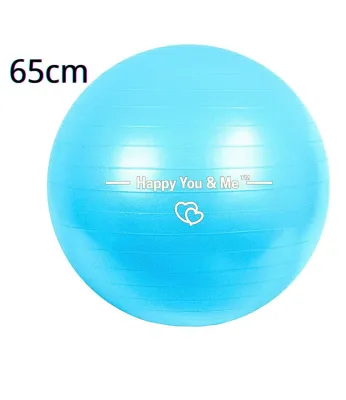


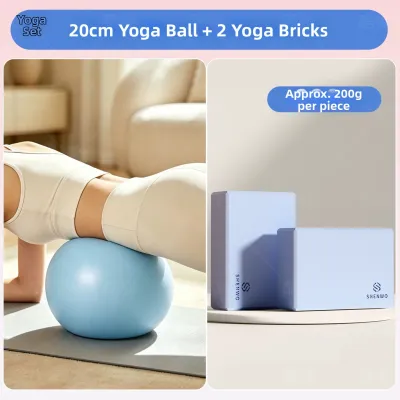
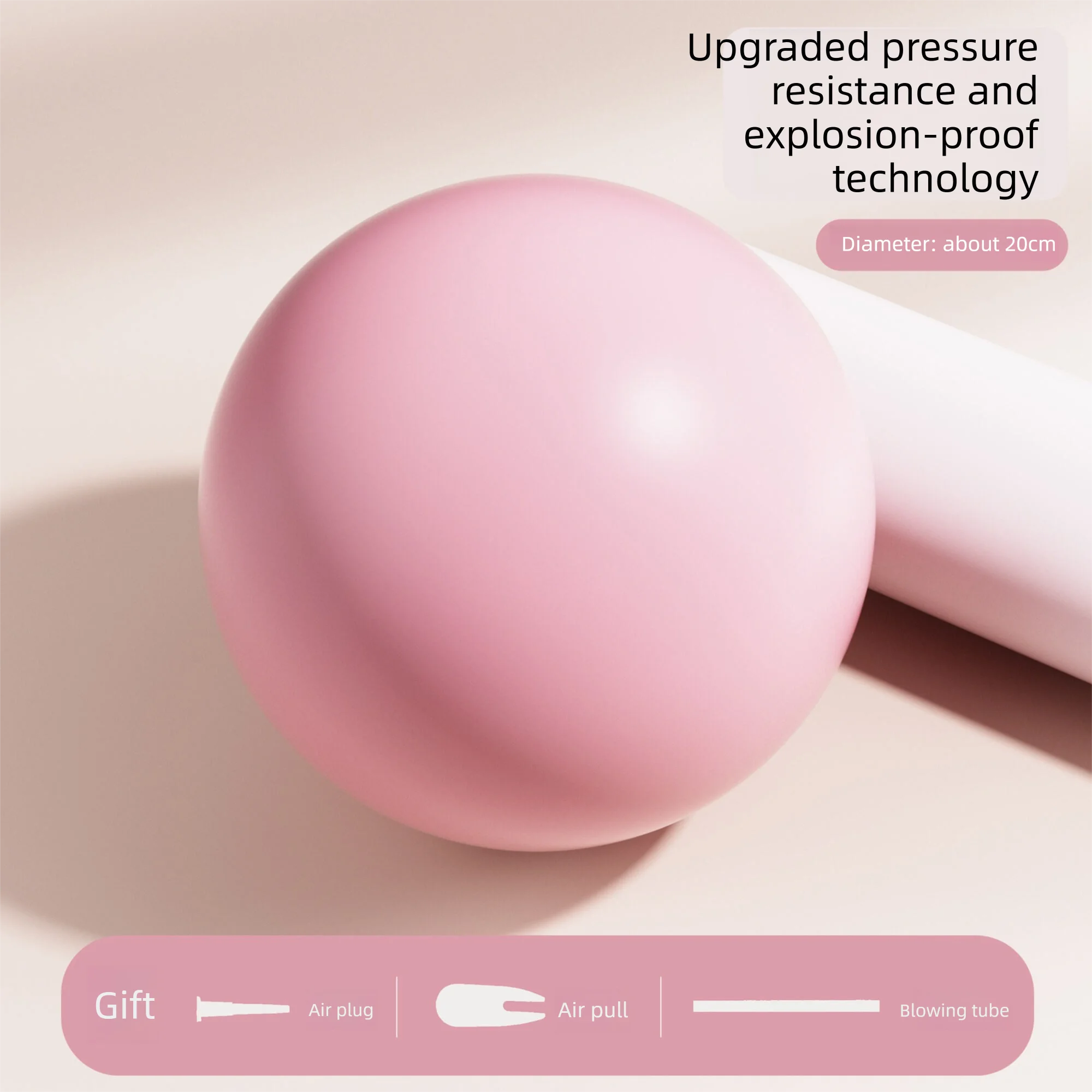



Prices are valid at publication and may change. Please refer to the product page for the latest price.
Preparing your exercise environment is the next critical step in preventing slips and sudden deflations. Always inspect the surface of the ball for any visible scuffs, deep creases, or embedded debris before applying your full body weight. Perform your workout on a clean, non-slip surface, such as a dedicated rubber exercise mat, rather than slick tile or polished wood floors. Ensure the surrounding area is completely clear of sharp objects, furniture corners, and loose items to allow for a safe range of motion.
A brief, targeted warm-up prepares your nervous system and stabilizing muscles for the unique demands of an unstable surface. Begin with gentle pelvic tilts while seated on the ball, slowly arching and rounding your lower back to mobilize the lumbar spine. Transition into small, controlled hip circles in both directions to activate the deep core and hip flexors. These dynamic movements increase local blood flow and establish the mind-muscle connection required to maintain balance during more challenging exercises.
Foundational Yoga Ball Moves to Activate Your Core
For those beginning their core-toning journey, foundational movements establish the necessary control and stability before moving to complex variations.

The classic ball crunch is highly effective because it allows your spine to extend over the natural curve of the ball, increasing the range of motion compared to a flat floor. Sit on the ball and slowly walk your feet forward until your lower back is fully supported by the curve, keeping your knees bent at 90 degrees. Place your hands lightly behind your head, ensuring you do not pull on your neck. Exhale as you contract your abdomen, lifting your shoulder blades off the ball while keeping your hips stable. Slowly lower your torso back over the curve under strict control, maintaining tension throughout the movement.
Planking on an unstable surface dramatically increases the demand on your shoulder stabilizers and deep abdominal wall. Kneel behind the ball and place your forearms on the top surface, clasping your hands together for stability. Step your feet back one at a time until your body forms a straight line from your head to your heels, balancing on your toes. Keep your elbows directly beneath your shoulders and actively push your forearms into the ball to avoid collapsing. Focus on pulling your belly button toward your spine and squeezing your glutes to prevent your hips from sagging.
The dead bug variation emphasizes coordination and deep transverse abdominis engagement while keeping your spine in a safe, supported position. Lie flat on your back on an exercise mat, holding the yoga ball securely between your knees and your hands, with your knees bent at a 90-degree angle. Press your lower back firmly into the mat, eliminating any space between your spine and the floor. Slowly extend your right arm overhead and your left leg straight out toward the floor, while simultaneously squeezing the ball with your left hand and right knee. Return to the starting position under control, then repeat the movement with your left arm and right knee, ensuring your lower back never arches off the mat.
Intermediate Ball Exercises for Deeper Core Challenges
Once you can perform foundational movements with perfect form, intermediate exercises introduce rotational challenges and greater leverage demands.
The ball pass requires excellent coordination and continuous tension across both the upper and lower abdominal regions. Lie flat on your back on your mat, holding the yoga ball securely between your hands with your arms extended overhead and your legs straight. Simultaneously lift your upper body and your legs toward the ceiling, keeping your lower back pressed into the floor as you meet in a “V” shape. Transfer the ball from your hands to your ankles, gripping it firmly between your feet, and slowly lower your limbs back toward the floor without letting them touch the ground. On the next repetition, lift back up to transfer the ball from your feet back to your hands.
The pike-up is an advanced movement that targets the lower stomach and hip flexors while demanding significant upper-body stability. Start in a high plank position with your hands flat on the floor directly under your shoulders, and the tops of your feet and shins resting on the center of the yoga ball. Engage your core and pull your hips upward toward the ceiling, rolling the ball forward toward your hands as your body hinges at the hips. Your head should align between your arms at the peak of the movement, with your toes supporting your weight on the ball. Slowly lower your hips back down to the starting plank position, ensuring you do not allow your lower back to sag past neutral.
Targeting the obliques on an unstable surface requires exceptional rotational control and balance. Sit upright on the ball with your feet flat on the floor, then slowly walk your feet forward while sliding your torso down until your upper back and shoulders are resting on the ball. Lift your hips so your body forms a bridge from your knees to your shoulders, and extend your arms straight up toward the ceiling, pressing your palms together. Slowly rotate your shoulders and arms to one side, keeping your hips level and facing upward, using your feet to stabilize your position. Return to the center with control before rotating to the opposite side, focusing on initiating the movement from your waist rather than swinging your arms.
Building a Sustainable Core Routine and Progressing Safely
Integrating these exercises into your weekly fitness routine requires a balanced approach that prioritizes recovery and quality of movement over sheer volume. Rather than training your stomach muscles daily, aim to perform a dedicated yoga ball routine two to three times per week. This frequency allows your muscle fibers adequate time to repair and rebuild, which is when actual toning and strengthening occur. You can easily perform these movements at the end of a full-body strength session or as a standalone core workout.
To continue seeing progress over time, focus on adjusting progression variables rather than simply adding more repetitions. You can increase the difficulty of any movement by slowing down the tempo, particularly during the eccentric or lowering phase, to maximize time under tension. Another effective strategy is to narrow your base of support; for example, bringing your feet closer together during a ball crunch or plank immediately increases the stability challenge. Always master these subtle adjustments before attempting more complex exercise variations.
Managing fatigue is crucial when working on an unstable surface to prevent injury and maintain proper alignment. Pay close attention to the physical signs that your stabilizing muscles are reaching their limit, such as uncontrollable shaking, a pulling sensation in your neck, or an arching lower back. When your form begins to degrade, stop the set immediately rather than forcing out extra, low-quality repetitions. Training to technical failure—where your form remains perfect but you cannot complete another rep—is far safer and more effective than training to absolute physical exhaustion.
Correcting Common Form Mistakes to Protect Your Lower Back
Executing yoga ball exercises with incorrect form not only reduces their effectiveness but also places unnecessary stress on your lumbar spine.
One of the most common errors is arching the lower back during planks, crunches, or leg raises. When your core muscles tire, your pelvis tends to tilt forward, shifting the workload from your stomach to your lower back muscles. To correct this, actively practice a slight posterior pelvic tilt by tucking your tailbone slightly and pulling your ribs down toward your hips. This adjustment flattens your lower back and ensures your abdominal muscles remain the primary drivers of the movement.
Rushing through the exercises is another mistake that diminishes your results. Using momentum to swing your body or bounce off the ball bypasses the deep stabilizing muscles you are trying to target. Focus on controlling both the lifting and lowering phases of every movement, aiming for a steady tempo of two seconds up and two seconds down. This deliberate control forces your muscles to work against gravity and the ball’s instability throughout the entire range of motion.
Finally, holding your breath during challenging movements can restrict oxygen flow and increase internal pressure unsafely. Many people instinctively hold their breath when trying to balance, which actually destabilizes the core. Practice exhaling deeply through your mouth during the hardest part of the exercise—such as the upward phase of a crunch or pike—and inhaling through your nose as you return to the starting position. This rhythmic breathing helps maintain proper intra-abdominal pressure and supports sustained muscle contraction.
Frequently Asked Questions (FAQ)
Can yoga ball exercises alone give you visible abs?
No, targeted yoga ball exercises alone cannot produce visible abdominal definition because spot reduction of body fat is physically impossible. While these movements are highly effective for strengthening, thickening, and stabilizing the underlying abdominal muscles, those muscles will remain hidden if covered by a layer of subcutaneous fat. To achieve a toned, visible midsection, you must combine your core training with a consistent caloric deficit, a balanced diet, and regular cardiovascular exercise to reduce overall body fat. The yoga ball serves to build the strong, defined muscular foundation that becomes visible as your body composition changes.
How often should you train your core with a yoga ball?
For optimal results, you should train your core with a yoga ball two to three times per week, allowing at least 48 hours of rest between intense sessions. Like any other muscle group, your abdominal muscles require adequate recovery time to repair, adapt, and grow stronger. Training them daily can lead to overtraining, chronic fatigue, and poor form, which increases your risk of lower back strain. Adjust your training frequency based on your overall workout volume, your individual recovery capacity, and whether you are experiencing delayed onset muscle soreness (DOMS).
Community discussion
Share your experience or ask a question. Comments are reviewed before publication.