
Selecting the ideal yoga mat thickness for kneeling requires balancing joint comfort with physical stability. While a standard 4mm to 5mm mat offers an optimal foundation for active flows and standing balances, practitioners with sensitive knees or those engaging in long Yin or meditation sessions often require a thicker 6mm mat or a dedicated kneeling pad. Finding the right setup is not about choosing the thickest mat available, but rather about balancing the need for joint protection with the stability required to maintain proper alignment and balance.
In Singapore, where home workout spaces often feature hard ceramic tiles, polished marble, or engineered wood floors, the impact on your knees during kneeling poses can be particularly intense. Unlike suspended timber floors found in some traditional studios, these rigid domestic surfaces do not absorb shock, meaning your joints bear the full force of your body weight. Choosing the correct mat thickness or incorporating a targeted kneeling pad can make the difference between a pain-free, restorative practice and one that causes chronic joint discomfort.
Understanding the Cushion vs. Stability Trade-Off
When you place your knees on a yoga mat, your body weight is concentrated over a relatively small surface area. This concentrated pressure causes compressible materials, such as low-density foam, to bottom out. Bottoming out means the material compresses completely under your weight, leaving your knees resting effectively against the hard floor beneath. Over time, this lack of cushioning can lead to discomfort or joint strain. Anatomically, the patella (kneecap), the prepatellar bursa, and the surrounding tendons are highly sensitive to direct pressure. Continuous compression on unyielding surfaces can lead to localized inflammation, such as bursitis, or aggravate existing joint issues.
Products mentioned in this guide
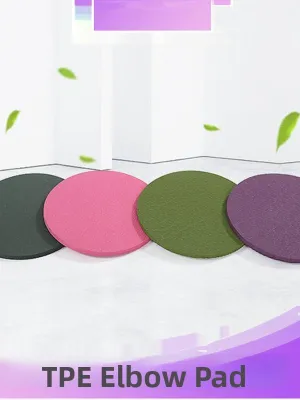
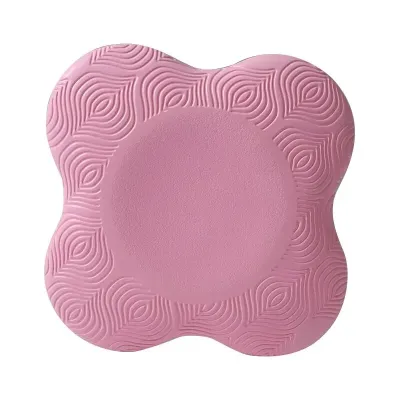
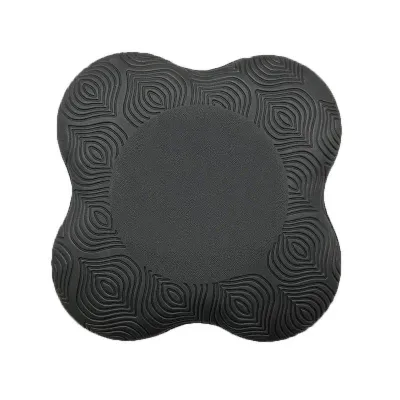
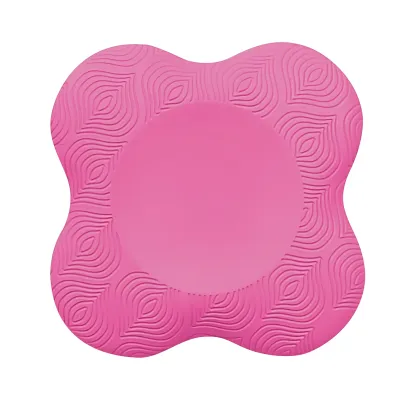
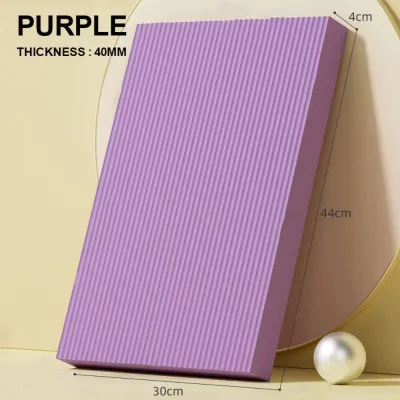
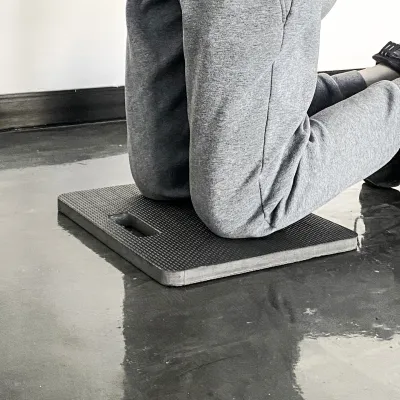
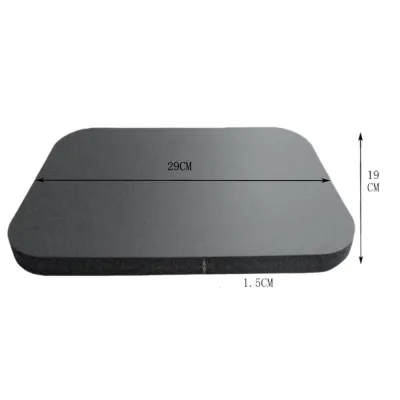
Prices are valid at publication and may change. Please refer to the product page for the latest price.
Conversely, excessive thickness introduces a different set of challenges. When a mat is too thick or overly soft, your hands and feet sink deeply into the material. This sinking reduces your proprioception—the body’s ability to sense its position and movement in space. In active kneeling poses like Camel Pose (Ustrasana) or Hero Pose (Virasana), a squishy, unstable surface can cause your ankles to roll outward or your hips to shift out of alignment. This misalignment forces your core and stabilizing muscles to work harder simply to keep you upright, detracting from the focus of the pose and potentially straining your lower back or knees.
The floor surface itself plays a critical role in how a mat performs. A thin mat that feels perfectly adequate on a carpeted floor or a professional sprung-wood studio floor may feel completely insufficient on a hard concrete or tile floor at home. Therefore, evaluating your practice environment is just as important as evaluating the mat itself. If your home practice space consists of hard, unyielding flooring, you must compensate with a higher-density mat or targeted padding to protect your joints.
Comparing Standard Yoga Mat Thicknesses for Kneeling
Evaluating how common yoga mat thickness categories perform specifically for kneeling, meditation, and transitional movements helps narrow down the most suitable option for your routine.

Thin to Standard Mats (3mm to 5mm)
Standard mats, typically ranging from 3mm to 5mm, are the industry benchmark for a reason. They provide a firm, reliable connection to the floor, which is essential for maintaining balance during standing poses and active transitions. In dynamic practices like Vinyasa or Ashtanga, where you quickly transition from standing to kneeling positions, a standard mat ensures your feet and hands do not slip or sink, allowing for precise alignment. Additionally, these mats are highly portable and easy to roll up, making them convenient for commuting to local studios via public transport.
However, these mats offer limited cushioning for prolonged static kneeling. If you are holding poses like Tabletop, Low Lunge (Anjaneyasana), or Gate Pose (Parighasana) for several minutes, a 3mm or 4mm mat may not provide enough protection, especially on hard floors. Practitioners with healthy, resilient joints or those practicing on carpeted surfaces may find this thickness sufficient, but those with sensitive knees will likely experience discomfort during extended floor work. To test if your standard mat is sufficient, observe whether you can feel the hardness of the floor pressing directly into your kneecap during a simple Tabletop pose; if so, your mat is bottoming out.
Thick Mats and Extra Cushioning (6mm and Above)
Thick mats, measuring 6mm or more, are designed to offer enhanced pressure distribution. By spreading your weight over a thicker layer of material, these mats reduce the concentrated pressure on your kneecaps and joints. This makes them highly suitable for restorative yoga, Yin yoga, and prolonged seated meditation, where poses are held for extended periods and active, standing balances are minimal. The extra thickness also provides excellent thermal insulation from cold tile floors, creating a more comfortable environment for relaxation.
The primary drawback of extra-thick mats is the loss of stability. In active flows, a thick, soft mat can cause wobbling and make it difficult to maintain balance. To mitigate this, it is crucial to consider the material density. A high-density PVC, natural rubber, or polyurethane mat can offer excellent cushioning at 5mm or 6mm without the squishiness of cheap, low-density TPE or NBR foam mats. When selecting a thick mat, check the product specifications to ensure it is made of a dense, supportive material that will not bottom out under concentrated knee pressure. Keep in mind that high-density thick mats can be significantly heavier, often weighing over 3kg, making them better suited for home use rather than travel.
When to Use a Dedicated Kneeling Pad
A dedicated kneeling pad is a specialized accessory designed to provide localized cushioning where you need it most, without compromising the stability of your entire mat. If you find that your knees hurt during kneeling poses even on a standard mat, but you do not want to switch to a thick, unstable mat for your entire practice, a kneeling pad is an excellent solution. These pads are typically small, rectangular cushions made of high-density EVA foam or gel, measuring around 15mm to 20mm in thickness.
Observable signs that your current mat is failing to protect your knees include localized pain, red marks, or the feeling of your bones pressing directly against the hard floor. If you notice the mat compressing completely flat under your knees, it is a clear indication that you need additional support. Using a kneeling pad allows you to maintain a thin, stable primary mat for balance and grip while enjoying maximum comfort during floor work.
The primary advantage of a high-density kneeling pad is its ability to deliver targeted cushioning. You can place the pad directly under your knees during kneeling poses and easily slide it out of the way for standing sequences. This hybrid approach ensures you do not have to compromise on either stability or comfort. It is particularly useful for asymmetrical poses like Low Lunge, where only one knee is on the floor and requires extra padding, while the front foot needs a firm, non-slip grip on the primary mat.
To use a kneeling pad safely, ensure it is positioned flat on your mat and does not create a tripping hazard. Look for pads with a non-slip textured surface on both sides to prevent them from sliding during transitions. Properly integrating a kneeling pad into your routine can significantly enhance your comfort and protect your joints from long-term strain.
How to Choose the Right Setup for Your Practice
Choosing the right setup requires a careful assessment of your practice style, joint health, and environment.
- Choose a standard mat (3mm–5mm) if your practice is dynamic (e.g., Vinyasa, Ashtanga) and requires high stability for transitions. This thickness ensures you maintain a solid connection to the floor and can balance safely.
- Choose a thick mat (6mm+) if your primary focus is restorative yoga, Yin, or prolonged meditation on hard floors, and you rarely perform standing balances. The extra cushioning will keep you comfortable during long holds.
- Choose a kneeling pad add-on if you need targeted joint relief but want to maintain a thin, stable primary mat for the rest of your practice. This hybrid approach offers the benefits of both approaches.
Before making a decision, verify if you have any pre-existing knee conditions, recent injuries, or chronic pain. If so, consult a physical therapist or check medical guidelines to determine the appropriate level of support for your joints. Equipment can support your practice, but it cannot replace professional medical advice or proper alignment training.
Frequently Asked Questions (FAQ)
Can I fold my yoga mat to create extra knee cushioning?
Yes, folding your yoga mat is a common quick fix during a class, but it has limitations. While folding the edge of your mat over can provide temporary relief during a brief kneeling pose, it creates an uneven surface that can compromise your balance. The folded edge creates a steep slope that can cause your knee to slide outward, putting lateral strain on the joint. Additionally, repeatedly folding or creasing a mat can cause permanent damage to the material, leading to cracking or tearing over time. For regular practice, a dedicated kneeling pad is a safer and more durable solution.
Does mat material matter more than thickness for knee support?
Yes, material density is often more important than thickness alone. A thin, high-density mat made of natural rubber or dense polyurethane can offer highly effective joint support and prevent bottoming out far better than a thick, low-density mat made of cheap foam. When shopping, look for specifications that indicate high density or firm support, as these materials will distribute your weight more effectively and protect your knees without sacrificing stability. You can test density by pressing your thumb firmly into the mat; if it resists your pressure and springs back quickly, it will provide excellent joint support.

Community discussion
Share your experience or ask a question. Comments are reviewed before publication.