
Selecting the right yoga mat thickness is a critical decision that directly impacts your balance, joint comfort, and overall practice progression. The ideal thickness is not a universal specification; rather, it is a personal compromise between cushioning and stability. While a thicker mat protects sensitive joints during floor-based poses, it can introduce instability during standing balances. Conversely, a thinner mat connects you firmly to the ground but may cause discomfort during prolonged kneeling or seated postures. By evaluating your primary yoga style, physical needs, and lifestyle habits, you can identify whether a 3mm, 5mm, or 6mm+ mat will best support your journey.
The Core Trade-Off: Cushioning vs. Stability
The relationship between a yoga mat’s thickness and its performance relies on a fundamental physical trade-off: cushioning versus stability. When you step onto a yoga mat, your body weight exerts downward pressure. A thicker mat deforms more under this pressure, absorbing the impact and distributing the load away from bony protrusions like the knees, ankles, and wrists. This absorption is highly beneficial for restorative postures where you remain in contact with the floor for extended periods.
However, this same deformation can compromise your balance during standing postures. As the material compresses unevenly under your feet, your ankles and feet must make constant micro-adjustments to maintain equilibrium. This wobble effect can fatigue the stabilizing muscles prematurely and disrupt your alignment.
Products mentioned in this guide
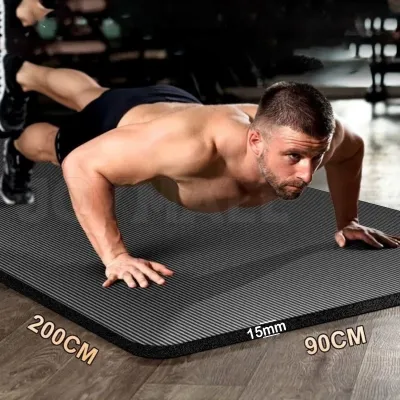
Prices are valid at publication and may change. Please refer to the product page for the latest price.
A thinner mat minimizes this material compression, offering a solid, unyielding connection to the subfloor. This immediate feedback allows you to engage your feet and hands effectively, establishing a reliable foundation.
It is also essential to recognize that thickness does not operate in isolation. The density of the material—whether it is lightweight thermal plastic elastomer (TPE), heavy natural rubber, or traditional polyvinyl chloride (PVC)—greatly influences how the mat behaves. A highly dense, thin mat can sometimes feel more supportive than a thick, low-density foam mat that bottoms out under pressure. Additionally, the surface texture plays a role in how secure your hands and feet feel, regardless of the cushioning beneath them.
3mm Mats: Maximum Stability for Dynamic Practices
A 3mm yoga mat is often the preferred choice for practitioners dedicated to dynamic, flowing, or alignment-focused styles. In active practices like Vinyasa, Ashtanga, and Power Yoga, transitions are rapid, and standing balances are frequent. A 3mm surface provides the immediate floor feedback necessary to transition safely between poses without losing your footing.

For arm balances and inversions, a thin mat is particularly advantageous. Your hands serve as your foundation, and any excessive squishiness under your palms can strain the wrists by forcing them into an unnatural angle. A 3mm mat keeps your hands close to the solid floor, allowing your fingers to grip effectively and distribute your weight evenly.
Portability is another significant benefit of the 3mm category. These mats roll up into compact cylinders and are substantially lighter than their thicker counterparts. If you regularly commute to a local studio, travel frequently, or navigate public transport systems, a 3mm mat fits easily into a standard carrying bag without adding burdensome weight.
The primary trade-off of a 3mm mat is its minimal joint protection. If you have sensitive knees, a history of wrist discomfort, or thin joints, floor-heavy sequences can feel uncomfortable. To mitigate this, you can fold the mat over during specific poses to double the thickness, or place a dedicated yoga towel or small knee pad underneath your joints when kneeling.
5mm Mats: A Versatile Balance for Mixed Routines
For practitioners who engage in a variety of yoga styles or want a single mat that can handle diverse routines, the 5mm thickness represents a highly versatile middle ground. This category is designed to offer sufficient joint cushioning for floor work while maintaining enough structural integrity to support standing balances.
In standard Hatha classes, slow flows, or home-based workouts that combine strength training with stretching, a 5mm mat adapts well to changing demands. During a low lunge, the 5mm barrier provides enough shock absorption to protect your back knee from the hard floor. When you transition to a standing balance, the material is dense enough to prevent excessive sinking, allowing you to maintain focus and alignment.
This versatility makes 5mm mats exceptionally popular for home use, where the floor surface might be unforgiving tile or hardwood. The extra millimeter or two over a standard travel mat makes a noticeable difference during seated forward folds and core exercises, protecting the tailbone and spine from direct pressure.
However, a 5mm mat is heavier and bulkier than a 3mm model. If you choose a high-density natural rubber mat in this thickness, the weight can be substantial, making it less convenient for long commutes. Additionally, in warm, humid environments, a thicker mat may take slightly longer to dry after a sweaty session, requiring diligent cleaning and proper air-drying to maintain hygiene.
6mm+ Mats: Extra Joint Support for Gentle Practices
Mats that measure 6mm or thicker are engineered primarily for comfort, recovery, and slow-paced, floor-based practices. If your routine consists of Yin Yoga, Restorative Yoga, prenatal sequences, or deep meditation, you spend the majority of your time seated, kneeling, or lying down. In these practices, the goal is to release tension and hold poses for several minutes, making maximum comfort and insulation from cold floors a priority.
For individuals recovering from joint injuries, managing chronic conditions, or experiencing age-related joint sensitivity, a 6mm+ mat can make the difference between a painful practice and a therapeutic one. The thick cushioning absorbs the pressure on the knees, elbows, and hips, allowing you to relax into the postures without distraction.
The trade-off for this extreme comfort is a pronounced reduction in stability during standing poses. The thick material creates a cushion that can cause your feet to sink and wobble, making balance poses significantly more challenging and potentially straining the ankles if proper care is not taken.
Furthermore, 6mm+ mats are bulky and heavy. They do not roll tightly, making them cumbersome to transport to a studio or pack for travel. They are best suited as dedicated home mats or for practices where you do not need to carry your equipment far. Storage in small living spaces also requires more room, as these mats occupy a larger footprint even when rolled.
Decision Framework: Matching Thickness to Your Needs
To determine the ideal mat thickness for your personal practice, consider how your physical requirements, preferred yoga style, and lifestyle factors intersect.
You should choose a 3mm mat if your practice is highly dynamic, focuses on standing balances and inversions, and you prioritize portability for commuting or travel. This thickness is ideal for those with healthy joints who prefer a direct, unyielding connection to the floor.
You should choose a 5mm mat if you practice a mix of active and gentle yoga, primarily practice at home or do not mind carrying a slightly heavier mat, and require a balanced blend of joint protection and standing stability. This is the safest default choice for most general practitioners.
You should choose a 6mm+ mat if your practice is almost entirely floor-based, such as Yin or Restorative yoga, or if you have highly sensitive joints, are recovering from an injury, or require maximum insulation from a cold, hard floor.
Before making a final purchase, always verify the manufacturer’s specifications regarding material density. A mat’s performance is a product of both its thickness and its weight per unit volume. For example, a dense 4mm natural rubber mat can offer superior joint protection compared to a cheap, low-density 6mm foam mat that collapses completely under your weight. If possible, test different materials to feel how they compress under your hands and feet before committing to a specific thickness.
Frequently Asked Questions (FAQ)
Can I use a thick yoga mat for hot yoga?
Using a thick mat, especially one over 6mm, in a hot yoga environment presents several practical challenges. Thicker mats tend to absorb more sweat, which can lead to hygiene issues and extended drying times in humid climates. Additionally, the combination of moisture and a squishy surface can make fast transitions slippery and unstable. If you prefer a thicker mat for hot yoga, verify that it has a closed-cell structure to prevent sweat absorption, or use a high-quality, slip-resistant yoga towel over the mat to manage moisture.
Is a thicker yoga mat always better for beginners?
It is a common misconception that beginners should start with the thickest mat available for maximum comfort. In reality, excessive cushioning can hinder a beginner’s ability to learn proper balance and alignment. A thick mat masks the feedback from the floor, making it harder to feel where your weight is distributed. For most beginners, a middle-ground thickness of 4mm to 5mm is recommended, as it provides adequate comfort while allowing you to develop the foot and ankle strength necessary for stable standing poses.
Community discussion
Share your experience or ask a question. Comments are reviewed before publication.