
Finding the right yoga mat involves balancing comfort, stability, and the realities of practicing on hard home floors like parquet or homogeneous tiles. While it is tempting to assume that a thicker mat automatically delivers superior cushioning, the relationship between a mat’s thickness and its actual support is highly dependent on material density. Popular yoga mat brands structure their lineups from ultra-thin travel options to plush, extra-thick models, but the secret to protecting your joints lies in understanding how different materials perform under pressure. By comparing thickness options alongside material characteristics, you can select a mat that keeps you grounded during balancing poses while providing sufficient shock absorption for floor-heavy practices.
Why Thickness Alone Does Not Guarantee Cushioning
To understand how a yoga mat supports your body, you must first look beyond the millimeter measurement on the label. Yoga mats generally fall into three thickness categories: travel mats (1.5mm to 2.5mm), standard mats (3mm to 5mm), and extra-thick mats (6mm to 8mm or more). While these categories provide a helpful starting point, two mats of the exact same thickness can feel entirely different under your knees depending on their material composition and density.
Material density is the true driver of shock absorption and joint protection. For instance, natural rubber and polyurethane (PU) are highly dense materials; a 4mm natural rubber mat is heavy and firm, offering substantial resistance that prevents your joints from sinking through to the hard floor. Conversely, Thermoplastic Elastomer (TPE) and standard polyvinyl chloride (PVC) are much lighter and airier. A 6mm TPE mat may feel soft to the touch, but under the concentrated weight of a knee or an elbow, it can easily compress completely, leaving you feeling the hard floor beneath.
Products mentioned in this guide
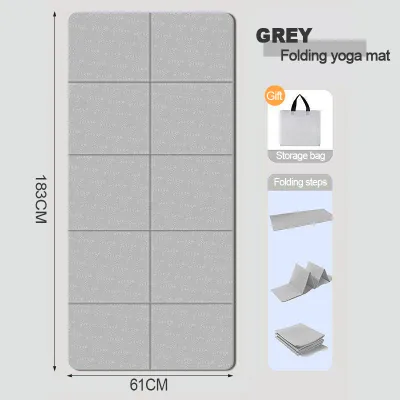
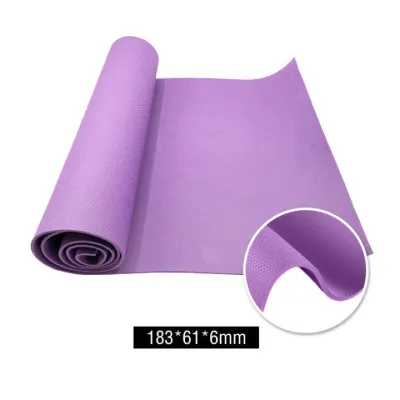
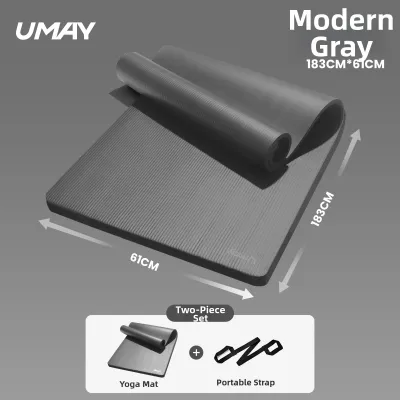
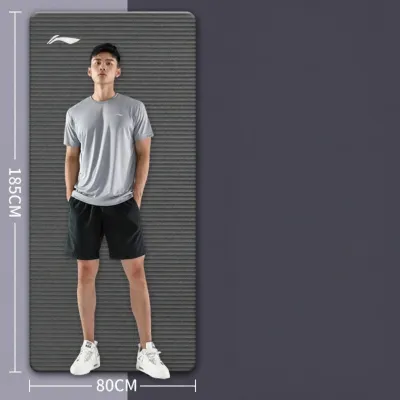
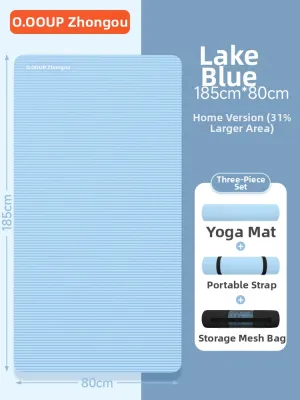
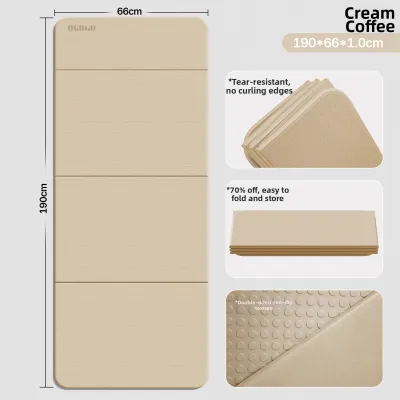

Prices are valid at publication and may change. Please refer to the product page for the latest price.
This material behavior highlights the classic trade-off between cushioning and stability. A highly cushioned, low-density mat might feel incredibly comfortable when you are lying down in “Savasana,” but it can severely compromise your stability during standing poses. When a mat is too soft or thick, your feet sink into the material, forcing the small stabilizing muscles in your ankles and feet to work twice as hard to maintain balance. Finding the right balance means choosing a density that offers joint protection without sacrificing your connection to the ground.
How Popular Brands Structure Their Thickness Options
Leading yoga mat brands design their product lines to cater to different lifestyles, practice environments, and physical needs. Rather than offering a single universal mat, they typically organize their collections into distinct use-case tiers.

The first tier consists of minimalist travel mats, which usually measure between 1.5mm and 2.5mm. These mats are designed to be lightweight, highly packable, and often foldable, making them ideal for commuters navigating public transport or packing for trips. Because they offer minimal cushioning on their own, they are frequently used as hygienic overlays on top of communal studio mats.
The second tier is the everyday studio mat, typically ranging from 3mm to 5mm. This is the most popular category because it strikes a versatile balance between portability and comfort. Premium brands often differentiate their offerings in this tier by using proprietary material blends, such as dual-layer construction featuring a grippy polyurethane top surface bonded to a dense natural rubber base. This design ensures excellent traction even in humid conditions while maintaining a slim, stable profile.
The third tier comprises restorative and extra-thick mats, which measure 6mm to 8mm. These are engineered primarily for home use or gentle, floor-based practices where joint comfort is the absolute priority. Premium brands in this space avoid the “spongy” feel of cheap foam by utilizing high-density closed-cell PVC or specialized TPE formulations that provide firm, progressive resistance rather than simple pillowy softness.
To help you compare these options systematically, use the following framework when evaluating different brands:
| Mat Category | Typical Thickness | Common Materials | Primary Use Case | Key Trade-off |
|---|---|---|---|---|
| Travel / Minimalist | 1.5mm – 2.5mm | Natural Rubber, Thin PU | Commuting, studio overlays, travel | Very low cushioning; requires a supportive subfloor |
| Everyday Studio | 3mm – 5mm | Natural Rubber, PU, Dense PVC | Vinyasa, Hatha, general studio classes | Moderate weight; requires some breaking in |
| Restorative / Joint Support | 6mm – 8mm | High-Density PVC, TPE | Yin, Restorative, Pilates, home practice | Heavy to carry; can reduce stability in standing balances |
Choosing the Right Thickness for Your Practice and Joints
Selecting the ideal mat thickness requires a realistic assessment of your preferred yoga style, your physical joints, and where you practice. Different styles of yoga place vastly different demands on your equipment.
If your practice consists primarily of dynamic, flowing styles like Vinyasa, Ashtanga, or Power Yoga, you need a mat that prioritizes stability and grip. Rapid transitions, jump-backs, and standing balances require a firm, predictable surface. A standard 3mm to 4mm dense natural rubber or PU mat is highly suitable here. It provides enough compression resistance to protect your wrists during handstands and planks while keeping your feet firmly connected to the ground so you do not wobble during complex standing sequences.
For those who prefer restorative practices, Yin yoga, or floor-heavy routines, the priorities shift toward comfort and insulation. In these styles, you hold poses for several minutes at a time, often with your knees, hips, or spine resting directly on the mat. An extra-thick 6mm mat made of high-density TPE or premium PVC can make a significant difference in your comfort, allowing your body to relax fully into the poses without the distracting discomfort of a hard floor pressing against your bones.
Your physical environment also plays a major role in this decision. Many homes feature hard parquet, marble, or homogeneous tiled floors, which have absolutely no natural give. If you are practicing at home on these unforgiving surfaces, you may need to opt for a slightly thicker or denser mat than you would use in a professional yoga studio, which often features sprung wooden floors designed to absorb impact. Additionally, if you frequently commute to local studios, a heavy 5mm natural rubber mat can become a chore to carry; a lighter 3mm or 4mm option, or a travel mat paired with a studio rental, might offer a more practical daily solution.
How to Verify True Cushioning Before You Buy
Because you cannot always trust the millimeter measurement alone, verifying a mat’s actual cushioning performance requires a systematic approach. Whether you are shopping in a physical store or browsing online, there are several practical steps you can take to ensure you get the support you need.
First, always check the manufacturer’s technical specifications for both thickness and weight. If two mats are both 5mm thick, but one weighs 1.5 kilograms and the other weighs 3 kilograms, the heavier mat is significantly denser. This higher density indicates that it will offer much better support and will not bottom out under your body weight. Look for terms like “high-density,” “closed-cell,” or “compression-resistant” in the product descriptions.
If you are shopping in a physical retail store, perform a simple physical evaluation. The thumb-press test is a quick way to gauge density: press your thumb firmly into the center of the mat. If your thumb easily presses all the way through to the hard surface beneath with minimal resistance, the mat lacks the density required for joint protection. A better test is the knee pressure test. Place the mat on the floor, place one knee on it, and lift your other foot off the ground. If you can feel the hard floor pressing directly against your kneecap, the mat’s cushioning is insufficient for floor-heavy practices.
When purchasing from online marketplaces or brand websites, pay close attention to the return and exchange policies. Many premium brands have strict rules regarding opened or unrolled mats due to hygiene reasons. Look for retailers that offer a satisfaction guarantee or allow returns if the mat is unused and in its original packaging. Reading customer reviews specifically filtering for terms like “knee pain,” “density,” or “hardness” can also provide valuable real-world insights into how the mat performs on hard floors.
Frequently Asked Questions (FAQ)
Is a Thicker Mat Always Better for Joint Support?
No, physical thickness does not automatically equal better joint support. A very thick but low-density foam mat will compress completely under concentrated weight, offering virtually no protection for your knees or wrists. A slightly thinner, high-density mat made of natural rubber or premium PVC will resist compression, keeping your joints elevated and cushioned from the hard floor beneath.
Will an Extra-Thick Mat Ruin My Balance Poses?
Yes, extra-thick mats that are soft and spongy can significantly compromise your balance. When your feet sink into a soft surface, your ankles lose the stable foundation they need to keep you upright, increasing the risk of ankle strain. If you require a thick mat for joint comfort but struggle with balance, you can easily step off your mat onto the hard floor during standing balance sequences.
Community discussion
Share your experience or ask a question. Comments are reviewed before publication.