
Choosing the right badminton racket can dramatically shape your performance on the court, especially when navigating a premium, attack-oriented lineup. The Yonex Astrox series is renowned for its head-heavy balance, designed to assist players in generating steep, powerful smashes. However, within this single family, the Astrox 77, Astrox 88, and Astrox 99 cater to vastly different skill levels, physical capabilities, and tactical roles. Selecting the wrong model can lead to rapid fatigue or even strain, while the right match enhances your natural playing style.
This guide breaks down the design philosophies, physical specifications, and practical playing characteristics of these three head-heavy rackets. By understanding how shaft flex, weight distribution, and frame aerodynamics interact with your swing, you can make an informed decision that aligns with your technique and physical conditioning.
Quick Answer: Which Astrox Racket Fits Your Style?
Your choice among these three rackets should depend primarily on your skill level, physical strength, and whether you play singles or doubles.
Products mentioned in this guide
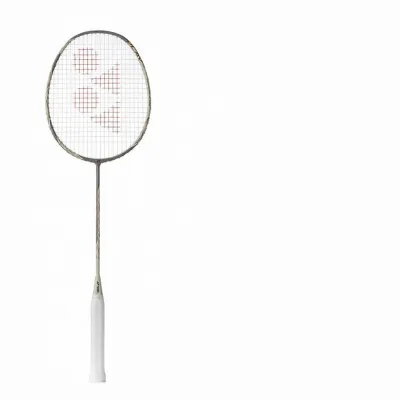
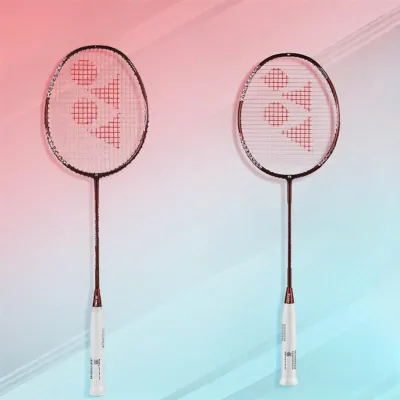
Prices are valid at publication and may change. Please refer to the product page for the latest price.
- Astrox 77: This model is designed as an accessible, versatile attacking racket. Featuring a medium-flex shaft and a moderately head-heavy balance, it is highly forgiving and suited for intermediate players who want extra power on their clears and smashes without sacrificing defensive speed.
- Astrox 88: Engineered primarily for doubles players, this racket focuses on rapid handling, precise placement, and fast recovery. It features a stiffer shaft and aerodynamic frame variations designed to excel in quick flat exchanges and front-court interceptions.
- Astrox 99: This is an uncompromising, heavily head-heavy racket with a very stiff shaft. It is designed specifically for advanced singles players who possess the refined technique and physical conditioning required to swing a demanding frame for maximum downward power.
Understanding the Astrox Head-Heavy Philosophy
To appreciate the differences between these models, it is essential to understand the engineering principles that define the Astrox lineup. Unlike even-balance or headlight rackets, head-heavy rackets concentrate more mass toward the top of the frame. This design leverages basic physics: during a downward swing, the extra weight at the head increases the racket’s momentum, transferring more kinetic energy to the shuttlecock upon impact.

However, static weight is only part of the equation. Swing weight—how heavy the racket feels when in motion—determines how much effort is required to maneuver the frame. A highly head-heavy racket can feel sluggish during quick defensive lifts or rapid mid-court drives. To balance this, Yonex utilizes a rotational generator system that distributes weight across the grip end, the frame joint, and the top of the head. This distribution is designed to help the racket transition smoothly from one stroke to the next, though the physical demand remains higher than that of headlight alternatives.
Additionally, these rackets feature an Isometric head shape. This design expands the sweet spot by keeping the main and cross strings at a more uniform length. When evaluating these rackets, players should look at the official specifications on the racket cone and shaft to verify the exact weight classification and grip size, as these physical dimensions heavily influence how the head-heavy philosophy translates to your hand.
Yonex Astrox 77: The Accessible Powerhouse
The Astrox 77 is designed to bring the benefits of a head-heavy racket to a broader audience. Its defining characteristic is its medium-flex shaft. In badminton, a flexible shaft acts like a spring; as you swing, the shaft bends and then snaps back, adding whip-like speed to the racket head. Because the Astrox 77 flexes relatively easily, players do not need elite wrist speed or perfect timing to generate deep clears and respectable smash power.
This user-friendly flex profile makes the Astrox 77 highly forgiving for intermediate players who are still developing their stroke mechanics. If you find yourself struggling to clear the shuttle from baseline to baseline, the medium flex provides the necessary assistance. Furthermore, the head-heavy balance is pronounced enough to aid your attacking game but not so extreme that it severely hinders your defensive reactions during fast-paced doubles rallies.
The racket is typically available in both 3U (average 88 grams) and 4U (average 83 grams) weight options. For most intermediate players, the 4U version offers a highly balanced combination of maneuverability and power, making it an excellent choice for all-round players who transition frequently between attacking and defensive play.
Yonex Astrox 88: Precision and Rapid Handling
The Astrox 88 series is built with a stiffer shaft and a clear focus on the fast-paced dynamics of modern doubles play. A stiffer shaft offers less mechanical assistance than a medium-flex shaft, meaning the player must generate their own swing speed through rapid wrist and forearm acceleration. The benefit of this stiffness is exceptional control and immediate feedback; the racket head reacts precisely to your hand movements, allowing for tight net play and sharp, angled placements.
To meet the demands of rapid doubles exchanges, the Astrox 88 incorporates aerodynamic frame designs aimed at reducing air resistance. This allows players to prepare for consecutive shots more quickly, which is vital when defending smashes or engaging in flat drives. The series is often split into distinct sub-variants, such as the “S” (Skill) version, which is slightly shorter and optimized for front-court control, and the “D” (Dominate) version, which features a slightly more head-heavy balance for rear-court smashing.
When shopping for an Astrox 88, it is crucial to check the specific sub-variant and tier (such as Pro, Tour, or Game). The Pro models feature the stiffest shafts and highest-grade materials, demanding excellent technique, while the Tour and Game versions offer slightly more accessible flex profiles for developing players.
Yonex Astrox 99: Maximum Power for Advanced Singles
The Astrox 99 represents the extreme end of the head-heavy spectrum. It features a highly concentrated head-heavy balance combined with an exceptionally stiff shaft. This combination is designed to deliver maximum downward force, making it a favorite for singles players who rely on heavy, decisive smashes from the rear court to win points.
However, this level of performance comes with a steep physical cost. Because the shaft is incredibly stiff, it will not bend unless swung with high speed and precise timing. If your technique is not fully developed, swinging the Astrox 99 can feel like hitting with a solid wooden plank. The high swing weight also makes defensive recovery slow and physically exhausting. Over a long match, the continuous effort required to maneuver this racket can lead to premature fatigue, reduced accuracy, and a higher risk of shoulder or elbow strain.
This racket is not recommended for beginners, intermediate players, or those who primarily play fast-paced doubles. It is a specialized tool for physically strong, advanced players who have the conditioning to handle the extra load and the technical skill to unlock its power potential.
Decision Framework: Match Your Game to the Racket
To choose the right racket, evaluate your current skill level, physical condition, and typical playing environment. Investing in a premium racket—which can range from S$200 to over S$300—requires matching the equipment to your actual play style rather than your aspirations.
Choose Astrox 77 if:
- You are an intermediate player looking to transition into an attacking style.
- You want a head-heavy racket that is forgiving and assists with baseline-to-baseline clears.
- You play a mix of singles and doubles and need a versatile, all-round frame.
- You prefer a medium-flex shaft that reduces physical strain on your arm during long sessions.
Choose Astrox 88 if:
- You are an intermediate-to-advanced player who primarily plays doubles.
- Your game relies on rapid racket speed, quick flat drives, and precise net play.
- You have developed sufficient wrist speed to utilize a stiff shaft effectively.
- You want to choose between front-court control (S variants) and rear-court power (D variants).
Choose Astrox 99 if:
- You are an advanced singles player with excellent physical conditioning and refined stroke mechanics.
- Your primary strategy is to dominate rallies from the rear court with heavy, steep smashes.
- You do not mind sacrificing defensive maneuverability and rapid handling for raw power.
- You have no history of chronic shoulder, elbow, or wrist injuries.
Verify first if:
- You are a beginner: Beginners should generally avoid head-heavy, stiff rackets entirely. A lightweight, even-balance, or flexible racket is highly recommended to help you learn proper stroke mechanics without risking injury.
- You are recovering from injury: If you are returning from tennis elbow or shoulder strain, a stiff, head-heavy racket will exacerbate the issue. Opt for a lighter, more flexible frame until you are fully recovered.
- You play in highly humid conditions: In humid sports halls, shuttlecocks can become heavy and slow. A racket that is too demanding physically will tire you out even faster under these conditions. Ensure your grip management (using high-absorbency overgrips) is optimized to maintain control of a head-heavy frame.
Pre-Purchase Specification and Authenticity Checklist
Before finalizing your purchase, verify the physical specifications and authenticity markers of the racket to ensure you are getting a genuine product that matches your preferences.
- Weight Class (U): Rackets are categorized by weight, with 3U (85-89g) and 4U (80-84g) being the most common. A 4U racket is generally easier to swing and defend with, while a 3U racket offers more mass for heavier smashes. Choose based on your physical stamina.
- Grip Size (G): Grip sizes typically range from G4 (larger) to G5 (smaller). In warm, humid climates, many players prefer a smaller G5 grip because it allows them to apply a thick, absorbent polyurethane or towel overgrip without making the handle too bulky.
- Recommended String Tension: Check the recommended tension limits printed on the racket cone (usually expressed in pounds, e.g., 20-28 lbs). Stringing a racket beyond its certified limit can warp or crack the high-modulus graphite frame, especially during off-center hits, and will void the manufacturer's warranty.
- Authenticity Markers: Premium Yonex rackets are highly targeted by counterfeiters. Always inspect the shaft and cone for clean, laser-engraved serial numbers rather than printed ones. Look for the official Yonex hologram sticker on the handle cap, and purchase exclusively from authorized sports retailers to guarantee authenticity.
Community discussion
Share your experience or ask a question. Comments are reviewed before publication.