
Choosing the right racket from the Yonex Astrox 88D (Dominate) lineup depends heavily on your technical consistency, physical conditioning, and budget. While all three models are engineered for aggressive backcourt doubles play, they target vastly different player profiles. Selecting a model that does not match your current skill level can hinder your performance and increase the risk of strain or injury.
Choose the Pro if: You are an advanced or professional player with rapid swing speed, excellent wrist power, and highly consistent contact. This model offers the highest power ceiling and precise feedback but requires a high level of physical conditioning and excellent technique to master.
Choose the Tour if: You are an intermediate-to-advanced club player looking for near-flagship performance, aggressive smash angles, and high-end materials without the demanding physical toll or premium price tag of the Pro.
Products mentioned in this guide
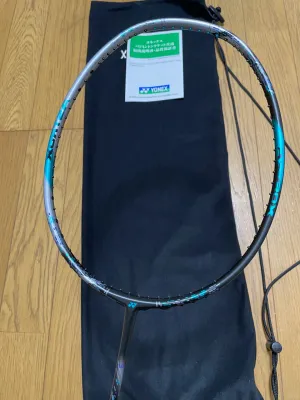
Prices are valid at publication and may change. Please refer to the product page for the latest price.
Choose the Game if: You are a beginner-to-intermediate player who needs maximum forgiveness, a larger sweet spot, and assistance in generating depth on clears and power on smashes as you refine your technique.
The Astrox 88D DNA: Why It's Built for Doubles Backcourt
The “D” in the Astrox 88D designation stands for “Dominate.” In the context of modern doubles play, this series is engineered specifically for the rear-court player. The rear-court specialist’s primary role is to break down the opponents’ defense with heavy smashes, steep drop shots, and powerful clears, keeping the opposition pinned to the back of the court while creating attacking opportunities for the front-court partner.
To achieve this aggressive performance, all three variants in the 88D lineup share a head-heavy balance. This design places more mass at the top of the frame, leveraging rotational momentum during a swing to increase shuttle speed and create a steeper downward trajectory. When you execute a smash with a head-heavy racket, the extra weight at the head helps drive the shuttlecock downward with greater force.
Another core element of the Astrox series is the Rotational Generator System. This counterbalanced weight distribution theory applies weight to the grip end, the frame top, and the joint. By distributing weight across these three strategic areas, the racket transitions smoothly from one shot to the next, mitigating the sluggish recovery time typically associated with traditional head-heavy frames. This allows you to recover quickly after a heavy smash to prepare for the next shot.
While the Pro, Tour, and Game share this fundamental geometry and tactical focus, they diverge significantly in material composition, shaft stiffness, frame construction, and overall playability. Understanding these structural differences is key to selecting the model that will elevate your game rather than hinder it.
Pro vs Tour vs Game: Core Differences in Materials and Feel
The differences between the three tiers lie in how material science translates to on-court feel. As you move up the lineup from Game to Pro, the materials become more sophisticated, the shaft stiffness increases, and the sweet spot becomes more compact and demanding.

Astrox 88D Pro: Uncompromising Power and Precision
The Pro is the flagship, tournament-grade model manufactured in Japan. It utilizes Yonex’s most advanced materials, including premium high-modulus carbon graphite combined with specialized resin systems like Volume Cut Resin and Namd. These advanced materials allow for a highly refined frame structure that optimizes weight distribution and enhances overall durability under high string tensions.
This premium construction allows the Pro to feature a slimmer shaft and a more compact head shape compared to its siblings. This design reduces air resistance, enabling exceptionally fast swing speeds. When swung with sufficient acceleration, the Pro delivers incredibly crisp feedback, pinpoint placement, and devastating smash power.
However, the defining characteristic of the 88D Pro is its stiff shaft. A stiff shaft does not flex easily; it requires rapid acceleration and precise timing to bend and snap back. If your swing speed is too slow, the shaft will not flex, resulting in weak, hollow-feeling shots and putting excessive strain on your wrist and elbow.
Additionally, the compact head means a smaller sweet spot. If you mis-time a shot or hit near the frame, the racket offers little dampening, sending harsh vibrations down to your arm. It is a demanding tool built for competitive players who train regularly and possess the physical conditioning to handle repeated high-impact swings without fatigue.
Astrox 88D Tour: High-End Feel at a Mid-Tier Price
The Tour model serves as a bridge, offering serious club players a taste of flagship performance at a more accessible price point. While it shares a similar aesthetic and design philosophy with the Pro, it is manufactured with slightly different material specifications and production processes outside of Japan. This allows Yonex to offer a high-performance frame at a mid-range price.
The shaft of the Tour is rated as stiff, but in practice, it offers a marginally more forgiving flex profile than the Pro. This subtle difference makes it easier for intermediate and advanced players to load the shaft and generate power during fast-paced doubles rallies, even when they are not in a perfect hitting position.
In terms of construction, the Tour retains many high-end frame technologies, including the rotational balance system, but uses a standard head size rather than the ultra-compact shape of the Pro. This provides a slightly larger sweet spot, offering better defense and recovery when under pressure.
For dedicated club players who play multiple times a week, the Tour offers an excellent balance. It delivers the aggressive backcourt capabilities and solid feedback required for competitive matches without the extreme physical demands or the premium price of the flagship model.
Astrox 88D Game: Maximum Forgiveness for Developing Players
The Game model is engineered specifically for beginner and intermediate players who are still developing their hitting technique and physical strength. This variant prioritizes ease of use and forgiveness over raw, uncompromising power.
The most notable structural difference is the medium-to-flexible shaft. A more flexible shaft bends easily during a swing, acting like a spring to launch the shuttlecock even with slower swing speeds. This helps developing players consistently hit deep clears and decent smashes without straining their wrists or shoulders.
Additionally, the Game features an expanded sweet spot. The frame is designed to be highly forgiving, meaning off-center hits still travel with reasonable distance and control, and fewer vibrations are transmitted to the arm. This design significantly reduces the risk of fatigue and repetitive strain injuries during long sessions.
While advanced players might find the Game’s feedback a bit muted or slow to recover during rapid-fire drives, it is the ideal tool for players focusing on positioning, timing, and footwork. It provides a comfortable, encouraging platform to build confidence on the court.
Side-by-Side Specification and Buying Checklist
To help you visualize how these models compare, the table below outlines the relative specifications and design choices of each variant.
| Specification / Feature | Astrox 88D Pro | Astrox 88D Tour | Astrox 88D Game |
|---|---|---|---|
| Target Skill Level | Advanced / Professional | Intermediate to Advanced | Beginner to Intermediate |
| Shaft Flexibility | Stiff | Stiff (Marginally more flex) | Medium / Flexible |
| Sweet Spot & Forgiveness | Compact / Precise | Balanced | Expanded / Forgiving |
| Manufacturing Origin | Japan | Outside Japan | Outside Japan |
| Price Category | Premium (S$280 – S$340+) | Mid-range (S$180 – S$220) | Entry-level (S$100 – S$130) |
| Frame Profile | Slim / Aerodynamic | Standard | Standard / Wide-body |
When you are ready to make a purchase, use this practical buying checklist to ensure you select the correct setup for your needs:
- Select the Right Weight Class (3U vs 4U): Most players in Singapore's fast-paced doubles scene prefer the 4U weight class (approximately 80 to 84 grams) because it offers better maneuverability and faster defensive recovery. The 3U weight class (approximately 85 to 89 grams) provides more mass for heavier smashes but demands significantly greater wrist and forearm strength to swing continuously.
- Check Grip Size (G5 vs G6): Ensure the grip size fits your hand comfortably. G5 is the standard size in Southeast Asia, while G6 is slightly thinner, allowing you to add overgrips to customize the thickness and sweat absorption without making the handle too bulky.
- Verify String Tension and Type: String selection is critical. High-tension strings (e.g., 26 lbs and above) on a stiff frame like the Pro require perfect technique, while lower tensions (e.g., 22 to 24 lbs) offer more repulsion and comfort on the Game or Tour. In Singapore's warm and humid climate, strings can lose tension more quickly, so consult a professional stringer to find a durable string type.
- Purchase from Authorized Retailers: Ensure authenticity by purchasing from official brand stores or reputable sports retailers in Singapore. Check the holographic decals and laser-engraved codes on the cone and shaft to protect yourself against counterfeit products.
- Verify Batch Specifications: Check the product label or consult with the retailer for exact weight, balance, and recommended tension limits, as these can vary slightly by production batch.
Final Verdict: Aligning Your Choice with Your Doubles Role
The optimal racket is the one that matches your current physical conditioning and technical consistency, rather than simply the most expensive one on the shelf. Buying a racket that is too stiff or too heavy for your current level can lead to poor performance, frustration, and physical strain.
In Singapore’s warm and humid climate, shuttlecocks can slow down slightly in non-air-conditioned sports halls, making backcourt power generation physically demanding. Choosing a racket that matches your strength ensures you can maintain high-quality play throughout a multi-hour session without exhausting your arm.
If possible, utilize demo programs or borrow rackets from club members to feel the differences in shaft stiffness firsthand before committing to a purchase.
Remember that the frame is only half of the equation. Partnering your chosen 88D variant with the appropriate string type and tension is essential to optimize its performance. A professional stringer can help tailor the setup to your specific style, ensuring you get the most out of your investment.
Frequently Asked Questions (FAQ)
Can I use the Astrox 88D for singles play?
Yes, the Astrox 88D can be used for singles play, particularly by aggressive players who rely on heavy rear-court attacks and steep smashes to win points. However, because it is head-heavy, it requires more energy to maneuver during long, defensive singles rallies. Players may experience faster arm fatigue compared to using an even-balance or head-light racket designed for speed and court coverage.
What is the difference between the Astrox 88D and 88S?
The Astrox 88D (Dominate) and 88S (Skill) are designed for different roles in a doubles partnership. The 88D features a head-heavy balance and a frame design optimized to maximize power and create steep angles from the backcourt. The 88S features a slightly more even balance, a shorter overall length, and a flex pattern designed for rapid front-court handling, quick net play, and precise drives.
Community discussion
Share your experience or ask a question. Comments are reviewed before publication.