
To find the right badminton racket, you must match its design philosophy to your style of play. Yonex categorizes its flagship models into three distinct families, each engineered to enhance specific physical actions on the court.
- Choose Astrox if you are an aggressive attacker who relies on steep smashes and heavy power from the backcourt. This family is engineered to maximize energy transfer during overhead strokes.
- Choose Arcsaber if you are a tactical player who prioritizes precise shuttle placement, controlled rallies, and even balance. This family focuses on stability and shuttle hold to dictate the pace of the game.
- Choose Nanoflare if you are a fast-paced player who excels in quick drives, rapid defense, and front-court interceptions. This family is optimized for rapid swing speeds and quick recovery.
While these core design philosophies guide each lineup, individual models within each series vary in weight, frame stiffness, and material composition. A lighter version of a power-oriented racket can feel vastly different from its heavier counterpart, making it essential to understand the underlying engineering before making a selection.
The Engineering Behind the Series: Balance and Frame Design
The playability of a badminton racket is dictated by its physical dimensions, material distribution, and aerodynamic profile. The most critical factor is the balance point—the distance from the bottom of the handle to the center of gravity. This measurement determines the swing weight (the perceived weight of the racket in motion), which directly influences momentum and maneuverability.
Products mentioned in this guide
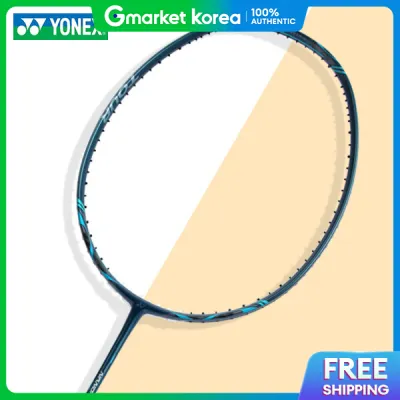
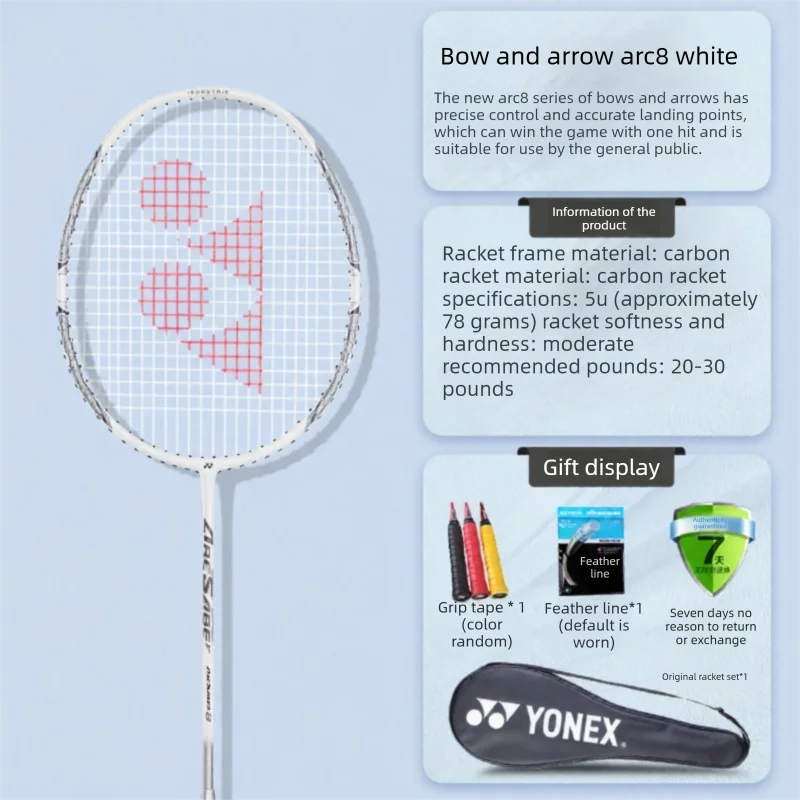
Prices are valid at publication and may change. Please refer to the product page for the latest price.
Head-heavy rackets, such as those in the Astrox lineup, concentrate more mass toward the top of the frame. When you swing, this distributed weight creates a larger pendulum effect, generating greater kinetic energy at impact. This physical advantage translates into steeper angles and faster shuttle speeds on overhead smashes, though it requires more effort to stop and redirect the frame.
Even-balanced rackets, exemplified by the Arcsaber series, distribute weight uniformly along the shaft and frame. This configuration provides a highly stable, predictable platform. When the shuttle strikes the string bed, the even distribution of mass resists twisting, allowing for precise control over the direction and depth of your shots.
Head-light rackets, characteristic of the Nanoflare series, shift the center of gravity down toward the handle. By reducing the weight at the head, engineers can craft frames that cut through the air with minimal drag. This design minimizes physical resistance, allowing players to execute rapid defensive blocks and flat drives with minimal preparation time.
To verify these engineering claims in person, you can perform a simple balance test. Rest the shaft of an unstrung racket on your index finger and slide it until the frame remains perfectly horizontal. The point where it balances will instantly reveal whether the racket leans toward head-heavy power, even-balanced control, or head-light speed, helping you confirm its characteristics before stepping onto the court.
Yonex Astrox: Maximizing Power for Aggressive Attackers
The Yonex Astrox series is engineered for players who want to dominate rallies with sheer offensive force. By utilizing a head-heavy balance, these rackets naturally assist in generating downward momentum. This design ensures that when you connect with a high clear or smash, the racket head drives through the shuttle, resulting in a steeper, more penetrating shot.

To support this style, Astrox rackets typically feature stiff shafts that resist bending during slow movements but snap back rapidly during high-speed swings. This snapback maximizes energy transfer from your wrist and forearm into the shuttle. However, players without developed wrist strength or proper technique may struggle to flex the shaft, leading to weaker shots.
The ideal player is a backcourt specialist. In singles, this is the player who continuously hunts for smash opportunities from the rear. In doubles, it is the partner who thrives on staying back, utilizing heavy overhead shots to force weak returns while their partner guards the net.
Wielding a head-heavy racket comes with physical trade-offs. The added frame weight increases the demand on your shoulder and wrist, accelerating fatigue. Additionally, the higher swing weight slows defensive reactions, leaving you vulnerable during rapid, flat drive exchanges where quick recovery is paramount.
When selecting an Astrox, check the weight class on the cone. While a standard 3U (heavier) model provides maximum power, a lighter 4U or 5U version reduces arm strain. A lighter weight class allows intermediate players to enjoy steep smash angles without sacrificing defensive maneuverability.
Yonex Arcsaber: Mastering Control and Shuttle Placement
The Yonex Arcsaber series is designed for tactical players who treat the court like a chessboard. Rather than relying on raw speed or overwhelming power, these rackets use an even-balanced chassis to deliver unmatched accuracy. This neutral balance point ensures the racket feels highly intuitive, moving exactly as you intend without unexpected pull or drift.
The hallmark of the Arcsaber is frame elasticity, engineered to “hold” the shuttle on the string bed longer during impact. This increased dwell time gives you precise feedback and control over trajectory. Whether executing a tight net shot, a deceptive drop, or a deep clear, the Arcsaber provides the stability needed to hit targets consistently.
This focus on precision makes the Arcsaber popular among tactical singles players and mid-court doubles controllers. These players construct rallies, moving opponents from corner to corner to force errors. The even balance allows for seamless transitions between defensive blocks and offensive drives, making it a versatile tool.
This versatility makes the Arcsaber an excellent choice for players who switch between singles and doubles. It adapts to the demands of the moment rather than forcing you into a specific role. The balanced weight distribution also reduces muscle strain, allowing you to sustain high-intensity rallies without the shoulder fatigue of heavier frames.
While the Arcsaber excels in control, it lacks the effortless power of the Astrox series. Generating a heavy smash requires more physical effort and precise body rotation, as the frame does not assist with natural momentum. However, for players who value consistency over raw power, this trade-off is highly beneficial.
Yonex Nanoflare: Dominating with Speed and Quick Reactions
The Yonex Nanoflare series is built for the modern, high-speed game where split-second reactions determine the winner. Featuring a head-light balance and aerodynamic frame profiles, these rackets cut through the air with minimal drag. This allows you to swing faster, recover quicker, and maintain a high tempo during flat exchanges.
This rapid maneuverability is highly advantageous in defense. When defending against a heavy smash, the head-light design allows you to position your racket instantly, transforming a powerful attack into a soft drop or a cross-court drive. The quick recovery time also makes it easier to defend consecutive attacks under pressure.
The ideal player is a front-court doubles specialist or a fast-paced counter-attacker. In doubles, this player excels at intercepting loose shots at the net, driving the shuttle flat into open spaces, and maintaining a high defensive wall. The ability to flick the wrist and generate rapid racket head speed makes the Nanoflare highly effective in tight spaces.
The primary trade-off of a head-light racket is the effort required to generate power from the backcourt. Without the natural momentum of a head-heavy frame, deep clears and smashes rely entirely on your timing, wrist snap, and technique. Players lacking these skills may find their rear-court shots falling short, giving opponents control.
To mitigate this power deficit, Yonex offers various shaft flexibility options. If you want the speed of a head-light racket but still need help reaching the backcourt, choosing a model with a medium or flexible shaft provides a helpful trampoline effect. This flexibility assists in launching the shuttle deeper, balancing speed with accessible power.
Side-by-Side Comparison and Final Decision Framework
To help you visualize how these three flagship families compare, the table below outlines their primary design characteristics, strengths, and ideal configurations.
| Series | Balance Point | Primary Strength | Ideal Court Position | Best Suited For |
|---|---|---|---|---|
| Yonex Astrox | Head-Heavy | Raw Power & Steep Smashes | Rear-Court / Backcourt | Aggressive attackers and singles specialists |
| Yonex Arcsaber | Even-Balanced | Precision Control & Shuttle Hold | Mid-Court / All-Around | Tactical rally builders and versatile players |
| Yonex Nanoflare | Head-Light | Swing Speed & Rapid Defense | Front-Court / Net Area | Speed-oriented players and defensive specialists |
When making your final decision, verify your preference through physical testing. If you are unsure, borrow a racket from a clubmate or visit a dedicated sports store in Singapore that offers demo programs. Testing a racket during a live session is the most reliable way to feel how the balance and stiffness interact with your swing.
Complete beginners should note that these advanced flagship series may not fit them perfectly. High-end models often feature stiff shafts and small sweet spots designed for experienced players. Beginners are better served by choosing an entry-level, flexible, even-balanced racket, which is much more forgiving as you develop fundamental strokes.
Additionally, the racket frame is only one part of the performance equation. The string type and tension heavily influence the final feel. A head-light Nanoflare strung at a high tension feels incredibly sharp and fast, while a head-heavy Astrox strung at a lower tension offers a more cushioned, power-oriented profile.
Practical Steps to Verify Your Choice Before Buying
Before purchasing at a pro shop or an authorized online retailer, verify the technical markings laser-engraved on the racket cone, just above the grip.
First, identify the weight and grip size codes on the cone (e.g., “3U G5” or “4U G5”). The “U” rating indicates the weight class, where a lower number represents a heavier racket (3U is 85–89 grams; 4U is 80–84 grams). The “G” rating indicates grip circumference, with G5 being the standard size in Singapore. A lighter 4U Astrox will feel more manageable, while a heavier 3U Nanoflare requires more strength to swing quickly.
Second, match the shaft stiffness (“Stiff,” “Medium,” or “Flexible”) to your swing speed. Fast, explosive swings benefit from stiff shafts that offer precise timing. Slower, smoother swings find flexible shafts more beneficial, as the extra bend helps generate depth on clears.
Third, consider string tension. Higher tensions (above 26 lbs) provide excellent control but shrink the sweet spot, requiring precise timing. Lower tensions (20 to 24 lbs) offer a larger sweet spot and more natural repulsion, making them ideal for intermediate players. Consult your local pro shop stringer to match the tension to your racket and skill level.
Finaly, perform a physical inspection before buying. Check the frame for paint chips, hairline fractures, or uneven grommets. Ensure the handle grip is intact, and verify authenticity by checking for the official Yonex hologram sticker and laser-engraved serial numbers on the shaft and cone.
Frequently Asked Questions (FAQ)
Can a beginner use an Astrox racket?
While a beginner can physically play with an Astrox racket, it is generally not recommended. The head-heavy balance and stiff shafts of the flagship Astrox models require precise timing, strong wrist technique, and developed forearm strength to use effectively. Without these skills, a beginner may struggle to clear the shuttle deep, experience rapid fatigue, or even develop shoulder and wrist injuries. If you are a beginner drawn to the Astrox series, look specifically for entry-level models with flexible shafts and lighter weight classifications, such as 4U or 5U, which are far more forgiving.
Does string tension change the balance of the racket?
No, string tension does not alter the physical balance point engineered into the racket frame. Whether you string a racket at 20 lbs or 30 lbs, the physical distribution of mass between the head and the handle remains unchanged. However, string tension significantly alters the perceived feel and playability of the racket. High tension makes the string bed feel stiffer and less forgiving, mimicking a highly control-oriented setup, while lower tension creates a trampoline effect that makes generating power feel much easier, subtly shifting how the racket behaves during a swing.
Are these series suitable for doubles play?
Yes, all three series are highly suitable and widely used in doubles play, but they cater to different roles within a partnership. The Astrox series is highly favored by rear-court players who focus on delivering heavy smashes to break down the opponent’s defense. The Nanoflare series is the preferred choice for front-court players who need rapid racket speed for net interceptions, quick blocks, and flat drives. The Arcsaber series is ideal for mid-court playmakers who focus on transition play, defensive consistency, and precise placement to set up attacking opportunities for their partner.
Community discussion
Share your experience or ask a question. Comments are reviewed before publication.