
The choice between the Yonex EZONE 100 and the EZONE 100 Tour comes down to your physical conditioning, swing speed, and how much built-in power you want from your frame. While both rackets share the same head size and user-friendly isometric shape, they cater to distinct player profiles. The standard EZONE 100 is designed for intermediate to advanced players who want a highly maneuverable, forgiving racket that offers easy depth and explosive power. In contrast, the EZONE 100 Tour is a heavier, more demanding frame built for advanced players who can generate their own swing speed and require extra stability to handle heavy incoming shots.
To make the right choice, you must evaluate your current physical strength, your typical swing style, and how much weight you can comfortably swing over a multi-hour match. Choosing a racket that is too heavy can lead to early fatigue and potential arm strain, while choosing one that is too light might leave you feeling pushed around during fast-paced rallies. By comparing the specific design elements of these two models, you can select the frame that best supports your development on the court.
Key Specification Differences to Verify Before Buying
When comparing the Yonex EZONE 100 and the EZONE 100 Tour, the physical specifications printed on the racket throat or listed on the official manufacturer’s website are your most reliable guide. Although both models feature a 100-square-inch head size, their physical builds differ significantly. You should always verify the exact unstrung weight, balance point, and beam width of the specific production year you are purchasing, as manufacturers occasionally make minor adjustments between product generations.
Products mentioned in this guide
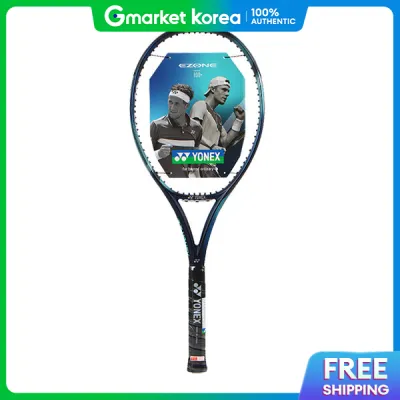
Prices are valid at publication and may change. Please refer to the product page for the latest price.
The most critical difference lies in the unstrung weight. The “Tour” designation in the Yonex lineup indicates a heavier frame designed for players who can handle additional mass. While the standard EZONE 100 typically sits in the mid-weight category suitable for a broad range of club players, the Tour version adds noticeable mass to the frame. This extra weight is strategically distributed to alter the racket’s balance point, which affects how heavy the racket feels when you actually swing it through the air.
Another key specification to verify is the swingweight, which measures how heavy the racket feels during a dynamic swing. Even if two rackets have similar static weights, their swingweights can differ based on how the mass is distributed along the frame. A higher swingweight provides more power and stability but requires more effort to accelerate. You should check the official specifications to see if the Tour model’s balance is adjusted to keep the swingweight manageable or if it is designed to maximize plow-through.
Beyond weight, you must check the beam width and frame stiffness specifications. A thicker beam generally provides more stiffness and energy return, while a thinner beam offers more flexibility and control. You should also verify the grip size availability before making a purchase. Because the Tour model is aimed at a more specialized segment of advanced players, retailers may stock a different range of grip sizes compared to the highly popular standard model. Ensuring you select the correct grip size is essential for maintaining control and preventing wrist discomfort.
Finally, check the string pattern specifications on the frame. While both models typically utilize a standard open string pattern to promote spin and power, the spacing of the mains and crosses can vary slightly between the standard and Tour versions. Verifying these details on the official Yonex specification sheet ensures you know exactly what to expect before you step onto the court.
How Weight and Balance Influence Your On-Court Feel
The physical differences between these two frames directly translate into how they behave during a match. A heavier frame like the EZONE 100 Tour requires more physical strength to swing consistently, but it offers substantial benefits in terms of stability. When you face a hard-hitting opponent, a heavier racket resists twisting in your hand, allowing you to block back fast serves and heavy groundstrokes with minimal effort. This quality, often referred to as plow-through, helps you maintain depth even when you cannot take a full swing.

Conversely, the standard EZONE 100 prioritizes maneuverability and fast swing speeds. Because the frame is lighter, you can accelerate the racket head quickly through the contact zone. This rapid acceleration makes it easier to generate spin and power, especially when you are stretched wide or forced to hit on the run. The lighter weight also makes the standard model highly effective at the net, where quick reflexes and fast racket handling are crucial for hitting successful volleys.
In Singapore’s warm and highly humid climate, the physical toll of a heavier racket becomes even more pronounced. High humidity causes tennis balls to absorb moisture from the air and the court surface, making them feel heavier and slower on impact. Swinging a heavy frame like the Tour against these heavy, moisture-laden balls requires significant physical effort, which can accelerate muscle fatigue during long outdoor sessions. Conversely, the standard EZONE 100’s lighter weight can help you maintain high swing speeds even when the playing conditions are heavy and draining.
When deciding between these two feel profiles, you must honestly assess your current arm strength and injury history. Swinging a heavier racket requires more effort from your shoulder, elbow, and wrist. If you have a history of tennis elbow or joint discomfort, a heavier frame can exacerbate these issues, particularly during long matches when your muscles begin to tire. A lighter, more maneuverable frame can help reduce physical strain, allowing you to play longer without discomfort.
You should also consider your typical rally length and playing style. If you prefer to play long, grinding baseline rallies where you rely on consistent depth and spin, a lighter racket that is easy to swing repeatedly might be more beneficial. If you prefer to play aggressive, short rallies where you look to dictate play with heavy, penetrating shots, the added mass of the Tour model can help you drive the ball through the court with greater authority.
Which EZONE Model Matches Your Playing Style?
To help you make a definitive decision, it is useful to look at how each racket aligns with specific playing styles and skill levels. Your choice should reflect not just where your game is today, but where you want it to be in the near future.
Choose the standard EZONE 100 if:
- You are an intermediate to advanced player who wants a racket that offers easy access to power and depth without requiring perfect technique on every shot.
- You play a lot of doubles, where quick reactions, fast reflex volleys, and rapid overheads are essential for winning points at the net.
- You prefer a fast-swinging frame that helps you react quickly at the net and defend effectively from the baseline.
- You want a forgiving sweet spot that provides comfortable feedback even when you do not hit the ball perfectly in the center of the strings.
- You want to minimize physical fatigue during long matches or intense training sessions in warm, humid climates.
Choose the EZONE 100 Tour if:
- You are an advanced player with established, full strokes who can easily generate your own pace and depth.
- You primarily play singles and rely on heavy, penetrating groundstrokes to push your opponent deep behind the baseline.
- You require maximum stability to counter heavy incoming shots and want a solid, plow-through feel on impact.
- You prefer a heavier swing weight that rewards precise timing and controlled, aggressive swings.
- You have the physical conditioning and arm strength required to swing a heavier frame consistently over multiple sets.
Verify first if you are transitioning between skill levels or recovering from an injury. If you are currently an intermediate player working hard to improve your technique, jumping straight to the Tour version can hinder your progress. A frame that is too heavy can force you to shorten your swings or alter your mechanics to compensate for the weight, which can lead to bad habits or injury. If you are unsure about your long-term physical conditioning, it is highly recommended to test both models under realistic playing conditions before making a final decision.
Evaluating Price and Authenticity in Singapore
When you are ready to purchase your new racket, navigating the local market in Singapore requires some care. Both the standard EZONE 100 and the EZONE 100 Tour are premium pieces of sporting equipment, and their prices should reflect this status. You should check authorized sports retailers and official brand stores in Singapore to compare current S$ pricing, stock availability, and warranty coverage.
It is important to understand that price differences between the two models do not mean one is universally superior to the other. The standard EZONE 100 is a highly popular, mass-market model, while the Tour version is a specialized frame produced in smaller quantities for a niche audience. Any price variation you observe typically reflects these manufacturing volumes and target demographics rather than a difference in material quality or technology.
Visiting a physical, authorized tennis specialty shop in Singapore offers significant advantages over buying online. Local shops often provide professional stringing services, allowing you to select your preferred string type and tension immediately upon purchase. The staff can also offer valuable advice based on your playing style and help you verify the physical specifications of the racket in hand. This personalized service ensures you get a setup tailored to your game.
Be cautious when browsing general online marketplaces or third-party e-commerce platforms. If you encounter listings with unusually low prices that seem too good to be true, they may indicate counterfeit products or unauthorized gray-market imports. Counterfeit rackets often look identical to genuine models but lack the internal structural integrity, carbon fiber quality, and vibration-dampening technologies of authentic Yonex frames. Purchasing from an authorized local retailer ensures you receive a genuine product backed by a proper manufacturer’s warranty, protecting your investment.
Frequently Asked Questions (FAQ)
Is it easy to transition from the standard EZONE 100 to the Tour version?
Transitioning from the standard EZONE 100 to the Tour version requires a noticeable physical adaptation. Because the Tour model has more mass, your muscles will have to work harder to accelerate the racket and decelerate it after contact. You may find that your swing timing is slightly off initially, as the heavier frame takes a fraction of a second longer to move through the hitting zone.
To make the transition smoother, it is best to introduce the heavier racket gradually. Start by using it for short hitting sessions or warm-ups, then slowly increase your playing time as your arm and shoulder adjust to the extra weight. If you experience any persistent muscle soreness or joint pain, you should stop using the heavier frame and consult a qualified tennis coach or physical therapist to evaluate your technique and physical readiness.
Do both rackets require the same string tension and type?
While you can use the same strings in both rackets, you should adjust your setup to match the specific characteristics of each frame. You should always consult the recommended tension range printed on the racket throat of each specific model as a starting point. Because the Tour model is heavier and inherently provides more control, you might choose a slightly lower tension or a softer string to add comfort and power.
Conversely, the standard EZONE 100 is a naturally powerful frame, so you might prefer a slightly higher tension or a stiffer polyester string to help control the ball’s depth. Experimenting with different string types, such as multifilaments for comfort or co-polyesters for spin, allows you to fine-tune the racket’s performance to match your personal preferences and playing style.

Community discussion
Share your experience or ask a question. Comments are reviewed before publication.