
Selecting the right shuttlecock can transform your badminton sessions from a series of frustrating misfires into a fluid, competitive game. For players using synthetic options, the Yonex Mavis series serves as the global benchmark. However, choosing between the Yonex Mavis 350 and the Yonex Mavis 200 requires understanding how their design differences impact your play. The choice depends primarily on your skill level and whether you prioritize a realistic, feather-like flight trajectory or maximum structural durability.
The Yonex Mavis 350 is engineered for intermediate to advanced players who require a flight trajectory and deceleration pattern that closely mimics a traditional feather shuttlecock. In contrast, the Yonex Mavis 200 targets beginners, casual players, and outdoor settings where structural resilience and budget-friendly longevity are the primary concerns. This comparison evaluates both models across flight feel, durability under different skill levels, and overall cost-effectiveness within Singapore’s unique playing environments, helping you choose the ideal match for your racket.
Flight Characteristics: Trajectory and Feel on the Court
Mavis 350 Flight Profile
The Mavis 350 is designed to replicate the aerodynamic performance of a feather shuttlecock. When struck, its nylon skirt is engineered to collapse slightly and recover its shape rapidly, creating a distinct high-drag phase. This technical design allows the shuttle to decelerate quickly during the latter half of its flight path, resulting in a steep, natural drop. Intermediate and advanced players will appreciate this characteristic during drop shots, clears, and tight net play, as the shuttle behaves predictably and rewards precise racket face alignment.
Products mentioned in this guide
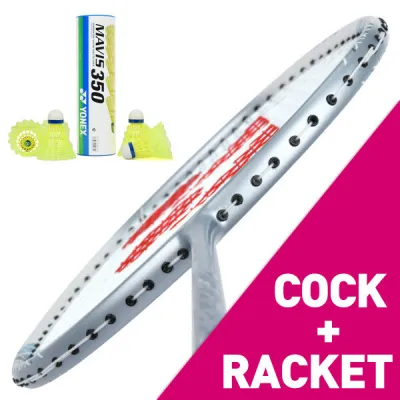
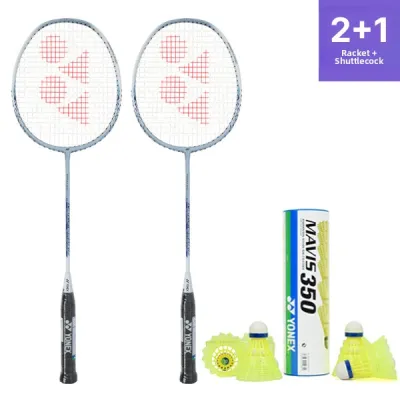
Prices are valid at publication and may change. Please refer to the product page for the latest price.
Speed Selection and Environmental Factors
To achieve this realistic flight, you must select the correct speed rating, which Yonex categorizes by cap color. In Singapore, where ambient temperatures and humidity are consistently high, choosing the correct speed is vital for maintaining a natural game pace:
- Green Cap (Slow Speed): Optimized for hot, non-air-conditioned sports halls or community club courts where temperatures range from 22°C to 33°C. The warmer, less dense air allows the shuttle to travel faster, so a slower speed rating prevents your clears from easily drifting past the baseline.
- Blue Cap (Middle Speed): Best suited for air-conditioned indoor stadiums or colder playing environments (typically 12°C to 23°C) where denser air requires a slightly faster-traveling shuttle to achieve a natural length.
Mavis 200 Flight Profile
The Mavis 200 features a simpler skirt structure that behaves differently in the air. It exhibits a flatter overall trajectory and slower deceleration, meaning it tends to float longer and maintain its forward velocity deeper into the court. While this extra float helps beginners keep rallies going with less physical effort, it can frustrate developing players trying to master advanced shots. Drop shots hit with a Mavis 200 may not fall as sharply over the net, and aggressive clears are more prone to flying out of bounds if hit with full power.
Impact Feel and Sound
The physical feedback transmitted through your racket grip differs noticeably between these two models. The Mavis 350 utilizes a high-quality synthetic cork base that offers a crisp, satisfying sound and minimal vibration upon impact, closely resembling the tactile feedback of a natural cork feather shuttle. The Mavis 200, designed with a firmer, more rigid base composition, delivers a harder feel on the string bed. This results in a slightly duller impact sound and more noticeable vibrations, which can affect touch play at the net but provides a solid, forgiving feel for recreational players focusing on basic clears and drives.
Durability and Lifespan: How Long Will They Last?
Skirt and Base Construction
Durability is the primary reason players opt for nylon over feather shuttlecocks, but the Mavis 350 and Mavis 200 balance this durability differently. The Mavis 200 is built with a thicker, highly robust nylon skirt. This added thickness makes the skirt incredibly resilient against permanent deformation, particularly from off-center hits where the racket frame strikes the skirt instead of the base. For beginners whose hitting consistency is still developing, the Mavis 200 can withstand significant mechanical abuse without tearing or losing its shape.

Mavis 350 Durability Trade-off
To achieve its superior, feather-like flight characteristics, the Mavis 350 uses a thinner and more flexible nylon skirt. This flexibility allows for the rapid shape recovery needed for realistic deceleration, but it makes the shuttle more vulnerable to physical damage. If intermediate or advanced players hit the shuttle consistently on the sweet spot, a single Mavis 350 can easily last multiple games. However, if subjected to frequent frame mishits by players with developing technique, the delicate ribs of the Mavis 350 skirt can warp, bend, or split prematurely, degrading its flight path.
Environmental Factors in Singapore
Singapore’s tropical climate, characterized by high relative humidity and elevated temperatures, directly affects synthetic polymers. While nylon is highly durable, prolonged exposure to extreme heat can dry out the plastic, making it brittle and prone to snapping. To maximize the lifespan of both models, implement these storage practices:
- Store in a Cool, Dry Place: Keep your shuttlecock tubes in an indoor closet or cabinet away from direct sunlight.
- Avoid Car Boots: Never leave your badminton gear in a car trunk parked in the sun, as temperatures can quickly rise high enough to weaken the adhesive holding the nylon skirt to the base and warp the plastic.
- Keep Tubes Upright: Store the tubes vertically to prevent any structural pressure on the shuttle skirts, which can cause flat spots over time.
Price and Value: Budgeting for Your Sessions
Relative Market Positioning
In the retail landscape, the Mavis 350 sits at a premium tier compared to the Mavis 200. While exact prices fluctuate based on retail promotions, import batches, and store locations, a tube of Mavis 350 typically costs more than a tube of Mavis 200. When budgeting for your badminton sessions, check current pricing at local sports retailers, specialized racket shops in areas like Queensway Shopping Centre, or official online brand stores to compare the current price difference in Singapore Dollars (SGD).
Cost Per Session Analysis
Evaluating the true value of these shuttlecocks requires looking beyond the initial purchase price to calculate your cost per playing hour. For a beginner or casual group, choosing the Mavis 350 can actually result in higher costs; if poor hitting technique leads to frequent frame contact, you may destroy a premium Mavis 350 within a single game. In this scenario, the highly durable Mavis 200 offers far better financial value, as a single shuttle can often survive multiple multi-hour sessions of recreational play.
Conversely, for intermediate players who rarely mishit, a Mavis 350 will last a long time while providing a vastly superior playing experience. Using a Mavis 200 in an intermediate session to save money can be counterproductive, as the floating flight path may disrupt your timing, leading to poor shot execution and less satisfying rallies. For these players, the slight price premium of the Mavis 350 is a worthwhile investment in game quality.
Buying Formats and Bulk Purchases
Both models are standardly packaged in tubes containing six shuttlecocks. If you play occasionally on weekends with family or friends, purchasing single tubes as needed is highly practical. However, if you organize regular weekly group sessions, run a school club, or manage community training programs, purchasing in bulk (such as cartons of 10 or more tubes) from local distributors can yield significant unit discounts, lowering your overall cost per session.
Decision Framework: Choose Mavis 350 or Mavis 200?
Choose Yonex Mavis 350 if:
- You are an intermediate or advanced player: Your hitting technique is consistent, and you rarely strike the shuttlecock skirt with your racket frame.
- You want to practice technical shots: You require a realistic flight path, sharp drop shots, and predictable deceleration to mimic feather shuttlecocks.
- You play primarily indoors: You want to optimize your performance in standard indoor sports halls or air-conditioned community club courts.
- You are training for amateur tournaments: You need a synthetic shuttle that prepares your muscle memory for the flight dynamics of competitive play.
Choose Yonex Mavis 200 if:
- You are a beginner or recreational player: You are still developing your hand-eye coordination and consistent contact with the racket sweet spot.
- You prioritize maximum lifespan and budget: You want a highly durable shuttlecock that can withstand heavy mishits and last for multiple sessions.
- You play outdoors or in windy conditions: You require a slightly heavier-feeling, floating shuttle that holds up against outdoor breezes in parks or open-air courts.
- You run high-volume training programs: You are purchasing equipment for school physical education classes, children's clinics, or casual community gatherings where keeping costs low is the primary objective.
Verify First if:
If you are transitioning from playing exclusively with feather shuttlecocks to synthetic ones, do not buy bulk quantities immediately. Nylon shuttlecocks are inherently heavier on impact and behave differently at the net compared to feathers. Purchase a single tube of the Mavis 350 first to test how its speed, weight, and flight deceleration align with your racket setup and physical timing before committing to a larger purchase.
Frequently Asked Questions (FAQ)
Can I use Mavis 350 and Mavis 200 interchangeably in the same game?
Mixing these two models within a single match is highly discouraged. Because the Mavis 350 decelerates quickly while the Mavis 200 floats longer and maintains a flatter trajectory, switching between them mid-game will disrupt your timing, muscle memory, and shot consistency. To maintain fair play and protect your technical development, stick to one model for the duration of your session.
How do I choose the right speed (cap color) for Singapore's weather?
For the majority of non-air-conditioned community club halls and school indoor courts in Singapore, the Green Cap (Slow) is the most suitable option. The high ambient heat makes the air less dense, causing shuttlecocks to fly faster; the slow speed rating compensates for this to keep your shots in bounds. If you play in a well-chilled, air-conditioned indoor stadium, opt for the Blue Cap (Middle) to ensure the shuttle travels at a natural pace.
Do nylon shuttlecocks need to be humidified like feather ones?
Nylon shuttlecocks do not require humidification. Unlike feather shuttlecocks, which rely on moisture to keep the natural feathers from becoming brittle, synthetic nylon skirts do not benefit from steaming. In fact, exposing nylon shuttles to steam or excessive moisture can damage the adhesive binding the skirt to the base, add unwanted weight to the nose, and cause immediate flight instability.
Community discussion
Share your experience or ask a question. Comments are reviewed before publication.