
Selecting the ideal nylon shuttlecock requires balancing flight accuracy against long-term durability. While both the YONEX Mavis 600 and the Mavis 350 are industry standards for synthetic shuttles, they cater to distinct on-court priorities. The Mavis 600 is specifically designed to replicate the flight trajectory, deceleration, and recovery performance of a traditional feather shuttlecock, making it an excellent bridge for intermediate players transitioning to competitive play. On the other hand, the Mavis 350 prioritizes exceptional durability and consistent speed, serving as the classic choice for recreational players, training clinics, and casual outdoor sessions. Understanding how these two models differ in construction, flight physics, and tactile feedback will ensure you invest in the right tube for your specific skill level and playing environment.
Flight Trajectory and Racket Feel
The primary engineering distinction between these two models lies in how they travel through the air and respond to racket contact. The Mavis 600 features an advanced skirt design that allows it to recover its shape rapidly after impact. This rapid recovery mimics the natural behavior of feather shuttlecocks, resulting in a distinct flight arc where the shuttle climbs quickly and then decelerates sharply during its descent. This realistic deceleration is crucial for players practicing precise drop shots and baseline clears, as it teaches proper court positioning and timing.
In contrast, the Mavis 350 exhibits a more traditional synthetic flight path. Because its skirt design does not collapse and recover in the exact same manner as the 600, it tends to maintain a flatter, faster trajectory over longer distances. It does not experience the same pronounced deceleration at the end of its flight path. For beginners, this predictable, linear speed can make rallies easier to sustain, but it does not fully prepare players for the sudden drop-offs characteristic of feather play.
Products mentioned in this guide
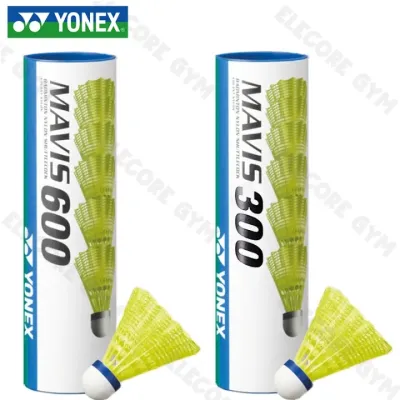
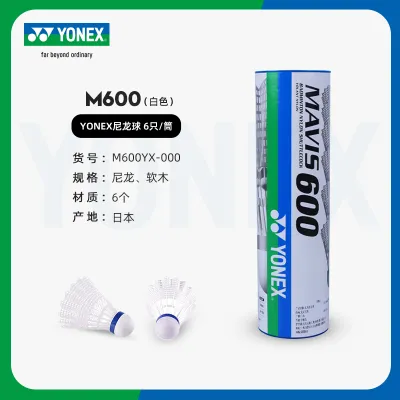
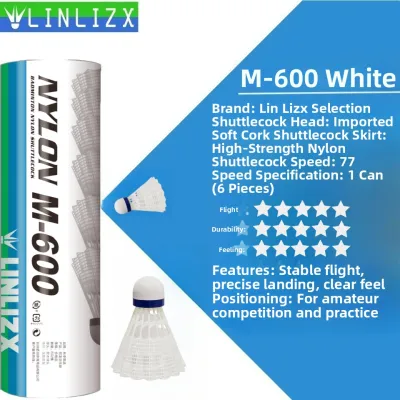
Prices are valid at publication and may change. Please refer to the product page for the latest price.
Tactile feedback also differs noticeably between the two models. When striking the Mavis 600, players often report a softer, more cushioned feel at impact, which closely resembles the sensation of hitting a feather shuttlecock. This dampening effect provides better touch and control for delicate net play. The Mavis 350 offers a firmer, crisper response off the racket face. While this provides clear auditory and physical feedback, it can feel slightly stiff or heavy to players accustomed to premium natural feathers.
Environmental factors play a significant role in how both synthetic models perform. In warm, humid climates—such as indoor sports halls in Singapore—nylon skirts naturally soften, which can cause them to fly faster and further. Conversely, in air-conditioned halls or cooler climates, the nylon material stiffens, slowing down the flight. Understanding these environmental responses is key to selecting the correct speed grade for your local venue.
Durability and Structural Resilience
For many players choosing synthetic shuttlecocks, durability is the primary purchasing factor. The Mavis 350 has long been celebrated as a benchmark for structural resilience. Its skirt is constructed with a slightly thicker nylon formulation and robust ribbing that can withstand repeated off-center hits. Even when beginners accidentally strike the skirt instead of the cork base, the Mavis 350 resists tearing and warping, maintaining its structural integrity over multiple intense sessions.

The Mavis 600, while still highly durable compared to natural feathers, sacrifices a small degree of structural toughness to achieve its superior flight characteristics. The skirt is engineered with thinner, more flexible nylon segments to facilitate rapid recovery and realistic deceleration. Consequently, repeated heavy smashes or frequent mishits can cause the skirt to warp or split sooner than the Mavis 350. It is best suited for players who have developed consistent timing and clean racket-to-cork contact.
To maximize the lifespan of your shuttlecocks, it is helpful to monitor specific wear indicators during play. A primary sign of degradation is skirt deformation, where the circular shape of the skirt becomes oval or flared, leading to erratic flight paths. You should also inspect the thin ribs connecting the skirt segments; once these ribs fracture, the shuttlecock will lose its aerodynamic stability. Finally, check for separation between the nylon skirt and the natural cork base, as any loosening here will severely compromise both safety and performance.
Matching the Shuttlecock to Your Skill Level
Aligning your shuttlecock choice with your current skill level and playing environment prevents frustration and optimizes your development on the court. Beginners who are still mastering basic strokes, such as clears, drives, and serves, will benefit most from the Mavis 350. Its forgiving nature and high durability mean a single shuttlecock can last through hours of practice, allowing players to focus on hand-eye coordination and footwork without worrying about damaging their equipment.
Intermediate and advanced players who are actively refining their tactical game should opt for the Mavis 600. At this stage of development, players require accurate feedback from their shots. The realistic deceleration of the Mavis 600 allows for the execution of advanced techniques, such as tight net drops, sliced drops, and deceptive clears, with a level of precision that the Mavis 350 cannot match. It serves as an invaluable training tool for those who play in leagues or tournaments where feather shuttlecocks are standard.
Your typical playing venue also dictates the best option. For casual backyard games, park sessions, or school physical education classes where wind resistance and durability are paramount, the Mavis 350 is the superior choice. Its robust build handles rough outdoor surfaces and unpredictable breezes better. For structured indoor club training, coaching clinics, and competitive recreational matches, the Mavis 600 provides the refined performance necessary to elevate the quality of play.
Quick Comparison Matrix
To help you quickly evaluate the primary differences between these two popular synthetic options, the following matrix summarizes their key design specifications and recommended use cases.
| Feature | YONEX Mavis 600 | YONEX Mavis 350 |
|---|---|---|
| Flight Trajectory | Close to feather (sharp deceleration) | Traditional nylon (linear speed) |
| Racket Feel | Soft, cushioned feedback | Firm, crisp feedback |
| Relative Durability | Moderate to high | Exceptionally high |
| Target Skill Level | Intermediate to advanced | Beginner to intermediate |
| Ideal Environment | Indoor courts, club training | Indoor/outdoor, casual play, schools |
| Speed Verification | Check local stock for Slow/Middle/Fast | Check local stock for Slow/Middle/Fast |
When purchasing either model, always verify the speed variants available at your local sporting goods store or online marketplace. Choosing the correct speed for your local playing temperature is just as important as choosing the right model.
Final Decision Framework
To finalize your decision, consider your primary goals on the badminton court. A structured framework helps cut through the technical specifications and aligns your purchase directly with your playing style and budget.
Choose the YONEX Mavis 600 if:
- You want a synthetic shuttlecock that closely mimics the flight physics, deceleration, and drop angles of a natural feather shuttlecock.
- You are an intermediate player training to transition to feather shuttlecocks for competitive club play or tournaments.
- You prioritize delicate net play, control, and realistic racket feedback over absolute durability.
Choose the YONEX Mavis 350 if:
- Your primary goal is maximum durability and cost-efficiency, helping you save on your monthly sports budget (often keeping your per-tube cost well under S$30 depending on local retail promotions).
- You are a beginner learning the fundamentals of the game or a recreational player enjoying casual rallies.
- You frequently play outdoors, in windy conditions, or in multi-purpose community halls where ultimate precision is secondary to longevity.
Verify first before purchasing: Before completing your purchase at a local retailer or ecommerce platform, check the color-coded speed band on the tube packaging. Ensure the speed rating matches your local playing environment (typically Green for slow/hot climates, Blue for middle/moderate climates, and Red for fast/cold climates). Additionally, inspect the packaging to ensure the tube is sealed and undamaged, as pre-purchase compression can permanently deform the nylon skirts and ruin their flight characteristics.
Frequently Asked Questions (FAQ)
Can I use these nylon shuttlecocks for official tournaments?
In professional and high-level sanctioned tournaments governed by national or international badminton federations, the use of natural feather shuttlecocks is mandatory. Nylon shuttlecocks, including the Mavis 600 and Mavis 350, are generally not permitted in these official competitive events due to differences in flight dynamics and spin. However, they are widely accepted and frequently used in local recreational leagues, school tournaments, senior sports festivals, and club training sessions where cost-effectiveness and durability are prioritized over strict international standards.
How do I choose the right speed grade for my location?
YONEX nylon shuttlecocks are categorized by speed grades, which are indicated by a color-coded band on the tube cap. Green represents slow speed, ideal for hot temperatures (typically above 22°C to 33°C) often found in tropical regions like Singapore, where warm air naturally increases flight distance. Blue represents middle speed, suited for moderate temperatures (12°C to 23°C). Red represents fast speed, designed for cold climates (below 13°C) where dense air slows the shuttle down. Selecting the correct speed ensures the shuttlecock travels the proper distance under your local playing conditions.
Community discussion
Share your experience or ask a question. Comments are reviewed before publication.