
Quick Answer: Which Yonex Shuttlecock Fits Your Game?
Selecting the right Yonex shuttlecock depends on your playing frequency, budget, and skill level. For beginners, recreational players, and outdoor sessions, synthetic nylon models from the Yonex Mavis series offer the best balance of durability and cost-efficiency. Advanced players and competitive club members should opt for natural feather models from the Yonex Aerosensa series to achieve the precise flight trajectory and tactile control required for high-level play.
The primary trade-off lies between durability and flight consistency. Nylon shuttlecocks resist deformation and last through multiple games, making them highly economical. Natural feather shuttlecocks offer superior aerodynamic deceleration and a satisfying impact feel, but they degrade quickly and require regular replacement during a single match.
Feather vs. Nylon: How Material Dictates Flight and Durability
The physical differences between natural feathers and synthetic nylon skirts fundamentally alter how a shuttlecock behaves in the air. A natural feather shuttlecock features a cone of overlapping feathers inserted into a solid cork base. When struck, the feathers flare slightly and then contract, causing the shuttlecock to spin rapidly and stabilize quickly. This aerodynamic design results in a steep drop angle at the end of its trajectory, allowing for precise drop shots and tight net play.
Products mentioned in this guide
Prices are valid at publication and may change. Please refer to the product page for the latest price.

In contrast, synthetic nylon shuttlecocks feature a molded plastic skirt that mimics the shape of feathers. Because the plastic material is more flexible and less rigid than natural quills, it does not compress or spin in the same manner. Nylon shuttlecocks tend to follow a flatter, more parabolic flight path and decelerate slower than feathers. This requires players to adjust their timing and swing power when transitioning between the two materials.
Durability is where synthetic options hold a clear advantage. A single off-center hit with a racket frame can easily break a natural feather quill, permanently ruining the shuttlecock’s flight path. Nylon skirts can withstand repeated high-impact strikes and minor mishits, recovering their shape quickly. This resilience makes nylon the practical choice for training drills and casual games where players are still refining their contact point.
Environmental conditions also play a significant role in performance. Natural feathers are highly sensitive to humidity and temperature. In dry conditions, feathers become brittle and prone to snapping, whereas high humidity helps maintain their flexibility. Synthetic nylon is less affected by moisture but can become stiffer in cold environments or softer in extreme heat, slightly altering its flight characteristics.
Matching Yonex Shuttlecock Lines to Your Skill Level
Yonex categorizes its shuttlecock offerings into distinct product lines designed to meet the specific demands of different player demographics. Understanding these tiers helps you avoid overspending on premium models before your technique requires them, or conversely, feeling frustrated by entry-level options.
Beginners and Casual Fitness Players
Recommended Material: Nylon (Mavis Series) Key Features to Verify: Synthetic skirt construction, composite cork base, high-visibility colors.
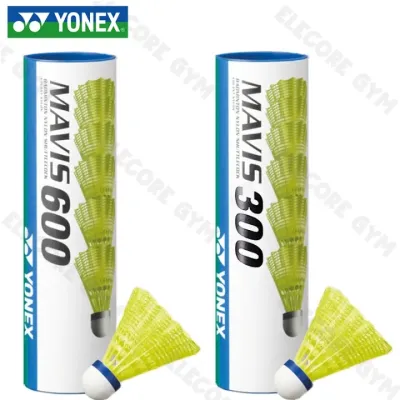
For those who are new to badminton or play primarily for weekend fitness, the Yonex Mavis nylon series is highly recommended. These shuttlecocks feature a durable nylon skirt attached to a synthetic or composite cork base, offering a robust design that survives frequent mishits. The structural resilience ensures that a single tube can last for weeks of casual play.
When selecting a nylon model, look for options that offer high-visibility colors, such as neon yellow. Yellow skirts are much easier to track against the varied backgrounds of community centers or outdoor courts. Beginners should focus on mastering basic strokes and footwork without the distraction of constantly changing damaged shuttlecocks.
Intermediate Club and Regular Training Players
Recommended Material: Premium Nylon or Entry-Level Feather Key Features to Verify: Natural cork base, wing-rib skirt design, hybrid construction.
Intermediate players who play regularly in indoor clubs often face a dilemma between cost and performance. Premium nylon models, such as those featuring Yonex’s advanced wing-rib design, closely mimic the flight path of natural feathers while retaining synthetic durability. These models often utilize a natural cork base, which provides a much cleaner rebound feel off the racket face compared to synthetic cork.
If your budget allows and you want to transition toward competitive play, entry-level feather shuttlecocks are an excellent training tool. These models typically use duck feathers rather than premium goose feathers, offering a realistic flight experience at a more accessible price point. This allows intermediate players to practice advanced shot-making, like sliced drops and deceptive net shots, with accurate aerodynamic feedback.
Advanced Competitors and Tournament Players
Recommended Material: Premium Feather (Aerosensa Series) Key Features to Verify: Goose feather construction, solid natural cork, BWF approval logo.
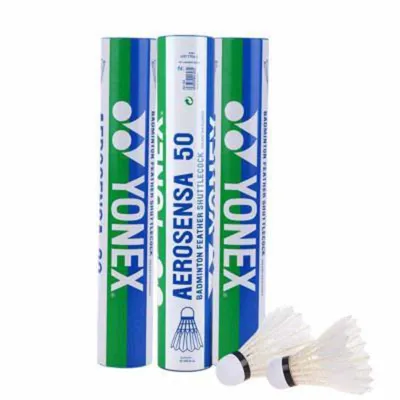
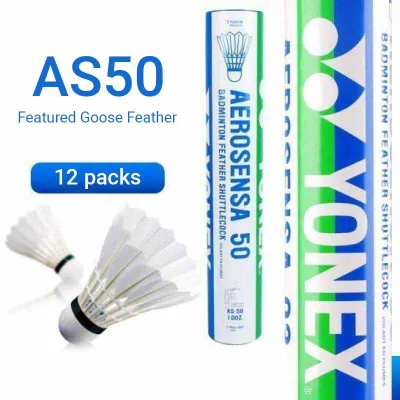
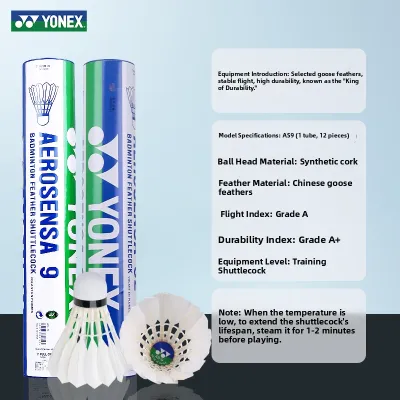
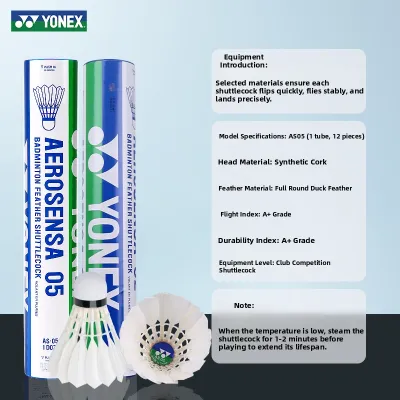
Advanced competitors and tournament players require the absolute highest level of flight consistency and speed accuracy. The Yonex Aerosensa series is the benchmark for competitive play, utilizing premium goose feathers selected for their uniform shape and structural strength. Combined with a solid natural cork base, these shuttlecocks deliver exceptional tactile feedback and a crisp sound upon impact.
When purchasing shuttlecocks for sanctioned tournaments or high-level club leagues, always check the tube packaging for official certification. Look for the Badminton World Federation (BWF) approval logo printed on the label. This mark ensures the model meets strict international standards for weight, flight trajectory, and balance, guaranteeing a fair and consistent playing field.
Verifying Speed, Weight, and Tube Labels Before Purchase
Before purchasing a tube of Yonex shuttlecocks, it is essential to verify several technical specifications to ensure they perform correctly in your local playing environment.
- Understand Speed Ratings: Shuttlecocks are calibrated to fly at specific speeds based on ambient temperature and altitude. Yonex uses a numbering system to indicate speed. For nylon models, speed is typically categorized as Slow (green cap), Medium (blue cap), or Fast (red cap). For feather models, speeds range from 75 (slowest) to 79 (fastest), or 1 to 5.
- Match Speed to Your Climate: In warm and humid tropical climates, such as indoor sports halls in Singapore, the air is less dense, causing shuttlecocks to fly faster. Consequently, players in these regions should look for slower speed ratings, typically Speed 2 (76) or Speed 3 (77) for feathers, or Medium (blue cap) for nylon. Using a shuttlecock that is too fast for your environment will result in clears constantly flying out of bounds.
- Check for Freshness: Natural feathers dry out over time, making them brittle and prone to breaking within minutes of play. Inspect the tube packaging for any manufacturing or batch dates. Avoid buying older stock that has been sitting on shelves in dry, non-air-conditioned warehouses.
- Calculate Cost-per-Shuttlecock: Compare bulk tube prices in S$ to determine your long-term playing costs. While a tube of premium feathers might cost significantly more upfront, buying in bulk or opting for high-quality nylon for training sessions can optimize your monthly sports budget.
- Identify Authentic Packaging: Due to the popularity of the brand, counterfeit Yonex shuttlecocks are common on online marketplaces. Always verify the holographic security sticker on the tube, check for clean and aligned logo printing, and purchase from reputable local sports retailers to ensure you are getting genuine products.
Decision Framework: Finalizing Your Shuttlecock Shortlist
To make your final decision, evaluate your playing conditions against this quick reference framework:
- Choose Nylon if: You play recreationally, practice outdoors, are on a strict budget, or want a single shuttlecock to last for multiple sessions without worrying about feather breakage.
- Choose Feather if: You play exclusively indoors, participate in competitive club matches, want to develop advanced spin and slice techniques, and prioritize flight accuracy over durability.
- Verify first if: You are playing in a venue with unusual temperatures or high altitudes, as you will need to adjust your speed rating selection (e.g., opting for a slower speed in hot, humid halls).
Frequently Asked Questions (FAQ)
How should I store feather shuttlecocks to prevent them from drying out?
To maintain the moisture content and flexibility of natural feathers, store your shuttlecock tubes vertically with the cap secure. Keep them in a cool, humid environment away from direct sunlight, heaters, or air conditioning vents. Many players use specialized humidifying tubes or insert a damp sponge wrapper into the top of the tube a few days before playing to restore moisture to dry feathers.
Can I use nylon shuttlecocks for official club tournaments?
While nylon shuttlecocks are widely accepted in casual leagues and recreational club play, official sanctioned tournaments almost exclusively require natural feather shuttlecocks. This is because competitive regulations demand the precise flight deceleration and spin characteristics that only natural feathers can provide. Always check your local league’s specific rulebook before purchasing equipment for competitive matches.
Community discussion
Share your experience or ask a question. Comments are reviewed before publication.