
Selecting the right badminton equipment goes beyond choosing a high-end frame and string tension. The point of contact between your hand and the racket—the overgrip—plays a decisive role in shot accuracy, comfort, and control. The yonex super grap is one of the most widely used polyurethane (PU) overgrips in the sport, known for its distinct balance of tackiness, cushioning, and durability. By wrapping over the racket’s original base grip, it modifies the handle’s physical dimensions and surface properties to directly alter how players experience shuttle impacts. Understanding the technical specifications of this overgrip allows players to make informed decisions about their gear setup, ensuring their hands remain secure during intense rallies.
Core Specifications: Translating Yonex Super Grap Technical Data into Racket Feel
The physical profile of an overgrip directly dictates how much control a player has over the racket bevels. When selecting an overgrip, thickness is the primary specification to evaluate. While you should always verify the exact millimeter specification on the product packaging, the standard AC102 model typically measures 0.6mm in thickness. This profile is thick enough to add a layer of compressed cushioning over the hard wooden handle, yet thin enough to prevent the handle from feeling overly rounded. Maintaining a clear sense of the handle’s octagonal bevels is essential for rapid grip transitions, and a 0.6mm thickness ensures these structural edges remain tactile under the palm.
The material composition of the grip relies on high-grade polyurethane (PU). Unlike natural leather, which is firm and requires a break-in period, or cotton towel grips, which can become heavy and stiff when dry, synthetic PU offers immediate elasticity and a consistent, rubbery texture. This synthetic polymer is formulated to provide a high coefficient of friction, resulting in a tacky surface that adheres to the skin even under light pressure.
Products mentioned in this guide
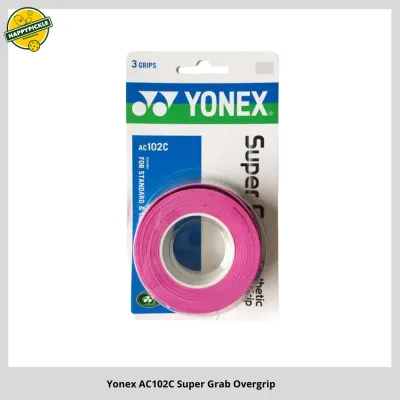
![Yonex Super Grap AC102EX [Individually Wrap]](https://img.lazcdn.com/g/p/2b44e5c7afc2c0d44447a09516fa7386.jpg_400x400q80.jpg_.webp)
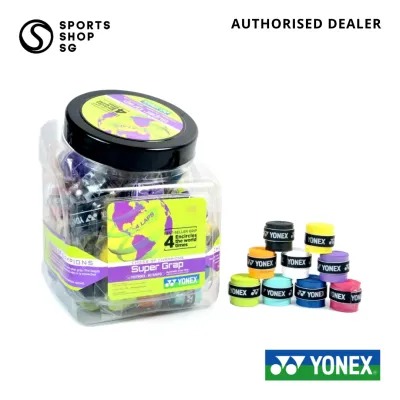
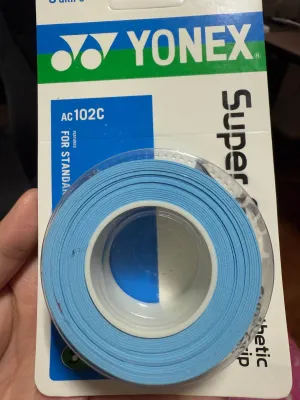
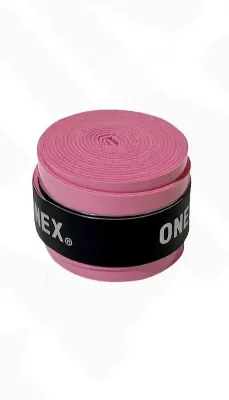
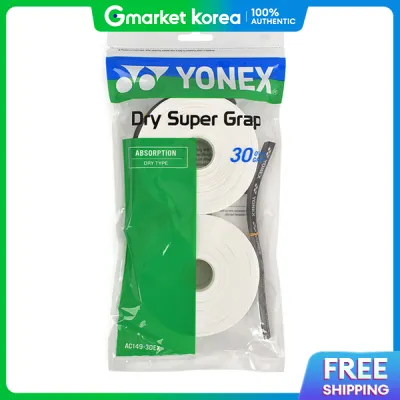
Prices are valid at publication and may change. Please refer to the product page for the latest price.
The surface texture of this overgrip is smooth rather than textured or perforated. This flat, uniform finish maximizes the surface area in contact with your fingers. Because there are no deep grooves or raised patterns, the grip allows for seamless sliding movements when shifting your hand position, minimizing the risk of friction burns and blisters during multi-hour training sessions.
On-Court Performance: How Specs Dictate Grip and Shock Absorption
An overgrip must perform reliably under the mechanical stresses of high-speed badminton gameplay. The technical properties of the PU material dictate how it behaves when subjected to moisture, sudden impacts, and repetitive friction.

Sweat Absorption in Humid Conditions
In tropical climates like Singapore, where indoor sports halls often lack air conditioning or experience high humidity, sweat management is a constant challenge for badminton players. The PU structure of the overgrip is designed to absorb a moderate amount of moisture from the palm, preventing the racket from twisting in the hand during high-speed defensive blocks or overhead smashes. The material uses microscopic pores to draw perspiration away from the immediate surface, maintaining its signature tacky feel through the initial stages of play.
However, every synthetic overgrip has a physical saturation limit. During prolonged, high-intensity rallies in humid environments, the PU material will eventually reach its maximum moisture capacity. Once saturated, the excess water remains on the surface, causing a noticeable drop in tackiness and making the handle feel slick. Players who perspire heavily may need to dry the grip with a towel between games or replace the wrap more frequently to maintain optimal slip resistance on the court.
Shock Absorption and Tactile Feedback
Every time a shuttlecock collides with the string bed, vibrational energy travels down the carbon fiber shaft and into the player’s hand. The density of the PU compound in the overgrip acts as a mechanical filter for these vibrations. By absorbing the harsh, high-frequency shocks resulting from off-center hits or repetitive heavy smashes, the material helps mitigate the physical strain placed on the wrist, elbow, and shoulder joints over time.
Despite this dampening effect, the grip does not completely isolate the player from the racket. A complete lack of feedback would make delicate net play, tight spinning shots, and flat drives difficult to execute, as players rely on tactile sensations to gauge shot power. The specific density of the overgrip preserves low-frequency tactile feedback, allowing you to feel the precise moment of shuttle impact without experiencing the uncomfortable jarring associated with bare wooden handles.
Player Profiling: Matching Super Grap Specs to Your Playstyle
No single overgrip design is universally perfect for every hand size, playstyle, or environmental condition. Analyzing how the physical specifications of the grip align with your specific physical traits helps determine if it is the correct choice for your racket.
The ideal candidates for this overgrip are players who value a highly secure, tacky hold and frequently execute rapid grip adjustments. Doubles players who constantly transition between forehand and backhand drives at the net benefit significantly from the smooth, high-friction surface. It is also highly suitable for recreational and competitive players who require a balanced blend of shock absorption and handle feel without significantly increasing the grip size.
Conversely, there are scenarios where this specification profile is less ideal. Players with exceptionally dry hands may find the high tackiness of fresh PU uncomfortable or overly adhesive, occasionally preferring a dry-feel grip or a traditional cotton towel wrap. Additionally, players with very small hands who use a small racket handle size (such as G6) might find that even a 0.6mm overgrip increases the grip diameter too much, making it harder to wrap their fingers fully around the handle bevels.
When purchasing, players often face a wide variety of color options and packaging configurations, such as single rolls, three-packs, or bulk reels. It is helpful to know that minor cosmetic variations, such as the color of the grip or slight packaging design updates, do not alter the underlying material specifications or on-court performance. While darker colors like black or navy may visually conceal dirt longer than white or yellow, the core polyurethane formulation and tackiness remain consistent across the color spectrum.
Maximizing Lifespan: Maintenance and Replacement Indicators
Maintaining the physical integrity of your overgrip ensures consistent on-court performance and protects the underlying racket handle from moisture damage. Because PU is a synthetic polymer, it naturally degrades over time due to exposure to sweat, friction, and environmental factors.
Recognizing the early signs of wear and tear prevents unexpected racket slippage during a match. A clear indicator that the grip requires replacement is a complete loss of surface tackiness, leaving the material feeling dry, smooth, or slippery. Physical degradation, such as flaking of the top PU layer, discoloration from sweat absorption, or the appearance of hardened, compressed spots, indicates that the material has lost its elastomeric properties and can no longer provide adequate shock absorption.
To maximize the lifespan of your overgrip, proper application and storage are essential. When wrapping the handle, maintain consistent, moderate tension; pulling the grip too tightly stretches the PU thin, reducing its cushioning capability and accelerating wear, while wrapping too loosely can cause the grip to bunch up or slide during play. Additionally, store unused spare grips in a cool, dry place away from direct sunlight and high temperatures, as excessive heat can dry out the synthetic compounds, causing the material to crack or lose its tackiness before it is even applied to the racket.
Frequently Asked Questions (FAQ)
Should I remove the original replacement grip before applying the Yonex Super Grap?
No, you should not remove the original factory replacement grip before applying the overgrip. The yonex super grap is specifically engineered as an overgrip, which is designed to be wrapped directly over the thicker, cushioned base grip that comes pre-installed on the racket handle.
Removing the base grip and wrapping an overgrip directly onto the bare wooden handle is generally discouraged unless you are intentionally trying to reduce the handle size and are prepared for a highly rigid feel. Without the thick base grip, the thin overgrip cannot provide sufficient shock absorption, which can increase the risk of wrist fatigue and impact injuries. Furthermore, sweat can easily penetrate the thin layer and seep into the wood, potentially causing the handle to rot or decay over time.
Be aware that layering multiple overgrips on top of each other will alter the racket’s overall physical characteristics. Adding extra layers increases the handle’s diameter, which rounds out the bevels and makes it harder to index your grip. It also adds weight to the handle end, shifting the racket’s balance point toward the grip and making the head feel lighter, which can subtly alter your swing timing and power generation.
Community discussion
Share your experience or ask a question. Comments are reviewed before publication.