
Selecting a 1000ml sports water bottle that keeps your drinks ice-cold during an intense workout requires looking beyond flashy brand logos and marketing slogans. While many manufacturers promise up to 24 hours of cold retention, the actual performance of a vacuum-insulated bottle depends on fundamental thermal physics, material quality, and lid design. To find a bottle that truly performs under demanding conditions, you must evaluate how its construction limits heat transfer through conduction, convection, and radiation.
A 1000ml capacity is highly popular among fitness enthusiasts because it provides a substantial volume of hydration—equivalent to one liter—without requiring constant refills during long training sessions. However, this larger size also introduces specific physical challenges, such as increased weight and a larger surface area exposed to ambient heat. Understanding how different design elements interact allows you to make an informed choice based on your specific workout environment, whether you are training in an air-conditioned indoor gym or running outdoors in high humidity.
Rather than relying on generic performance ratings, the most reliable way to compare these bottles is to inspect their physical specifications and match them to your activity level. By focusing on verifiable construction details, such as the type of vacuum seal, the material of the inner lining, and the design of the lid, you can accurately predict how well a bottle will maintain your preferred beverage temperature.
Products mentioned in this guide
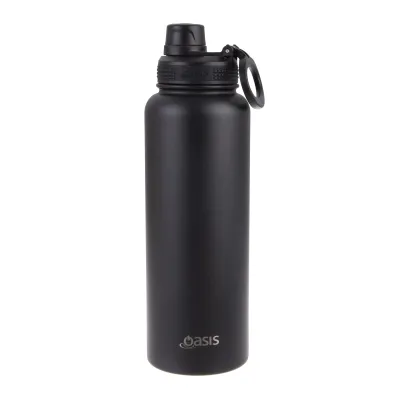
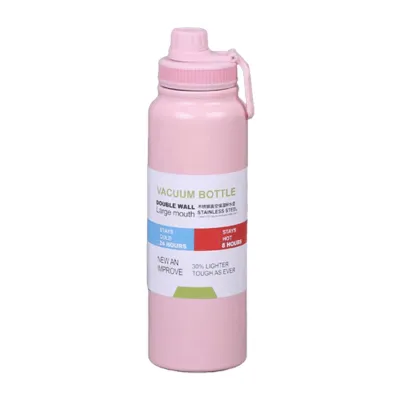
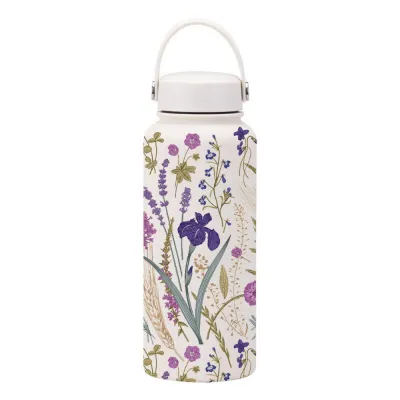
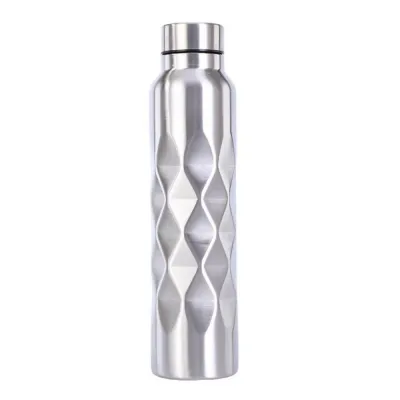
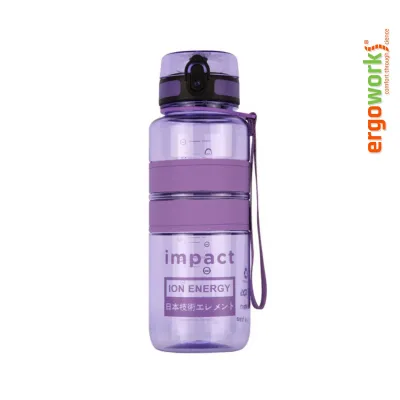
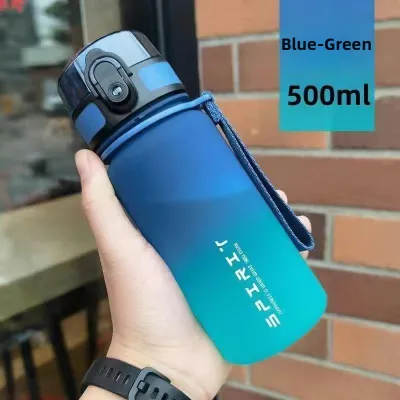
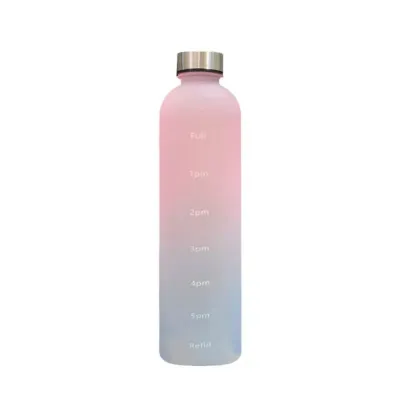
![[BPA Free] 1000/750ML Motivational Water Bottle With Time Marker And Straw/Sports Water Bottle With Handle/Tritan And Food Grad PC Material/Leak Proof Portable/Drinking Kettle Fitness Sport WaterJug For Men Women Kids Student](https://img.lazcdn.com/g/p/25f75e1b2338812d6d787b6452a9496e.jpg_400x400q80.jpg_.webp)
Prices are valid at publication and may change. Please refer to the product page for the latest price.
Key Specifications That Determine Cold Retention
The primary mechanism behind any high-performing insulated sports bottle is double-wall vacuum insulation. This construction features an inner and outer stainless steel wall with the air evacuated from the space between them, creating a near-complete vacuum. Because heat requires a physical medium to travel via conduction or convection, this vacuum barrier effectively stops heat from transferring from the warm outside air to your cold drink. When comparing 1000ml bottles, verify that the manufacturer specifies “double-wall vacuum insulation” rather than simple double-wall construction, which may only contain air and offers significantly lower thermal resistance.
To further enhance thermal performance, some premium bottles incorporate a reflective lining, often made of copper, on the outer surface of the inner stainless steel wall. This copper layer acts as a radiation barrier, reflecting radiant heat away from the interior chamber. While you cannot see this layer directly, high-quality manufacturers will explicitly list copper plating or triple-wall technology in their technical specifications. If you frequently exercise in direct sunlight or high-heat environments, prioritizing a bottle with this additional thermal barrier can noticeably improve cold retention.
The lid is often the weakest link in a bottle’s insulation system, as it represents a physical break in the vacuum barrier where heat transfer can easily occur. Screw-top lids generally offer the best thermal seal because they typically feature thick, insulated plastic or stainless steel construction with a heavy-duty silicone gasket that compresses tightly against the bottle neck. In contrast, lids with built-in straws, flip-caps, or push-button spouts introduce multiple seams, moving parts, and thinner materials. These design elements allow cold air to escape and warm ambient air to enter more rapidly, reducing the overall duration of temperature retention.
Another critical factor is the width of the bottle’s neck, which directly influences both ice retention and thermal bridging. Wide-mouth bottles make it incredibly easy to drop in large ice cubes, which significantly lowers the starting temperature of your drink and extends the cooling effect. However, a wider opening also means a larger surface area of non-vacuum-insulated lid material is exposed to the air, creating a larger thermal bridge. Narrow-mouth bottles have a smaller uninsulated surface area at the top, which naturally limits heat exchange, but they make adding ice cubes highly challenging and are more difficult to clean.
Evaluating Insulation Claims on Product Labels
When reading product labels that claim “24 hours cold” or “12 hours hot,” it is essential to understand that these figures are generated under highly controlled laboratory conditions. Manufacturers typically conduct these tests in temperature-regulated indoor environments, starting with water that is just above freezing and keeping the bottle completely sealed for the duration of the test. In real-world scenarios, such as an outdoor workout at a local fitness corner or a run along East Coast Park, the bottle is exposed to direct sunlight, high ambient temperatures, and frequent opening, all of which rapidly accelerate heat transfer.

One natural advantage of a 1000ml bottle is its high thermal mass. A larger volume of cold liquid contains more thermal energy (or rather, requires more heat energy to raise its temperature) than a smaller volume, meaning a full 1000ml bottle will inherently stay cold longer than a 500ml bottle of identical construction. To maximize this thermal mass advantage, you should always fill your bottle completely to the top with cold water and ice. Leaving a large pocket of warm air inside the bottle when it is only partially filled will cause the remaining liquid to warm up much faster.
To get an accurate picture of how a bottle performs in daily use, cross-reference the manufacturer’s claims with detailed user feedback on online marketplaces and independent sports forums. Look specifically for reviews from users who exercise in similar climates to yours, paying close attention to comments about how long ice remains solid inside the bottle. If multiple reviews mention that the exterior of the bottle feels cold to the touch or that condensation forms on the outside, this is a clear indication of poor insulation or a compromised vacuum seal.
Design and Usability Trade-offs for 1000ml Bottles
While maximum insulation is highly desirable, it comes with a significant trade-off in terms of weight and portability. A 1000ml stainless steel bottle, when completely filled with water and ice, can easily weigh over 1.3 kilograms. This substantial weight can make the bottle cumbersome to carry by hand during long walks or runs. Before purchasing, consider how you plan to transport the bottle; check if your gym bag or backpack has side pockets wide enough to accommodate a bottle that typically measures around 9 to 10 centimeters in diameter, or look for models that feature integrated carrying loops or compatible shoulder slings.
Condensation resistance, often marketed as “sweat-proof” technology, is a crucial feature to verify if you plan to carry your bottle alongside electronics, gym clothes, or paper documents. A properly functioning vacuum-insulated bottle should never develop condensation on its exterior, regardless of how cold the liquid is inside or how humid the surrounding air is. If you notice moisture forming on the outside of your bottle, it indicates that heat is actively transferring through the walls, which not only ruins your gear but also means your drinks will warm up rapidly.
Hygiene and maintenance are additional practical considerations that are easily overlooked when focusing solely on insulation specs. Insulated lids with complex straw mechanisms, bite valves, or multi-part flip tops are notorious for trapping moisture, sports drink residues, and bacteria. Over time, this can lead to mold growth and unpleasant odors that are difficult to eliminate. If you prefer the convenience of a straw lid, ensure that the manufacturer’s design can be completely disassembled for thorough cleaning, and invest in specialized straw brushes to reach every crevice.
How to Choose the Right Insulated Bottle for Your Workout
To select the ideal 1000ml insulated bottle, you must establish a clear decision framework based on your primary workout environment and hydration habits. If your routine consists of long outdoor sessions in Singapore’s tropical heat, your absolute priority should be maximum thermal efficiency. In this scenario, choose a wide-mouth, double-wall vacuum-insulated bottle with an inner copper lining and a simple, insulated screw-top lid. This configuration allows you to pack the bottle with ice and provides the tightest possible seal against external heat, ensuring your water remains refreshingly cold even after hours in the sun.
For indoor gym workouts, functional fitness classes, or court sports where you have easy access to water dispensers and air conditioning, extreme multi-day cold retention is less critical. Here, usability and convenience take precedence. A bottle featuring a one-handed flip-lid or an integrated straw design is highly advantageous, allowing you to take quick sips between sets without interrupting your momentum or risking spills. While these lids offer slightly less insulation than a solid screw-top, they provide more than enough thermal protection for a standard one-to-two-hour indoor training session.
Finally, if you plan to use your 1000ml bottle as a versatile container for both ice-cold water and hot recovery beverages like tea or broth, you must carefully verify the manufacturer’s material limits and care instructions. Not all sports bottles are rated to handle boiling liquids safely. Some models use plastic components, silicone seals, or internal coatings that can degrade, warp, or leach chemicals when exposed to high temperatures. Always confirm that the bottle is explicitly certified for both hot and cold liquids before pouring in any boiling beverages.
Frequently Asked Questions (FAQ)
Does a 1000ml bottle keep drinks colder longer than smaller sizes?
Yes, a 1000ml bottle will generally keep drinks cold longer than a smaller bottle of the exact same construction due to the principle of thermal mass. A larger volume of cold water requires a significantly greater amount of heat energy to transfer from the environment to raise its temperature by even a single degree. This means that as long as both bottles are filled to capacity, the larger bottle has a natural physical advantage in resisting temperature changes.
To fully benefit from this effect, it is important to minimize the amount of empty space inside the bottle. Air is a poor thermal conductor, but a large pocket of warm air introduced every time you open the bottle will quickly transfer heat to the remaining liquid. Keeping your 1000ml bottle topped up with cold water and ice ensures that the thermal mass remains high, maximizing the duration of its insulation performance throughout your workout.
Can I put boiling water in a bottle optimized for cold retention?
You should never assume a bottle designed for cold retention can safely hold boiling water without first checking the manufacturer’s explicit instructions. While the stainless steel body of a vacuum-insulated bottle can easily withstand high temperatures, the lids, gaskets, and straw mechanisms are often made of plastics and silicones that may warp, degrade, or release unwanted chemicals when exposed to temperatures near boiling point.
Additionally, pouring boiling water into a sealed bottle creates a significant safety hazard due to pressure buildup. As the hot liquid heats the air trapped inside the sealed chamber, the air expands, creating high pressure. When you open a flip-lid, straw valve, or even a standard screw-top, this pressure can cause boiling liquid or steam to spray out forcefully, leading to severe burns. Always allow hot liquids to cool slightly, and ensure the bottle is rated for hot beverages before use.

Community discussion
Share your experience or ask a question. Comments are reviewed before publication.