
When comparing the insulation performance of 3000ml sports water bottles across leading brands, the absence of a universal third-party testing standard means that evaluating thermal retention requires looking beyond marketing claims. The best choice depends on matching the bottle’s structural design, lid mechanism, and manufacturer-stated specifications to your specific activity and environmental conditions. This guide provides a framework to critically assess insulation claims, understand the physical factors that affect temperature retention in large-capacity bottles, and make a condition-based decision for your hydration needs.
To make an informed comparison, you must understand that thermal performance is not a single, static number. A brand claiming “up to 24 hours cold” is presenting a best-case scenario under controlled laboratory conditions that rarely match real-world usage. For a massive 3000ml (approximately 100-ounce) container, the physics of heat transfer behave differently than they do in standard 500ml or 1-litre bottles. The sheer volume of liquid creates a substantial thermal mass, which can work to your advantage, but only if the structural integrity of the vacuum seal and the design of the lid prevent heat from bridging the gap between the interior and the exterior environment.
By focusing on verifiable design elements—such as the thickness of the stainless steel walls, the presence of internal copper coatings, the surface area of the lid, and the quality of the silicone gaskets—you can look past marketing slogans. This analytical approach allows you to compare different brands objectively, ensuring that your investment in a high-capacity sports bottle delivers the temperature retention you require for long training sessions, outdoor excursions, or demanding workdays.
Products mentioned in this guide
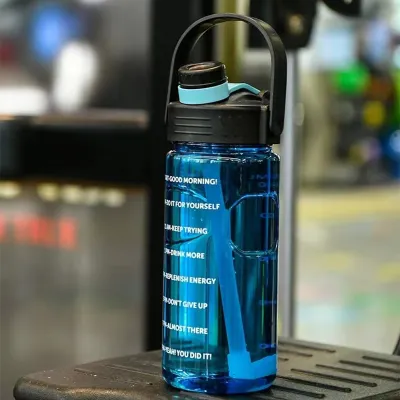
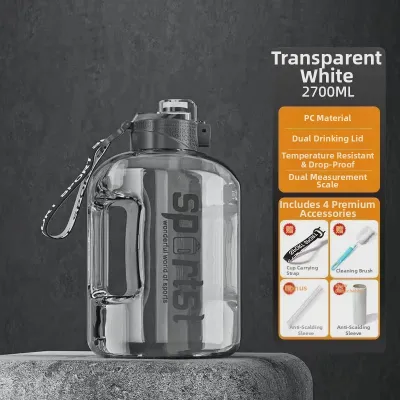
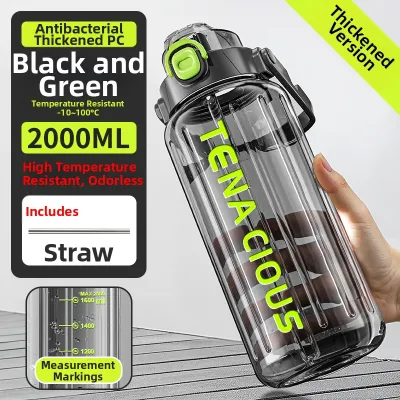
Prices are valid at publication and may change. Please refer to the product page for the latest price.
Key Factors That Determine Insulation in 3000ml Bottles
The foundation of any high-performance insulated water bottle is double-wall vacuum insulation. This technology relies on two stainless steel vessels nested inside one another, with the air between them evacuated during manufacturing. Because a vacuum contains no air molecules, it virtually eliminates heat transfer via conduction and convection. However, not all vacuum layers are created equal. In 3000ml bottles, the structural demands of holding three kilograms of liquid require thicker steel walls (typically food-grade 18/8 or 304 stainless steel) to prevent the vacuum cavity from collapsing under pressure or impact. When comparing brands, look for those that specify the grade of steel and the structural reinforcement of the outer wall, as a dented bottle can compromise the vacuum seal entirely.
While conduction and convection are minimized by the vacuum, radiation still allows heat to transfer across the empty space. To combat this, premium manufacturers apply a thin layer of copper or silver plating to the outer surface of the inner wall. This reflective metallic barrier bounces radiant heat away from the liquid, significantly extending the duration of thermal retention. When evaluating different brands, check the product specifications for explicit mentions of “copper lining” or “reflective thermal barriers.” If a brand omits this detail, it is highly likely they rely solely on the basic vacuum layer, which may result in faster temperature degradation over a multi-hour period.
The most vulnerable point for thermal loss in any insulated bottle is not the metal body, but the lid. Because plastic and silicone cannot match the insulation properties of a double-walled vacuum steel chamber, heat enters or escapes primarily through the top of the bottle. For a 3000ml bottle, the lid is necessarily larger to accommodate the wide mouth required for easy filling and cleaning. This increased surface area makes the sealing mechanism critical. High-quality brands utilize thick, food-grade silicone gaskets that compress tightly against the rim to prevent air exchange. The thickness of the lid itself, the presence of internal insulating foam within the plastic cap, and the overall design of the closure system dictate how much heat will bridge this gap during the day.
How to Evaluate Brand Specifications and Labels
When browsing online marketplaces or sports specialty stores, you will encounter various thermal retention claims, such as “keeps cold for 36 hours” or “keeps hot for 12 hours.” To compare these claims objectively, you must understand the baseline testing conditions behind them. Most manufacturers conduct their tests in temperature-controlled laboratories, typically at an ambient room temperature of around 20°C to 22°C. For cold retention tests, the bottle is usually filled to capacity with water chilled to approximately 4°C, often with ice added, and the test concludes when the water reaches a specific threshold, such as 15°C. Hot retention tests often start with boiling water at 95°C and measure how long it takes to drop to 55°C.

Because these tests are performed with the lid kept tightly closed throughout the entire duration, they do not reflect real-world drinking habits. Furthermore, there is a natural physical disparity between cold and hot retention times. Cold liquids benefit from a smaller temperature differential relative to typical ambient conditions (e.g., a 4°C drink in a 30°C environment has a 26-degree difference), whereas hot liquids face a much steeper gradient (e.g., a 90°C drink in a 30°C environment has a 60-degree difference). This steep gradient accelerates heat loss, which is why hot retention ratings are always significantly shorter than cold retention ratings.
To verify these claims, look for brands that reference standardized testing methodologies or provide detailed charts showing the temperature curve over time. Be skeptical of brands that use vague terms like “super-insulated” or “extreme thermal barrier” without providing concrete starting and ending temperatures or testing durations. If a manufacturer does not disclose their testing parameters, you should treat their claims as marketing estimates rather than verified performance metrics. Checking user manuals or official brand specifications sheets for these details is a reliable way to separate high-performing products from lower-quality alternatives.
Real-World Conditions Affecting Thermal Retention
In practical sports and outdoor scenarios, several variables will alter your bottle’s insulation performance, regardless of the brand’s laboratory ratings. One of the most significant factors is the fill volume and the resulting headspace air gap. When a 3000ml bottle is completely full, it possesses a large thermal mass, meaning it contains a massive amount of thermal energy (or lack thereof, in the case of cold water) that resists temperature change. However, as you drink and empty the bottle, the liquid is replaced by ambient air. This growing air gap accelerates heat exchange every time you open the lid, causing the remaining liquid to warm up or cool down much faster than it would in a fully filled container.
To maximize the effectiveness of the vacuum insulation, pre-conditioning the bottle is a highly recommended routine. If you intend to keep water cold, fill the bottle with ice water and let it sit for five to ten minutes to chill the inner stainless steel wall before emptying it and refilling it with your actual beverage. For hot liquids, pre-heat the bottle with boiling water in the same manner. This simple step ensures that the thermal energy of your drink is not immediately wasted on cooling or heating the internal metal structure of the bottle itself.
Environmental exposure also plays a massive role in thermal performance. In hot and humid climates, such as Singapore, a bottle left in direct sunlight on a sports field, inside a parked vehicle, or on an outdoor gym rack will experience extreme external temperatures. While the vacuum layer prevents direct conduction, the intense radiant heat from the sun will warm the outer steel shell, which in turn transfers heat through the lid and the neck of the bottle. To maintain optimal performance under these conditions, keep your bottle shaded, use an insulated carrying sleeve, and minimize the duration the lid remains open.
Decision Framework: Choosing the Right 3000ml Bottle for Your Activity
Selecting the ideal 3000ml sports water bottle requires balancing thermal efficiency against convenience, weight, and ergonomics. If your primary goal is maximum thermal retention for long-duration, low-sip activities—such as all-day hiking, camping, or endurance cycling—a narrow-mouth model with a solid, insulated screw cap is the most effective choice. The smaller opening minimizes the surface area exposed to the air when you open the bottle, and the solid cap provides a superior thermal seal compared to complex lid designs.
Conversely, if you require frequent, high-volume hydration during high-intensity gym sessions, team sports, or fitness training, a wide-mouth bottle with a straw lid or a quick-flip spout is far more practical. These designs allow you to drink quickly without tilting a heavy 3kg bottle. However, you must acknowledge the trade-off: straw lids and flip-tops introduce thermal bridges and air pathways that allow heat to enter more rapidly, reducing the overall duration of temperature retention. For these activities, convenience often outweighs the need for multi-day insulation, making a slightly lower thermal performance an acceptable compromise.
The physical dimensions and weight of a 3000ml bottle are critical practical considerations. When completely filled with water, a 3000ml stainless steel bottle will weigh well over 3.5 kilograms. This weight makes ergonomic handles, heavy-duty carrying straps, or integrated paracord loops essential features to look for when comparing brands. A bottle that is difficult to carry or pour from will quickly become a burden, regardless of how well it keeps your water cold.
Finally, before finalizing your purchase, verify the physical dimensions of the bottle. A 3000ml bottle has a substantial base diameter that will not fit into standard vehicle cup holders or typical gym equipment bottle cages. If you plan to transport the bottle in a car or secure it to a specific piece of outdoor gear, measure the available space and compare it to the manufacturer’s specified base diameter. For transport in Singapore, where public transit or compact vehicles are common, ensuring you have a secure, leak-proof carrying bag or a dedicated backpack sleeve for a bottle of this size is highly recommended.
Frequently Asked Questions (FAQ)
Does a larger 3000ml capacity improve or reduce insulation compared to smaller bottles?
A larger 3000ml capacity generally improves insulation performance compared to smaller bottles, provided the bottle is completely full. This phenomenon is due to the relationship between liquid volume and surface area. A larger volume of liquid has a higher thermal mass, meaning it contains more thermal energy and is more resistant to temperature changes caused by external heat transfer. The ratio of the bottle’s surface area to its internal volume is lower in a 3000ml bottle than in a 500ml or 1-litre bottle, which slows down the rate of heat exchange through the walls.
However, this advantage only holds true when the bottle is filled to capacity. Once you begin drinking and create a large air gap inside the bottle, the thermal performance degrades. A partially filled 3000ml bottle contains a large volume of air that circulates and exchanges heat every time the lid is opened, which can cause the remaining liquid to change temperature faster than it would in a smaller, fully filled bottle.
Are straw lids or screw caps better for maintaining temperature in large sports bottles?
Screw caps with solid, insulated tops and thick silicone gaskets are significantly better for maintaining temperature than straw lids or flip-top spouts. A solid screw cap creates a continuous, airtight seal over the bottle’s opening, eliminating direct air pathways and minimizing the surface area through which heat can escape or enter. Many premium screw caps also feature internal insulation or double-wall construction to further reduce thermal bridging.
In contrast, straw lids and flip-top mechanisms prioritize drinking convenience over maximum thermal efficiency. These lids contain internal valves, folding joints, and air vents that act as thermal bridges, allowing heat to bypass the bottle’s insulation. Additionally, drinking through a straw lid often requires drawing air into the bottle, which accelerates heat exchange with the liquid inside. If long-term temperature retention is your absolute priority, a solid screw cap is the superior choice.

Community discussion
Share your experience or ask a question. Comments are reviewed before publication.