
Soft kettlebells have become a staple for home fitness enthusiasts in Singapore, offering a floor-friendly alternative to traditional cast iron weights. At the 8kg weight mark—a highly versatile threshold for endurance, core stability, and unilateral strength training—the local market presents a wide array of options. Choosing the right 8kg soft kettlebell requires looking beyond the weight label to evaluate how different brands construct their outer shells, handles, and internal fills.
For residents living in high-density housing like HDB flats, the choice of home workout equipment involves practical considerations such as noise reduction and floor protection. An accidental drop of a standard cast iron bell can damage parquet, crack ceramic tiles, or cause disruptive vibrations for neighbors downstairs. A well-designed soft kettlebell mitigates these risks, but performance and durability vary significantly across different manufacturing standards. This guide breaks down the essential comparison factors to help you find a durable, comfortable, and high-value option for your home workouts.
Core Evaluation Criteria for 8kg Soft Kettlebells
When comparing popular soft kettlebell brands, the outer shell material is your first line of defense against wear and tear. Neoprene, vinyl, and heavy-duty fabric (such as canvas or reinforced nylon) are the most common coverings. Neoprene offers a soft, slightly cushioned touch and moderate sweat resistance, though it can absorb moisture in Singapore’s humid climate if not dried properly. Vinyl is completely non-porous, making it exceptionally easy to wipe clean after a sweaty session, but it can become slippery when wet. Fabric covers are highly durable and excellent for protecting delicate floors, though they require regular sanitizing to prevent odors.
Products mentioned in this guide
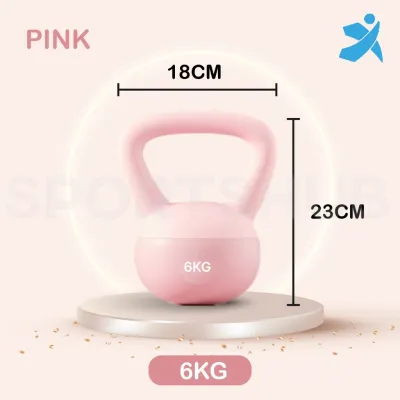
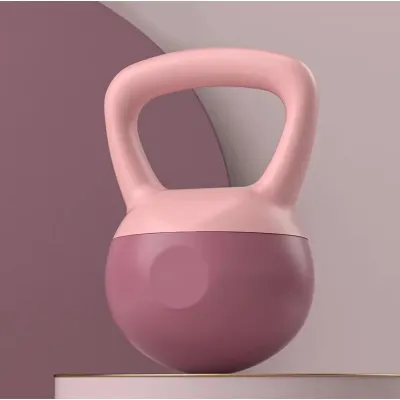
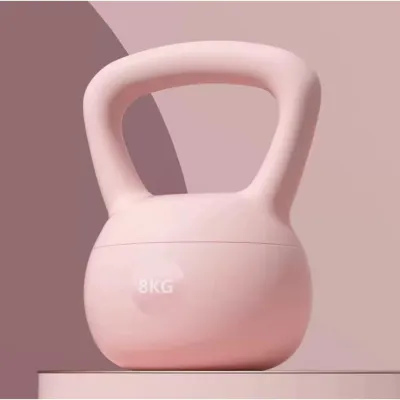
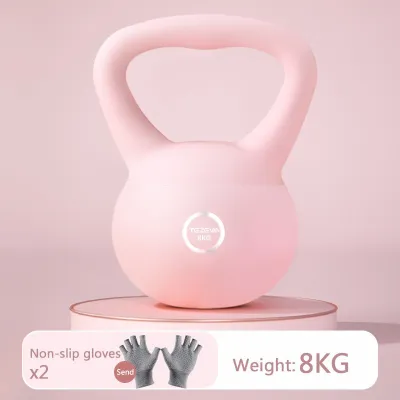
Prices are valid at publication and may change. Please refer to the product page for the latest price.
Inside the kettlebell, the type of fill material directly impacts both the physical size of the bell and its center of gravity. Sand, iron sand, and cement are the standard fills used by manufacturers. Sand fill is high-volume, which often results in a bulkier 8kg kettlebell that can feel awkward during close-body movements. Iron sand is much denser, allowing for a compact profile that closely mimics the dimensions of a traditional cast iron bell. Cement-filled options are common among budget-friendly brands, but they run the risk of cracking internally if dropped repeatedly, which eventually leads to shifting weight distribution.
Handle construction is the final core pillar of build quality. Some brands utilize solid core inserts made of steel or hard plastic wrapped in a soft outer layer, while others feature fully flexible molded fabric handles. Solid core handles provide a stable, predictable grip for classic ballistic movements like swings and cleans. Fully flexible handles, often found on sandbag-style kettlebells, shift the center of gravity dynamically during exercises. While this increases the stability challenge for your core, it can make traditional kettlebell movements harder to control for beginners.
Comparing Handle Designs and Grip Comfort
Handle width and clearance are critical specifications to check before purchasing an 8kg soft kettlebell. Because 8kg is a common weight for two-handed swings, the handle window must be wide enough to accommodate both hands comfortably without pinching your fingers. Narrow handles force your hands together, which can compromise your shoulder alignment and wrist posture during dynamic movements. Look for brands that specify a generous handle width, especially if you have larger hands.

Surface texture and seam placement play a major role in preventing friction burns and blisters. Cheaply manufactured soft kettlebells often have prominent, rough seams on the underside of the handle where the molded materials meet. During high-rep swing sets, these rough edges rub against your palms, causing discomfort. High-quality brands prioritize smooth, heat-sealed vinyl or seamless neoprene wraps along the gripping surface to ensure a comfortable, friction-free experience.
Ergonomic shaping is equally important for exercises where the kettlebell rests against your forearm, such as cleans, snatches, and overhead presses. A well-designed soft kettlebell should have a slightly contoured or flat-sided profile to distribute the weight evenly across your arm. Fully spherical or poorly padded models can cause localized bruising on the forearm, even at a moderate 8kg weight. Inspecting the physical shape of the bell body can give you a clear indication of how comfortable it will feel during overhead transitions.
Assessing Durability and Shift-Proof Construction
Stitching and seam quality are the primary indicators of longevity for fabric-shell soft kettlebells. Because an 8kg kettlebell experiences significant centrifugal force during swings, the seams are under constant tension. Look for models that feature reinforced, double-stitched nylon seams or heavy-duty cross-stitching at key stress points. If the stitching appears thin, uneven, or has loose threads straight out of the box, the shell is highly susceptible to splitting and leaking its internal fill over time.
Base stability is a crucial safety feature for floor-based exercises. If you plan to perform movements like renegade rows, push-ups on the handles, or simple floor-to-overhead transitions, the kettlebell must sit securely on the ground without wobbling. Soft kettlebells with loose sand fills often sag at the bottom, creating a rounded, unstable base. Premium brands solve this by incorporating a rigid, flat base plate inside the bottom of the shell, ensuring the kettlebell remains upright and stable during floor work.
To verify weight distribution and check for shift-proof construction, perform a physical inspection upon delivery or in-store. Pick up the kettlebell and shake it gently near your ear. You should not hear loose sand sliding around excessively, nor should you feel a distinct delay in the weight shifting inside the shell. A high-quality 8kg soft kettlebell should feel dense, unified, and balanced. If the internal fill shifts dramatically, it will create unpredictable momentum during dynamic exercises, increasing the risk of wrist strain.
Evaluating Price-to-Quality Ratios in the Local Market
When browsing online marketplaces and local fitness retailers in Singapore, understanding what justifies a higher price point helps you avoid low-quality purchases. Premium features that warrant a higher investment include textured anti-slip handle coatings, reinforced internal steel frames, and precise weight calibration. High-end brands typically guarantee their weight accuracy within a very narrow tolerance (such as +/- 1%), ensuring that your 8kg kettlebell actually weighs 8kg rather than a lighter, cheaper approximation.
In the local market, entry-level soft kettlebells typically cost under S$25. While highly accessible, these budget models often utilize loose sand or cement fills wrapped in single-stitched fabric or thin PVC. They are suitable for occasional, light-duty home workouts but may suffer from handle deformation or seam stretching under regular use. Mid-tier to premium options, ranging from S$30 to S$60, generally offer reinforced neoprene or thick vinyl-dipped iron sand construction, providing a much closer feel to traditional cast iron while maintaining excellent floor safety.
When evaluating product listings, be wary of red flags such as vague material descriptions. Listings that simply state “soft material” without specifying whether the shell is neoprene, PVC, or fabric often indicate generic, low-grade manufacturing. Additionally, a lack of clear dimensions, handle-width measurements, or weight tolerance specifications should prompt you to look elsewhere. Reliable brands are transparent about their materials and physical dimensions.
Decision Framework: Which 8kg Soft Kettlebell Fits Your Routine?
To finalize your choice, match the kettlebell’s construction to your specific training environment and fitness goals:
- Choose a fabric-shell with sand fill if: You prioritize absolute floor protection and noise reduction in a typical apartment setting. The soft fabric and loose sand absorb impact exceptionally well, making this style ideal for quiet, high-rep cardio routines and basic swings where the bell might frequently contact the floor.
- Choose a vinyl-dipped model with iron sand fill if: You want a compact profile that closely mimics the dimensions of a standard cast iron kettlebell. This is the best fit if you train on a thick rubber gym mat or in a dedicated garage space, as the higher density allows for better control during complex movements like cleans, snatches, and Turkish get-ups.
- Verify first if: You have specific hand size constraints or previous wrist injuries. In these cases, prioritize a model with a wide, solid-core handle and a textured grip to minimize hand fatigue. Always check the manufacturer's weight tolerance specifications if you require exact calibration for structured strength programming.
Frequently Asked Questions (FAQ)
Can I use an 8kg soft kettlebell for heavy strength training?
An 8kg soft kettlebell is highly effective for endurance training, mobility work, shoulder rehabilitation, and high-velocity ballistic movements. It serves as an excellent starting weight for beginners learning proper hinge mechanics. However, for progressive overload and maximal strength gains in compound movements like deadlifts or heavy squats, 8kg will eventually become too light. Because soft-shell designs rarely scale safely to very heavy weights due to their bulk and stability limits, you will eventually need to transition to traditional cast iron or competition kettlebells as your strength demands increase.
How do I clean and maintain a soft kettlebell cover?
To maintain hygiene and prevent odors in Singapore’s humid climate, wipe down the cover after every workout using a damp cloth and a mild, non-abrasive soap. Avoid harsh chemical solvents or bleach, as these can degrade vinyl, neoprene, or fabric fibers. For fabric or neoprene shells, ensure the kettlebell is placed in a well-ventilated, shaded area to dry completely before storing it away; never store it wet or in direct sunlight, as trapped moisture can lead to mold growth. Stop using the kettlebell immediately and consult the manufacturer if you notice any seam tearing, fabric thinning, or internal filling leakage, as this compromises safety during dynamic exercises.

Community discussion
Share your experience or ask a question. Comments are reviewed before publication.