
Selecting the right Daiwa telescopic rod as a beginner in Singapore requires balancing portability with the specific demands of local fishing environments. Telescopic rods offer a distinct advantage for urban anglers who rely on public transport to reach their favorite spots. Instead of carrying a cumbersome two-piece rod on a crowded MRT train or bus, a compact telescopic model slides easily into a standard backpack. To make the best choice, you must understand how to evaluate a rod’s physical specifications against your intended fishing style, target species, and typical local venues.
Rather than searching for a single universal model, the key is matching the rod’s engineered capabilities to your immediate needs. Daiwa produces several telescopic series designed for different experience levels and environments. By learning how to read the manufacturer’s labels and inspect the physical build of these rods, you can confidently select an entry-level setup that performs reliably without unnecessary complexity.
Matching Your Rod to Singapore's Local Fishing Spots
Singapore offers a diverse range of fishing environments, from concrete breakwaters and long jetties to tranquil freshwater reservoirs and highly managed payponds. Each of these locations places unique demands on your tackle, meaning your choice of telescopic rod should directly reflect where you plan to spend most of your time.
Products mentioned in this guide
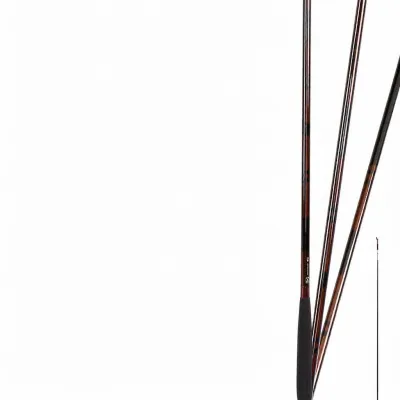
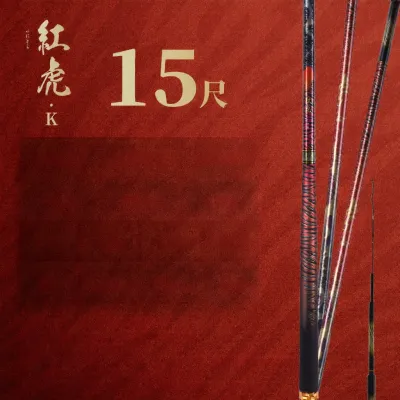
Prices are valid at publication and may change. Please refer to the product page for the latest price.
Coastal spots like Bedok Jetty, Labrador Park, or the breakwaters around Marina South expose your gear to harsh saltwater and require specific physical rod characteristics. Jetties and breakwaters often present a significant height clearance challenge, where you must lift your catch several meters out of the water. For these saltwater environments, you will want to verify that the rod has sufficient length to clear shoreline obstructions and enough structural power to handle the weight of local species like small groupers, snappers, or rabbitfish.
In contrast, freshwater reservoirs such as MacRitchie, Pandan, or Bedok Reservoir demand a different approach. Fishing in these designated zones typically involves casting lightweight artificial lures or soft plastics for active predators like peacock bass and giant snakehead. Here, casting accuracy and sensitivity are far more critical than raw lifting power. A lighter, more responsive telescopic rod allows you to feel the subtle vibrations of your lure and detect delicate bites from cautious fish swimming near submerged structures.
Managed fishing ponds, or payponds, represent another popular option for beginners looking to practice their skills. These environments are often stocked with hard-fighting species such as barramundi, red drum, or hybrid groupers. Because these fish can grow quite large and fight aggressively in confined spaces, your rod must feature a robust power rating to prevent the fish from wrapping your line around pond aerators or jetty pilings.
Portability remains a primary deciding factor for many local anglers. If you frequently commute via the MRT or bus network, a rod with a collapsed length of under 60 centimeters is highly advantageous. This compact size allows you to pack your rod safely inside a daypack, keeping your hands free and preventing accidental damage to the delicate rod tip during transit. If you primarily travel by private transport, you might prioritize a slightly longer collapsed length in exchange for fewer telescopic sections, which can offer a smoother bending curve.
Finally, consider the typical size of the fish you expect to encounter. Beginners in Singapore often start by targeting smaller species under one kilogram, such as yellowstripe scads, small tinfoil barbs, or tilapia. Choosing a rod that is overly heavy for these species reduces the excitement of the catch and makes it difficult to cast the lightweight rigs needed to entice them. Matching your rod’s power to the realistic size of local catches ensures a much more rewarding learning experience.
Key Specifications to Check on a Daiwa Telescopic Rod
When browsing Daiwa’s telescopic rod lineup, you will find a variety of technical specifications printed directly on the rod blank or the packaging. Understanding how to interpret these metrics is essential for selecting a model that aligns with your skill level and fishing goals.

The first specification to evaluate is the relationship between the extended length and the collapsed size. Extended length determines your casting distance and leverage; a longer rod of 2.1 to 2.4 meters (approximately 7 to 8 feet) allows for longer casts, which is highly beneficial when fishing from wide jetties or open reservoir banks. However, a longer extended rod typically requires more telescopic sections, which can slightly increase the overall weight and the number of friction joints you must maintain. For general beginner use, an extended length of 1.8 to 2.1 meters (6 to 7 feet) offers an excellent balance of casting distance, control, and ease of handling.
Power ratings indicate the rod’s overall stiffness and resistance to bending. These ratings range from Ultra Light (UL) and Light (L) to Medium Light (ML), Medium (M), and Heavy (H). For a beginner in Singapore, a Medium Light or Medium power rod is highly versatile. These ratings provide enough backbone to handle unexpected larger fish in saltwater canals while remaining sensitive enough to enjoy catching smaller freshwater species. Always check the recommended line weight (usually printed in pounds, such as 6–14 lb) and lure weight (printed in grams or ounces) on the rod blank to ensure they match the terminal tackle you plan to use.
Action refers to where the rod bends when pressure is applied. Fast action rods bend primarily near the tip, offering high sensitivity and quick hook sets, which are ideal for lure fishing. Medium or moderate action rods bend further down the blank, providing a more forgiving cushion that helps prevent hooks from tearing out of a fish’s mouth during a fight. Beginners often find medium-fast or moderate action rods easier to cast, as they load more progressively and accommodate minor timing errors during the casting motion.
Material composition significantly influences both the performance and durability of a telescopic rod. High-modulus carbon fiber (often referred to as graphite) makes the rod exceptionally light and sensitive, allowing you to feel minor underwater vibrations. However, carbon fiber is also more brittle and susceptible to damage from high-sticking or impact. Fiberglass, on the other hand, is heavier and less sensitive but offers superior impact resistance and durability. Many entry-level Daiwa rods utilize a composite blend of carbon and glass fibers to deliver a balanced combination of lightweight handling and rugged durability.
Inspecting the Rod Before and During Purchase
Because telescopic rods consist of multiple sliding sections, they feature more moving parts than traditional one-piece or two-piece rods. Conducting a thorough physical inspection before finalizing your purchase is crucial to ensure the rod is free from manufacturing defects and ready for the water.
Begin by carefully examining the line guides. On a telescopic rod, some guides are fixed to the ends of the sections, while others are “floating” guides designed to slide along the blank to distribute line tension evenly. Extend the rod fully and look down the blank from the reel seat to the tip. All guides must align in a perfectly straight line; any misalignment will create friction, reducing your casting distance and causing premature line wear. Gently run your fingernail along the inside of each ceramic guide insert to check for cracks, chips, or rough edges that could easily slice through your fishing line under tension.
Next, test the locking mechanisms of each individual section. Telescopic rods rely on friction fits to stay extended. Extend the rod section by section, starting from the tip and working your way down to the handle. Apply a gentle twist to lock each joint securely. Once fully extended, hold the rod by the handle and apply light downward pressure on the tip against a flat, clean surface to simulate the bend of a fish. The joints must hold firmly without slipping, collapsing, or twisting. If a section collapses easily under light pressure, the friction fit may be improperly sized.
Finally, inspect the reel seat and handle assembly. The reel seat must feature a smooth-threaded hood that tightens securely without binding or skipping threads. Insert a standard spinning reel into the seat and tighten the locking nut to verify there is no lateral movement or wobbling. The handle grip, whether made of high-density EVA foam or cork, should be securely bonded to the rod blank with no visible gaps, glue squeeze-out, or loose edges that could degrade after exposure to water.
Basic Care and Handling for Telescopic Rods
Proper operational habits and routine maintenance are essential to prevent structural damage and ensure your telescopic rod remains functional for years to come. Because dirt, sand, and salt can easily become trapped inside the sliding joints, these rods require more diligent care than standard multi-piece rods.
Always follow the correct sequence when extending and collapsing your rod. To extend the rod, start by removing the protective tip cap and gently pulling out the tip section first, locking it into place before moving to the next section down. Repeat this process until you reach the butt section. When collapsing the rod, reverse the process: start from the thickest section near the handle, unlock it with a gentle twist, and slide it down before moving to the next section up. Never slam the rod sections down or force them together, as this can easily crack the thin walls of the carbon blank or jam the joints permanently.
Routine cleaning is particularly critical after fishing in saltwater environments, which are common along Singapore’s coastline. Salt crystals and fine sand act as abrasives that can quickly scratch the protective coating of the blank and wear down the friction joints. After every outing, extend the rod fully and rinse it thoroughly under warm, running fresh water. Use a soft microfiber cloth to wipe away any salt residue, sand, or grime from the blank and the line guides. Allow the rod to dry completely in a well-ventilated indoor area before collapsing it for storage, as trapping moisture inside the closed sections can lead to internal corrosion and mold.
Store your telescopic rod in a cool, dry place away from direct sunlight and extreme heat, such as the trunk of a car parked outdoors. High temperatures can weaken the epoxies used to secure the line guides and reel seat. Always replace the protective guide cap when the rod is collapsed to shield the delicate tip and guides from physical impact during storage or transport.
Frequently Asked Questions (FAQ)
Can I use an entry-level telescopic rod for saltwater fishing at local parks?
Yes, you can use an entry-level telescopic rod in saltwater environments, provided you verify the manufacturer’s specifications for corrosion resistance. Many entry-level rods feature stainless steel guide frames and corrosion-resistant reel seats designed to withstand coastal conditions. However, saltwater is highly corrosive, and fine sand from local beaches can easily enter the telescopic joints. To prevent damage, you must rinse the entire rod thoroughly with fresh water and dry it completely after every saltwater session before collapsing the sections.
What reel size pairs well with a beginner telescopic rod?
For most beginner telescopic rods measuring between 1.8 and 2.1 meters, a spinning reel in the 1000 to 2500 size range provides the best balance. To determine the ideal size, check the recommended line weight printed on your rod’s label. If your rod is rated for 4–8 lb line, a 1000 or 2000 size reel is appropriate, whereas a rod rated for 6–14 lb line pairs better with a 2500 or 3000 size reel. Ensuring the reel is not excessively heavy prevents hand fatigue during long casting sessions and maintains the rod’s natural sensitivity.

Community discussion
Share your experience or ask a question. Comments are reviewed before publication.