
Selecting your first Shimano spinning reel in Singapore requires matching the gear to the specific coastal and freshwater environments found across the island. For most beginners, a versatile spinning reel in the 2000 to 3000 size class provides the ideal balance of weight, line capacity, and drag power. This size range allows you to transition smoothly between casting lures in freshwater reservoirs and bait fishing from coastal jetties without needing to purchase multiple specialized setups. By focusing on key specifications such as gear ratios, body materials, and corrosion resistance, you can select a reliable tool that simplifies the learning curve and withstands local tropical conditions.
Identifying Your Fishing Environment and Target Species in Singapore
Singapore offers a unique mix of fishing opportunities, ranging from tranquil freshwater reservoirs to high-current saltwater jetties and nearshore boat trips. Before selecting a reel, you must identify where you plan to spend most of your time, as the environment directly dictates the physical demands placed on your gear. For instance, casting light lures for peacock bass in reservoirs like MacRitchie or Bedok requires a lightweight, highly responsive setup that minimizes fatigue during hours of repetitive casting.
In contrast, fishing from coastal structures such as Bedok Jetty or Woodlands Jetty exposes your gear to harsh saltwater spray and strong tidal currents. Here, you are more likely to target species like tamban (fringe-scale sardines) using multi-hook sabiki rigs, or larger predators like snapper and grouper using live bait. These saltwater environments demand a reel with robust sealing to prevent salt crusting and a stronger drag system to stop powerful fish from diving into sharp jetty pilings or underwater debris.
Products mentioned in this guide
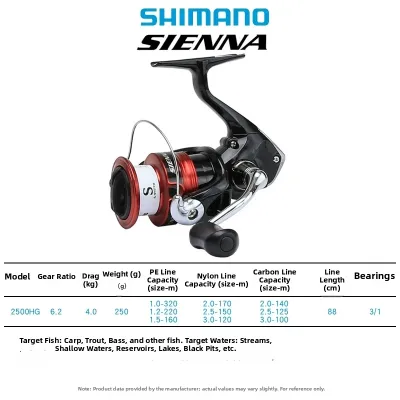
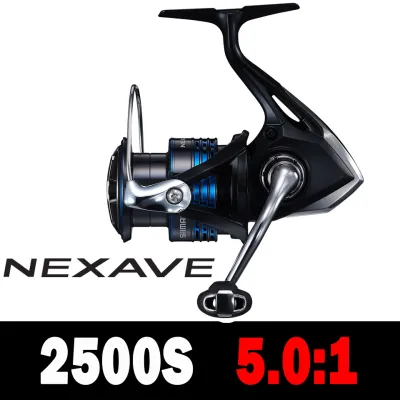
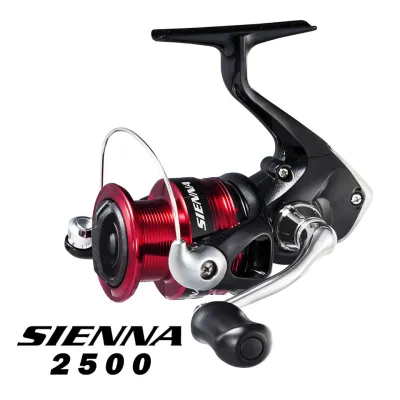
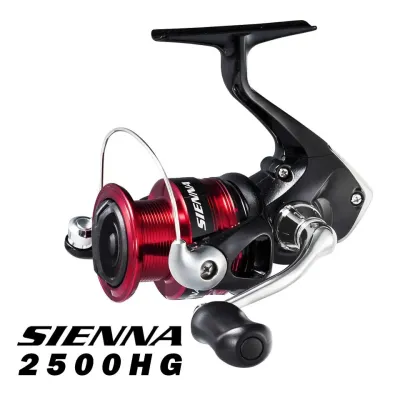
Prices are valid at publication and may change. Please refer to the product page for the latest price.
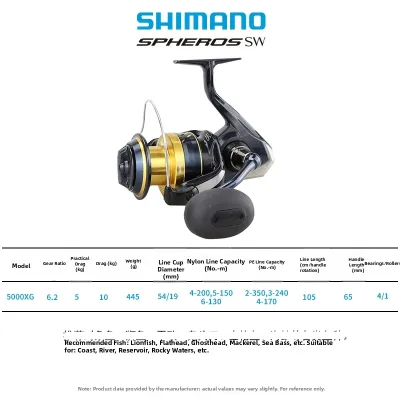
Your target species also determine the baseline drag and line capacity requirements of your reel. Freshwater species like peacock bass and snakehead are known for sudden, explosive runs that require a smooth, immediate drag engagement to prevent line breakage. Saltwater species, even smaller ones caught nearshore, tend to fight with greater sustained power and utilize the current to their advantage. A reel with a maximum drag rating of 3kg to 6kg is generally sufficient for freshwater and light coastal applications, while heavier jetty or boat fishing may require a rating of 9kg or more to maintain control over your catch.
Decoding Shimano Specifications for a Beginner-Friendly Setup
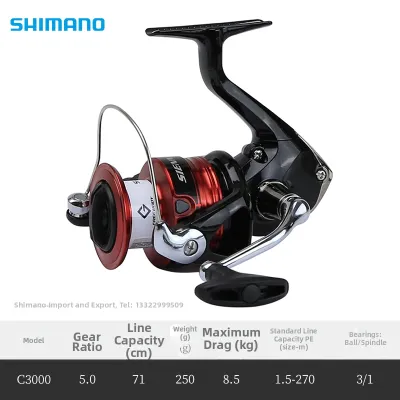
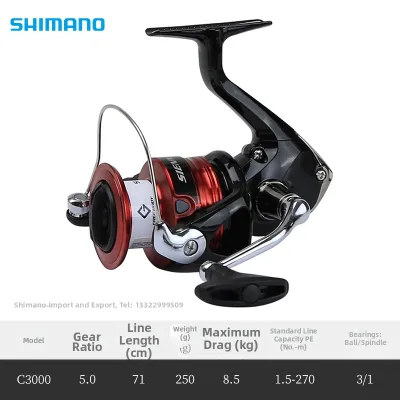
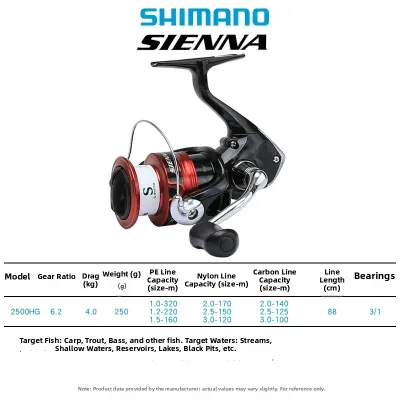
Understanding how to read a Shimano specification sheet is essential for selecting a reel that matches your skill level and fishing style. One of the first metrics to evaluate is the gear ratio, which indicates how many times the spool’s rotor spins for every single turn of the handle. A ratio of 5.0:1 is considered a medium speed, offering excellent cranking power for retrieving heavy baits or fighting stubborn fish. Higher ratios, such as 6.2:1 (often designated with an “HG” for high gear or “XG” for extra high gear on Shimano packaging), retrieve line much faster, which is highly beneficial when working topwater lures or quickly recovering slack line in moving water.

Line capacity ratings are another critical factor to verify before making a purchase. Shimano reels typically list capacity limits for both traditional nylon monofilament and modern braided lines (often referred to as PE lines). Braided lines have a much thinner diameter relative to their breaking strength, allowing you to pack significantly more line onto a smaller spool. For beginners in Singapore, spooling a 2500-size reel with PE 1.0 to PE 1.5 braid provides an excellent balance of casting distance, strength, and line capacity for both reservoir and jetty fishing.
The number and quality of ball bearings listed in the specifications directly influence the operational smoothness of the reel. While it is tempting to assume that more bearings automatically equate to a better reel, the placement and shielding of those bearings are far more critical. Shimano utilizes specialized shielded bearings, often labeled as S A-RB or A-RB, which are designed to resist dust, salt, and sand intrusion. When comparing entry-level models, prioritize reels that feature these protected bearings in key areas like the line roller and main shaft, as they significantly extend the smooth operating life of the reel.
Finally, pay close attention to the physical size and weight of the reel, which is denoted by numerical classes such as 1000, 2500, C3000, or 4000. The “C” prefix in Shimano sizing stands for “Compact,” meaning the reel features a larger spool capacity mounted on a smaller, lighter body frame. For a beginner, a C3000 size is often the ultimate sweet spot, offering the high line capacity of a 3000-size reel while maintaining the lightweight, comfortable handling of a 2500-size body.
Checking Build Quality and Corrosion Resistance for Local Waters
Singapore’s tropical climate, characterized by high humidity and intense salinity, is exceptionally harsh on fishing tackle. Without adequate build quality and corrosion resistance, a spinning reel can quickly develop rust, leading to gear misalignment and a rough retrieval feel. When browsing Shimano’s entry-level lineup, look for specific design features and materials engineered to withstand these demanding conditions.
The choice of body material plays a significant role in both the durability and weight of the reel. Many of Shimano’s beginner-friendly reels utilize high-strength graphite composites, such as their proprietary XT-7 material. Graphite is naturally immune to saltwater corrosion and keeps the overall weight of the reel low, which is a major advantage for beginners who are still developing their casting technique. On the other hand, aluminum alloy bodies offer superior rigidity under heavy loads, preventing the frame from flexing when fighting large fish, though they require more meticulous cleaning to prevent galvanic corrosion over time.
Another critical area to inspect is the bail wire and line roller assembly. The line roller is the small wheel that guides the fishing line onto the spool during retrieval, and it is highly susceptible to saltwater buildup because it is in constant contact with wet line. Ensure the model you choose features a smooth, seamless transition from the bail wire to the roller to prevent thin braided lines from catching or fraying. Advanced entry-level models may also feature water-resistant coatings or labyrinth seals, such as CoreProtect, which help repel water from entering the roller bearing and roller clutch assembly.
Balancing Your Reel with the Right Rod and Line
A spinning reel does not operate in isolation; it must be carefully paired with a compatible rod and line to create a balanced, comfortable fishing system. When a setup is properly balanced, the pivot point rests naturally near the reel seat when you hold the rod. This balance is crucial for reducing wrist fatigue and shoulder strain during long fishing sessions, allowing you to maintain precise control over your lure presentations.
To achieve this balance, match the physical size and weight of your Shimano reel to the power and action of your rod. A lightweight 1000 or 2000-size reel is best suited for ultra-light to light power rods designed for casting tiny lures in reservoirs. If you pair a heavy 4000-size reel with a light rod, the setup will feel bottom-heavy and clumsy. Conversely, a C3000-size reel pairs beautifully with a medium-light to medium power rod rated for 8lb to 17lb lines, creating a highly versatile combo capable of handling both freshwater predators and coastal saltwater species.
Additionally, you must align the reel’s maximum drag output with the breaking strain of your mainline and leader. If you are using a reel with a maximum drag of 4kg, spooling it with a 30lb (approx. 13.6kg) braided line is highly inefficient and can place excessive stress on the reel’s internal gears and drag washers before the drag can slip. A good rule of thumb is to select a mainline with a breaking strength that is roughly two to three times the maximum drag setting you plan to use, ensuring that the drag system can smoothly release line during a hard run without risking a sudden line snap or rod breakage.
Purchasing Safely and Verifying Authenticity
As you prepare to purchase your first Shimano spinning reel, navigating the local market safely is essential to ensure you receive an authentic product backed by a valid warranty. Due to the global popularity of the brand, counterfeit reels occasionally find their way onto online marketplaces. To protect your investment, prioritize purchasing from authorized local tackle shops in Singapore or official brand flagship stores on reputable e-commerce platforms.
When your reel arrives or when inspecting it in a physical shop, take a few moments to verify its packaging and physical integrity. Authentic Shimano reels are packaged in high-quality boxes featuring clear, crisp printing, accurate model codes, and matching serial numbers. Inside the box, you should find the reel itself, a detailed schematic diagram illustrating all internal parts, a user manual, and, in many cases, adjustment washers for adjusting the line lay on the spool. Inspect the reel’s finish for any uneven paint, loose screws, or rough edges, and turn the handle to ensure the rotation is smooth and silent.
Furthermore, check for the presence of an official local distributor warranty card. In Singapore, having a local warranty is incredibly valuable, as it grants you access to authorized service centers and genuine spare parts. If your reel requires maintenance, a replacement line roller, or new drag washers after a season of heavy use, authorized service centers can perform the repairs quickly and professionally, ensuring your gear remains in peak operating condition for years to come.
Frequently Asked Questions (FAQ)
Do I need a spare spool for my first Shimano reel?
For most beginners starting out in Singapore, a spare spool is not an immediate necessity, though it does offer distinct advantages. A spare spool allows you to quickly swap between different line types or breaking strengths without needing to buy a second reel. For example, you could have one spool loaded with light monofilament line for targeting tamban at the jetty, and another loaded with stronger braided line for casting lures in a reservoir. However, if you are on a budget, starting with a single spool loaded with a versatile 15lb braided line and a fluorocarbon leader will easily cover the vast majority of local fishing scenarios.
How should I maintain my spinning reel after fishing in saltwater?
Proper post-trip maintenance is the single most effective way to prolong the lifespan of your spinning reel, especially after exposure to Singapore’s saltwater environments. Immediately after returning from a fishing trip, tighten the reel’s drag knob completely to prevent water from penetrating the delicate felt or carbon drag washers inside the spool. Gently rinse the exterior of the reel under a slow-running tap of cool, fresh water, taking care not to submerge the reel or use high-pressure spray, which can force salt and water deep into the internal gears. After rinsing, wipe the reel down with a clean, dry cloth, loosen the drag knob completely to relieve pressure on the drag washers, and store the reel in a cool, dry, and well-ventilated indoor space away from direct sunlight. If the reel begins to feel gritty or noisy after several trips, take it to a local tackle shop for professional cleaning and lubrication.

Community discussion
Share your experience or ask a question. Comments are reviewed before publication.