
Selecting the right yoga mat thickness is a critical decision that directly impacts your balance, joint comfort, and overall practice quality. When comparing Adidas, Lululemon, and Manduka, you are looking at three distinct design philosophies. Adidas generally caters to multi-sport fitness enthusiasts with versatile, moderately cushioned mats. Lululemon focuses on dynamic, high-grip options with specific reversible thickness profiles. Manduka offers a highly structured, professional-grade hierarchy ranging from ultra-thin travel sheets to exceptionally dense, heavy-duty mats. Finding your ideal match requires looking beyond the millimeter measurement to evaluate how material density and surface texture align with your specific practice environment.
Understanding Yoga Mat Thickness for Your Practice
Yoga mats typically fall into three primary thickness categories, each serving a distinct purpose. Thin mats, measuring between 1.5mm and 3mm, are designed primarily for travel and maximum stability. They allow your feet and hands to remain in close contact with the floor, which is highly beneficial for standing balance poses. However, they offer minimal cushioning, making them less suitable for practices with prolonged floor contact.
Standard mats, ranging from 4mm to 5mm, represent the industry sweet spot. These mats aim to balance joint protection with floor feedback, making them versatile enough for dynamic Vinyasa flows, gentle Hatha sessions, and basic strength training. They provide sufficient padding for knees and elbows without creating an unstable, squishy surface that compromises your alignment.
Products mentioned in this guide
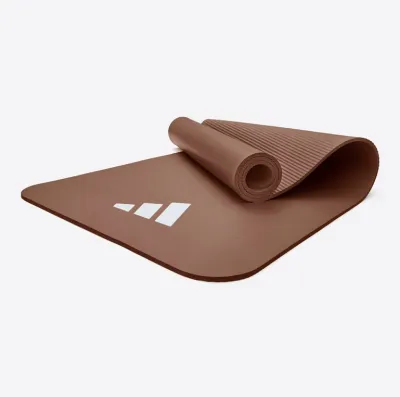
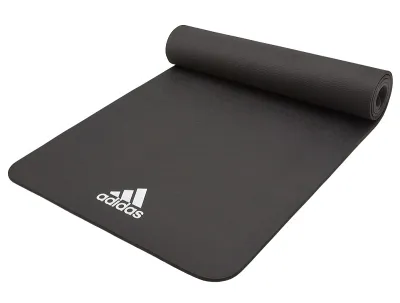
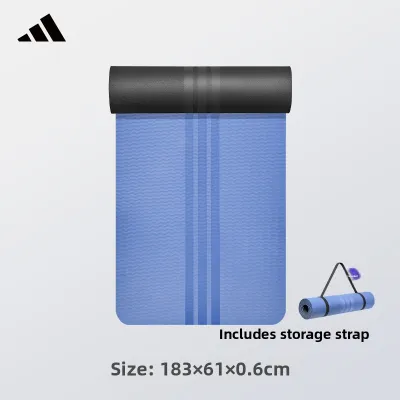
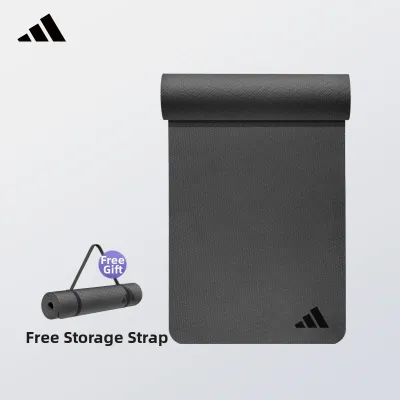
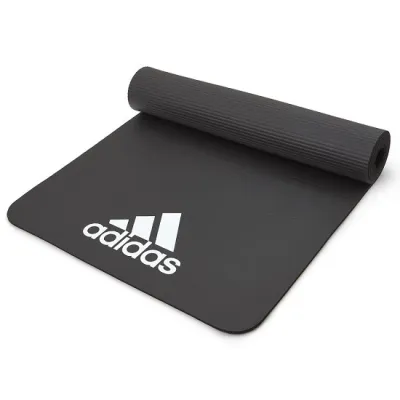
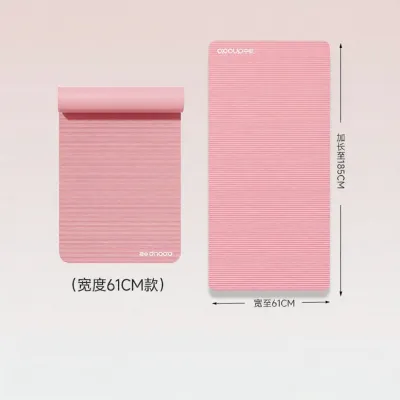
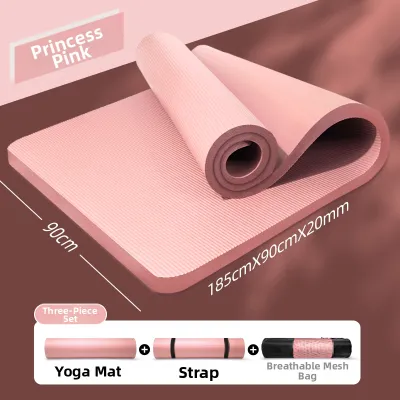
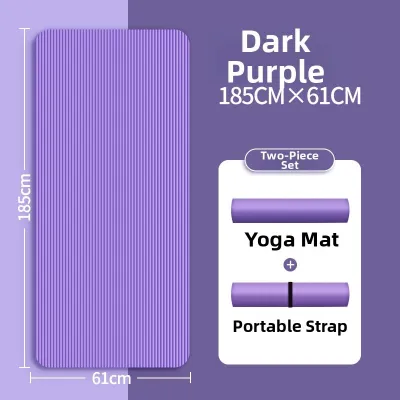
Prices are valid at publication and may change. Please refer to the product page for the latest price.
Thick mats, measuring 6mm or more, prioritize joint cushioning and comfort. These are highly favored for Restorative yoga, Yin yoga, or Pilates, where you spend significant time holding poses on the floor.
However, thickness alone does not guarantee comfort. A low-density, thick foam mat may compress completely under your weight, leaving your joints pressing directly against the hard floor. Conversely, a dense, thinner mat can offer superior support. Always verify the material density and construction type on the product label rather than relying solely on the millimeter thickness.
Adidas Yoga Mats: Thickness Range and Best Use Cases
The Adidas yoga mat lineup is designed to accommodate a broad spectrum of fitness activities, often bridging the gap between traditional yoga and general studio workouts. When browsing the Adidas range, you will find options that typically span from 4mm to 8mm. It is essential to distinguish between their general fitness mats and their dedicated yoga lines, as their structural properties differ significantly.

Adidas general fitness mats often lean toward the thicker end of the spectrum, frequently measuring 8mm or more. These mats are typically constructed from lightweight, highly cushioned materials like NBR (nitrile butadiene rubber) or EVA foam. While excellent for cushioning your spine during sit-ups or protecting your knees during lunges, these thick, spongy surfaces are not ideal for dedicated yoga. They tend to stretch under lateral tension and can make balancing poses highly unstable.
For a dedicated yoga practice, Adidas offers specialized mats, typically in the 4mm to 6mm range, often made from TPE (thermoplastic elastomer) or lightweight polymer blends. These mats provide a firmer, more stable foundation that helps prevent your hands and feet from sinking too deeply. They offer a practical balance of cushioning and grip for casual practitioners.
When selecting an Adidas mat, always check the product tag or online specifications to verify the exact material and intended use case. This ensures you do not accidentally purchase a thick fitness mat for a precise yoga practice.
Lululemon vs Manduka: Premium Thickness Alternatives
For practitioners seeking specialized performance, premium brands like Lululemon and Manduka offer highly engineered thickness options that contrast sharply with the multi-purpose approach of Adidas. Lululemon focuses heavily on its reversible mat designs, primarily offered in 3mm and 5mm options. These mats feature a smooth, moisture-absorbing polyurethane top layer paired with a dense natural rubber base. The 5mm version is highly popular for its exceptional cushioning that does not sacrifice stability, while the 3mm version offers a lighter, more portable alternative for those who commute to hot yoga studios.
Manduka takes a highly structured, tier-based approach to thickness, catering to different stages of a practitioner’s journey. Their lineup is divided into distinct families: the eKO series (made from natural rubber) and the PRO series (made from ultra-dense, closed-cell PVC). Within these lines, Manduka offers precise thickness tiers. The eKO SuperLite at 1.5mm is a dedicated travel mat that can be folded into a suitcase. The PROlite at 4.7mm serves as a durable, standard-thickness option for daily studio use. The flagship Manduka PRO stands at 6mm, offering an exceptionally dense, heavy-duty cushion designed to protect joints during intense, lifelong practices.
While Adidas provides accessible, cost-effective options for general fitness and casual yoga, Lululemon and Manduka target dedicated practitioners willing to invest in specialized materials. Lululemon is highly favored by those who prioritize immediate, high-sweat grip paired with plush cushioning. Manduka appeals to those seeking long-term durability, professional-grade joint protection, and precise thickness options tailored to specific travel or studio needs.
Comparing Thickness, Stability, and Portability
Evaluating a yoga mat requires understanding the direct trade-offs between thickness, stability, and portability. A thicker mat may seem like the most comfortable choice, but it can introduce significant challenges during standing and balancing poses. In poses like Warrior III or Tree Pose, a thick, soft mat allows your ankles to wobble as they search for a stable foundation. This instability can strain small stabilizing muscles and increase the risk of joint fatigue. Denser, thinner mats keep your center of gravity lower and provide a firm connection to the subfloor.
Portability is another crucial factor, especially for urban practitioners commuting via public transport or walking to local studios. Thicker, denser mats are inherently heavier. For instance, a dense 6mm professional mat can weigh over 3 kilograms, making it a cumbersome load to carry in a shoulder bag during a warm commute. In contrast, a 1.5mm travel mat or a lightweight 4mm TPE mat is highly portable but will offer very little comfort if laid directly on a hard concrete or tile floor.
To make an informed decision, you must verify specific product specifications before purchasing. Look closely at the weight, material density, and surface texture. A high-density 4mm or 5mm mat often provides better joint protection than a low-density 8mm mat, while remaining light enough for easy transport. Consider your primary practice location—whether at home on a carpeted floor or at a studio with hard timber flooring—to determine the right balance of weight and cushioning.
How to Choose the Right Thickness and Brand
Your final decision should align with your primary practice style, frequency, and commuting habits. By using conditional logic, you can easily narrow down the best brand and thickness for your needs.
Choose Adidas if you are looking for an accessible, versatile mat for general home fitness, casual yoga, or stretching. Their 4mm to 6mm yoga-specific mats offer a practical, lightweight entry point without a premium price tag, while their thicker 8mm mats are excellent for dedicated floor-based core workouts.
Choose Lululemon if you practice dynamic, sweaty styles like Vinyasa or hot yoga and prioritize a high-grip surface. Their 5mm reversible mat is ideal if you want plush cushioning that still feels stable, while their 3mm option is a great choice for a lighter, more packable studio companion.
Choose Manduka if you are committed to a long-term, daily practice and require professional-grade joint support or a highly specific travel solution. Their 6mm PRO mat offers unmatched density for joint protection on hard floors, while their 1.5mm eKO SuperLite is perfect for practitioners who travel frequently.
Verify first if you have pre-existing joint injuries, sensitive knees, or plan to practice on highly uneven outdoor surfaces. In these scenarios, do not rely on standard assumptions. Check the manufacturer’s official specifications for material density, load support, and exact millimeter thickness to ensure your chosen mat provides the precise physical support your body requires.
Frequently Asked Questions (FAQ)
Is a thicker yoga mat always better for joint pain?
No, a thicker mat is not automatically better for joint pain. Support depends heavily on material density rather than thickness alone. A thick but soft foam mat will compress completely under pressure, allowing your joints to press against the hard floor. For joint pain, look for a high-density mat (such as dense rubber or closed-cell PVC) in a standard 5mm or 6mm thickness, which prevents bottoming out.
Can I use a standard Adidas yoga mat for hot yoga?
A standard Adidas yoga mat may not provide sufficient grip in high-sweat environments unless paired with a specialized yoga towel. Grip in hot yoga depends primarily on the surface material and texture rather than the mat’s thickness. If using a standard TPE or foam Adidas mat, verify the manufacturer’s guidelines regarding moisture absorption, and consider using a microfiber grip towel on top to prevent slipping.
How do I measure my current yoga mat's thickness accurately?
To measure your mat’s thickness accurately, lay it completely flat on a hard, level surface. Use a pair of calipers or a precise ruler held perpendicular to the floor at the edge of the mat. Avoid measuring areas that are heavily worn or compressed from frequent use, as these spots will likely measure thinner than the mat’s original factory specifications.

Community discussion
Share your experience or ask a question. Comments are reviewed before publication.