
Choosing between an adjustable weight set and a fixed weight set is one of the most significant decisions you will make when designing a home gym. The right choice depends on your available floor space, training style, and long-term budget. If you are setting up a workout corner in a space-constrained apartment, such as a typical HDB flat or condominium, an adjustable weight set offers an incredibly compact footprint by replacing up to fifteen individual pairs of dumbbells with a single pair. Conversely, if you have a dedicated spare room, prioritize rapid weight transitions for high-intensity circuits, and prefer the indestructible feel of commercial gym equipment, a fixed weight set with a dedicated rack is the superior choice.
Space, Setup, and Core Mechanical Differences
In modern residential layouts, floor space is at a premium. A pair of adjustable dumbbells sits neatly in a corner, occupying less than 0.5 square meters of floor space. A full rack of fixed weights, however, requires a multi-tier rack that can easily span 1.2 to 1.5 meters in length. This rack must also have sufficient clearance around it so you can safely lift and return the weights without scraping your walls or bumping into other furniture.
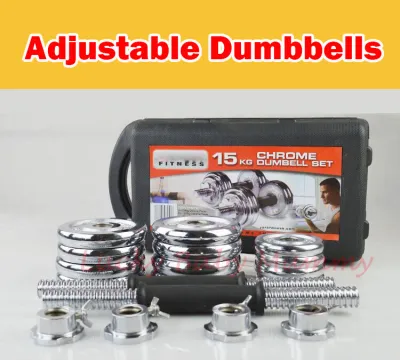
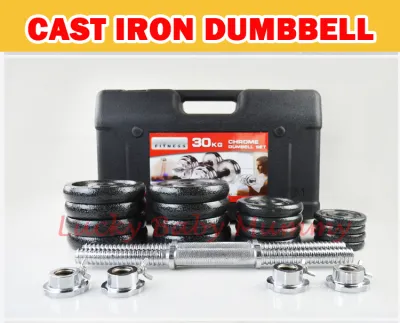
The mechanical design of adjustable weight sets varies widely. Dial-based systems allow you to turn a dial at either end of the dumbbell to select the desired weight, automatically leaving the unused plates in the storage cradle. Spin-lock collars require you to manually slide plates onto a threaded bar and spin a collar to secure them. Lever-based and pin-selected block systems use sliding pins or levers to lock the plates in place. Each mechanism has trade-offs: dial and pin systems are incredibly fast but rely on complex internal gears, while spin-locks are highly secure and mechanically simple but slow to adjust.
Products mentioned in this guide
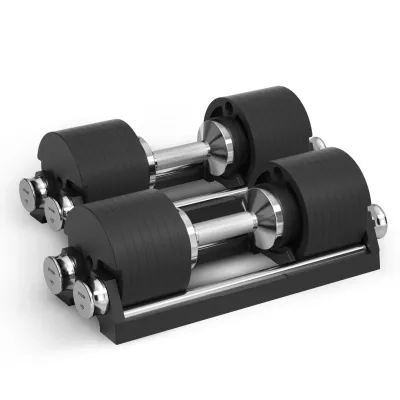
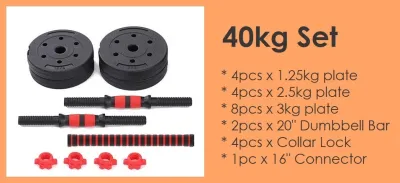
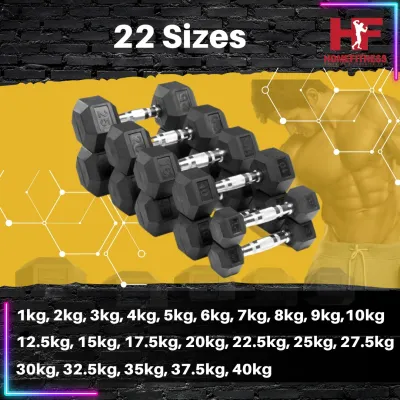
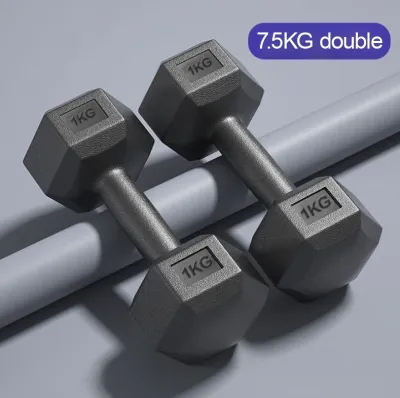
Prices are valid at publication and may change. Please refer to the product page for the latest price.
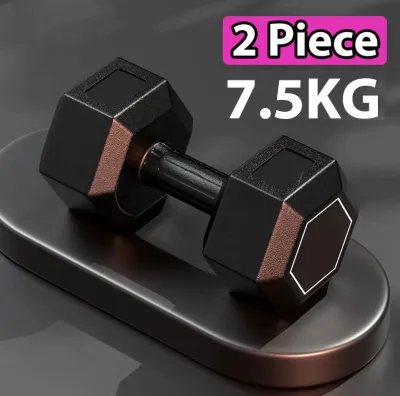
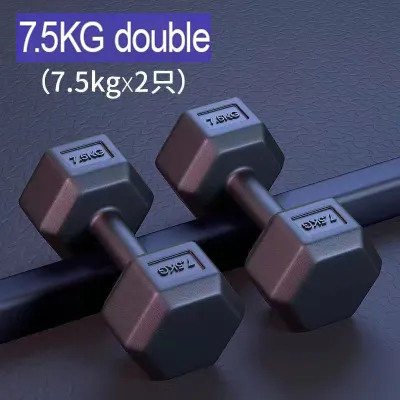
Fixed weight sets feature a solid, single-piece construction. The weight heads—typically made of cast iron, steel, or rubber-coated iron—are permanently welded, bolted, or pressed onto a solid steel handle. There are no moving parts, no gears to align, and no risk of plates shifting during a lift.
When evaluating adjustable sets, pay close attention to the weight increment granularity on the manufacturer’s specification sheet. Some premium adjustable sets allow for micro-adjustments in 1 kg or 2 kg increments, which is essential for progressive overload on smaller muscle groups like the shoulders and arms. Other sets have larger jumps of 4 kg or more, which can make transitioning to heavier weights challenging. Additionally, check the maximum load limit of the adjustable set; while some top out at 24 kg per dumbbell, others can be configured up to 40 kg or more to accommodate heavy compound lifts.
Upfront Cost vs. Long-Term Value
At first glance, a high-quality adjustable weight set can seem like a major financial investment. However, when you calculate the cost-per-kilogram across the entire weight range they replace, they represent exceptional value. Purchasing a single pair of adjustable weights that scales from 2 kg to 24 kg is far more economical than purchasing twelve separate pairs of fixed dumbbells, which would also require buying a heavy-duty storage rack.

Fixed weights have a linear cost structure. Because you pay for the raw material, shipping, and storage of each individual dumbbell, the total cost scales rapidly as you add heavier pairs to your collection. For beginners, a few light pairs of fixed dumbbells may be highly affordable, but as your strength levels increase, the cost of purchasing heavier pairs can quickly surpass the price of a single premium adjustable set.
Expansion costs are another critical factor. Some adjustable systems are designed with modularity in mind, allowing you to purchase proprietary add-on kits to increase the maximum weight capacity later on. Before committing to a brand, verify if these expansion kits are readily available in the local market and check their compatibility with your base model. With fixed sets, expanding your collection simply means buying the next weight up, though this will eventually require investing in a larger rack once your current storage space is maxed out.
Should you ever decide to upgrade or sell your equipment, both types hold their value well on local online marketplaces. Fixed cast-iron or rubber hex dumbbells are highly sought after because they do not wear out mechanically. Adjustable sets also enjoy high demand, but potential buyers will closely inspect the dial mechanisms and locking pins for wear, meaning well-maintained sets command a much higher resale price.
Workout Flow, Grip, and Training Convenience
Your training style should heavily influence your choice. If your workouts rely on drop sets, supersets, or rapid circuit training where transition time is critical, fixed weights are unmatched. You can drop one pair of dumbbells and immediately pick up another without breaking your rhythm. Adjustable weights require you to pause, return the dumbbells to their cradles, align the plates, and turn the dials, which can disrupt your heart rate and muscle pump during fast-paced routines.
Grip ergonomics also differ significantly between the two types. Fixed dumbbells typically feature contoured, knurled metal handles that offer a secure, comfortable grip tailored to the weight of the dumbbell. Adjustable dumbbells often have thicker, straight handles to accommodate the internal locking rod, and the overall length of the dumbbell remains constant regardless of how much weight is loaded. This fixed length can make exercises like overhead presses, bicep curls, or goblet squats feel awkward, as the bulky ends of the dumbbells may collide or restrict your natural range of motion.
Balance and weight distribution are crucial for maintaining proper form during unilateral exercises. Fixed weights are perfectly balanced, with the center of gravity located precisely in the middle of the handle. Some adjustable designs can feel slightly off-center or exhibit a slight rattle if the plates are not perfectly flush or if there is play in the locking mechanism, which can affect your stability during slow, controlled movements.
Durability, Safety Checks, and Maintenance
Durability is the primary trade-off when choosing adjustable weights. Fixed weights, especially those with rubber-coated hex heads or polyurethane finishes, are designed to withstand heavy use and the occasional drop. Adjustable weights, by contrast, contain delicate plastic dials, selector pins, and internal gears. Dropping an adjustable dumbbell from even a short height can crack the housing, bend the selector rod, or misalign the plates, rendering the entire set unusable and potentially dangerous.
Safety must be your top priority when lifting weights at home. Before every workout, perform a quick inspection of your equipment. For adjustable sets, verify that the plates are fully seated in their cradles, the selector dials are locked securely into their designated clicks, and there is no rattling when you lift the handle. For fixed sets, check that the heads are not rotating or loosening from the handle, and inspect rubber coatings for splits or peeling.
Singapore’s tropical humidity presents a unique challenge for gym equipment maintenance. High moisture levels can accelerate rust on exposed steel, cast iron, and internal mechanical parts. Wipe down handles and plates with a dry microfiber cloth after every workout to remove sweat and oils. For adjustable sets, keep the selector tracks free of dust and debris, and apply a dry silicone lubricant to moving parts if recommended by the manufacturer. Avoid using heavy oils or WD-40, as these can attract dust and clog the delicate gears.
If you notice any signs of mechanical failure—such as a sticking dial, a loose plate, a stripped spin-lock thread, or a cracked housing—stop using the equipment immediately. Do not attempt to force a stuck mechanism or use tape to secure loose plates. Consult the manufacturer or a qualified fitness equipment technician to inspect or repair the unit before attempting to lift with it again.
Final Decision: Which Weight Set Fits Your Home Gym?
To finalize your decision, evaluate your home gym setup against these specific criteria. Choose an adjustable weight set if your floor space is limited, you want to keep your workout area clutter-free, and you prefer a single, scalable investment that grows with your strength. It is the ideal solution for apartment living where space efficiency is paramount.
Choose a fixed weight set if you have a dedicated workout room or garage, prioritize rapid weight changes for high-intensity training, and prefer the rugged, drop-safe durability of commercial gym equipment. Fixed weights offer a traditional feel and a seamless workout flow that adjustable sets cannot match.
Before making your purchase, verify three critical structural factors. First, check the floor load capacity of your home, especially if you plan to store a heavy rack of fixed weights in a high-rise apartment. Second, ensure you have adequate ceiling and wall clearance for your storage racks. Finally, review the specific product warranty terms; many manufacturers of adjustable weights explicitly void the warranty if the weights are dropped, making it essential to understand the limits of your equipment before your first lift.
Frequently Asked Questions (FAQ)
Can I mix adjustable and fixed weight sets in the same home gym?
Yes, a hybrid setup is highly practical and common among home gym enthusiasts. You can use a few pairs of light fixed dumbbells (such as 2 kg, 4 kg, or 6 kg) for high-rep lateral raises, warm-ups, or fast-paced circuits where quick transitions are essential. Meanwhile, you can rely on a heavy adjustable set for compound movements like bench presses, rows, and squats, where you need substantial weight but have more time to adjust the load between sets. This hybrid approach maximizes space efficiency while maintaining workout flow.
Do adjustable weight sets break easily compared to fixed ones?
Adjustable weight sets are engineered to be highly durable under normal, controlled training conditions, but they are significantly more vulnerable to impact damage than fixed weights. While a solid cast-iron fixed dumbbell can survive decades of drops onto rubber flooring, the internal locking gears, dials, and selector pins of an adjustable dumbbell can crack or bend if dropped. To prevent mechanical failure, always lower adjustable weights to the floor under control, avoid dropping them from any height, and store them securely in their designated cradles when not in use.

Community discussion
Share your experience or ask a question. Comments are reviewed before publication.