
When preparing your gear for an outdoor adventure, it is easy to look at a small, metallic clip and assume it can handle basic load-bearing tasks. However, the short answer is that most mini carabiners are designed strictly for accessory use and are entirely unsafe for climbing. These everyday clips lack the life-safety ratings, robust materials, and rigorous manufacturing standards required to support human weight or withstand dynamic forces.
Using an unrated accessory clip in a climbing system can lead to catastrophic gear failure. To ensure your safety on the rock, you must know how to verify specific load limits and identify official certification marks before using any carabiner for climbing, anchoring, or overhead suspension. Understanding the precise boundaries between certified climbing hardware and casual utility clips is a fundamental skill for every climber.
Understanding the Difference: Climbing vs. Accessory Carabiners
To the untrained eye, a mini carabiner might look like a scaled-down version of a standard climbing carabiner. However, the physical differences are vast and directly impact safety. Climbing carabiners are engineered using high-grade aluminum alloys or heavy-duty steel. They feature thick cross-sections designed to distribute stress efficiently along the spine. Their gate mechanisms are highly sophisticated, utilizing precise spring tensions, keylock noses to prevent snagging, and locking sleeves to prevent accidental opening.
Products mentioned in this guide
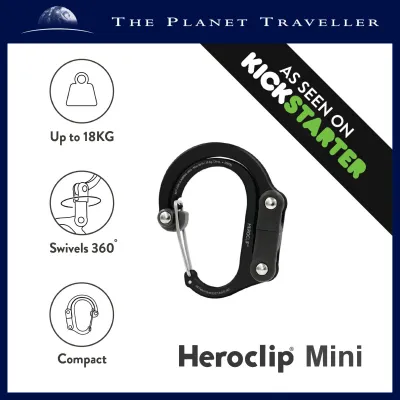
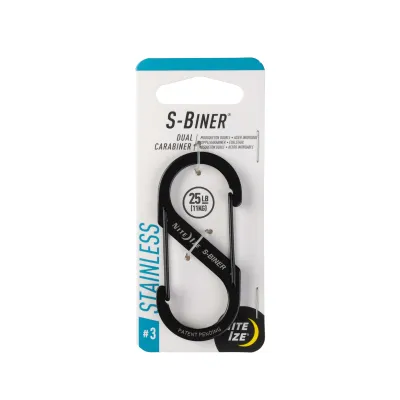
Prices are valid at publication and may change. Please refer to the product page for the latest price.
In contrast, common mini carabiners or accessory clips are typically made from low-grade aluminum or plastic. Their wire gates or simple spring gates lack locking mechanisms and are prone to opening under minimal pressure. The material thickness is often uniform and thin, with no structural reinforcement at the basket or spine where the rope or sling would rest.
The most critical difference lies in the manufacturing process and quality control. Climbing carabiners must pass strict batch testing, material analysis, and stress testing to ensure they meet international safety standards. Accessory clips, on the other hand, are mass-produced with little to no quality control regarding load capacity. They are designed for low-risk tasks like holding keys or securing a water bottle to a backpack, meaning their actual breaking point is highly unpredictable.
How to Read Load Ratings and Certification Marks
Before clipping any carabiner into a safety system, you must inspect its body for stamped ratings and certifications. Certified climbing carabiners feature laser-etched or stamped markings on the spine that detail their exact strength profiles. These ratings are measured in kilonewtons (kN), which represent force rather than static weight.

A standard climbing carabiner will display three distinct load ratings. The major axis rating indicates the strength of the carabiner when loaded end-to-end with the gate closed; this is the strongest configuration and must typically be at least 20 kN for standard climbing use. The minor axis rating indicates the strength when cross-loaded side-to-side, which is significantly weaker, often rated around 7 kN to 9 kN. The open-gate rating indicates the strength if the gate is forced open during a load event, which also drops dramatically to around 7 kN to 9 kN.
Alongside these numbers, look for recognized certification marks. The CE mark, followed by a four-digit number, indicates compliance with European Union safety standards for personal protective equipment. The UIAA logo indicates that the gear meets the strict safety standards of the International Climbing and Mountaineering Federation.
The golden rule of climbing hardware is absolute: if a carabiner lacks these stamped kN ratings, the CE mark, or the UIAA logo, it is not a climbing carabiner. Even if it is made of metal and feels solid, it must be treated as a non-rated accessory and kept far away from any life-safety application.
Safety Risks of Using Non-Rated Mini Carabiners for Climbing
Using a non-rated mini carabiner in a climbing scenario introduces severe, unpredictable risks. The most immediate danger is structural failure under dynamic loads. When a climber falls, the safety system experiences a sudden spike in force. While a certified climbing carabiner is designed to elastically deform and absorb this energy, an unrated accessory clip will instantly snap or bend out of shape, releasing the load.
Another common failure mode is gate flutter. During a fall, the rapid movement of the rope or a sudden impact against the rock can cause the carabiner gate to vibrate or flutter open. If a non-rated mini carabiner experiences gate flutter, its already minimal strength is reduced to almost nothing, causing immediate failure.
Furthermore, accessory carabiners lack material fatigue resistance. Over time, repeated minor stresses can cause micro-fractures to develop within the low-grade metal. Because these clips do not undergo non-destructive testing during manufacturing, these internal flaws are invisible to the naked eye. Relying on such a clip for belaying, building anchors, or securing a personal tether means placing your safety on a device that could fail under less than normal body weight.
When to Retire or Stop Using a Carabiner
Even fully certified climbing carabiners do not last forever. Regular inspection is vital to ensure your gear remains safe to use. Start by checking the metal body for visible cracks, deep grooves, or sharp edges. Rope friction can wear down the basket of the carabiner over time; if the groove wear exceeds 10% of the original metal thickness, the carabiner must be retired immediately to prevent damage to your ropes.
Next, test the gate mechanism. The gate must open smoothly and snap shut instantly when released. If the gate sticks, fails to close completely, or if the locking sleeve is difficult to turn, try cleaning it. However, if the sticking persists or if the rivets are loose, the carabiner must be taken out of service.
Environmental factors also play a major role in gear degradation. In humid tropical climates, such as Singapore, gear stored in damp gear bags or exposed to coastal salt air at outdoor crags can degrade faster. Inspect your carabiners for signs of chemical corrosion, such as pitting or white powdery oxidation. If a carabiner has been exposed to extreme heat, harsh chemicals, or has suffered a major drop onto a hard surface from a significant height, retire it immediately even if there is no visible damage.
Finally, establish a strict rule regarding gear history. Never use second-hand carabiners or gear with an unknown history. If you cannot verify how a piece of gear was stored, used, or maintained, it is not worth the risk.
Proper Use Cases for Mini and Accessory Carabiners
While mini carabiners are unsafe for climbing, they are incredibly useful tools when kept within their intended limits. Their primary purpose is gear organization and lightweight attachment. You can safely use them to clip your chalk bag to your harness, secure your climbing shoes to the outside of your pack, or keep your water bottle accessible during a hike.
They are also excellent for everyday carry (EDC) tasks, campsite organization, and backpacking. Use them to hang lanterns inside your tent, secure gear to a roof rack, or organize keys.
However, you must explicitly forbid their use in any scenario involving human suspension, overhead loads, or dynamic forces. To prevent dangerous mix-ups at the crag, store your accessory clips in a separate pocket of your gear bag, away from your certified climbing rack.
Frequently Asked Questions (FAQ)
Can I use a keychain carabiner for a hammock or swing?
No, you should never use a keychain or accessory carabiner to hang a hammock or a swing. Hammocks and swings subject the suspension hardware to significant static and dynamic forces, which can easily exceed the weight of the person sitting in them due to the physics of the suspension angle. Always use heavy-duty, certified climbing carabiners or hardware specifically rated for human suspension to prevent sudden failure and injury.
What does the kN rating on a carabiner actually mean?
A kilonewton (kN) is a unit of force rather than static weight. One kilonewton is roughly equivalent to 100 kilograms (225 pounds) of static force under gravity. In climbing, ratings are expressed in kN because a falling climber generates dynamic impact forces that are much higher than their actual body weight. A certified carabiner rated at 20 kN can withstand these high-impact forces during a fall.
Are all small carabiners unsafe for climbing?
No, physical size alone does not determine whether a carabiner is safe for climbing. Many reputable climbing manufacturers produce highly compact, lightweight carabiners designed specifically for alpine climbing or weight-conscious sport climbing. These compact carabiners are fully certified by the CE and UIAA and carry clear kN ratings stamped on their spines. The safety of a carabiner is determined by its official certification and load ratings, not its physical size.

Community discussion
Share your experience or ask a question. Comments are reviewed before publication.