
Nite Ize carabiners are highly popular utility accessories, but they are absolutely not safe for rock climbing, belaying, or any other life-support applications. These products are designed exclusively for non-load-bearing tasks like organizing gear, securing keys, and hanging lightweight camp accessories. Climbing and belaying require specialized, certified hardware engineered to withstand the extreme dynamic forces of a fall. Using a utility clip in a climbing safety chain can lead to catastrophic equipment failure and fatal accidents.
Climbing safety relies on certified equipment, proper training, and sound judgment. No piece of gear can replace professional instruction and situational awareness. Understanding the clear boundary between utility accessories and life-support hardware is a fundamental skill every climber must master before tying into a rope.
Understanding the Difference Between Utility and Climbing Carabiners
To understand why utility clips are unsafe for climbing, it is essential to look at their design intent. Utility carabiners, such as the popular dual-gated S-Biners, are engineered for static, low-weight applications. Their primary purpose is convenience—allowing you to quickly attach lightweight items to a backpack, belt loop, or tent line. They are not designed to absorb energy, arrest falls, or bear the weight of a human body.
Products mentioned in this guide
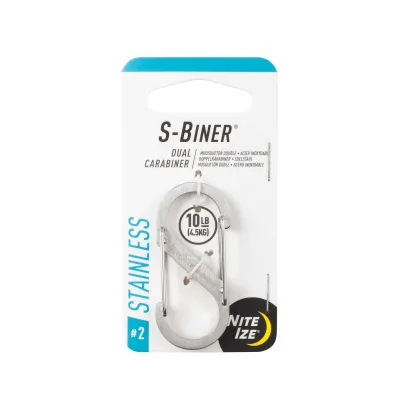
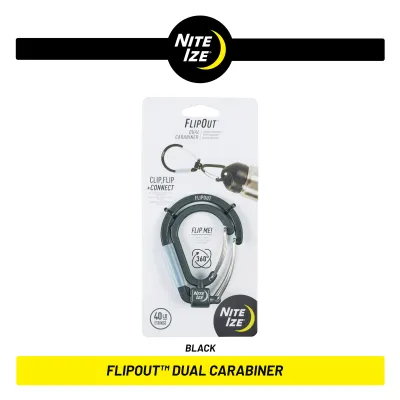
![[Free Gift CamelBak Collab] Nite Ize S-Biner Plastic Dual Carabiner Size 4](https://img.lazcdn.com/g/p/ab3b409febddff8345a4cc2b64c0845c.jpg_400x400q80.jpg_.webp)
Prices are valid at publication and may change. Please refer to the product page for the latest price.
In contrast, climbing carabiners are highly engineered safety links designed to function under extreme dynamic loads. When a climber falls, the safety system must absorb a massive amount of kinetic energy. Climbing hardware is built specifically to manage these sudden, violent forces without deforming or breaking, ensuring the safety of the entire belay chain.
This difference in design intent dictates the materials and manufacturing processes used. Climbing carabiners are typically constructed from high-strength, hot-forged aluminum alloys (such as 7075-T6 aircraft-grade aluminum) or heavy-duty stainless steel. Hot-forging aligns the crystalline grain structure of the metal, maximizing its tensile strength while keeping the gear lightweight. Utility clips, however, are often made from stamped sheet metal, low-grade wire, or molded plastics. These materials lack the structural integrity and elasticity required to survive sudden impacts.
Gate mechanisms also differ fundamentally between the two categories. Utility clips often feature simple, non-locking wire gates that can easily catch on clothing, rock edges, or ropes and pop open under light pressure. Climbing carabiners feature robust gate designs, including heavy-duty non-locking gates with precise spring tension, or sophisticated locking mechanisms like screwgates, twist-locks, and magnetic collars. These locking systems are engineered to remain securely closed even when subjected to vibration, rope drag, or contact with the rock face.
How to Verify if a Carabiner is Certified for Climbing
Before using any carabiner in a climbing or belaying context, you must inspect the device to verify its certifications. Certified climbing hardware undergoes rigorous third-party testing to ensure it meets strict international safety standards. If a carabiner lacks these specific markings, it must never be used for life-support.

First, look for official certification stamps on the spine of the carabiner. Real climbing hardware will feature the CE mark (Conformité Européenne) followed by a four-digit number, which identifies the independent laboratory that certified the gear. It should also reference the European Standard EN 12275, which governs mountaineering equipment. Additionally, look for the UIAA (International Climbing and Mountaineering Federation) logo, indicating the product meets global safety requirements for climbing.
Second, check for explicit warning labels. Utility carabiners almost universally feature a warning molded, stamped, or laser-etched onto the body. Phrases such as “NOT FOR CLIMBING,” “NOT FOR HUMAN SUPPORT,” or “DO NOT USE FOR CLIMBING” are clear indicators that the manufacturer did not design the product for safety-critical applications. If you see any variation of this warning, the clip must be kept far away from your climbing harness.
Third, look for stamped kilonewton (kN) strength ratings. A certified climbing carabiner will always display three distinct strength ratings on its spine: major axis strength (typically 20 kN or higher when the gate is closed), minor axis or cross-loaded strength (usually 7 to 10 kN), and open-gate strength (usually 7 to 9 kN). One kilonewton represents approximately 100 kilograms of force, meaning a certified carabiner can withstand major axis forces exceeding 2,000 kilograms. If a carabiner only lists a weight limit in pounds or kilograms, or has no ratings stamped on it at all, it is a utility clip and is unsafe for climbing.
The Risks of Using Non-Certified Carabiners for Life-Support
Using a non-certified utility clip for climbing or belaying introduces extreme mechanical risks. During a lead fall, the forces generated can easily reach 4 to 8 kilonewtons, depending on the fall factor and the elasticity of the climbing rope. A utility clip designed to hold a water bottle or a set of keys will deform, shear, or snap instantly under these loads.
One of the primary failure points is the gate. Under sudden tension, a non-locking utility gate can suffer from “gate flutter,” a phenomenon where the vibration of a fall causes the gate to swing open. When a carabiner’s gate is open, its structural strength is reduced by more than half. For a utility clip that already lacks structural reinforcement, an open-gate scenario leads to immediate catastrophic failure.
Furthermore, utility clips are highly susceptible to cross-loading, where the load shifts from the strong major axis to the weak minor axis. Climbing carabiners are shaped to guide the rope along the spine, and even when cross-loaded, they must meet minimum safety standards. A utility clip has no such design considerations; a minor shift in the rope can cause the clip to twist, placing the entire load directly onto the weak gate or hinge, causing it to snap.
The consequences of these mechanical failures are severe. If a utility clip fails while you are belaying, anchoring, or clipping into a protection point, the safety chain is broken. This can result in an uncontrolled ground fall, loss of control over the belay system, or the complete collapse of an anchor system. These scenarios carry a high risk of severe injury or death.
Proper Outdoor Uses for Utility Carabiners
While Nite Ize and other utility carabiners are unsafe for life-support, they remain highly valuable tools for outdoor organization. Understanding how to use them correctly allows you to keep your camp and gear organized without compromising your safety.
At the campsite, utility clips are excellent for hanging lanterns inside your tent, suspending food bags from tree branches to keep them away from pests, or securing lightweight gear to your pack. They are also perfect for organizing keys, water bottles, and pocket tools, keeping them easily accessible during a hike.
At the crag, you can use utility clips to organize your non-safety gear. They are great for clipping your climbing shoes together, carrying a chalk bag, or securing a nut tool to your harness gear loops. However, to prevent dangerous mix-ups, it is best to use utility clips that look completely different from your climbing hardware. Choosing distinct shapes, like the S-Biner, or bright, non-standard colors helps ensure you never accidentally grab a utility clip when building an anchor or clipping into a route.
Always store your utility clips in a separate compartment of your gear bag when packing for a climb. Keeping them physically separated from your certified climbing carabiners reduces the risk of grabbing the wrong clip in high-stress, low-light, or fatiguing situations.
Choosing the Right Certified Carabiners for Climbing and Belaying
When purchasing actual climbing hardware, you must select the correct carabiner shape and gate type for your specific task. Matching the gear to the activity ensures the safety system functions exactly as intended.
For belaying and rappelling, choose an HMS (pear-shaped) locking carabiner. The wide top basket of an HMS carabiner provides ample space for a belay device and allows the rope to run smoothly without binding or creating excessive friction. Many modern belay-specific carabiners also feature internal wire gates or clips that lock the carabiner in place on your harness belay loop, preventing dangerous cross-loading.
For anchors and quickdraws, D-shape or modified D-shape carabiners are the industry standard. Their asymmetrical design naturally directs the load along the stronger major axis, maximizing the carabiner’s strength-to-weight ratio. Non-locking D-shape carabiners are typically used on quickdraws for clipping the rope, while locking D-shape carabiners are preferred for building master points in anchor systems.
Select the appropriate gate mechanism based on your environment and experience level. Screwgates are highly reliable, easy to operate with one hand, and resistant to freezing in cold weather, but they require you to manually lock them every time. Auto-locking gates, such as twist-locks or magnetic locks, lock automatically when closed, reducing the risk of human error. However, they can be more challenging to operate when wearing gloves or in muddy conditions.
Always purchase your climbing gear from reputable outdoor specialty retailers or directly from established climbing brands. Avoid buying safety-critical hardware from unverified third-party sellers on online marketplaces or discount ecommerce platforms. Counterfeit gear that mimics certified designs can find its way into these supply chains, putting your safety at risk.
Frequently Asked Questions (FAQ)
Can I use a utility carabiner to attach my belay device to my harness?
No, you must never use a utility carabiner to attach a belay device to your harness. Belaying is a critical life-support function that subjects the carabiner to complex, multi-directional forces and potential cross-loading. You must use a certified, locking HMS carabiner designed specifically for belaying. This ensures the gate remains locked and the load stays aligned along the major axis, preventing catastrophic failure during a catch.
Is it safe to use a keychain carabiner for a top-rope anchor?
Absolutely not. A top-rope anchor is the single point of safety holding both the climber and the belayer, and it is subjected to repeated dynamic loads during falls. Keychain carabiners have no load rating and will fail instantly under the weight of a single climber. Top-rope anchors require multiple independent, certified locking climbing carabiners to ensure redundancy, strength, and absolute safety.
What should I do if I accidentally used a non-climbing carabiner on a route?
If you realize mid-climb that a non-certified carabiner has been placed in your safety system, do not panic, but act immediately to correct the mistake. Stop climbing and find a stable, safe position. Secure yourself to a reliable, certified piece of gear or anchor using proper climbing hardware, such as a sling and a certified locking carabiner. Once you are safely secured and the load is transferred off the utility clip, remove the non-certified carabiner and replace it with proper climbing gear. Once back on the ground, retire the utility clip from your climbing pack entirely or mark it clearly with tape so it can never be mistaken for climbing gear again.

Community discussion
Share your experience or ask a question. Comments are reviewed before publication.