
When comparing automatic tent brands for rain protection, there is no single “best” brand, as waterproof performance varies significantly across different models within the same brand. True weather resistance depends on specific hydrostatic head (HH) ratings, seam construction, and how well the automatic mechanism is sealed. This guide provides a structured framework to help you decode waterproof labels, compare critical build dimensions, and evaluate price-to-performance ratios so you can confidently select an automatic tent that matches your weather expectations and budget.
Decoding Waterproof Ratings for Automatic Tents
To understand how well an automatic tent will perform in a downpour, you must first look at its hydrostatic head (HH) rating. This measurement, expressed in millimeters (mm), indicates the amount of water pressure a fabric can withstand before moisture begins to penetrate. During testing, a column of water is placed over the fabric, and the height of the water is increased until three drops pass through. For example, a fabric rated at 2,000 mm can theoretically resist a 2,000-millimeter column of water before leaking.
When evaluating these specifications, it is crucial to differentiate between the rainfly (the outer canopy) and the groundsheet (the tent floor). The rainfly is exposed to falling rain and wind pressure, but it does not experience direct physical contact from occupants. Consequently, a rainfly rating of 1,500 mm to 2,000 mm is generally sufficient for moderate rain.
Products mentioned in this guide
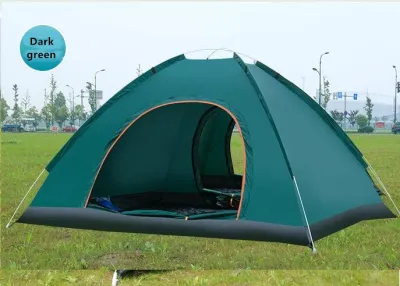
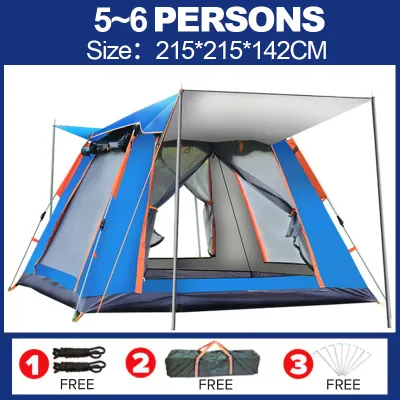
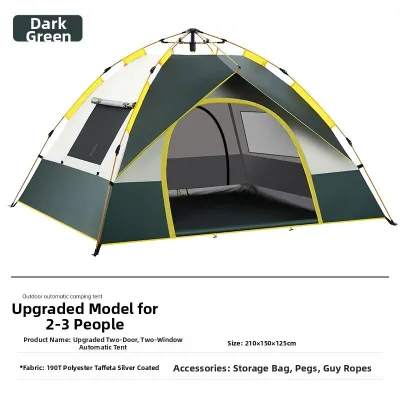
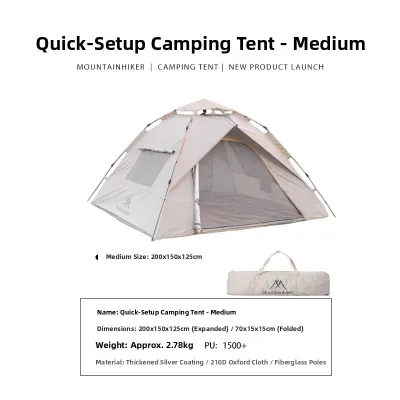
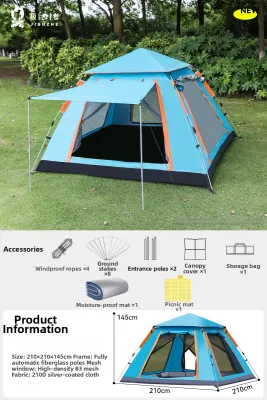
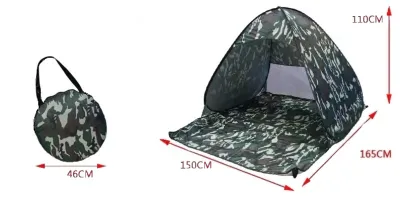
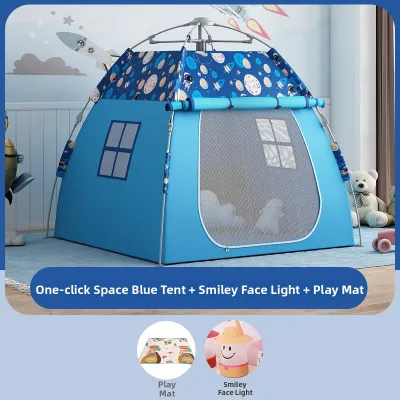
Prices are valid at publication and may change. Please refer to the product page for the latest price.
The groundsheet, however, requires a significantly higher rating. When you sit, kneel, or sleep inside the tent, your body weight exerts concentrated pressure on the damp ground beneath. This physical pressure can easily force water through a low-rated fabric. For reliable protection on wet soil, look for a groundsheet rating of at least 3,000 mm to 5,000 mm.
You must also distinguish between common marketing terms used by manufacturers. A “water-resistant” fabric merely slows down water penetration and is only suitable for very light, brief showers. “Water-repellent” fabrics feature a chemical coating that causes water to bead up and roll off the surface, but they will still saturate under sustained pressure. Only a truly “waterproof” fabric combines an impermeable barrier coating with sealed construction to keep water out during prolonged storms.
Critical Comparison Dimensions Beyond the Label
While a high hydrostatic head rating is a strong starting point, fabric specifications alone do not guarantee a dry interior. The seams where fabric panels meet are the most common failure points in any tent. High-quality automatic tents feature factory-taped seams, where a waterproof tape is heat-sealed over the stitching to block water from entering the needle holes. When comparing models, verify whether the taping extends to high-stress areas, such as the corners and the attachment points for the automatic frame.

The type of waterproof coating applied to the fabric also impacts long-term performance. Most budget and mid-range automatic tents use Polyurethane (PU) coatings. PU is highly effective at blocking water and is relatively inexpensive, but it can degrade over time when exposed to humidity and heat. Premium models may feature silicone-treated fabrics (often called silnylon or silpoly). Silicone coatings are highly durable, resist UV damage, and strengthen the fabric, though they are more expensive and require specialized seam sealers.
Automatic tents have a unique structural vulnerability: the central pop-up hub and folding joints. Unlike traditional tents with continuous pole sleeves, automatic designs rely on a central hub mechanism at the apex of the roof. If this hub is not properly protected, water can pool around the joints and slowly drip into the living space.
To counter this, reputable brands design their automatic tents with dedicated rain caps or protective fabric hoods that clip over the central mechanism. When shopping, inspect the design of this top cap. It should extend well past the hub joints and feature secure fastening points to prevent wind from lifting it and exposing the mechanism to driving rain.
Evaluating Rain Protection Against Price
Navigating online marketplaces requires a realistic understanding of how price correlates with actual weather protection. In the entry-level tier, typically priced under S$80, automatic tents are generally designed for fair-weather backyard camping or casual beach trips. These models often feature basic water-resistant fabrics with ratings below 1,000 mm and may lack taped seams entirely. They are highly convenient for quick setups but are highly likely to leak during a sudden tropical downpour.
The mid-range tier, ranging from S$80 to S$250, is where you will find reliable weekend camping options. Tents in this bracket usually offer rainfly ratings between 1,500 mm and 3,000 mm, along with factory-taped seams and reinforced groundsheets. These models strike a practical balance, providing sufficient protection against moderate, sustained rain without a prohibitive price tag.
Premium automatic tents, priced above S$250, utilize advanced materials, robust hub mechanisms, and superior coatings. These tents often boast ratings exceeding 3,000 mm for the fly and 5,000 mm for the floor, alongside highly durable silicone or heavy-duty PU coatings. They are built to withstand harsher weather conditions, though they are heavier and less compact to transport.
Be cautious of unrealistic claims when browsing online listings. Phrases like “100% stormproof” or “military-grade waterproof” are red flags if the seller does not provide specific hydrostatic head numbers or details about seam construction. Always look past the marketing adjectives and search the product specifications for concrete technical data.
Decision Framework: Choosing the Right Automatic Tent
Selecting the right automatic tent requires matching the product’s specifications to your specific camping environment and skill level. If you primarily camp in dry, warm climates, plan only short summer trips, or prioritize an ultra-fast setup for casual outings, a basic water-resistant model is highly practical. These tents are lightweight, highly breathable, and budget-friendly, making them ideal when heavy rain is not a threat.
If you plan to camp in regions with unpredictable weather, face potential overnight downpours, or must set up on damp ground, you should choose a fully waterproof model. Ensure the tent has a minimum rainfly rating of 2,000 mm, a heavy-duty groundsheet with a higher rating, and fully taped seams. This setup provides the necessary barrier to keep you and your gear dry during sustained wet weather.
However, you must recognize the physical limits of automatic tent designs. If the weather forecast predicts severe storms, high winds, or torrential downpours, an automatic tent may not be suitable regardless of its waterproof rating. The jointed, spring-loaded frames of automatic tents are inherently less aerodynamic and structurally weaker than traditional, continuous-pole geodesic tents. In high winds, the frame can collapse or deform, which compromises the fabric tension and allows water to pool and penetrate. For extreme conditions, prioritize structural integrity and safety by choosing a traditional pole tent.
Before finalizing your purchase, verify the exact specifications of the specific model you are considering. Do not assume that a high-end brand name guarantees high waterproof ratings across their entire product line, as many brands offer both budget summer tents and premium weather-resistant models. Check user reviews specifically for feedback on rain performance, looking for real-world reports of leakage at the seams or the central hub.
Frequently Asked Questions (FAQ)
Can I improve the waterproof rating of an existing automatic tent?
Yes, you can restore or enhance the water-shedding ability of your tent, though you cannot change the fabric’s inherent hydrostatic head rating. Applying a spray-on Durable Water Repellent (DWR) treatment to the clean, dry exterior of the rainfly helps water bead up and roll off more efficiently. For leaking joints, you can apply a liquid seam sealer directly to the inside of the seams. However, if the internal polyurethane coating has begun to peel, flake, or feel sticky due to age, the fabric has reached its physical limit, and the tent should be replaced to ensure safety.
Does a higher waterproof rating mean the tent will last longer?
Not necessarily. A high initial hydrostatic head rating indicates how much water pressure the fabric can withstand when new, but it does not protect against environmental degradation. Ultraviolet (UV) radiation from the sun gradually breaks down fabric fibers and coatings over time. Additionally, storing a tent while it is still damp can cause hydrolysis, a chemical process where the waterproof polyurethane coating breaks down, peels, and develops a foul odor. To maximize your tent’s lifespan, always dry it completely in a shaded, well-ventilated area before packing it away, regardless of its waterproof rating.

Community discussion
Share your experience or ask a question. Comments are reviewed before publication.