
Choosing the right racket bag capacity is one of the most practical decisions a badminton player can make. While manufacturers label bags based on the maximum number of rackets they can hold—such as 3-racket, 6-racket, or 9-racket models—these numbers represent a best-case scenario where the bag contains nothing but bare rackets. In reality, once you pack court shoes, shuttlecock tubes, spare apparel, and personal items, the actual racket capacity drops significantly. To find the perfect fit, you must evaluate your regular gear inventory, your playing frequency, and how you transport your equipment to the court.
Understanding Badminton Bag Capacity Standards
Manufacturers establish capacity ratings using standard, uncovered rackets packed tightly side-by-side. A 6-racket bag does not mean you should comfortably carry six rackets alongside your daily gear; rather, it indicates the total physical volume of the main compartments measured in racket units.
The physical shape of the bag heavily influences how this volume is distributed. Traditional teardrop-shaped bags taper at one end, which matches the silhouette of a racket but limits the storage of bulky, square items like shoe boxes or multiple shuttlecock tubes. Rectangular tournament bags, on the other hand, offer uniform depth and width from end to end, maximizing every square centimeter of interior space.
Products mentioned in this guide
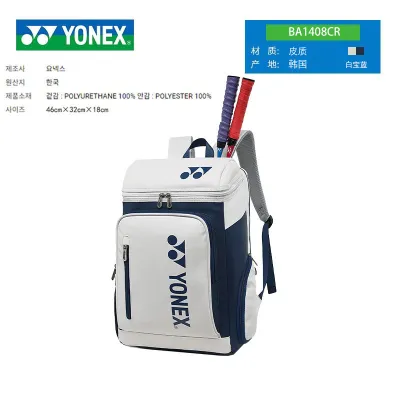
![[😀SG Ready Stock]YONEX YY 1408 series professional badminton bag independent shoe compartment](https://img.lazcdn.com/g/p/bc37ab997b30faf8deb8c0917f220fb4.jpg_400x400q80.jpg_.webp)
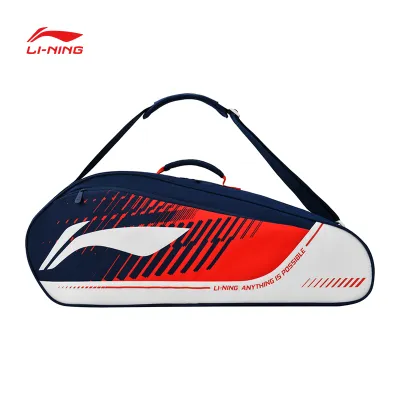
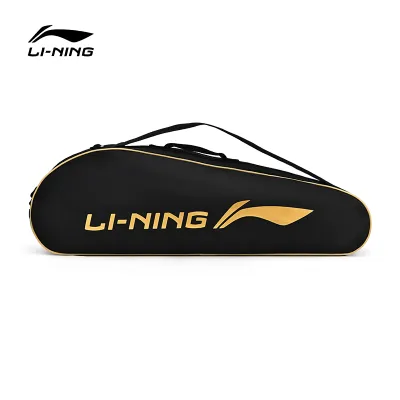
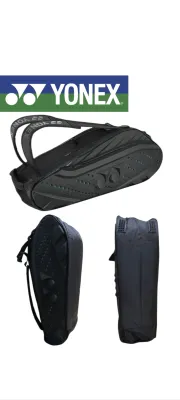
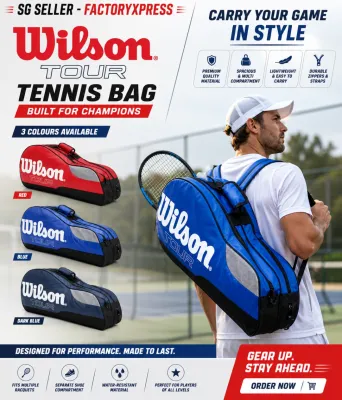
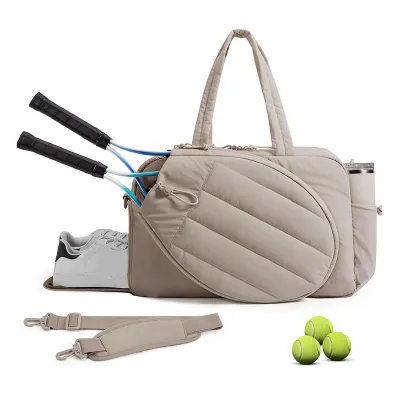
Prices are valid at publication and may change. Please refer to the product page for the latest price.
Internal dividers and compartment layouts also dictate usability. High-quality bags feature dedicated thermal-lined compartments. These specialized sections use heat-reflective materials to shield your rackets from extreme temperature shifts, which can otherwise cause string tension to drop or graphite frames to warp. Non-thermal compartments are designed for general storage, where items can be stacked freely.
Assessing Your Gear and Accessory Needs
Before selecting a bag, lay out all the equipment you bring to a typical session. Most active players carry at least two rackets: a primary frame and an identical backup. Relying on a single racket leaves you vulnerable to mid-match string breakages, which can abruptly end your session.

Beyond rackets, court shoes are the most space-consuming item. Badminton shoes require excellent grip and lateral support, and keeping them clean is vital for court traction. A dedicated, ventilated shoe compartment is essential to isolate dirty outsoles and damp socks from your clean apparel and rackets.
You must also account for apparel and accessories. A standard packing list includes a change of clothes, a towel, wristbands, and spare grip tape. Additionally, a single tube of shuttlecocks is highly bulky, measuring about 40 centimeters in length. When you add a water bottle, keys, wallet, and phone, a bag that seemed spacious on paper can quickly become overcrowded.
Matching Bag Capacity to Your Playing Profile
Your selection should align with your playing habits, frequency, and transport methods.
Casual or social players who hit the court once a week typically find 3-racket or slim 6-racket bags ideal. A 3-racket bag is lightweight and compact, perfect for carrying one or two rackets, a water bottle, and keys. If you travel by public transport, such as buses or trains, these smaller profiles are easy to manage during peak hours and fit comfortably on your lap or between your feet.
Regular club players and competitive league participants generally benefit most from a 6-racket or 9-racket bag. This size range serves as the industry sweet spot. It allows you to carry three to four rackets in a dedicated compartment while leaving the second main compartment entirely free for shoes, a towel, and fresh clothing. The added volume ensures you do not have to squeeze your gear, preserving the shape of your apparel and protecting your racket strings from friction.
Coaches, tournament players, and organizers require 9-racket to 12-racket bags. These massive carriers are designed for those who spend consecutive hours at the sports hall. They provide ample space for half a dozen rackets, multiple tubes of shuttlecocks, resistance bands, first-aid kits, and even clipboard folders. While premium 9-racket bags can range from S$80 to over S$150, they offer the durability and space needed for heavy-duty use. These bags are best suited for players who travel by car or have access to large personal lockers.
Evaluating Fit, Comfort, and Carrying Options
Carrying a fully loaded badminton bag can put considerable strain on your shoulders and back, making ergonomics a critical selection factor. Look for thick, adjustable backpack straps with breathable mesh padding. Dual-strap systems distribute weight evenly across both shoulders, which is far superior to single-shoulder straps for preventing muscle fatigue during long walks to the court.
Physical dimensions must also match your daily environment. Measure the bag’s exterior to ensure it fits into standard sports club lockers or the trunk of your vehicle. A bag that is too long or wide may have to sit on the dusty floor of the court, exposing the fabric to premature wear and tear.
Finally, inspect the structural integrity of the bag. Check the denier rating of the polyester or nylon fabric; higher ratings indicate denser, more tear-resistant weaves. Reinforced stitching at the strap attachment points and heavy-duty, smooth-gliding zippers are essential indicators of a bag built to withstand daily use.
Common Sizing and Packing Mistakes
One of the most frequent errors is overstuffing a small bag. Forcing shoes, clothes, and four rackets into a 3-racket bag puts immense pressure on the zippers and seams, leading to premature failure. More importantly, tight packing can cause racket frames to press against each other, risking scratches, paint chips, or even structural warping under pressure.
Conversely, buying an oversized bag “just in case” can be highly impractical. An underfilled 12-racket bag lacks structural support, causing your gear to slide around violently during transit. This shifting can damage delicate racket heads and makes the bag awkward and cumbersome to carry.
Lastly, many players overlook the importance of climate protection. In humid or warm environments, leaving your bag in a hot car trunk without thermal lining can ruin expensive string jobs within hours. Investing in a bag with at least one thermal-insulated compartment is a simple way to extend the lifespan of your strings and maintain consistent playability.
Frequently Asked Questions (FAQ)
Can I fit non-badminton items like a laptop in a racket bag?
While you can physically fit a laptop inside the larger compartments of a 6-racket or 9-racket bag, standard racket bags lack the specialized, padded sleeves found in dedicated commuter backpacks. Carrying electronics alongside damp clothes, sweaty towels, and heavy water bottles poses a significant risk of moisture damage or impact cracks. If you must carry a laptop, place it inside a rigid, waterproof protective sleeve before sliding it into a separate compartment away from your sports gear.
Does a higher racket capacity mean the bag is physically larger on the outside?
Generally, yes, but the external footprint depends heavily on the bag’s design and shape. A 6-racket rectangular tournament bag may feel wider and bulkier than a 6-racket backpack-style bag, which utilizes vertical height to minimize its physical footprint. Always check the manufacturer’s exact exterior dimensions (length, width, and height) rather than relying solely on the racket capacity label, as different brands shape their compartments differently to appeal to various travel preferences.

Community discussion
Share your experience or ask a question. Comments are reviewed before publication.