
When searching for the right yoga mat 20mm options in Singapore, the ideal choice is not defined by a single brand, but rather by the material construction that matches your specific physical needs and environmental conditions. A 20mm thickness provides unparalleled joint cushioning, making it highly sought after for therapeutic practices, floor Pilates, and rehabilitation. However, because premium natural rubber brands rarely produce mats of this thickness due to extreme weight, buyers must navigate a market dominated by Nitrile Butadiene Rubber (NBR), Thermoplastic Elastomer (TPE), and specialized composite foams.
To find the best balance of cushioning and durability, you must look beyond brand labels and evaluate the core material’s density, cell structure, and resistance to Singapore’s tropical humidity. Selecting the wrong material can lead to a mat that degrades rapidly, traps sweat, or compromises your stability during exercise.
Quick Answer: Balancing Cushioning and Durability in 20mm Mats
A 20mm yoga mat is a highly specialized piece of fitness equipment. It is designed to completely isolate your body from hard flooring, such as the concrete, tile, or laminate common in Singaporean homes. This extreme cushioning is highly beneficial for floor-based, low-impact exercises, but it is a double-edged sword: while it provides maximum relief for sensitive joints, it significantly reduces your stability during standing balance poses.
Products mentioned in this guide
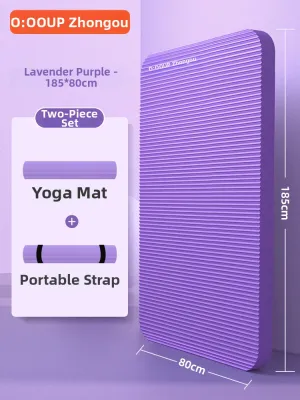
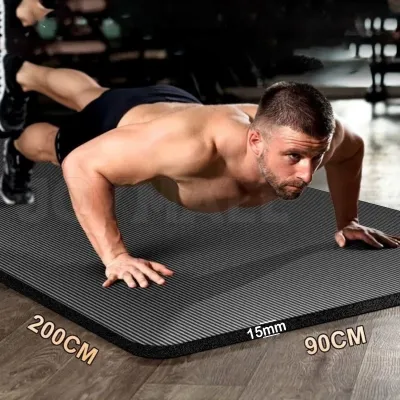
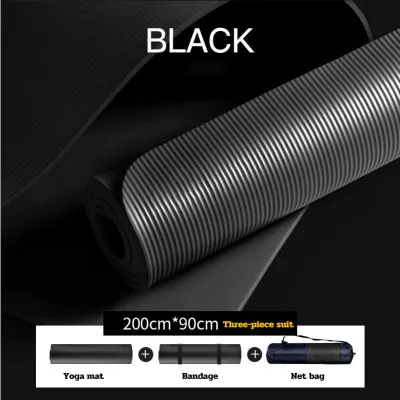
![[BEST SELLER]Rubber gym mats High Density EPDM Rubber Tile Mat With Connector 20mm Thickness Crossfit Gym Flooring](https://img.lazcdn.com/g/p/283522ee973e4963458b83ca9fd96231.jpg_400x400q80.jpg_.webp)
Prices are valid at publication and may change. Please refer to the product page for the latest price.
For most users, the choice is conditional:
- NBR (Nitrile Butadiene Rubber) is the most common and budget-friendly option, offering a lightweight, pillowy feel that is easy to move around but prone to stretching and tearing.
- TPE (Thermoplastic Elastomer) serves as a more durable, eco-friendly, and firmer alternative that resists moisture absorption and offers better structural support.
- High-Density Composite Foams are the premier choice for dedicated Pilates and physical therapy, providing excellent rebound and longevity at a higher price point and weight.
Regardless of the brand, the critical factor for durability in a warm climate is verifying a closed-cell construction, which prevents the mat from acting like a giant sponge for sweat and humidity.
Who Actually Needs a 20mm Yoga Mat? (Use Cases and Safety Limits)
A 20mm mat is not a standard yoga mat; it is a specialized utility mat. It is highly beneficial for floor-based, low-impact practices where the body remains in prolonged contact with the ground. This includes restorative yoga, Yin yoga, classical mat Pilates, and targeted physical therapy or rehabilitation exercises. For individuals suffering from chronic joint pain, osteoarthritis, or those recovering from knee, wrist, or hip injuries, the 20mm barrier provides the necessary shock absorption to execute movements pain-free.

However, this thickness introduces serious biomechanical risks for active, standing practices. If you attempt dynamic styles like Vinyasa, Ashtanga, or Hatha flows that require standing balance poses (such as Tree Pose, Warrior III, or Eagle Pose), a 20mm mat can be hazardous. The foot sinks deep into the soft foam, creating an unstable foundation. This “sinking effect” forces the small stabilizing muscles in your ankles and feet to overwork, which can lead to rapid fatigue, loss of balance, and acute ankle sprains. For dynamic standing practices, equipment cannot replace physical stability; you should instead opt for a standard 4mm to 6mm high-density mat.
Transporting a 20mm mat in Singapore presents distinct practical challenges. When rolled, these mats have a diameter of 20 to 25 centimeters, making them highly bulky. Carrying one on a crowded MRT train during peak hours or on a local bus can be incredibly cumbersome. Additionally, in compact Singaporean apartments, storing a roll of this size requires dedicated closet space, as leaving it out can clutter living areas.
Key Comparison Dimensions for a Yoga Mat 20mm Profile
Many buyers mistake initial softness for high-quality cushioning. A very soft, low-density 20mm mat will simply compress completely under your body weight, causing your knees or hips to “bottom out” against the hard floor. High-density mats, conversely, feel firmer to the touch but distribute your weight evenly, preventing contact with the ground and protecting your joints far more effectively.
Compression set refers to a material’s tendency to remain permanently deformed after being subjected to pressure. Cheap, low-quality thick mats will retain deep indentations from your knees or elbows long after your workout is over. A high-quality 20mm mat must have excellent rebound properties, returning to its original flat shape within seconds of pressure being released. This directly dictates the mat’s long-term durability.
Thinner yoga mats often rely on the natural “stickiness” of polyurethane or natural rubber to keep you from slipping. At 20mm thickness, these materials are rarely used because they would make the mat too heavy to lift. Instead, manufacturers of TPE and NBR mats use deep textured patterns—such as ribbed, textured, or honeycombed surfaces—to provide mechanical grip. You must evaluate these patterns to ensure they offer sufficient traction for your hands and feet.
A standard 5mm yoga mat typically weighs between 1 and 3 kilograms and rolls up tightly. A 20mm mat made of high-density foam can weigh significantly more and will have a massive roll diameter. You must weigh the benefit of extra cushioning against the practical trade-off of a heavy, bulky roll that is difficult to store and transport.
Material Breakdown: NBR vs. TPE vs. High-Density Foam
To make an informed purchase, you must understand that the brand printed on the mat is secondary to the material it is made of. The vast majority of 20mm mats available in the Singapore market are constructed from one of three materials: Nitrile Butadiene Rubber (NBR), Thermoplastic Elastomer (TPE), or High-Density Composite Foam.
NBR (Nitrile Butadiene Rubber) is a synthetic rubber and the most common material for ultra-thick mats. It is exceptionally lightweight and offers a very soft, pillowy cushion that feels incredibly comfortable initially. It is also highly affordable, typically falling into the budget price tier. However, NBR has low tensile strength. It is highly prone to stretching, tearing, and flaking, especially when subjected to lateral forces. It also tends to absorb moisture if the outer skin is punctured, and can become quite slippery when wet with sweat.
TPE (Thermoplastic Elastomer) is a polymer blend that represents a significant upgrade in durability and environmental safety. It is typically hypoallergenic, recyclable, and free from harmful phthalates. TPE mats offer a much firmer, more supportive cushion than NBR, preventing the “bottom-out” effect. Because TPE is naturally closed-cell, it does not absorb sweat, making it highly hygienic. The trade-offs are that TPE is heavier than NBR, more expensive (falling into the mid-range tier), and can degrade if exposed to high heat or direct sunlight over long periods.
High-Density Foam & Composite Layers are professional-grade mats often used in physical therapy clinics and high-end Pilates studios. They frequently feature a multi-layer composite construction, combining a firm, rigid base layer for structural stability with a slightly softer, high-density top layer for comfort. They offer unparalleled durability, exceptional rebound, and supreme joint protection. However, they are the bulkiest and heaviest options on the market, and they carry a premium price tag.
The physical structure of these materials also dictates how they behave under shear stress. For instance, when you perform a plank, your hands push forward while your feet push backward. Under this type of force, NBR has a tendency to stretch and elongate, which can disrupt your form and cause microscopic tears in the foam. TPE, with its cross-linked molecular structure, offers much higher tensile resistance, maintaining its shape and providing a safer, more predictable surface.
Composite foams often incorporate a middle reinforcement mesh, typically made of fiberglass or polyester. This internal layer acts as a skeleton, preventing the mat from stretching or tearing even under intense daily use. While this makes the mat exceptionally durable, it also limits its flexibility, meaning it will never roll as tightly as a pure NBR or TPE mat.
| Material | Weight | Durability | Best Use Case | Relative Price Range |
|---|---|---|---|---|
| NBR (Synthetic Rubber) | Very Lightweight | Low to Moderate | Occasional floor exercises, budget-conscious home use | Budget (Under S$30) |
| TPE (Thermoplastic Elastomer) | Moderate | High | Regular Pilates, restorative yoga, eco-conscious users | Mid-Range (S$30 to S$70) |
| High-Density Composite Foam | Heavy | Exceptional | Professional physical therapy, daily intense Pilates, home studios | Premium (Over S$70) |
Managing Durability and Grip in Singapore's Tropical Climate
Singapore’s relative humidity routinely hovers above 80%, creating a breeding ground for mold, mildew, and bacteria. When you exercise on an extra-thick mat, your body heat and sweat can easily become trapped. If your mat has an open-cell structure—which is common in cheaper, low-density NBR mats—it will act like a sponge, drawing moisture deep into its core. Once trapped inside a 20mm thick foam layer, this moisture is incredibly difficult to dry out, leading to persistent sour odors and eventual mold growth. To protect your health and the longevity of your mat, always verify that the manufacturer specifies a closed-cell surface or an antimicrobial treatment.
Many residents store their fitness gear on balconies, in utility yards, or inside the trunks of their cars. In Singapore, temperatures inside a parked car or a sun-drenched balcony can easily exceed 40°C. High heat is highly destructive to both TPE and NBR. Extreme heat causes these thermoplastic materials to soften, warp, lose their structural rebound, and in some cases, develop a sticky, degrading surface. Always store your mat in a cool, shaded, indoor environment.
To maintain both hygiene and grip, establish a strict cleaning routine. After every session, wipe down the surface with a soft cloth dampened with water and a mild, non-oil-based soap. Avoid harsh chemical cleaners, alcohol, or essential oils, which can break down synthetic foams. Before rolling your mat up, ensure it is 100% dry. Hang it flat over a wide clothes drying rack or a thick railing in a well-ventilated, shaded room. Never roll up a damp 20mm mat, as the trapped moisture will degrade the inner core and create odors.
Decision Framework: Which 20mm Mat Profile Fits You?
To select the perfect yoga mat 20mm option for your home setup, evaluate your practice frequency, budget, and storage capacity against these clear profiles:
Choose an NBR mat if you are on a strict budget (under S$30), plan to use the mat occasionally for basic floor stretching or gentle core work, and prioritize a lightweight roll that is easy to move around your home. Be prepared to replace it sooner if it is subjected to high-friction movements.
Choose a TPE mat if you want a durable, hygienic, and eco-friendly middle ground (S$30 to S$70). TPE is ideal if you practice Pilates or restorative yoga multiple times a week, require firm joint support that does not bottom out, and want a mat that resists sweat absorption in Singapore’s humid climate.
Choose a High-Density Composite mat if you are setting up a dedicated home workout space, require professional-grade shock absorption for physical rehabilitation, and do not mind a heavier, bulkier roll. This premium investment (over S$70) offers the absolute best longevity and structural rebound.
Verify first if your fitness routine involves any standing balance work, dynamic yoga flows (like Vinyasa), or high-impact jumping. In these scenarios, a 20mm mat is fundamentally unsafe. You should abandon the 20mm requirement entirely and instead look for a high-density 5mm to 8mm natural rubber or polyurethane mat, which provides the necessary ground feedback and ankle stability to keep you safe.
Frequently Asked Questions (FAQ)
Can I use a 20mm yoga mat for high-intensity interval training (HIIT)?
While a 20mm mat might seem appealing for cushioning your joints during high-impact exercises, it is highly unsuitable and unsafe for HIIT workouts. Dynamic movements like burpees, jumping jacks, mountain climbers, and rapid lateral lunges require a stable, high-traction surface. The extreme thickness and soft compression of a 20mm mat absorb the energy of your movements, making it incredibly easy to roll or strain your ankle. Furthermore, the high-friction forces of rapid footwork will quickly tear and shred NBR or TPE materials. For HIIT, you should use a thin (4mm to 6mm), high-density utility mat designed specifically for athletic training.
How do I clean and store a thick yoga mat in a humid environment?
In Singapore’s humid climate, proper care is essential to prevent mold. Begin by wiping down the entire surface of the mat after every use using a microfiber cloth lightly dampened with a mixture of water and a few drops of mild dish soap. Next, hang the mat completely flat over a wide drying rack, a shower rod, or a chair in a well-ventilated room away from direct sunlight. Do not expose it to the harsh midday sun, as this can warp the material. Once fully dry to the touch, roll the mat up loosely. Store it in a cool, dry place indoors—never on an outdoor balcony or inside a hot car trunk.
Will a 20mm mat fit in a standard yoga mat bag?
No, a 20mm mat will not fit into a standard yoga mat bag. Standard bags, sleeves, and carriers are designed for mats with a thickness of 4mm to 6mm, which roll up to a relatively narrow diameter. A rolled 20mm mat is exceptionally bulky, often measuring 20 to 25 centimeters in diameter. To transport a mat of this size, you will need to purchase an oversized Pilates mat bag, a heavy-duty adjustable carrying strap, or a dedicated utility harness. Many 20mm mats are sold with simple elastic carrying straps included; utilizing these open straps is the most practical way to carry and store your thick mat.

Community discussion
Share your experience or ask a question. Comments are reviewed before publication.