
Starting a strength training journey with kettlebells is an exceptionally efficient way to build functional strength, improve cardiovascular fitness, and enhance overall mobility. For women beginners in Singapore, finding the right kettlebell involves balancing physical comfort, home storage constraints, and safety.
A suitable starter kettlebell is not a one-size-fits-all product. Instead, it is a tool that matches your hand size, fits comfortably in your living space, and provides a safe, manageable load for learning foundational movements. By focusing on key physical characteristics like handle diameter, coating materials, and weight distribution, you can select a kettlebell that supports your fitness goals without risking injury or damaging your home flooring.
Quick Guide: What Makes a Kettlebell Ideal for Women Beginners
Handle diameter is one of the most overlooked aspects of kettlebell selection, yet it directly impacts your grip security and forearm fatigue. Many standard kettlebells are designed with thick handles that can be difficult for smaller hands to wrap around completely. For women beginners, a handle diameter of approximately 28mm to 30mm is generally the most comfortable, allowing for a secure closed grip. If the handle is too thick, your grip will likely fail long before your target muscles are fully fatigued, leading to premature termination of your sets or accidental slippage.
Products mentioned in this guide
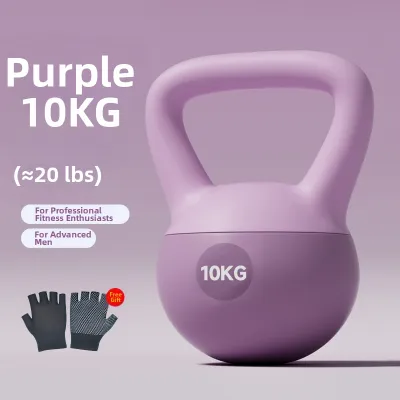
![[SG Ready Stock]Soft Kettlebell Women Fitness Home Software 2-12kg Kettlebell Squat Exercise Hip Strength Training Sand Kettlebell](https://img.lazcdn.com/g/p/4195d50bcdd9697fdff93cfe8e8ee624.jpg_400x400q80.jpg_.webp)
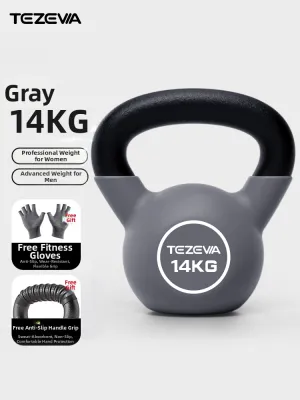
Prices are valid at publication and may change. Please refer to the product page for the latest price.
Horn spacing—the distance between the vertical sides of the handle—is equally critical. During two-handed exercises like the basic kettlebell swing or goblet squat, you must be able to place both hands on the handle side-by-side without pinching your fingers. Some compact kettlebells have narrow horns that force your hands to overlap, which destabilizes your grip and compromises your lifting form. A well-designed beginner bell should have a wide enough window to accommodate a two-handed grip comfortably.
The texture of the handle determines how well you can control the weight when your hands begin to sweat. A completely smooth, glossy painted handle can become incredibly slick, requiring excessive grip force to hold onto. Conversely, an overly rough, unfinished cast iron handle can cause painful friction, leading to blisters and torn calluses. A matte powder-coated finish or a lightly textured painted surface offers a practical balance, providing traction while remaining smooth enough to rotate easily in your palm.
Base flatness is a fundamental safety feature that should never be compromised. A high-quality kettlebell must have a wide, machined flat bottom that allows it to sit securely on the floor without wobbling. This stability is crucial not only for safe storage but also for floor-based exercises such as renegade rows, push-ups on the bells, or plank transfers. Cheaply manufactured kettlebells often have rounded or uneven bases that can tip over unexpectedly under load, potentially causing wrist sprains or crushing fingers.
Coating materials play a dual role in protecting both the equipment and your home environment. In Singapore, where residential spaces often feature delicate flooring like polished tiles, engineered wood, or vinyl laminates, dropping a bare iron weight can result in costly damage. Neoprene or vinyl coatings encase the metal body of the kettlebell, providing a resilient buffer that absorbs minor impacts and dampens noise. However, it is important that this coating is restricted to the bell’s body; a coated handle can become slippery and is generally more difficult to grip.
Recommended Kettlebell Types for Your First Strength Routine
For residents living in space-conscious apartments in Singapore, clutter is a constant concern. Storing a complete set of individual kettlebells can quickly overwhelm a small living room or balcony. Adjustable kettlebells offer a practical solution by combining multiple weight increments into a single compact unit. These bells typically use a dial, pin, or internal plate system to adjust the resistance, allowing you to progress from lighter weights for upper-body exercises to heavier loads for lower-body movements.

This versatility supports progressive overload, which is the cornerstone of building strength. However, users must carefully inspect the locking mechanism of any adjustable bell. Any internal movement or rattling of the plates during ballistic exercises can shift the center of mass unexpectedly, making the movement unstable. Additionally, some adjustable designs have bulkier dimensions than standard bells, which can alter the path of the movement during exercises like cleans or presses.
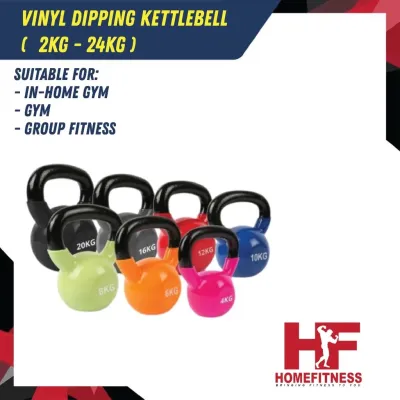
Vinyl or neoprene-coated cast iron kettlebells represent a traditional standard for home fitness. These are solid, single-cast iron pieces where the spherical body is wrapped in a colorful synthetic sleeve. The primary advantage of this design is its extreme durability. Because there are no moving parts, dials, or internal plates, there is virtually nothing that can break or wear out over years of heavy use.
The synthetic coating also acts as a barrier against moisture, which is highly beneficial in Singapore’s humid climate where exposed iron is prone to rusting. When shopping for these, it is crucial to choose single-piece cast iron bells rather than those with welded handles, which can fail under stress. Ensure the coating is thick and uniform to prevent the underlying metal from being exposed to air and moisture.
Competition kettlebells are engineered to meet strict international standards, meaning every bell has the exact same external dimensions, handle diameter, and shape, regardless of whether it weighs 8kg or 32kg. The weight variation is achieved by adjusting the thickness of the internal steel walls or using hollow cores. For beginners who are highly committed to mastering technical kettlebell sport movements, competition bells offer unmatched consistency.
Because the physical size of the bell never changes, your forearm contact points, wrist alignment, and lifting trajectory remain identical as you progress to heavier weights. However, competition bells are typically more expensive and feature a standardized handle diameter of 33mm to 35mm, which may feel excessively thick for women with smaller hands. Additionally, their bare steel handles require regular maintenance to prevent rust in humid environments.
How to Choose the Right Starting Weight
Selecting the correct starting weight requires understanding the biomechanical differences between ballistic and strict movements. Ballistic exercises, such as the kettlebell swing, clean, and snatch, are explosive movements powered by the hips, glutes, and hamstrings. Because these large muscle groups are incredibly strong, they require a heavier load to be properly engaged. A weight that is too light will not provide enough resistance to force correct hip-hinge mechanics, often leading beginners to pull the bell up using their arms and shoulders.
On the other hand, strict movements like overhead presses, windmills, and Turkish get-ups rely on smaller stabilizing muscles in the shoulders and core. These exercises require a much lighter weight to ensure safety and maintain proper joint alignment. Attempting to press a weight that is too heavy can lead to shoulder impingement or lower back hyperextension as your body struggles to compensate for the lack of localized strength.
To determine a safe starting point, beginners can use simple physical baselines. For most women who are new to strength training, a starting weight of 6kg or 8kg is highly appropriate for learning ballistic movements like the swing. For strict upper-body movements, a lighter bell of 4kg or 6kg is usually recommended. If you have some experience with resistance training, you might comfortably start with an 8kg or 10kg bell for lower-body exercises and a 6kg bell for upper-body work.
A practical home assessment involves holding a household object of a known weight (such as a large water bottle or a bag of rice) and performing a single-arm overhead press. If you can complete 8 to 10 controlled repetitions without arching your lower back, you can safely transition to a kettlebell of a similar weight. If you struggle to complete three repetitions, or if your form breaks down immediately, you should start with a lighter load.
When testing a new kettlebell weight, look for specific physical indicators to verify if the load is appropriate. A weight is too heavy if you cannot maintain a neutral spine throughout the movement, if your shoulders round forward, or if your wrists bend backward under the load. If you feel a pinching sensation in your lower back during swings, it is a clear sign that the weight is pulling you out of alignment and you need to scale down.
Conversely, a weight is too light if you can easily swing the bell using only your arms without engaging your hips, or if the movement feels so effortless that you cannot feel the path of the weight. The ideal starter weight should feel challenging but entirely controllable, allowing you to complete your target repetitions with proper form.
Where to Shop and Pre-Purchase Checks in Singapore
Singapore offers a variety of avenues for purchasing kettlebells, ranging from specialized commercial fitness showrooms to general sporting goods stores and online marketplaces. For beginners, visiting a physical showroom is highly advantageous. It provides the opportunity to physically lift different weights, test the handle thickness, and assess the texture of the finishes in person.
While online marketplaces offer the convenience of home delivery, buying sight unseen carries the risk of receiving a poorly balanced or rough-handled product. If purchasing online, prioritize reputable fitness brands that provide detailed specifications regarding handle diameter, material composition, and base width. Avoid generic listings that do not specify these critical dimensions.
When inspecting a kettlebell in a physical store, run your fingers along the entire underside of the handle. This area must be completely smooth; any sharp casting seams, metal burrs, or rough paint drips can easily tear your skin during high-repetition swing workouts. Next, place the kettlebell on a flat, level surface and gently push it from different angles. It should remain rock-solid; any wobbling indicates an uneven base, which makes floor-based exercises unsafe.
Finally, inspect the coating for any chips, cracks, or thin spots. These imperfections can allow sweat and humidity to penetrate the iron core, leading to internal rusting and eventual peeling of the protective layer. If you notice any rust spots already forming on the showroom floor, it is a strong indicator of poor manufacturing quality or inadequate storage.
Because kettlebells are dense, heavy items, shipping fees in Singapore can vary significantly. When purchasing online, look for retailers that offer free local delivery for orders exceeding a certain value, as standard delivery fees for heavy items can quickly inflate the total cost. Additionally, review the seller’s return and exchange policies.
Returning a heavy iron weight via courier can be costly and logistically challenging, so ensure the retailer allows for self-returns at a physical warehouse if a product arrives damaged. For adjustable kettlebells, check if a warranty is provided for the internal locking mechanisms, as these components are subject to wear and tear over time.
Frequently Asked Questions (FAQ)
Can I use a dumbbell instead of a kettlebell for beginner workouts?
Yes, dumbbells can be used as temporary substitutes for several foundational exercises, such as goblet squats, lunges, and strict overhead presses. However, they cannot fully replicate the unique training benefits of a kettlebell due to the fundamental difference in weight distribution. A dumbbell’s center of mass is positioned directly in line with your hand, making it highly stable and balanced.
In contrast, a kettlebell’s center of mass is offset, hanging below the handle. This offset design creates a dynamic pendulum effect during ballistic movements like swings and cleans, forcing your core, glutes, and shoulder stabilizers to work significantly harder to control the weight’s trajectory. While you can perform a swing by holding one end of a dumbbell, the movement mechanics are awkward and do not provide the same fluid, hip-driven power development.
Do I need to buy a pair of kettlebells or just one?
For beginners, starting with a single kettlebell is highly recommended and more than sufficient for a comprehensive full-body workout. Most foundational kettlebell movements—including the single-arm press, goblet squat, Turkish get-up, and basic swing—are designed to be performed with a single bell.
Training with one weight introduces asymmetrical loading, which is incredibly beneficial for developing core stability, improving balance, and identifying and correcting strength discrepancies between the left and right sides of your body. You only need to invest in a matching pair of kettlebells once you have mastered the foundational movements and are ready to progress to advanced double-kettlebell exercises, such as double cleans, double thrusters, or heavy double front squats, which require symmetrical loading to build maximum strength.

Community discussion
Share your experience or ask a question. Comments are reviewed before publication.