
Selecting the right bicycle U-lock is one of the most critical decisions you can make to safeguard your ride. With a wide variety of locks available on the market, understanding independent security ratings is the most reliable way to evaluate a lock’s true protective capabilities. These ratings provide an objective measure of how well a lock can withstand real-world theft attempts, helping you look past marketing claims and make an informed choice.
To choose the ideal lock, you must balance the security rating against your typical parking scenarios, the replacement value of your bicycle, and the physical portability of the lock itself. By matching these factors to your daily routine, you can find a lock that offers robust protection without becoming an unnecessary burden during your commute.
Decoding U-Lock Security Rating Systems
Many lock manufacturers use their own proprietary security scales, which can range from one to ten or one to fifteen. Because these internal scales are not standardized, comparing locks from different brands based solely on manufacturer packaging is highly challenging. To solve this problem, independent security testing organizations provide unbiased, standardized evaluations of locking products.
Products mentioned in this guide
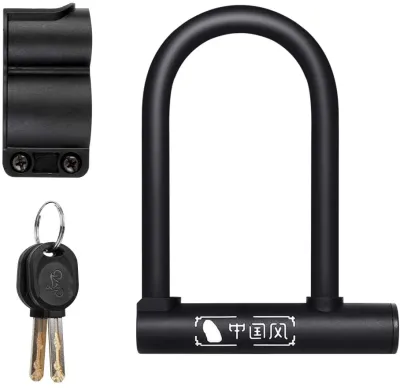
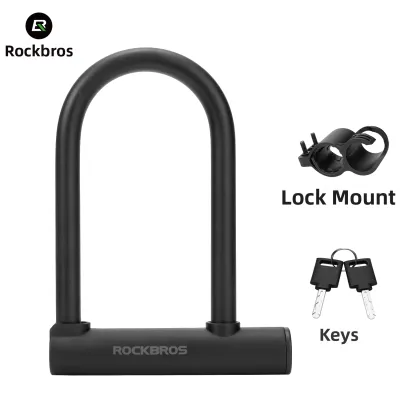
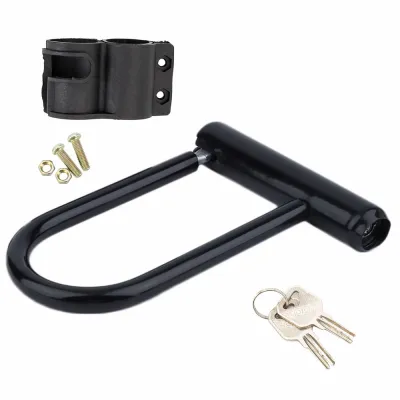
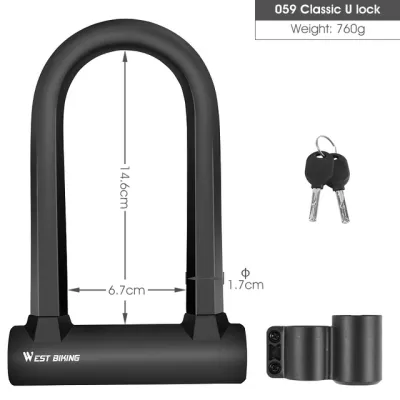
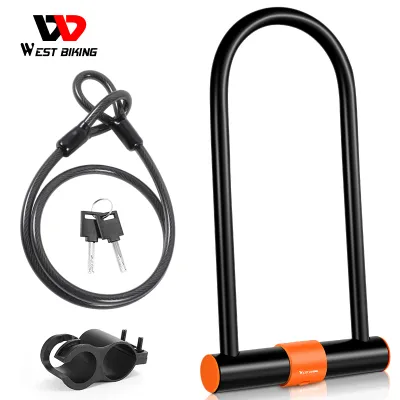
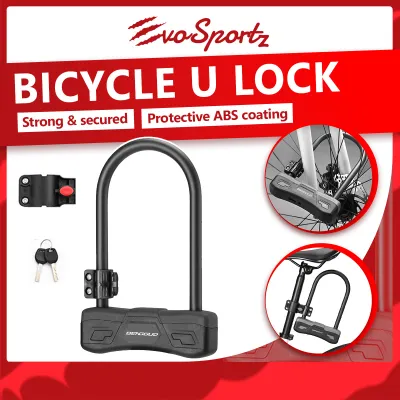
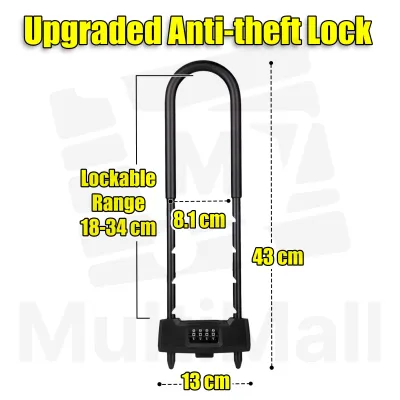
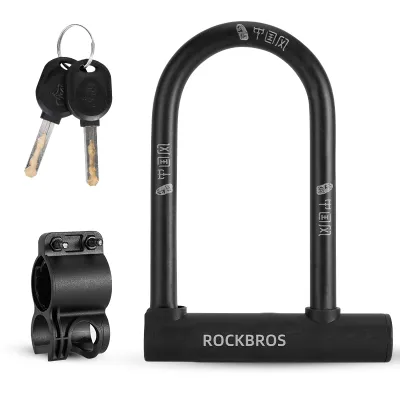
Prices are valid at publication and may change. Please refer to the product page for the latest price.
Organizations such as Sold Secure in the United Kingdom and ART in the Netherlands are widely recognized as the industry benchmarks for bicycle lock testing. These independent bodies employ professional locksmiths and security experts who attempt to defeat locks using a standardized suite of tools. The testing process simulates real-world theft scenarios, applying manual tools, power tools, and destructive techniques within strict time limits to determine a lock’s resistance level.
Sold Secure, for example, categorizes bicycle locks into four distinct tiers: Bronze, Silver, Gold, and Diamond. Bronze-rated locks offer basic security designed to resist casual opportunists using simple hand tools. Silver ratings represent a solid compromise between cost and security, resisting more determined attacks with basic tools. Gold-rated locks provide high-level security against dedicated thieves using sophisticated tools, while Diamond-rated locks represent the pinnacle of protection, specifically tested to withstand aggressive attacks from heavy-duty tools like angle grinders.
It is important to recognize that these ratings do not represent an absolute, lifetime guarantee against theft. Instead, they indicate how much time, noise, and effort a thief must expend to compromise the lock. A higher security rating serves as a powerful visual and physical deterrent, forcing thieves to look for easier targets.
Matching Protection Levels to Your Parking Scenarios
Your choice of security rating should directly correspond to the risk level of your daily parking environments. Low-risk scenarios typically involve short stops where your bicycle remains within your line of sight or in highly visible, high-footfall areas during daylight hours. If you are stopping briefly at a Park Connector Network (PCN) pit stop in Singapore for a quick drink, a Silver-rated lock is generally sufficient to deter opportunistic grab-and-go theft.

Medium-risk scenarios require a step up in security. These situations involve leaving your bicycle unattended for several hours in public spaces, such as MRT station bicycle racks or HDB void decks during the day. While these locations experience regular pedestrian traffic, they also provide thieves with windows of opportunity to work discreetly. For these environments, a Gold-rated lock is highly recommended to withstand more persistent manual attacks.
High-risk scenarios demand the maximum level of protection available. If you regularly park your bicycle overnight in secluded areas, dark alleyways, or transit hubs where foot traffic is minimal, a Diamond-rated lock is essential. The extended resistance time provided by a Diamond-rated lock is crucial when a thief has the cover of darkness and ample time to use noisy power tools without interruption.
Balancing Bike Value, Lock Weight, and Portability
A practical framework for choosing a lock is to align your financial investment with the replacement value of your bicycle. As a general guideline, you should expect to spend approximately 10% of your bicycle’s total value on high-quality locking systems. For instance, if you ride a commuter bicycle or an electric bike valued at S$1,500, investing in a Gold- or Diamond-rated lock is a highly sensible decision to protect your asset.
However, higher security ratings inevitably introduce a physical trade-off in terms of weight and bulk. To achieve the structural integrity required for Gold and Diamond ratings, manufacturers must use thicker, hardened steel shackles and heavier locking bodies. A top-tier lock can easily weigh between 1.5 to over 2.5 kilograms, which adds noticeable weight to your ride.
Before purchasing, consider how you will transport the lock on your daily journeys. Many locks come with frame-mounting brackets, but you must verify that your bicycle frame has adequate clearance and that the bracket can support a heavy lock without slipping. Alternatively, carrying a heavy lock in a backpack or a dedicated pannier bag transfers the weight to your body or rack, which may affect your riding comfort and handling over long distances.
Physical Specs to Verify Beyond the Rating Label
While independent rating labels are an excellent starting point, you should also verify specific physical specifications to ensure the lock meets your practical needs. First, inspect the shackle diameter and material composition. Hardened steel shackles with a diameter of 13mm to 15mm offer excellent resistance against manual bolt cutters, while shackles measuring 16mm or thicker are highly recommended to resist power tool attacks.
Next, evaluate the internal dimensions of the U-lock shackle. The lock must be large enough to secure your bicycle’s frame and ideally the rear wheel to a fixed anchor point, such as a public bike rack or a sturdy metal railing. However, avoid buying a lock that is excessively large for your needs; a tight fit leaves less open space inside the shackle, making it much harder for a thief to insert hydraulic jacks or leverage tools to pop the lock open.
Finally, examine the design of the locking mechanism itself. Look for locks that feature a dual-locking mechanism, which secures both ends of the shackle independently inside the crossbar. This design requires a thief to make two separate cuts to remove the lock, doubling the time and effort needed to steal the bike. Additionally, verify that the lock cylinder features anti-drill plates and disc-detainer technology to protect against picking and drilling attacks.
Frequently Asked Questions (FAQ)
Can I use a lower-rated U-lock if I park in a secure compound?
Even if you park in a restricted-access area, such as a card-access bicycle room or a monitored office basement, relying on a lower-rated lock carries inherent risks. Secure compounds reduce the likelihood of casual opportunistic theft, but they are still vulnerable to tailgating, unauthorized entry, or inside theft. If your bicycle is left unattended in these areas for long periods, maintaining a high-quality lock ensures your bike remains secure even if the building’s perimeter security is compromised.
Does a higher security rating mean the lock is completely unpickable?
No security rating indicates that a lock is entirely unpickable or indestructible. Independent ratings measure a lock’s resistance to common physical and destructive attack methods within specific time limits. While high-security locks utilize complex keyways designed to resist picking and drilling, the vast majority of real-world bicycle thefts involve destructive physical force rather than lock picking. A higher rating ensures the lock can withstand aggressive physical attacks for a longer duration, which is the most effective way to deter thieves.

Community discussion
Share your experience or ask a question. Comments are reviewed before publication.