
The Short Answer: Bag Carabiners vs. Climbing Carabiners
No, you must never use a bag carabiner, everyday carry (EDC) clip, or novelty key ring for climbing, belaying, or any other life-support application. These small, lightweight accessories are designed solely to hold keys, secure water bottles, or attach light gear to the outside of a backpack. They lack the structural engineering, material strength, and rigorous safety certifications required to support human weight or withstand the dynamic forces generated during a fall.
Climbing carabiners are classified as Personal Protective Equipment (PPE). They undergo strict manufacturing processes, quality control checks, and standardized testing to ensure they can handle thousands of kilograms of force. In contrast, a typical bag carabiner is an unrated accessory designed for convenience, not survival. Using one in a climbing system introduces a catastrophic point of failure that can lead to severe gear failure and serious injury.
If you are currently at a climbing gym, an outdoor crag, or a high-ropes course and realize that you or your climbing partner is using a non-rated bag clip in a safety system, you must stop climbing immediately. Safely secure yourself using certified gear, alert your partner, and descend to the ground to replace the unrated clip with a certified climbing carabiner before continuing. Equipment can never replace proper training, vigilance, and sound judgment on the wall.
Products mentioned in this guide
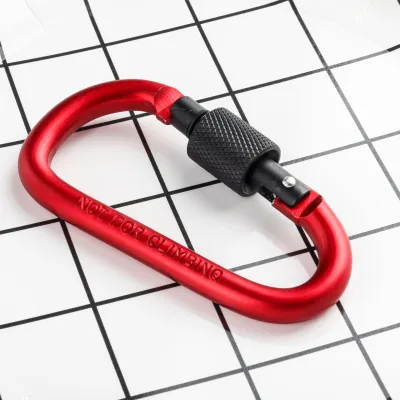
![[SG Stock] Carabiner Locking Screw Lock Biner Snap Keychain Bag Hook Aluminum Alloy Outdoor Camping Hiking](https://img.lazcdn.com/g/p/f7df1e5fcb0fd6af28660e14a5b7a86b.jpg_400x400q80.jpg_.webp)
Prices are valid at publication and may change. Please refer to the product page for the latest price.
Why Bag Carabiners Fail Under Climbing Loads
The primary reason bag carabiners fail catastrophically under climbing loads lies in their material composition and manufacturing methods. Most accessory clips are made from cast zinc, low-grade molded plastics, or cheap, extruded aluminum alloys. These materials are brittle and prone to sudden snapping when subjected to sudden tension. Climbing-rated carabiners, on the other hand, are constructed from high-strength, hot-forged or cold-forged aluminum alloys (such as 7075 aluminum) or stainless steel, which are engineered to deform slightly and absorb energy rather than shattering under extreme stress.

Another critical vulnerability is the gate mechanism. Bag carabiners typically feature simple wire gates, spring-loaded plastic clips, or basic non-locking gates with weak internal springs. They lack locking sleeves—such as screw-gates, twist-locks, or magnetic locks—that prevent the gate from accidentally opening during movement. If a rope or rock rubs against an unlocked gate, it can easily swing open, reducing the carabiner’s overall strength by more than half and allowing the rope to slip out entirely.
Furthermore, the geometry of a bag carabiner is not optimized for load distribution. Climbing carabiners are meticulously shaped (often in asymmetrical D-shapes or pear shapes) to direct the force of a load along the spine, which is the strongest part of the frame. Accessory clips often have symmetrical oval or novelty shapes that allow the load to shift toward the weaker gate or the minor axis, leading to immediate structural failure under minimal tension.
Finally, bag carabiners do not undergo standardized load testing or quality control for human suspension. During a climbing fall, the dynamic force (or shock load) exerted on the anchor system can easily exceed several kilonewtons (kN), which is equivalent to hundreds of kilograms of sudden force. Because accessory clips are not designed to tolerate shock loads, they will bend, shear, or break instantly under forces that a certified climbing carabiner would easily absorb.
How to Identify a True Climbing-Rated Carabiner
To ensure your safety on the wall, you must know how to distinguish a certified climbing carabiner from a cosmetic accessory. The most reliable method is to inspect the spine of the carabiner for permanently engraved or stamped markings. A genuine climbing carabiner will always display its minimum breaking strength ratings in kilonewtons (kN). Look for three distinct numbers: the major axis rating (usually 20 kN or higher when closed), the minor axis rating (typically 7 kN to 10 kN), and the gate-open rating (usually 6 kN to 9 kN). If these numbers are missing, the clip is not safe for climbing.
In addition to strength ratings, look for recognized international safety certification marks engraved directly into the metal. The most common certifications are the European Conformity mark (CE) followed by a four-digit laboratory code, and the Union Internationale des Associations d’Alpinisme (UIAA) logo. These markings verify that the gear has passed rigorous independent testing standards (such as EN 12275) for mountaineering and climbing equipment.
You should also evaluate the physical design and gate mechanism of the carabiner. Climbing carabiners designed for critical safety points, such as belaying or anchoring, feature robust locking mechanisms like manual screw-gates or automatic locking sleeves. The gate should feel smooth, snap shut firmly without catching, and align perfectly with the nose of the carabiner. Be wary of lightweight clips that mimic the appearance of climbing gear but feature loose gates, rough edges, or plastic locking sleeves, as these are often counterfeit or low-quality novelty items.
When purchasing gear, always buy from reputable outdoor retailers and authorized distributors rather than unverified online marketplaces. Counterfeit climbing gear can look remarkably similar to certified products but may fail at a fraction of the rated load. If you cannot trace the origin of a carabiner or if the markings are worn, illegible, or completely absent, treat it as a non-load-bearing accessory and keep it far away from your climbing harness.
Safe Uses for Non-Load-Bearing Carabiners
While bag carabiners are entirely unsuitable for climbing, they remain highly useful tools for everyday organization and low-risk outdoor tasks. You can safely use these lightweight clips to attach water bottles, travel mugs, hand sanitizer, or keys to the exterior daisy chains of your backpack. This keeps essential items easily accessible during a hike or a commute without cluttering the main compartments of your bag.
In a camping or basecamp setting, non-load-bearing carabiners are excellent for gear organization and storage. You can use them to hang lightweight items like camp lanterns, wet socks, or cooking utensils from a clothesline or inside your tent. They are also handy for bundling together loose items, such as organizing paracord bundles, keeping matching dry bags grouped together, or securing a lightweight tarp cover over your gear pile.
To prevent dangerous mix-ups, establish a strict rule of thumb for your gear: if dropping the attached item could result in personal injury, significant property damage, or a ruined trip, do not trust it to a bag carabiner. For example, hanging a heavy camera setup, an expensive GPS unit, or a critical medical kit should be done with a rated utility clip or a light climbing-rated carabiner. By keeping your non-rated accessory clips visually distinct—perhaps by choosing bright, novelty shapes or plastic designs—you can easily avoid accidentally grabbing one during a high-stakes climbing scenario.
Frequently Asked Questions (FAQ)
Can I use a bag carabiner to anchor a hammock or hang a heavy bag?
No, you should not use a standard bag carabiner to anchor a hammock or hang a heavy punching bag. While these activities may seem static compared to the dynamic falls of rock climbing, they still subject the hardware to significant, continuous tension. The force exerted on a hammock anchor is often much higher than the actual weight of the person inside due to the physics of the hang angle; a shallow angle can multiply the tension on the clips exponentially.
Most accessory clips have a safe working load limit of only a few kilograms, which is easily exceeded by human weight. If a bag carabiner fails while you are in a hammock or standing near a heavy bag, the sudden drop can result in serious back, neck, or head injuries. For any application involving human suspension or heavy overhead loads, always use hardware specifically rated for those activities, such as heavy-duty hammock carabiners or climbing-rated gear.
What should I do if I accidentally used a bag carabiner while climbing?
If you discover that you have accidentally used a bag carabiner in your climbing system, you must stop climbing immediately and secure yourself using certified, load-bearing gear. Do not put any further weight on the unrated clip. Once you are safely anchored with proper equipment, carefully descend to the ground and remove the accessory carabiner from your active gear kit to prevent anyone else from using it.
After descending, perform a thorough visual inspection of the accessory clip and any gear that was connected to it. Check the carabiner for visible signs of stress, such as a bent spine, a misaligned gate, cracks, or deep grooves. Because non-rated metals can develop invisible micro-fractures under tension, you must permanently discard the bag carabiner—ideally by destroying it or marking it clearly with tape so it can never be mistaken for climbing gear again.
Additionally, inspect any soft goods, such as climbing ropes, slings, or webbing, that were in contact with the failing clip. If the accessory carabiner bent or broke under load, it may have created sharp metal edges that could cut or abrade your ropes. If there is any suspicion that your soft gear was subjected to a shock load against a deformed or damaged clip, err on the side of caution and retire those items from climbing use immediately.

Community discussion
Share your experience or ask a question. Comments are reviewed before publication.