
Quick Answer: Which Kettlebell Fits Your Workout Style?
Choosing between a cast iron and a competition kettlebell depends primarily on your training style, grip preferences, and long-term fitness goals. If your workouts consist of two-handed swings, goblet squats, strict presses, and general strength conditioning, a cast iron kettlebell is typically your best option. Its wider handle accommodates both hands comfortably, and the physical size of the bell scales naturally with the weight.
Conversely, if you focus on high-repetition ballistic movements, single-arm snatches, cleans, or competitive kettlebell sport (Girevoy Sport), a competition kettlebell is the superior choice. These bells maintain identical dimensions across all weight increments, ensuring your lifting technique remains perfectly consistent as you progress. For fitness enthusiasts operating in compact living spaces where storing a full rack of weights is impractical, an adjustable kettlebell that mimics these designs can serve as an excellent space-saving alternative.
Physical Differences That Affect Your Grip and Form
Understanding the structural differences between these two designs is essential, as they directly influence your lifting mechanics, wrist comfort, and overall safety during high-velocity movements.
Products mentioned in this guide
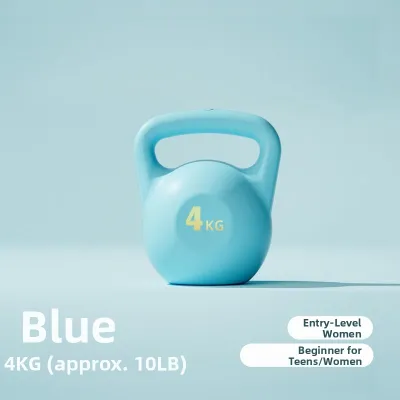
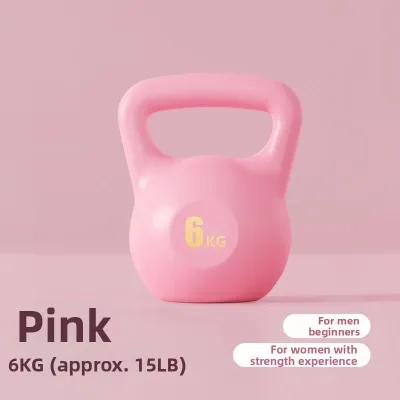
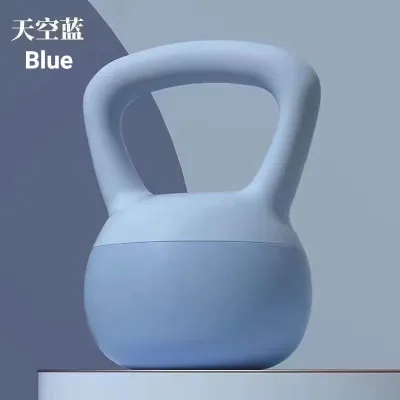
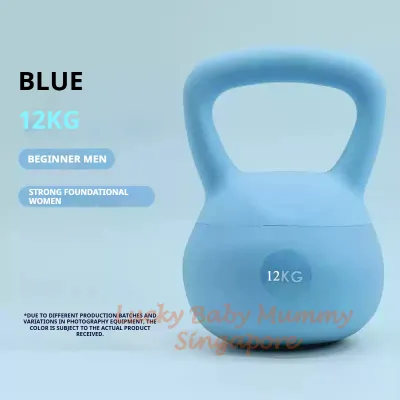
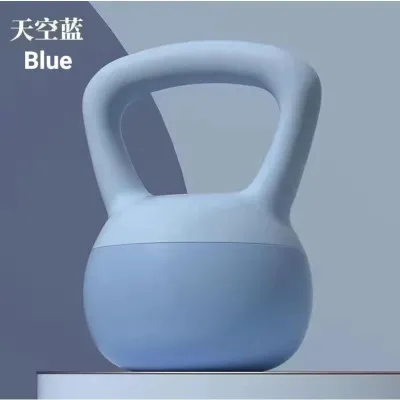
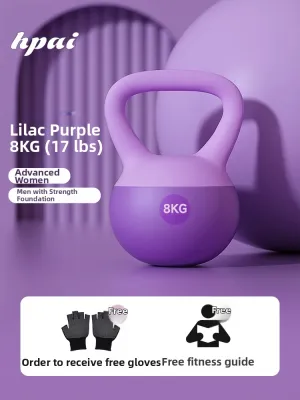
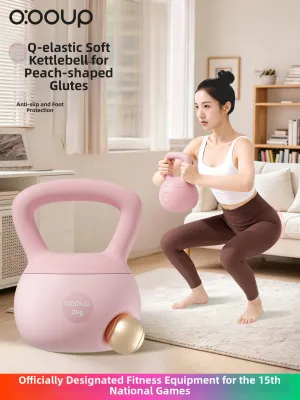
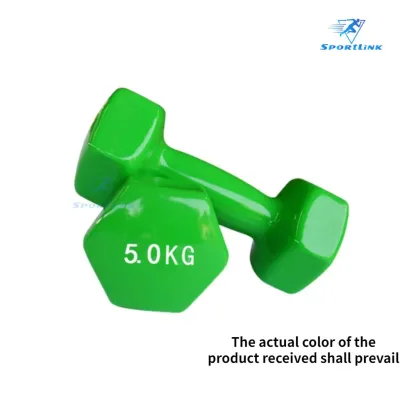
Prices are valid at publication and may change. Please refer to the product page for the latest price.

Handle Geometry and Clearance
Cast iron kettlebells feature a curved, slightly triangular handle that grows wider and thicker as the weight increases. This design provides ample clearance for two-handed exercises but can cause your hand to slide laterally during single-arm ballistic movements. Competition kettlebells utilize a smaller, rectangular handle with a uniform diameter (typically 33mm or 35mm) regardless of the total weight. This standardized shape keeps the hand securely centered, reducing friction and blister formation during high-repetition sets.
Bell Dimensions and Center of Mass
The physical size of a cast iron kettlebell is directly proportional to its weight; a 12kg bell is visibly smaller than a 24kg bell. This means the point where the bell rests against your forearm changes with every weight increment, requiring constant minor adjustments to your rack position. Competition kettlebells are constructed with a uniform steel outer shell. Whether you are lifting an 8kg or a 32kg bell, the external dimensions and the center of mass remain identical, allowing you to build highly consistent muscle memory.
Base Design and Surface Coatings
Cast iron bells are molded as a single piece of solid metal and are often finished with powder coating, matte paint, or a raw textured surface to enhance chalk retention. The flatness of the base can vary depending on the casting quality, which is a critical factor to verify if you perform floor-based exercises. Competition bells are made of steel and feature a machined, perfectly flat base for maximum stability. Their handles are usually left as bare, polished steel to allow the hand to transition smoothly without catching, while the body is painted in standardized colors to indicate weight.
Matching the Kettlebell to Your Training Goals
Your training program should dictate the style of kettlebell you purchase, as using the wrong design can hinder your progress or lead to unnecessary joint strain.
Heavy Slow Lifts and Two-Handed Swings
For traditional strength training involving slow, controlled grinds—such as strict overhead presses, goblet squats, lunges, and deadlifts—cast iron kettlebells are highly practical. The wider handle allows you to place both hands on the bell comfortably for standard two-handed swings, which is the foundational movement for most beginners. The scaling size of the bell also feels intuitive, as heavier weights naturally present a larger surface area to brace against your body.
Dynamic Flows and Single-Arm Ballistics
If your routine emphasizes dynamic flows, high-rep snatches, clean-and-jerks, or rotational movements, the competition kettlebell is highly advantageous. Because the bell size never changes, the window of insertion—the space where your hand passes through the handle—remains constant. This consistency prevents the bell from banging painfully against your forearm bones, a common issue when transitioning between different sizes of cast iron weights.
Prioritizing Hybrid Routines
If your weekly workouts mix both styles of training, evaluate which movement category forms the core of your program. If you primarily perform single-arm ballistic work with occasional two-handed swings, a competition bell is highly manageable if you use a modified grip for two-handed movements. However, if your routine is built around general strength, conditioning, and partner workouts where multiple users share weights, the versatility and lower learning curve of cast iron make it the logical starting point.
Evaluating Budget and Long-Term Progression
Building a home gym requires balancing initial equipment costs against your long-term strength progression, especially when space and budget are limited.
Cost Efficiency and Material Quality
Cast iron kettlebells are generally more cost-effective per kilogram because the manufacturing process is straightforward. A single-cast mold requires less precision engineering than a calibrated steel competition bell. In Singapore, where fitness equipment prices can vary, cast iron represents a lower entry barrier for beginners. Expect to pay a premium for competition steel bells, as they require precise internal calibration to ensure the weight is accurate despite the uniform outer shell.
Space Constraints and Weight Progression
For residents living in compact apartments or HDB flats, floor space is a premium commodity. Purchasing a complete run of fixed-weight kettlebells can quickly clutter your living area. If you choose cast iron, you will likely need to purchase three or four distinct sizes over time as your strength increases. With competition bells, the financial commitment is higher upfront, but the standardized size makes them highly compatible with modular storage racks or specialized plate-loaded systems.
Durability and Maintenance in Humid Climates
Singapore’s high relative humidity can accelerate rust on fitness equipment. Cast iron bells with high-quality powder coating offer excellent resistance to moisture, but if the coating chips from metal-on-metal contact, the exposed iron will rust quickly. Competition bells feature bare steel handles that require regular maintenance. To prevent surface rust caused by sweat and humidity, you must wipe down the handles after use and occasionally clean them with a light wire brush or apply a thin layer of protective oil.
Quick Comparison: Cast Iron vs Competition Kettlebells
This table summarizes the key design elements and practical considerations to help you verify which style aligns with your training environment.
| Feature | Cast Iron Kettlebells | Competition Kettlebells |
|---|---|---|
| Handle Shape | Curved, wider; scales up with weight | Rectangular, uniform diameter (33mm-35mm) |
| Grip Style | Ideal for two-handed exercises | Optimized for single-handed transitions |
| Bell Dimensions | Increases in size as weight increases | Standardized external dimensions for all weights |
| Material | Solid cast iron | Steel shell with calibrated core |
| Best For | General strength, swings, and squats | High-rep snatches, cleans, and sport lifting |
| Relative Cost | Moderate; budget-friendly entry | Higher; premium investment per unit |
| Rust Vulnerability | Low (if powder-coated); high if chipped | High on bare steel handle; requires maintenance |
Pre-Purchase Checklist for Quality and Safety
Before finalizing your purchase from a local fitness retailer or online marketplace, use this checklist to ensure the kettlebell is safe, durable, and free of manufacturing defects.
- Inspect the Handle Seams: Run your hand along the underside of the handle. Cheap casting processes often leave sharp ridges or seams. These imperfections will quickly tear your palms during dynamic movements and should be sanded down or avoided entirely.
- Verify Base Flatness: Place the kettlebell on a hard, level floor and apply pressure to the sides. It should remain perfectly stable. A rounded or uneven base can tip over during floor exercises like renegade rows or push-ups, risking wrist injury.
- Check Weight Tolerance: Look for manufacturers that guarantee a tight weight tolerance (ideally within 1% to 2% of the stated weight). Low-quality cast iron weights can sometimes deviate significantly from their labeled mass.
- Assess the Coating Texture: Ensure the powder coating is uniform and matte rather than glossy. Glossy paint finishes become incredibly slippery when exposed to sweat, making the kettlebell difficult and dangerous to grip without chalk.
- Review Return Policies: Because kettlebells are heavy and expensive to ship, verify the retailer's return policy regarding manufacturing defects or shipping damage before completing your transaction.
Frequently Asked Questions (FAQ)
Can I use a competition kettlebell for heavy slow lifts?
Yes, you can use a competition kettlebell for heavy slow lifts, but you may find the handle ergonomics less than ideal. Because the handle is designed to be compact and uniform, fitting both hands onto a single competition bell for movements like goblet squats or heavy two-handed deadlifts can be difficult if you have larger hands. Additionally, because a lighter competition bell is physically larger than its cast iron equivalent, it may feel bulky or awkward when resting in the rack position during overhead presses if you are not accustomed to the standardized size.
Should I buy an adjustable kettlebell instead?
An adjustable kettlebell is an excellent alternative if you have limited storage space or a restricted budget. High-quality adjustable models are often built using a competition-style steel shell with an internal locking mechanism that holds stackable weight plates. This allows you to access a wide range of weights within a single footprint. However, you must verify the security of the internal locking system before buying. Some adjustable designs can rattle during high-velocity swings, and changing the weight plates manually can slow down your pace during fast-moving circuit workouts.

Community discussion
Share your experience or ask a question. Comments are reviewed before publication.