
Selecting an exercise bike for an elderly family member in a Housing & Development Board (HDB) flat requires balancing physical accessibility with space constraints. As we age, maintaining cardiovascular health and joint mobility is vital, yet Singapore’s high-rise apartments demand compact equipment that does not clutter common walkways. The ideal solution lies in choosing a bike with a low mounting height, excellent stability, and a footprint that preserves the home’s natural flow. By focusing on specific design features and spatial measurements, you can introduce a safe, effective workout routine right into the living room or bedroom.
Assessing Your Available Space and Layout Constraints
Before purchasing any fitness equipment, you must evaluate the physical dimensions of your HDB flat to ensure a safe setup. Many buyers make the mistake of only looking at the product’s folded or static dimensions listed on the box. In reality, you must measure both the permanent storage footprint and the larger in-use footprint. The in-use footprint must account for the full rotation of the pedals, the outward flare of the handlebars, and the space required for the user to move their limbs freely without hitting nearby walls or household items.
Safe mounting and dismounting require a dedicated clearance zone, particularly for seniors who may experience balance issues. You should aim for an unobstructed clearance of at least 60 to 80 centimeters on the primary mounting side of the bike. This open space allows the user to stand securely, grip the handlebars, and swing their leg over the frame without having to squeeze past a sofa, dining table, or television console. If the user relies on a walking frame or cane, this clearance zone must be wide enough to accommodate those mobility aids as well.
Products mentioned in this guide
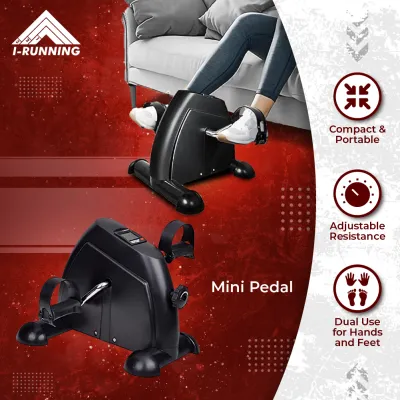
![[Good Store] SG stock Fast Shipping Pedal Exerciser Bike / Elderly Friendly Exercise hines / Adjustable Resistance / Upper And Lower Limb Leg Trainer / leg exercise equipment for elderly 3178064455](https://img.lazcdn.com/g/p/22024dd9bc8a17df868219fab7f5afef.jpg_webp_400x400q80.jpg_.webp)
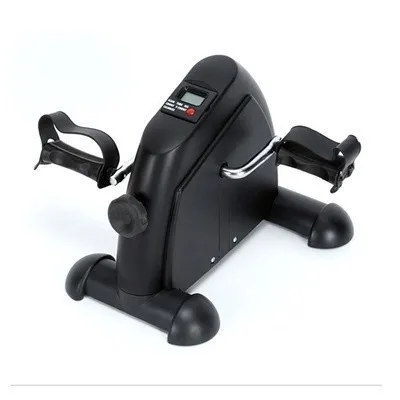
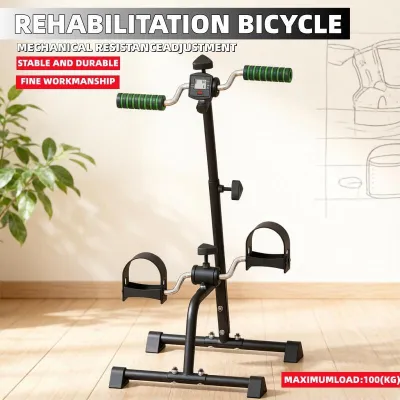

Prices are valid at publication and may change. Please refer to the product page for the latest price.
Logistical pathways within the estate and the flat itself are equally critical to verify before delivery day. Take a tape measure and check the narrowest points of your entryways, bedroom doors, and internal hallways to confirm the boxed or assembled bike can pass through. Additionally, consider the dimensions of your HDB block’s passenger lift and the corridor leading to your front door. If the equipment is heavy or bulky, ensuring a clear, wide path from the lift lobby to your living room prevents accidental damage to your walls and reduces physical strain during transport.
Key Safety and Accessibility Features for Seniors
When selecting an exercise bike for an elderly user, safety and ease of access must take precedence over advanced digital programming or high-intensity training features. The most critical structural element to look for is a step-through frame design. Traditional upright bikes often feature a high center bar that requires the rider to lift their leg significantly to mount the seat. A step-through frame eliminates this barrier, allowing the user to simply step across a very low base frame, which greatly minimizes the risk of tripping or losing balance before the workout even begins.

Seat comfort and adjustability directly impact both safety and joint health during exercise. Look for a bike equipped with a wide, generously cushioned seat that provides adequate pelvic support. The adjustment mechanisms should be tool-free, utilizing simple quick-release levers or pull-pins that are easy for older hands to operate. Proper seat height is achieved when the user’s knee has a slight bend at the bottom of the pedal stroke; proper fore-and-aft adjustment ensures the user does not have to lean forward excessively, which can strain the lower back and shoulders.
The contact points between the user and the machine must offer maximum security to prevent slips. Pedals should feature a textured, non-slip surface and adjustable, heavy-duty straps that keep the feet firmly in place during rotation. This prevents the foot from slipping off mid-pedal, which can cause sudden joint jarring or loss of balance. Furthermore, the handlebars must be sturdy, ergonomically shaped, and covered in a high-grip material. These bars should be stable enough to support a portion of the user’s body weight as they transition between sitting and standing.
Comparing Compact Bike Types for Small Spaces
Different styles of exercise bikes offer distinct advantages and trade-offs regarding physical footprint and physical support. Recumbent exercise bikes are widely regarded as the most comfortable option for seniors because they feature a reclined seat with full back support and pedals positioned out in front. This design distributes body weight more evenly and reduces stress on the lower back and knees. However, recumbent bikes naturally have a longer horizontal footprint, meaning they will occupy more floor space in an HDB living room and may not be suitable for highly congested areas.
Foldable upright bikes present an excellent space-saving alternative for smaller flats. These models can be folded into a compact, vertical shape and rolled into a corner or closet when not in use. While highly convenient, you must carefully verify the structural integrity of these space-saving designs. Check the manufacturer’s specifications regarding frame rigidity, locking pin security, and maximum weight capacity. Foldable frames can sometimes feel less stable or more prone to wobbling than solid, non-folding frames, which can cause anxiety or safety risks for an elderly rider.
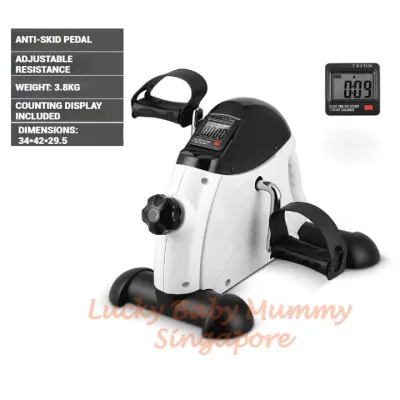
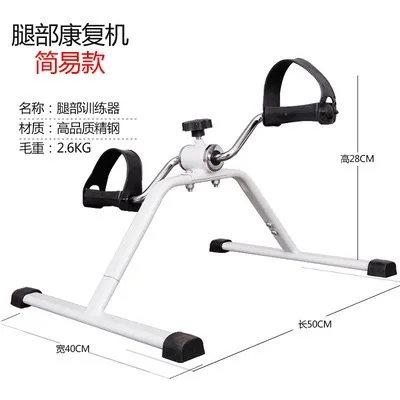
Mini pedal exercisers, also known as floor pedalers, represent the most compact option available, consisting solely of a pedal mechanism without a seat or handlebars. These devices can be tucked under a desk or stored in a small cabinet, making them ideal for extremely tight spaces. However, because they lack built-in upper body support, the user must pair the device with a highly stable, non-slip household chair. You must ensure the chair used does not slide backward on your flooring while the senior is pedaling, as this can lead to falls or muscle strain.
Creating a Safe Workout Zone in Your Flat
Once you have selected the appropriate bike type, setting up a dedicated, safe workout environment within your HDB flat is essential for long-term success. Your first step should be placing a high-density equipment mat beneath the bike. This mat serves multiple practical purposes: it protects your vinyl, laminate, or polished tile flooring from scratches, dampens the operational vibrations that could travel through the concrete floor to your downstairs neighbors, and provides a high-friction surface that prevents the bike from shifting or sliding during use.
Strategic positioning of the bike can provide an extra layer of physical security for an elderly user. If possible, position the bike parallel to a solid wall or next to heavy, stable furniture like a sturdy sideboard. This layout gives the user a reliable surface to touch or hold onto for balance when getting on or off the machine. Just ensure that this setup does not block the primary mounting side or restrict access to nearby power outlets, light switches, or storage cabinets.
Finally, pay close attention to the environmental conditions of the workout zone to ensure comfort and safety. The area must be well-lit to prevent missteps and allow the user to read the bike’s console clearly. Given Singapore’s warm and humid climate, position the bike in a well-ventilated spot, such as near a window with a standing fan or directly under a ceiling fan, to prevent overheating and dehydration. Keep the surrounding pathways completely clear of loose rugs, electrical cords, and other potential tripping hazards so that emergency access is never compromised.
Frequently Asked Questions (FAQ)
Can an exercise bike be kept in an HDB bedroom?
Yes, keeping an exercise bike in an HDB bedroom is entirely feasible, provided you plan the layout carefully. You must ensure there is sufficient clearance around the bed, wardrobe doors, and walkways so that the bike does not block daily movement or create a tripping hazard in the dark. Ventilation is also key; because bedrooms are often smaller and more enclosed than living rooms, using a fan or air conditioning during workouts is highly recommended to maintain a comfortable temperature. Lastly, consider the operational noise of the bike to ensure it does not disrupt a sleeping partner or create unwanted vibrations through shared walls.
Are magnetic resistance bikes quieter for apartment living?
Magnetic resistance bikes are generally much quieter than friction-based alternatives, making them highly suitable for multi-story HDB living. Friction bikes rely on a felt pad rubbing against the flywheel, which naturally creates a continuous whirring sound and requires periodic lubrication or replacement. Magnetic systems, on the other hand, adjust resistance by moving magnets closer to or further from the flywheel without physical contact, resulting in near-silent operation. To ensure the quietest possible experience, always check the manufacturer’s product specifications for decibel levels and follow the recommended maintenance guidelines in the user manual.

Community discussion
Share your experience or ask a question. Comments are reviewed before publication.