
Finding the right balance between a high-intensity workout and the compact layout of a Singapore Housing & Development Board (HDB) flat requires focusing on folding geometry, vertical storage footprints, and operational clearances. While traditional gym treadmills dominate a room, modern compact incline treadmills allow you to engage in active incline walking without sacrificing your living room or study. The key is selecting a model that folds flat or upright, features transport wheels for easy relocation, and maintains a low deck height so you do not hit your ceiling at maximum incline. By prioritizing smart design features and accurate measurements, you can enjoy a challenging cardio routine right at home without cluttering your living space.
Assessing Your Available Space and Clearances
Before purchasing, measure both the static storage footprint and the active operational space. A treadmill might look small when folded, but once unfolded, it requires a significant amount of floor space to accommodate the running belt and your natural walking stride. For comfortable incline walking, the belt length should match your stride, which typically requires a running surface of at least 100 to 120 centimeters.
Ceiling height is a critical safety factor in HDB apartments, where standard ceilings typically range from 2.6 to 2.8 meters. When you increase the incline, the deck rises, lifting your body closer to the ceiling. To ensure safety, calculate your clearance by adding the treadmill’s deck height at its maximum incline to your own height, then compare this total to your ceiling height, leaving a safety buffer of at least 15 to 20 centimeters.
Products mentioned in this guide
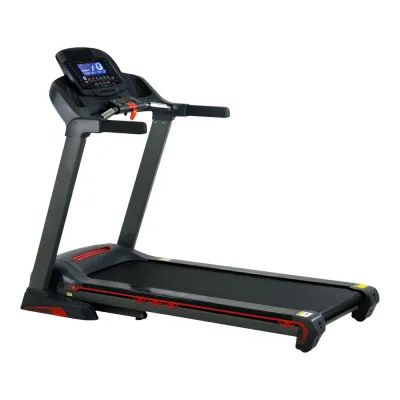
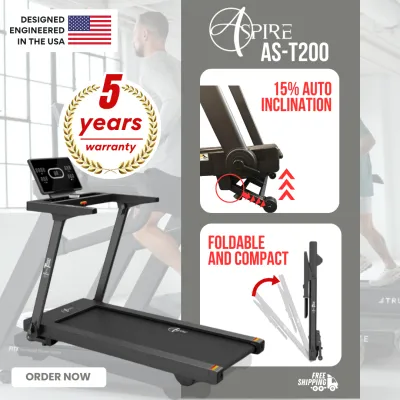
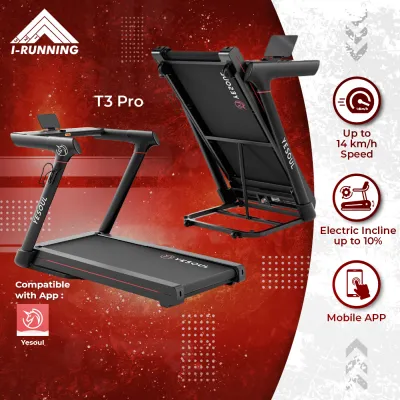
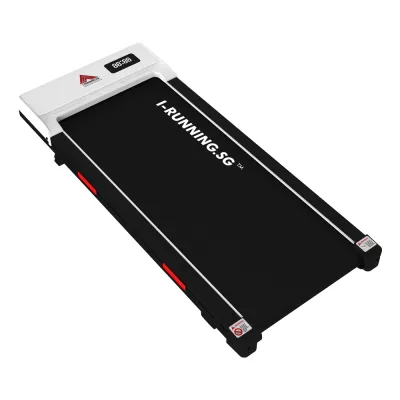
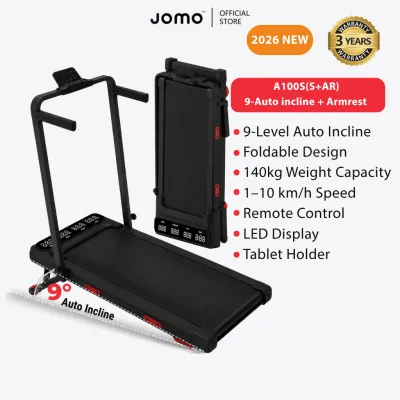
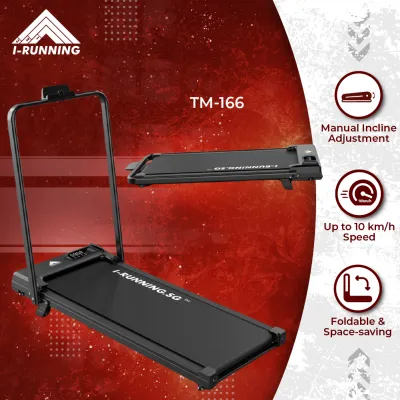
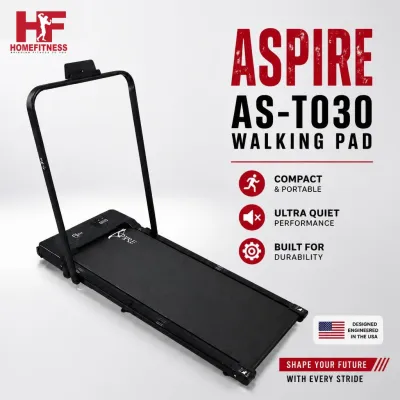
Prices are valid at publication and may change. Please refer to the product page for the latest price.
You must also map out the delivery pathway from the building entrance to your room. HDB passenger lifts, main door entryways, and narrow corridors can easily block bulky treadmill boxes. Measure the width of your doorways and any tight turns before ordering, and verify whether the delivery service includes on-site assembly or if the machine arrives fully assembled.
Finally, plan for safety clearances around the machine for proper ventilation, power cord routing, and emergency dismounts. Keep at least 1 meter of clear space behind the running belt and 0.5 meters on both sides. This open space ensures that if you lose your balance or need to step off quickly, you will not collide with walls or furniture.
Key Features for Space-Saving Incline Treadmills
The folding mechanism determines how easily you can reclaim your living space. Hydraulic soft-drop systems allow the deck to lower slowly and hands-free, which is an excellent safety feature if you have children or pets. Manual folding models require more physical effort to lift and lock, but they often fold into a flatter profile that can slide under a bed or stand upright in a narrow closet.

Integrated transport wheels are essential if you plan to move the treadmill between rooms. Look for models with multi-directional wheels that allow for lateral movement, rather than wheels that only roll forward and backward. Because HDB floors are commonly finished with vinyl, laminate, or tiles, always place a high-density rubber equipment mat under the machine to protect your flooring from scratches and indentations.
Console designs and handlebar configurations play a major role in reducing visual bulk. Minimalist consoles with slim LED touch panels or integrated tablet holders keep the machine’s profile clean. Some space-saving models feature handlebars that fold completely flush with the running deck, allowing the entire unit to be stored vertically against a wall or tucked away inside a wardrobe when not in use.
When choosing a compact model, weigh the trade-offs between frame weight, user weight capacity, and overall stability. A lightweight treadmill is easier to fold and move around your flat, but it may feel less stable or vibrate more during high-incline walking. Check the manufacturer’s specified frame weight and maximum user weight limit to ensure the machine offers a solid, shake-free foundation.
Evaluating Incline Mechanisms in Compact Models
Incline mechanisms in compact treadmills generally fall into manual or motorized categories, affecting size, weight, and usability. Manual incline systems require you to step off the treadmill and adjust pins or legs on the rear frame, limiting your ability to change intensity mid-session. Motorized incline systems allow you to adjust the angle seamlessly via console buttons while walking, though this convenience adds mechanical complexity and weight.
Compact treadmills typically offer incline ranges from 3% to 12%, whereas commercial gym models can reach 15% or higher. For effective incline walking, a maximum grade of 10% to 12% is usually sufficient to elevate your heart rate and simulate outdoor hill climbing. Always verify the actual percentage or level system used by the manufacturer, as some models use arbitrary levels that do not correspond to true percentage grades.
Your height and stride length are crucial factors when evaluating the safety of a compact treadmill’s running belt. Taller users have longer strides, requiring a longer belt to prevent their feet from slipping off the back, especially when walking at a steep incline. Before purchasing, check the manufacturer’s recommended maximum user height and compare it against the belt length to ensure you can walk naturally.
The motor’s continuous horsepower (CHP) is the engine of your workout. Incline walking puts more strain on the motor at lower speeds because your body weight acts as a constant brake on the belt. Look for a motor with at least 1.5 to 2.0 CHP to ensure smooth operation, prevent overheating, and avoid premature motor wear during steep walking sessions.
Setup, Safety, and Maintenance in Small Rooms
Proper installation begins with placing the treadmill on a verified level surface to prevent the belt from drifting and to ensure even wear. HDB floors can sometimes have minor unevenness, which can cause the treadmill to wobble. Adjust the leveling feet on the bottom of the frame until the machine is perfectly stable, and place a dedicated equipment mat underneath to absorb motor vibrations and prevent noise from traveling to neighbors below.
Cable management is a key safety consideration in tight spaces. Route the power cord along baseboards and secure it with cable clips to prevent it from crossing active walking paths. Never run the power cord under the treadmill deck itself, as the moving belt or folding mechanism can pinch and damage the insulation, creating a hazard.
Regular maintenance keeps your compact treadmill running quietly and safely. Check the belt alignment weekly to ensure it remains centered on the deck, and lubricate the underside of the belt with silicone oil according to the manufacturer’s schedule. Periodically inspect the folding hinges, locking pins, and latch mechanisms to ensure they are secure and free of wear.
Know when to stop using the machine and seek professional help. If you hear unusual grinding noises, smell burning plastic, or experience sudden stuttering in the incline motor, immediately power off the unit and unplug it. Do not attempt to disassemble the motor housing yourself; always consult the manufacturer’s customer service or a qualified fitness equipment technician.
Frequently Asked Questions (FAQ)
Can I keep a folded treadmill upright against the wall?
Only store a treadmill vertically if the manufacturer explicitly states it is designed for upright storage. These models feature specialized base stabilizers, locking safety pins, or wall-anchoring straps to prevent the machine from tipping over. Storing a standard folding treadmill upright without these safety features poses a severe tipping hazard, which can cause serious injury or damage your walls and floors.
Will an incline treadmill cause noise complaints in an HDB flat?
Incline walking generally produces significantly less noise and impact vibration than running, making it highly suitable for HDB living. However, the motor and the friction of the belt still generate sound. To maintain good neighborly relations, use a thick, high-density rubber equipment mat, perform workouts during reasonable daytime hours, and keep the deck well-lubricated to minimize motor strain and squeaking.
Do compact treadmills support steep inclines for intense workouts?
Some compact treadmills do support steep inclines, but they rarely match the extreme grades found on heavy-duty commercial machines. Most space-saving models max out around a 10% to 12% incline, which is highly effective for cardiovascular conditioning and muscle engagement. Always verify the specific model’s maximum weight capacity and incline limits, as operating a compact machine at its absolute limit can accelerate wear on the motor and frame.

Community discussion
Share your experience or ask a question. Comments are reviewed before publication.