
Finding the right manual treadmill for a small HDB flat requires balancing a compact footprint with structural stability. The ideal manual treadmill for a tight Singapore apartment is one that features a folding deck—either folding completely flat to slide under a bed or vertically to stand against a wall—and includes built-in transport wheels for easy movement. Because manual treadmills rely entirely on your physical effort to move the belt, choosing a model with a frame that matches your stride length and weight is essential to ensure a safe, effective workout without overcrowding your living room or hallway.
Measuring Your Available Space for a Treadmill
Before purchasing any fitness equipment, you must map out the exact floor area where you plan to exercise. A manual treadmill requires more than just its physical footprint; you must account for a safety clearance zone of at least one to two meters behind the belt to allow for safe deceleration or in case of a slip. Overhead clearance is equally critical, especially in HDB flats with standard ceiling heights, as the deck height of the treadmill combined with your own height must not bring your head too close to ceiling fans or light fixtures.
Getting the treadmill into your home is the next logistical step to verify. Measure the narrowest points of your entryways, including the HDB main door, metal gate, bedroom doors, and any tight corridors inside the flat. Do not forget to check the dimensions of the estate’s passenger lift and the stairwell clearance, as some non-folding or heavy curved manual treadmills are shipped in large, bulky crates that cannot easily navigate tight corners.
Products mentioned in this guide
![[INSTOCK] Home Manual Treadmill / Belt Treadmill / Walking Pad](https://img.lazcdn.com/g/p/252e9cdd1aff5e5f5ac7bf3fc98134c9.png_400x400q80.png_.webp)
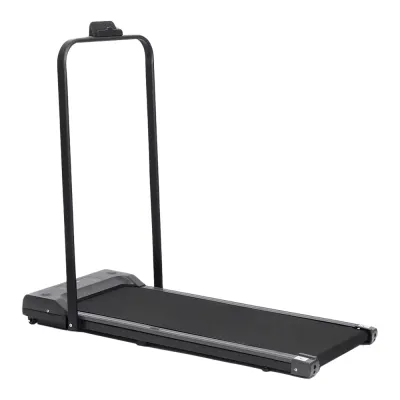
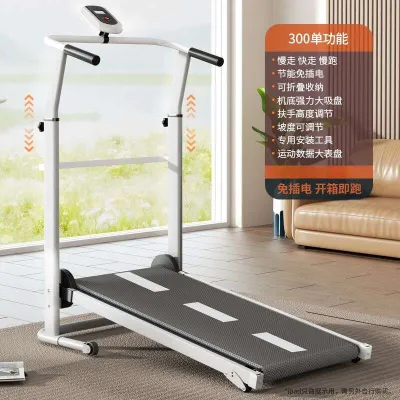
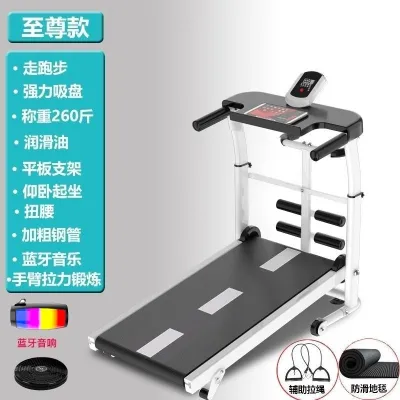
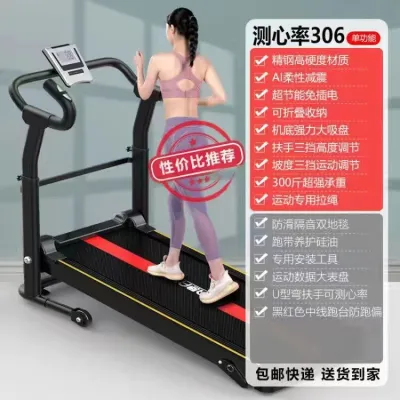
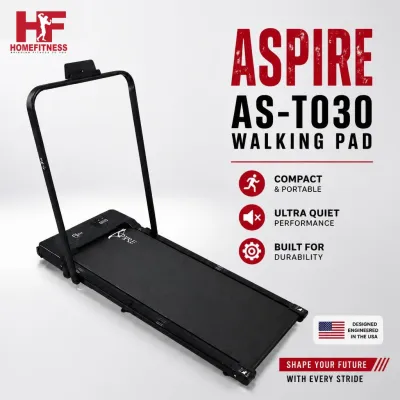
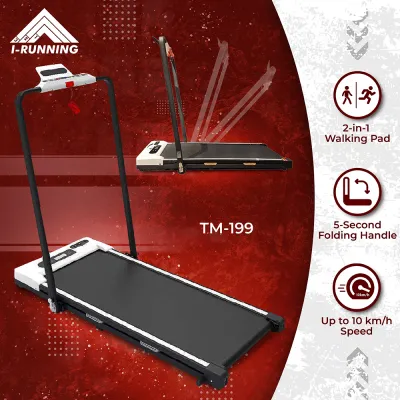
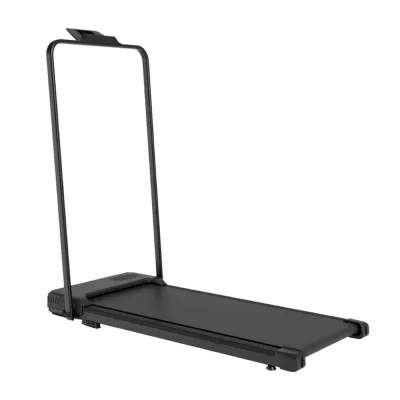
Prices are valid at publication and may change. Please refer to the product page for the latest price.
Even though manual treadmills do not require a motorized power source to turn the belt, many models feature battery-operated or plug-in electronic consoles to track speed, distance, and heart rate. If your chosen model uses magnetic resistance that requires a power outlet, position the machine close to a wall socket to avoid running hazardous extension cords across your living space. Additionally, ensure the workout zone is situated in a well-ventilated area, perhaps near a window or directly under an air conditioning unit, to manage heat and humidity during intense training sessions.
Key Dimensions and Specifications to Verify
When comparing manual treadmills, you must carefully evaluate the difference between the fully deployed dimensions and the folded footprint. A treadmill that seems manageable on paper might dominate a small living room once fully extended for a workout. Look for the manufacturer’s specification sheet to compare the active length and width against the folded height and depth to ensure the unit can be tucked away seamlessly when guests visit.

Maximum user weight capacity is a critical safety specification that directly correlates with the frame’s structural integrity. Compact manual treadmills designed for small spaces often utilize lighter steel or aluminum alloys, which naturally lowers their weight limits compared to heavy commercial gym models. Always verify that your body weight falls well within the manufacturer’s recommended limit, leaving a safe buffer of at least ten to fifteen percent to prevent premature wear on the deck and bearings.
The dimensions of the running belt itself must match your physical height and running style. A belt that is too short or narrow will restrict your natural stride, forcing you to take unnaturally short steps or risk stepping off the side of the moving platform. For walking and light jogging, a shorter belt may suffice, but taller users or those planning high-intensity interval training will need to verify that the belt length accommodates their full stride without requiring an oversized, non-folding frame.
Folding Mechanisms and Storage Solutions
The design of the folding mechanism determines how easily you can transition your HDB living room from a temporary home gym back to a relaxing family space. Vertical folding decks are highly popular because they pivot upward and lock securely into place, reducing the floor space occupied by the machine by more than half. Ensure the locking pin or hydraulic assist system is robust and easy to operate, preventing the heavy deck from accidentally falling forward.
Integrated transport wheels are non-negotiable for small-space fitness equipment. Because manual treadmills can still weigh upwards of thirty to fifty kilograms, you need high-quality, smooth-rolling wheels that allow you to tilt and roll the machine without straining your back or scratching your flooring. Check whether the wheels are designed for multi-directional movement, which makes maneuvering around tight corners, into closets, or behind sofas much easier.
While leaning a folded treadmill against a wall might seem like a convenient way to save space, you must exercise extreme caution in an HDB flat. Many interior walls in modern HDB flats are non-structural partition walls made of lightweight concrete or drywall, which may not safely support the concentrated weight of a heavy treadmill leaning against them. Never attempt to wall-mount a heavy manual treadmill unless you have verified the wall’s load-bearing capacity and are using heavy-duty anchors secured directly into a structural concrete wall.
Balancing Compact Size with Workout Stability
Achieving a balance between a lightweight, compact design and a stable workout platform is one of the biggest challenges when selecting a manual treadmill. Extremely light machines are easy to fold and move, but they are highly prone to shifting, sliding, or wobbling when you walk or run vigorously. This instability not only disrupts your rhythm but can also lead to joint strain or loss of balance, making a slightly heavier frame with rubber stabilizer feet a much safer choice.
Curved manual treadmills offer an exceptional, low-impact running experience and often feature a shorter overall footprint than traditional flat motorized treadmills. However, their curved deck design means they cannot fold flat, and they are significantly heavier and bulkier to move. If you choose a curved model, you must dedicate a permanent or semi-permanent spot in your flat, and you will need to adapt your running posture to control the belt speed solely through your foot strike position.
It is vital to recognize the physical stop conditions that indicate a compact manual treadmill is not suited for your workout intensity. If you experience excessive belt slipping, frame flexing, or a noticeable squeaking from the rollers during use, stop exercising immediately. These signs suggest that the mechanical limits of the compact frame have been reached, and continuing to push the machine could result in equipment failure or personal injury.
Frequently Asked Questions (FAQ)
Can I keep a manual treadmill permanently folded in a closet?
Storing a manual treadmill folded for extended periods is generally safe, but you must take precautions to prevent mechanical issues. Leaving the belt under high tension while folded can cause it to stretch unevenly or develop creases over time, leading to a bumpy ride when you next use it. Refer to your user manual to see if loosening the belt tension is recommended for long-term storage, and ensure the storage closet is dry and free from extreme humidity to prevent rust on the metal frame and bearings.
Do manual treadmills require floor mats in HDB flats?
Using a high-density rubber floor mat underneath your manual treadmill is highly recommended for HDB living. Because manual treadmills require significant physical force to operate, they generate vibrations that can easily travel through the concrete floors of high-density apartment blocks, disturbing your downstairs neighbors. A quality mat dampens this noise, protects your vinyl, tile, or laminate flooring from scratches, and prevents sweat from dripping directly onto the floor, which can cause moisture damage over time.

Community discussion
Share your experience or ask a question. Comments are reviewed before publication.