
Finding a single bicycle pump that can handle high-pressure road bike tires, high-volume mountain bike tires, and household items like sports balls or air mattresses requires understanding the trade-offs between pressure and volume. In Singapore, where space in residential apartments is often limited, owning one versatile pump is highly practical. However, not all bicycle pumps are designed to handle non-cycling inflatables efficiently. To make an informed choice, you must evaluate how different pump designs manage air flow, valve compatibility, and long-term durability in a tropical climate.
Evaluating your primary inflation needs is the first step toward selecting the right tool. A pump that excels at inflating a high-pressure road tire may prove incredibly frustrating when used to fill a large camping mattress, while a high-volume pump might struggle to reach the pressure required for a smooth road ride. By understanding the technical specifications and adapter options offered by various brands, you can find a pump that fits seamlessly into your active lifestyle without cluttering your home.
Identifying Your Pressure and Volume Requirements
Bicycle tires and household inflatables require fundamentally different inflation mechanics. Road bike tires are high-pressure, low-volume systems, typically requiring pressures ranging from 80 to over 100 PSI. To achieve these high pressures without requiring immense physical strength, road-specific pumps utilize narrow barrels. The smaller surface area of the internal piston reduces the force needed to compress the air, allowing you to reach high pressures with controlled, manageable strokes.
Products mentioned in this guide
![[LOCAL SELLER] ROCKBROS A320 120PSI Bicycle Air Pump Aluminum Alloy Bike Mini Pump for Balloon Football Basketball Bicycle](https://img.lazcdn.com/g/p/4cdf88dce9570556e1ae5796568391e5.png_400x400q80.png_.webp)
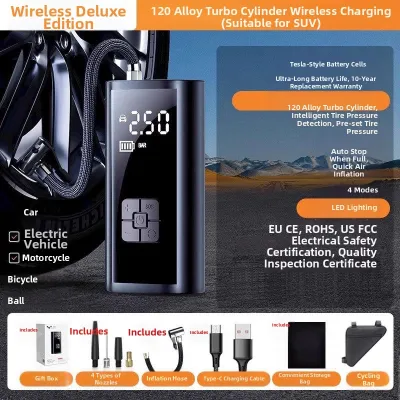
![[SG Stock] Air Pump Car Inflator Compressor Portable Ball Bike Bicycle Rechargeable Basketball Soccer Volleyball Tyre Wheel Tire 12V LED Fast Auto Shut-off Emergency](https://img.lazcdn.com/g/p/cc7d92c566c3860fbbfa1d535cc6f3bb.jpg_400x400q80.jpg_.webp)
Prices are valid at publication and may change. Please refer to the product page for the latest price.
Conversely, mountain bike tires, sports balls, and air mattresses are low-pressure, high-volume systems. These items require a large quantity of air but at a much lower pressure, often under 40 PSI for tires and under 10 PSI for balls and mattresses. Using a narrow-barrel road pump to inflate a double-sized camping mattress at East Coast Park will result in hundreds of exhausting strokes. A wide-barrel pump, designed for high volume, delivers more air per stroke, making quick work of large inflatables but becoming physically difficult to pump as pressure rises.
Valve compatibility is another critical factor when selecting a multi-purpose pump. Bicycles primarily use Presta valves, which are slender and threaded, or Schrader valves, which are wider and identical to those found on car tires. Household items like footballs and basketballs require a narrow metal needle, while inflatable pool toys and air mattresses use wide plastic pinch valves. A versatile pump must accommodate these different interfaces, either through a smart pump head that automatically adjusts to both Presta and Schrader valves or through easily swappable internal components.
Choosing a single pump involves accepting physical trade-offs. If your household primarily rides road bikes and occasionally inflates a basketball, a high-pressure floor pump with a basic needle adapter is the most sensible choice. If your family rides wide-tired utility bikes and frequently uses inflatable recreation gear, a high-volume pump will save you significant time and effort. Balancing these priorities ensures you select a pump that performs its primary task efficiently without making secondary tasks a chore.
Comparing Core Pump Specifications Across Brands
When comparing pump brands, look beyond the maximum PSI rating printed on the packaging. Many entry-level pumps advertise a maximum rating of 120 or 160 PSI, but this only indicates what the internal seals can theoretically withstand, not how easily a user can achieve that pressure. For practical multi-purpose use, the volume of air delivered per stroke is a far more telling specification, as it directly impacts how long you will spend inflating larger items.

Pump mechanisms generally fall into single-action or dual-action categories. Single-action pumps only push air into the tire or inflatable when you press the handle down. Dual-action pumps, which are common in portable mini-pumps, inflate on both the push and pull strokes. While dual-action designs cut inflation time in half for high-volume items like sports balls or compact camping mats, they require more physical effort on the pull stroke, which can be tiring when working against higher resistance.
An often-overlooked specification is the length and flexibility of the pump hose. When inflating a bicycle tire, the wheel is stationary on the ground, but inflating a large air mattress inside a tent or a sports ball on a storage rack requires more reach. A pump with a short, stiff hose forces you to position the pump body awkwardly close to the object, which can cause the pump to tip over. Look for brands that offer flexible hoses of at least 80 to 100 centimeters to provide adequate clearance.
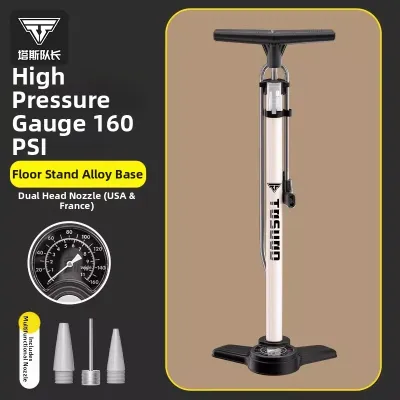
Gauge placement and readability are also crucial for multi-purpose utility. Gauges mounted at the base of a floor pump can be difficult to read from a standing position, especially in low-light conditions. Top-mounted gauges or digital displays located near the handle offer much better visibility. Furthermore, ensure the gauge has clear markings for low-pressure ranges, as inflating a sports ball or a kids’ toy requires precise monitoring under 15 PSI to prevent over-inflation and damage.
Verifying Adapter Compatibility and Storage
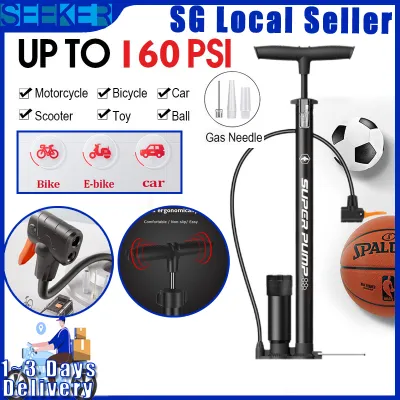
Bicycle pump brands package their products differently, with some focusing strictly on cycling and others catering to general household needs. Premium cycling-focused brands often omit non-cycling accessories from their standard packaging to keep the product streamlined. If you choose one of these brands, you will need to purchase a separate multi-purpose adapter kit. Other brands include a complete set of adapters, typically consisting of a metal ball needle and one or two tapered plastic nozzles for inflatable toys.
How these adapters connect to the pump head affects both ease of use and seal quality. Some pumps use a press-on lever chuck, where you insert the adapter and flip a thumb lock lever to secure it. Others utilize a threaded connection, where the adapter screws directly into the pump head. Threaded connections generally provide a more reliable, airtight seal, which is highly beneficial when inflating high-pressure sports balls where even a tiny leak can prevent proper inflation.
Because ball needles and plastic nozzles are small, they are incredibly easy to misplace in a busy household. To prevent this, look for floor pumps that feature integrated onboard storage. Many brands design their pumps with dedicated clips on the handle or a small storage drawer built into the base to keep these accessories secure and accessible. For portable mini-pumps, check if the adapters can be stored inside the pump handle or within a compartment on the frame mounting bracket.
Evaluating Build Quality and Local Support in Singapore
Singapore’s tropical climate, characterized by high humidity and ambient heat, can accelerate the degradation of low-quality materials. Pumps constructed with steel or aluminum barrels and robust metal bases offer superior stability and corrosion resistance compared to cheap plastic alternatives. A heavy steel or cast-iron base prevents the pump from tipping over when you are vigorously inflating a high-volume item on a rough surface like concrete or gravel.
Internal component quality is equally important for long-term reliability. The plunger cup and internal O-rings are subject to friction and heat during rapid pumping. Brands that use high-grade synthetic rubber or silicone seals maintain their airtight integrity much longer than those using cheap rubber, which can dry out and crack in humid conditions. Additionally, check if the pump head uses metal internal locking jaws rather than plastic ones, as plastic jaws can wear down quickly after repeated clamping onto metal valve threads.
Before finalizing your purchase, verify the availability of local distributors and replacement parts in Singapore. A high-quality pump is an investment that should last for years, but wear and tear on hoses, gaskets, and gauge covers is inevitable. Brands with a strong local presence make it easy to source replacement parts from local bicycle shops, saving you from having to discard the entire pump when a single rubber seal fails. Check the manufacturer’s warranty terms to ensure they cover general household use and are supported by local service centers.
Building a Condition-Based Pump Shortlist
To find the most suitable pump for your household, map your specific usage patterns to the appropriate pump category and design features. This approach ensures you do not overpay for high-pressure capabilities you do not need, nor do you end up with a pump that struggles to perform your daily tasks.
Scenario A: Road Cycling Priority with Occasional Ball Inflation
If your primary activity is road cycling, your main requirement is high-pressure accuracy and ease of pumping up to 100 PSI or more. Look for a brand that specializes in high-pressure floor pumps featuring narrow aluminum barrels, highly accurate top-mounted gauges, and a secure thread-on Presta valve connection. For occasional ball inflation, a simple thread-in brass needle adapter is sufficient, as you will not need to move large volumes of air frequently.
Scenario B: Mountain Biking and Camping
If you frequently ride mountain bikes with high-volume tubeless tires and enjoy camping trips, you need a pump that can seat tubeless tires and quickly fill air mattresses. Prioritize brands that offer high-volume floor pumps with a “tubeless chamber” feature (which stores compressed air to pop tubeless tires onto the rim) or dual-action mini-pumps. Ensure the pump head is compatible with wide plastic mattress nozzles and can deliver a high volume of air per stroke to minimize setup time at your campsite.
Scenario C: Family Household with Diverse Inflatables
For a busy household where the pump will be used for kids’ bicycles, basketballs, pool toys, and guest air mattresses, convenience and ease of use are paramount. Look for a brand that offers a robust floor pump with an oversized, easy-to-read base gauge, a long flexible hose, and a dedicated, secure storage compartment for all adapters. A smart-head design that automatically fits both Presta and Schrader valves without swapping internal parts is highly recommended to prevent confusion among family members.
Pre-Purchase Checklist
Before making your final decision, use this checklist to verify your chosen pump:
- Does the pump head securely fit both Presta and Schrader valves without leaking?
- Are the sports ball needle and mattress nozzles included, and is there an onboard storage solution to prevent losing them?
- Is the pressure gauge clear, easy to read, and marked with the low-pressure increments needed for sports balls?
- Are replacement parts, such as hoses and internal seals, readily available from local retailers in Singapore?
- Does the barrel and base construction feel sturdy enough to withstand high-frequency use in a humid environment?
Frequently Asked Questions (FAQ)
Can a high-pressure road bike pump damage a sports ball or air mattress?
Yes, high-pressure road bike pumps can easily damage low-pressure items like sports balls or air mattresses if not used with caution. Road bike pumps are designed to push air into small chambers at high pressure, meaning a few vigorous strokes can quickly exceed the safe limits of a football or inflatable toy. Because standard bicycle pump gauges are calibrated for high pressures (often up to 120 or 160 PSI), they lack the resolution to accurately display very low pressures, such as 4 to 8 PSI for sports balls or under 2 PSI for air mattresses. To prevent over-inflation and potential popping, inflate these items slowly, perform frequent manual squeeze tests, and stop immediately if the material feels taut.
Why do some pump brands sell adapters separately?
Many premium bicycle pump brands design their products primarily for dedicated cyclists who prioritize weight, valve connection security, and precise high-pressure performance. To keep the initial cost down and avoid cluttering the packaging for purist cyclists, these brands often sell multi-purpose adapter kits as optional add-ons. If your chosen pump does not include the necessary needles or nozzles, you can easily source standard third-party adapter kits from local bicycle shops or online marketplaces. Most bicycle pump heads use standard thread sizes or clamp mechanisms that can securely hold universal brass ball needles and plastic tapered nozzles.

Community discussion
Share your experience or ask a question. Comments are reviewed before publication.