
Starting your fishing journey in Singapore requires a setup that balances ease of use, portability, and adaptability to local waters. For most beginners, a pre-matched spinning rod and reel set offers the most straightforward entry point. These integrated combinations remove the guesswork of pairing a rod’s flexibility with a reel’s line capacity, allowing you to focus on learning basic casting techniques and knot tying. Choosing the right starter set depends heavily on where you plan to fish, how you intend to travel to your destination, and your willingness to perform basic gear maintenance.
Understanding Your Fishing Environment in Singapore
Singapore offers a unique mix of fishing environments, ranging from tranquil freshwater reservoirs to high-flow coastal jetties and offshore charter boats. Before selecting a fishing rod and reel set, you must identify where you will spend most of your time angling. Managed freshwater reservoirs, such as Bedok, MacRitchie, or Lower Peirce, typically require lighter gear suited for casting small lures or baits targeting species like Peacock Bass or Snakehead. These environments often feature clear water and structured shorelines where accuracy and subtle presentations are more important than raw pulling power.
In contrast, coastal spots like Bedok Jetty, Woodlands Jetty, or the rocky shorelines of Labrador Park expose your gear to saltwater, stronger currents, and larger target species. Saltwater environments demand higher corrosion resistance and heavier line capacities to handle the abrasive nature of sand, salt, and concrete structures. If you plan to fish from these elevated platforms, you will need a longer rod to clear the railings and cast past the shallow shoreline breakers.
Products mentioned in this guide
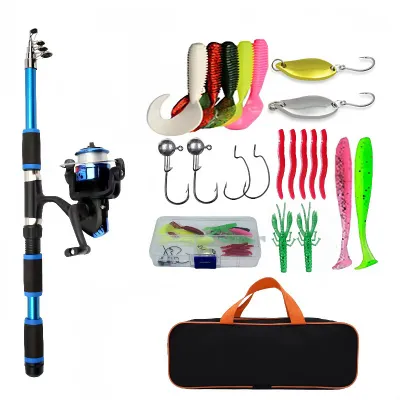
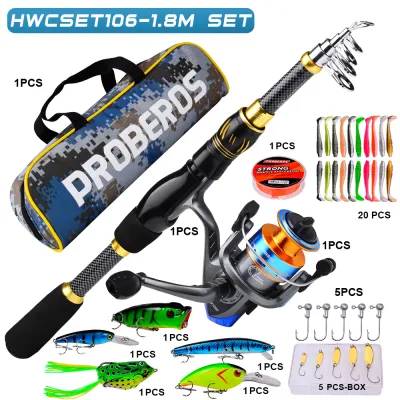
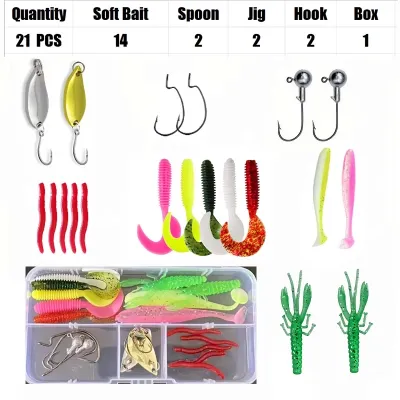
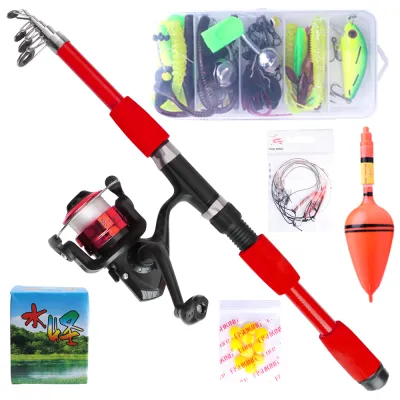
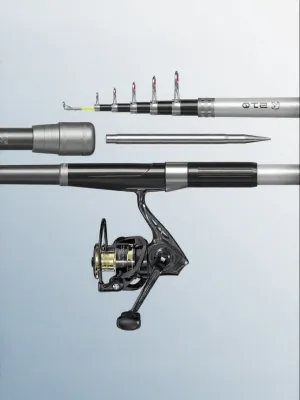
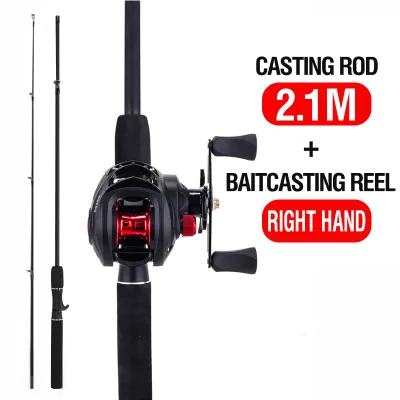
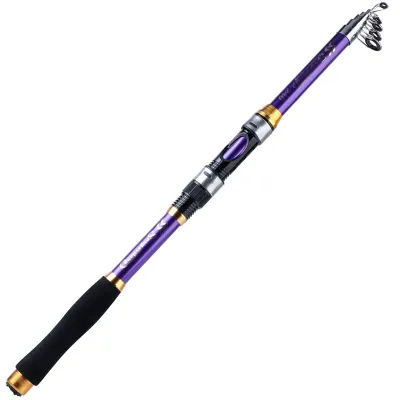
Prices are valid at publication and may change. Please refer to the product page for the latest price.
Portability is another critical factor for anglers in Singapore, where public transport is often the primary mode of travel. Land transport authorities maintain specific guidelines regarding oversized items on buses and MRT trains. Carrying a one-piece rod that exceeds standard height limits can lead to boarding issues or accidental damage in crowded cabins. Opting for a multi-piece or telescopic fishing rod and reel set ensures you can pack your gear into a compact bag, making your commute to spots like Punggol Point or West Coast Park stress-free and safe for fellow commuters.
Key Specifications for Beginner Rod and Reel Sets
Navigating the technical specifications of fishing tackle can feel overwhelming, but focusing on a few core parameters will help you make an informed decision. For beginners, a spinning reel setup is almost universally recommended over a baitcasting system. Spinning reels are mounted on the underside of the rod, utilizing an open-face design that allows the line to flow freely off the spool during a cast. This design minimizes the risk of line tangles, commonly known as backlashes or “bird’s nests,” which frequently plague novices attempting to master baitcasting reels.

The rod itself is defined by its action and power ratings, which are typically printed directly onto the blank just above the grip. Rod power refers to the amount of pressure required to bend the rod, ranging from ultra-light to heavy. For general use in Singapore’s varied waters, a medium-light or medium power rod provides the ideal balance, offering enough stiffness to hook larger fish while remaining sensitive enough to feel subtle bites. Rod action describes where the rod bends along its length; a fast-action rod bends primarily near the tip, providing quick hooksets and excellent sensitivity, whereas a moderate-action rod bends further down the blank, offering more forgiveness when fighting aggressive fish.
Always verify that your chosen line weight and lure weight match the manufacturer’s recommendations printed on the rod. Using a line that is too heavy can snap the rod under extreme tension, while casting a lure that exceeds the recommended weight limit can fracture the blank during a hard cast. Conversely, using gear that is too light for your target environment will limit your casting distance and make it difficult to control a hooked fish.
Rod Length and Material Considerations
The physical construction of your rod directly influences how far you can cast, how well you can feel a fish biting, and how easily you can store the equipment. Rods generally come in one-piece, multi-piece (usually two-piece), or telescopic configurations. While one-piece rods offer seamless energy transfer and maximum sensitivity, they are highly impractical for urban anglers relying on public transport or small vehicles. A two-piece rod serves as an excellent compromise, splitting down the middle for easy transport while retaining a high level of structural integrity and sensitivity at the joint. Telescopic rods offer the ultimate in portability, collapsing into a fraction of their extended length, though they require careful cleaning to prevent sand from jamming the sliding sections.
Material composition is another key decision point, with most modern entry-level rods made from fiberglass, graphite, or a composite blend of both. Fiberglass rods are incredibly durable, highly flexible, and very forgiving of beginner mistakes, such as holding the rod too vertically during a fight. However, they tend to be heavier and less sensitive. Graphite rods, also known as carbon fiber, are lightweight and highly sensitive, allowing you to feel the slightest vibrations in the water, but they are more brittle and susceptible to impact damage. A composite rod blends these materials, offering a balanced combination of durability and sensitivity that suits a beginner’s learning curve.
Reel Sizing and Drag Systems
Selecting the correct reel size is essential for maintaining the balance of your overall setup and ensuring you have sufficient line capacity. Reel sizes are designated by numbers, typically ranging from 1000 to 4000 or higher for entry-level gear. A 1000-size reel is small and lightweight, ideal for ultra-light freshwater setups targeting small fish in reservoirs. For a versatile starter set that can transition between freshwater and light coastal saltwater fishing in Singapore, a 2500 or 3000-size reel is generally the most practical choice, accommodating a sufficient amount of monofilament or braided line without adding excessive weight.
The drag system is the mechanical heart of the reel, responsible for releasing line under a controlled amount of tension when a fish pulls hard. A smooth, reliable drag prevents the line from snapping when a fish makes a sudden run. Look for reels that feature a multi-disc drag system, which utilizes alternating washers made of felt, carbon, or synthetic materials to distribute friction evenly. Before heading to the water, practice adjusting the drag knob on the front of the spool; it should turn smoothly with distinct clicks, allowing you to make fine adjustments rather than jumping from completely loose to locked tight.
Evaluating Entry-Level Brands and Starter Combos
When searching for a reliable fishing rod and reel set, you will encounter pre-matched manufacturer combos as well as the option to assemble a custom setup. Pre-matched combos are highly advantageous for beginners because the manufacturer has already paired a rod and reel with compatible physical weights, line capacities, and action profiles. This integration ensures the setup feels balanced in your hand, reducing fatigue during long casting sessions.
Rather than searching for a single winner, focus on evaluating brands based on their material transparency, build quality, and local support network. Reputable brands provide clear specifications on their packaging, detailing the number of ball bearings, gear ratios, and material compositions. In Singapore, purchasing your starter set from a specialized local tackle shop rather than a generic department store or unverified online marketplace offers significant advantages. Local tackle shops provide access to spare parts, such as replacement rod tips or reel handles, and their staff can offer invaluable advice on local fishing regulations and active spots.
Consider the warranty terms and after-sales service offered by the brand’s local distributor. Entry-level gear is subject to high wear and tear as you learn the ropes, and having access to a reliable service center in Singapore can save you from having to replace the entire set if a minor component fails. Avoid unbranded or extremely cheap setups that do not list specifications, as these often use low-grade plastics and metals that corrode rapidly when exposed to Singapore’s humid, salty air.
What to Inspect Before Buying Your First Combo
Before finalizing your purchase, it is crucial to physically inspect the fishing rod and reel set to ensure there are no manufacturing defects or shipping damages. Begin by assembling the rod and aligning the guide rings. Look straight down the blank from the reel seat to the tip; the guides must form a perfectly straight line. Any misalignment will cause friction during casts, reducing your distance and causing premature line wear. Inspect the epoxy coatings around the guide feet for cracks, bubbles, or rough edges that could snag your line.
Next, examine the reel seat, which is the mechanism that secures the reel to the rod. Mount the reel and tighten the locking nut. The reel must sit firmly without any wobbling or play. Turn the reel handle slowly to assess the smoothness of the internal gears. There should be no grinding sensations, clicking noises, or tight spots during retrieval. Flip the anti-reverse switch back and forth; when engaged, the handle should stop instantly without any backward play, which is vital for setting the hook effectively.
Finally, hold the fully assembled setup at the grip to evaluate its overall balance and ergonomics. A well-balanced combo should not feel excessively tip-heavy or butt-heavy. The grip, whether made of cork or EVA foam, should fit comfortably in your hand without slipping. A setup that feels comfortable and balanced during a dry run in the shop will prevent wrist fatigue and hand cramps when you are out casting for hours along the coast.
Frequently Asked Questions (FAQ)
Do I need a saltwater-specific set for Singapore's reservoirs?
While you do not strictly need a specialized saltwater setup for freshwater reservoirs, using a saltwater-rated fishing rod and reel set provides excellent versatility and durability. Singapore’s coastal environments are highly corrosive, and even brackish waters near canal mouths can quickly degrade standard freshwater gear. If you choose a standard freshwater set, you must be extremely diligent with maintenance. Regardless of where you fish, always rinse your rod and reel thoroughly with gentle running tap water after every outing to remove salt, mud, and organic debris. Avoid using high-pressure sprays, which can force contaminants deep into the reel’s internal bearings.
Should I buy a pre-matched combo or separate rod and reel?
For absolute beginners, a pre-matched combo is highly recommended due to its cost-effectiveness and guaranteed compatibility. Manufacturers design these sets to ensure the rod’s bending characteristics complement the reel’s weight and drag capabilities, offering a seamless learning experience out of the box. As your skills progress and you develop specific preferences for certain techniques—such as ultra-light lure casting or heavy bait fishing—you can transition to buying separate rods and reels. Upgrading to individual components allows you to customize your gear to target specific species or adapt to highly specialized fishing environments around Singapore.

Community discussion
Share your experience or ask a question. Comments are reviewed before publication.