
Fitting an indoor spin bike into a Singapore HDB flat requires balancing a compact physical footprint with the dynamic clearance needed for high-intensity workouts. Because space is at a premium in modern estates, selecting the right equipment involves analyzing more than just the static dimensions listed on a product page. You must account for your apartment’s layout, floor type, acoustic properties, and delivery pathways to ensure your home workouts remain safe, comfortable, and neighbor-friendly. By focusing on key design features like magnetic resistance, transport wheels, and stable frame geometries, you can establish a highly effective cardio zone without disrupting your living space.
Measuring Your Available Space and Delivery Route
Before purchasing any fitness equipment, precise physical measurements of your designated workout area are essential. Start by mapping out the floor space using a tape measure, noting the exact length and width of the zone. Do not rely on visual estimation, as even a few centimeters of error can make a room feel cramped or block essential walkways. It is equally important to measure the vertical clearance of the room, especially if you plan to perform out-of-saddle climbs that raise your head significantly higher than your standing height.
Beyond the workout spot itself, you must verify the entire delivery route from the building entrance to your flat. Measure the height and width of your HDB lift doors, the clearance of the common corridor, and the entryways of your home. Many modern flats feature narrow hallways or tight turns that can trap bulky, fully assembled exercise equipment. Additionally, take note of existing furniture placement, wall-mounted air conditioning units, and ceiling fans. Operating a spin bike directly beneath an active ceiling fan poses a severe safety hazard, so ensure there is a generous safety buffer between your highest riding position and any overhead fixtures.
Products mentioned in this guide
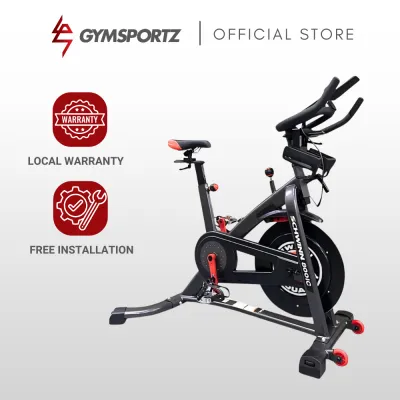
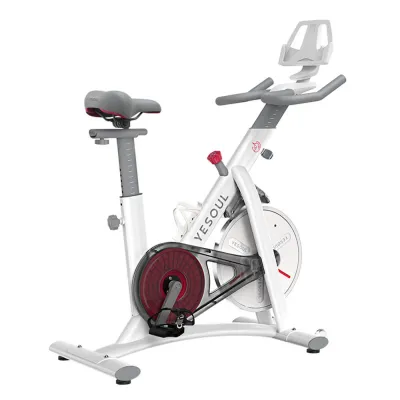
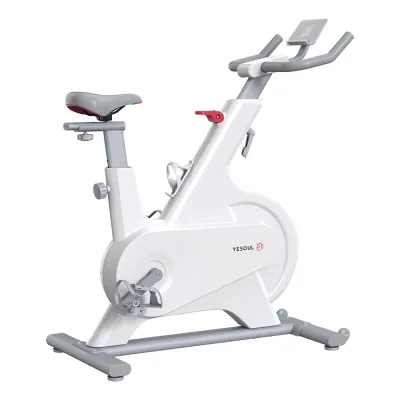
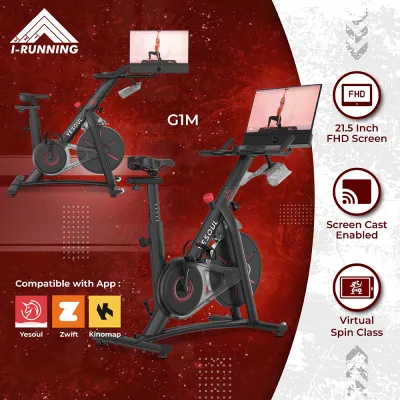
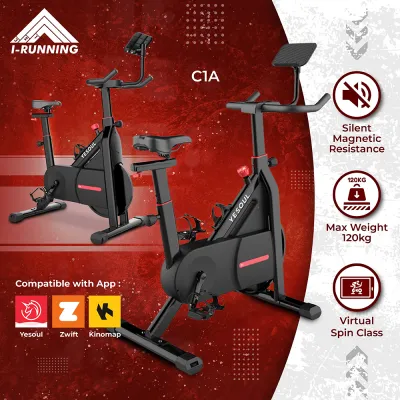
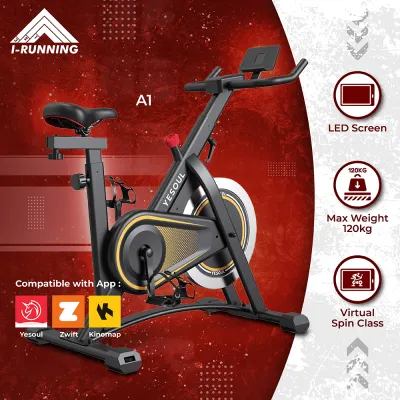
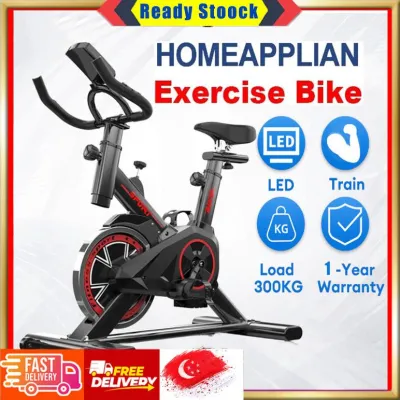
Prices are valid at publication and may change. Please refer to the product page for the latest price.
Evaluating Spin Bike Footprints and Operational Clearance
When browsing product specifications, it is easy to confuse a spin bike’s static footprint with its actual operational clearance. The static footprint refers only to the physical dimensions of the base stabilizers resting on the floor. While a standard compact spin bike might occupy a modest area of approximately 120 centimeters in length and 50 centimeters in width, the dynamic space required during a workout is considerably larger. You must factor in the lateral movement of your body, the outward flare of your elbows, and the space needed to mount and dismount the bike safely.

To calculate the true operational clearance, add at least 50 centimeters of open space around all sides of the bike. This buffer prevents your knees or handlebars from clipping nearby walls, shelves, or television consoles during intense intervals. Pay close attention to the handlebar width and the maximum lateral pedal stance, known as the Q-factor, as these elements dictate the widest points of the machine. Furthermore, cross-reference the manufacturer’s user height and inseam specifications with your own measurements. A bike that requires you to extend the seat post to its maximum limit will raise your riding profile, demanding greater overhead clearance in rooms with standard ceiling heights.
Comparing Foldable Designs and Mobility Features
For multi-purpose living areas, such as a shared living room or a study that doubles as a home gym, foldable spin bikes offer an appealing way to reclaim floor space. These models typically utilize an X-frame design that collapses into an upright profile, allowing you to store the machine in a utility closet or behind a door when not in use. However, this space-saving convenience comes with structural trade-offs. Foldable frames generally feature more joints and moving parts, which can translate to slight frame flex or wobble when you pedal at high speeds or stand up on the pedals.
If you prioritize high-intensity training or out-of-saddle climbs, a non-folding bike with a rigid, heavy-duty frame is usually more stable. To compensate for the lack of foldability, look for rigid models equipped with high-quality, integrated transport wheels on the front stabilizer. These wheels allow you to tilt the bike forward and roll it smoothly into a corner after your workout. When evaluating transport wheels, check their material and size; larger, polyurethane wheels roll more easily over floor transitions and rug edges than small, hard plastic wheels, protecting your flooring from scuffs during transport.
Managing Floor Protection and Vibration in Multi-Story Flats
Living in a multi-story HDB flat means your workouts can easily impact the residents living directly below you. The combination of rapid pedaling, body weight shifts, and flywheel rotation generates structural vibrations that travel through the floorboards. To mitigate this noise transfer, always place your spin bike on a dedicated equipment mat. A high-density PVC or rubber mat with a thickness of at least 6 millimeters is ideal for absorbing low-frequency vibrations and preventing the bike’s metal stabilizers from scratching your tiles or vinyl flooring.
The design of the bike’s base also plays a critical role in maintaining stability on smooth apartment floors. Look for models featuring adjustable leveling feet, which allow you to compensate for minor unevenness in your floor tiles and prevent the bike from rocking. Additionally, the drive system and resistance mechanism dictate how quiet your workouts will be. Belt-driven bikes paired with magnetic resistance operate almost silently, as they eliminate the metallic rattling of traditional chain drives and the friction hiss of felt pads. This quiet operation is essential for early morning or late-night sessions when you want to avoid disturbing your household or neighbors.
Common Spatial Planning Mistakes to Avoid
One of the most common spatial planning mistakes is purchasing a spin bike based solely on its boxed shipping dimensions. Shipping boxes are often deceptively compact because the bike is completely disassembled, whereas the fully constructed unit with extended seat posts and handlebars occupies a much larger volume. Another frequent oversight is failing to account for the rider’s elevated height during standing climbs. If you do not calculate your total height when standing on the pedals, you risk hitting your head on low-hanging light fixtures or ceiling fans.
Finally, do not neglect the narrowest choke points along your delivery path. Even if a bike fits perfectly in your bedroom, a narrow bedroom door frame or a tight turn in your flat’s entryway can prevent the delivery team from bringing the pre-assembled frame inside. Always measure these transition zones beforehand and verify if the bike can be partially disassembled for transport through tight spaces.
Frequently Asked Questions (FAQ)
Can I keep an indoor spin bike on an HDB balcony?
Keeping a spin bike on an HDB balcony is generally not recommended unless the area is fully enclosed and climate-controlled. Singapore’s high humidity, ambient salt air, and exposure to wind-blown rain can rapidly corrode steel frames, degrade drive belts, and damage sensitive electronic consoles. Direct sunlight can also cause plastic shrouds to warp or become brittle over time. If you must use a balcony, check the manufacturer’s warranty terms regarding outdoor exposure, use a heavy-duty waterproof cover when the bike is idle, and regularly inspect the mechanical parts for signs of rust or wear.
Do folding spin bikes compromise workout stability?
Folding spin bikes do compromise some stability compared to traditional, rigid studio bikes. The folding hinge and lighter frame construction inherent to these designs can result in noticeable frame flex during high-resistance workouts or standing climbs. To ensure a foldable model meets your needs, verify its maximum weight capacity and look for robust locking pins that secure the frame firmly in its open position. If your training routine involves high-intensity interval training (HIIT) or frequent out-of-saddle riding, a compact but non-folding bike with a solid steel frame and transport wheels will provide a safer and more stable platform.

Community discussion
Share your experience or ask a question. Comments are reviewed before publication.