
Selecting the right tennis balls for beginner training sessions depends entirely on the player’s current skill stage, the court surface, and the specific drills being practiced. There is no single universal ball for all beginners; an absolute novice requires a different bounce profile and compression than an intermediate player refining their rally consistency. This guide breaks down the core construction types, felt options, and progression stages to help you build a targeted training shortlist that supports skill development without causing unnecessary arm strain or frustration.
In Singapore’s tropical climate, high humidity and ambient heat can accelerate the degradation of tennis equipment. When training on local hard courts—such as those found in public sports complexes or private residential estates—the combination of surface friction and moisture requires careful ball selection to ensure both durability and consistent playability. Choosing the wrong ball can lead to erratic bounces, shortened practice sessions, and a slower learning curve.
Understanding Tennis Ball Types for Beginners
To make an informed choice, you must first understand how tennis balls are constructed and how their internal design affects their behavior on the court. The two primary categories of standard tennis balls are pressurized and pressureless, each offering distinct characteristics for training.
Products mentioned in this guide
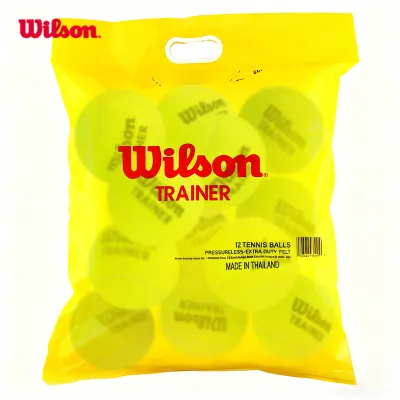
![Wilson Trainer Tennis Balls [12 Balls]](https://img.lazcdn.com/g/p/2deef53e3ac2f2de38bf72a8f079bb2f.jpg_400x400q80.jpg_.webp)
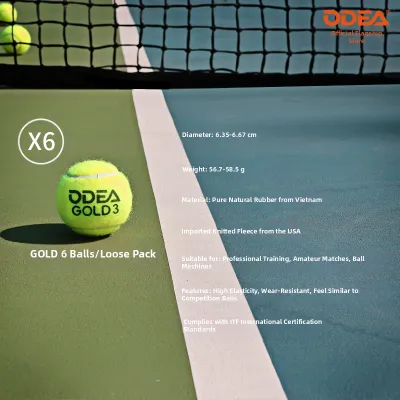
![[CLEARANCE SALE] Slazenger Practice Tennis Ball / 6 Balls 9 Balls 15 Balls 30 Balls 45 Balls](https://img.lazcdn.com/g/p/e9192bd83d28b12e12f07f54bdb55ff9.jpg_400x400q80.jpg_.webp)
Prices are valid at publication and may change. Please refer to the product page for the latest price.
Pressurized tennis balls rely on internal gas pressure to achieve their bounce. When you open a fresh can, the release of pressure is audible; from that moment, the gas slowly permeates through the porous rubber shell, causing the ball to lose its bounce over time. For beginners, fresh pressurized balls offer a lively, responsive feel and are highly comfortable on the arm because the rubber shell is relatively thin and flexible. However, their rapid loss of pressure means they have a short peak performance lifespan, which can become expensive for high-volume training.
Pressureless tennis balls, on the other hand, derive their bounce from the structural elasticity of their thick rubber core rather than internal gas. Because there is no gas to escape, these balls do not lose their bounce over time; in fact, as the outer felt wears away, they can actually become slightly bouncier and faster. The trade-off is that pressureless balls feel heavier and stiffer upon impact. For a beginner with developing stroke mechanics, this added stiffness can sometimes translate to increased vibration in the wrist and elbow, especially during off-center hits.
Transition and low-compression balls are specifically engineered to bridge the gap for developing players. These balls are intentionally designed to bounce lower and travel slower through the air, giving beginners the crucial extra split-second needed to prepare their swing, establish proper footwork, and strike the ball at a comfortable waist-height zone. Using standard pressurized balls too early often forces beginners to rush their strokes, leading to truncated swings, poor muscle memory, and physical discomfort from hitting balls that bounce above their natural strike zone.
Matching the Ball to Your Skill Level and Training Goals
Effective tennis training relies on a structured progression. Matching the ball’s compression level to your current physical and technical capabilities ensures that your practice sessions remain productive and engaging.

The International Tennis Federation (ITF) recognizes a three-stage transition system designed to scale the game down for learners. Stage 3 (Red) balls are the slowest and largest, designed primarily for young children or absolute adult beginners on shortened courts; they bounce 75% slower than standard balls. Stage 2 (Orange) balls are standard-sized but compressed to travel 50% slower, making them ideal for practicing directional control on medium-sized courts. Stage 1 (Green) balls feature a green dot, are standard in size, and travel 25% slower than standard balls, making them the perfect transitional tool for adult beginners playing on a full-sized court.
Transitioning to standard adult pressurized balls should be a gradual decision based on observable technical markers. You are generally ready to move off low-compression balls when you can consistently sustain a rally of ten shots at a controlled pace, maintain a balanced stance during contact, and execute a full follow-through without rushing. Moving up too quickly can stall your progress, as the faster pace of standard balls often causes beginners to revert to defensive, jerky movements.
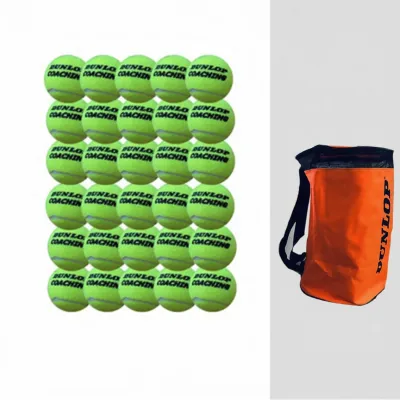
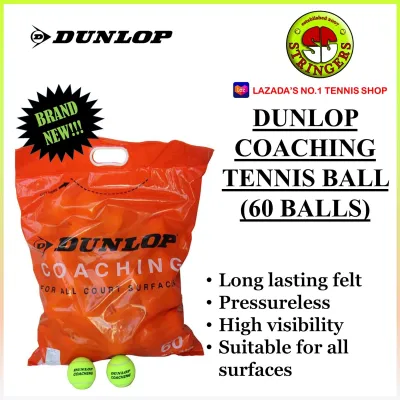
Your training goals also dictate whether you should invest in practice-grade or match-grade balls. Practice drills that involve high-volume feeding from a basket or a ball machine require highly durable balls that can withstand repetitive impacts without losing their shape or bounce. For these scenarios, pressureless balls or specialized “trainer” pressurized balls with extra-thick felt are highly suitable. Conversely, if you are playing practice matches to transition into recreational play, using standard pressurized balls is necessary to adapt to the true speed, spin, and bounce heights you will encounter in real game situations.
Court Surface and Felt Selection
An often-overlooked aspect of selecting training tennis balls is the outer felt cover. The felt wrapper is not just for visibility; it regulates the ball’s speed through aerodynamic drag and determines how the ball interacts with the court surface.
Tennis ball felt is categorized into Regular Duty and Extra Duty. Regular Duty felt is thinner and woven tightly, designed primarily for soft court surfaces like clay, grass, or indoor carpet. If you use a Regular Duty ball on a hard court, the abrasive acrylic-on-concrete surface will rapidly shred the thin felt, leaving the ball bald and unusable within a few games. Extra Duty felt features a thicker, looser weave infused with a higher percentage of synthetic nylon fibers designed to resist the intense friction of hard courts. Given that the vast majority of tennis courts in Singapore are hard courts, beginners should almost exclusively look for Extra Duty options to ensure reasonable durability.
Before purchasing, always inspect the packaging and labels to verify court compatibility. Manufacturers clearly print designations such as “Extra Duty,” “All Court,” or “Hard Court” on the can or box. If a packaging sleeve only mentions “Regular Duty” or “Clay Court,” it is best to avoid it for hard-court training, as the felt will wear down prematurely, altering the ball’s flight path and bounce consistency.
Recognizing when to retire a training ball is crucial for maintaining quality practice. As felt wears down, the ball loses its aerodynamic drag, causing it to fly faster and slide off the court surface rather than gripping and bouncing naturally. Look for visual signs of wear, such as excessive fuzzing, bald patches where the black rubber core is visible, or a soft, mushy sensation when you squeeze the ball. Training with bald or flat balls forces you to adjust your strokes incorrectly to compensate for the lack of natural bounce and control.
Building Your Beginner Training Shortlist
To help you finalize your training setup, use the following decision matrix to match your specific profile and training environment to the most appropriate ball type.
| Player Profile | Recommended Ball Type | Primary Training Focus | Key Benefit |
|---|---|---|---|
| Junior Beginner (Under 8) | Stage 3 (Red) | Hand-eye coordination, basic contact | Slower pace, larger target size |
| Adult Absolute Beginner | Stage 1 (Green Dot) | Stroke mechanics, footwork timing | Lower bounce height, controlled speed |
| Consistent Driller (Ball Machine) | Pressureless Training Balls | Repetitive stroke path, muscle memory | Long-lasting bounce, uniform weight |
| Recreational Match Player | Standard Pressurized (Extra Duty) | Game play, spin response, court coverage | Realistic match-play simulation |
When planning your purchases, consider the packaging and quantity that best fit your training style. If you primarily practice with a coach or use a personal ball hopper for self-feeding drills, buying in bulk is highly economical. A single can of three pressurized balls typically costs between S$5 and S$9 in local retail shops, which can add up quickly if you replace them weekly. For high-volume practice, purchasing a mesh bag of 72 pressureless training balls for approximately S$80 to S$120 offers a much more sustainable long-term investment, as these balls can last for months of repetitive hitting.
Before making a purchase, perform a few quick verification checks to ensure you are getting quality equipment. Look for the International Tennis Federation (ITF) approval logo on the packaging, which guarantees that the balls meet strict weight, size, and bounce specifications. If you are buying pressurized cans, check that the metal seal is completely intact and that the plastic lid is secure; any denting or air leakage in the can indicates that the balls inside may have already begun to lose their pressure before reaching the court.
Frequently Asked Questions (FAQ)
How long do pressurized tennis balls last once opened?
Once the pressurized seal of a tennis ball can is broken, the internal gas begins to escape slowly through the rubber shell. For active training sessions, pressurized balls generally maintain their optimal bounce and responsiveness for about two to six hours of play, which typically translates to one to three sessions. Even if left unused in a tennis bag, opened pressurized balls will lose a significant amount of their bounce within two weeks. You can easily test bounce retention by dropping a ball from shoulder height onto a hard court; it should bounce up to approximately chest height to be considered suitable for active training.
Can beginners use extra duty balls on hard courts?
Yes, beginners should actively choose Extra Duty balls when training on hard courts. The abrasive nature of concrete and acrylic hard courts quickly wears down the felt of Regular Duty balls, leading to rapid balding and inconsistent flight paths. Extra Duty balls feature a thicker, more durable felt weave that is specifically engineered to withstand this friction. While they may feel slightly heavier on the racket face initially, the increased durability and consistent bounce they provide over multiple sessions make them the most practical and cost-effective choice for hard-court practice.
Are pressureless balls better for tennis ball machines?
Pressureless balls are highly recommended for use in tennis ball machines. Because ball machines rely on consistent ball behavior to help players build muscle memory, using pressurized balls can lead to frustrating variations in depth and height as the balls lose pressure at different rates. Pressureless balls maintain their structural bounce indefinitely, ensuring that the machine delivers highly predictable and uniform feeds over hundreds of repetitions. Additionally, their durable construction means they can withstand the mechanical grinding of the machine’s spinning wheels far better than standard pressurized options.

Community discussion
Share your experience or ask a question. Comments are reviewed before publication.