
Securing a bicycle in Singapore requires balancing convenience with security, especially when transitioning between leisurely Park Connector Network (PCN) rides and daily multi-hour parking at Mass Rapid Transit (MRT) stations. While a bicycle lock cable offers excellent flexibility and lightweight portability, choosing the right one depends heavily on understanding where, when, and how long your bike will be left unattended.
Understanding Security Realities for Local Cycling Routes
Singapore’s cycling infrastructure has expanded rapidly, making multi-modal commuting highly practical. However, parking security needs vary drastically along your route. A brief stop at a PCN pitstop to grab a drink presents a low-risk scenario where your bike remains within your line of sight or is left unattended for only a few minutes.
In contrast, leaving a bicycle at an MRT station parking rack for a full work day exposes it to prolonged, unsupervised risk. These transit hubs experience high foot traffic, but they also provide cover for opportunistic theft, especially during off-peak hours when racks are less monitored.
Products mentioned in this guide
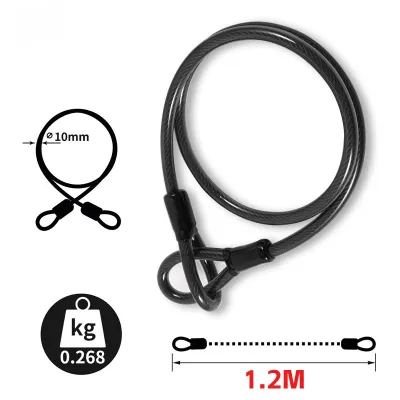
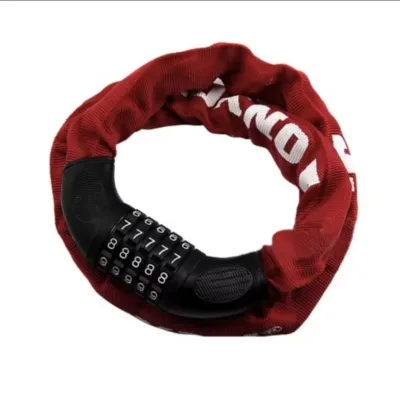
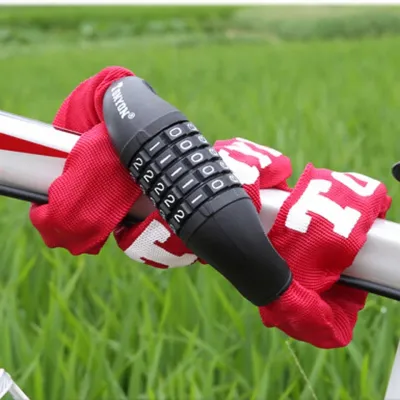
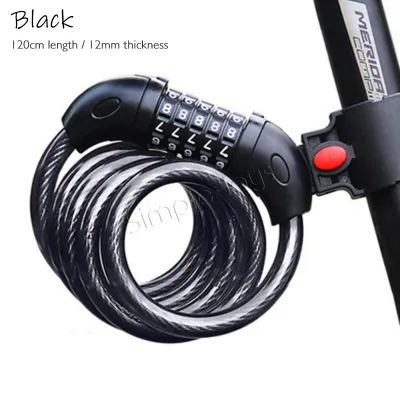
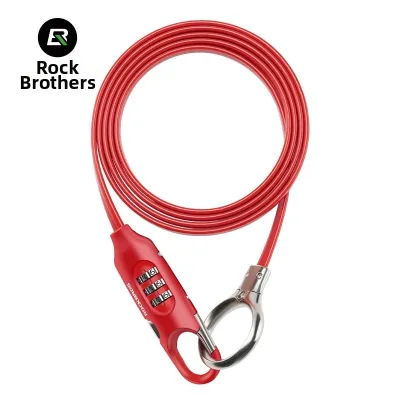
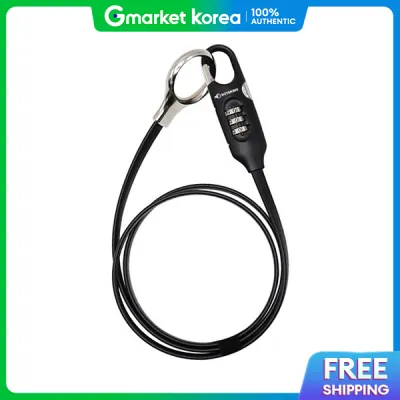
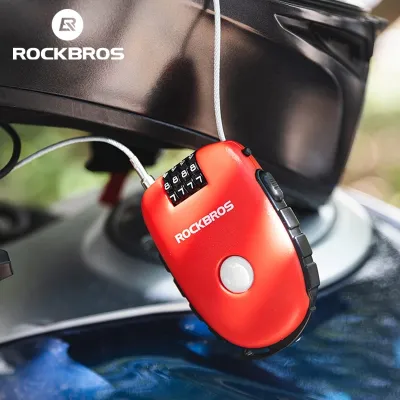
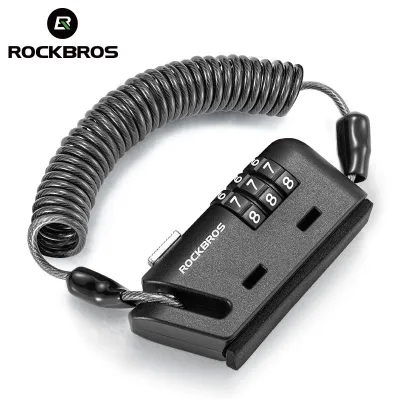
Prices are valid at publication and may change. Please refer to the product page for the latest price.
It is vital to recognize that even the thickest bicycle lock cable can be severed quickly by a determined thief equipped with hand-held cable cutters. Cable locks are fundamentally designed as deterrents against opportunistic “ride-away” theft rather than high-security barriers.
For short daytime stops along the PCN, a standalone cable lock is often sufficient to prevent someone from simply walking off with your bike. For extended MRT station parking, however, a cable lock should transition to a secondary role, securing easily removable components like wheels and saddles, while a heavy-duty rigid lock secures the main frame.
Essential Specifications to Verify Before Buying
When shopping for a bicycle lock cable, the first specification to inspect is the actual thickness of the internal steel core. Many manufacturers list the total diameter, which includes a thick plastic sleeve; always verify the thickness of the braided steel wire itself, aiming for at least 10mm to 12mm for basic deterrence.

The internal construction of the cable also matters. Look for tightly braided steel cables, as these are more difficult to cut cleanly with basic hand tools compared to loosely wound strands that can be snipped one by one.
Next, evaluate the locking mechanism, which typically comes down to a key-operated cylinder or a combination dial. Keyed locks often offer better physical security but require you to manage a physical key, whereas combination dials eliminate the risk of a lost key but can be more vulnerable to manipulation if they are cheaply made.
If you choose a combination lock, look for dials with clear, tactile clicks and weather-resistant numbering that will not fade over time. For keyed options, disc-detainer cylinders are generally more resistant to picking than simple pin-tumbler designs.
A protective outer coating is another essential feature to check. A thick vinyl, silicone, or woven nylon sleeve prevents the metal cable from scratching your bicycle frame’s paintwork and protects the steel core from direct exposure to rain.
Finally, consider the length and design of the cable. Coiled cables are highly compact and stretch to reach distant anchors, but they can be springy and difficult to thread through tight spaces. Straight cables are easier to handle but require more deliberate storage solutions when riding.
Matching the Lock to Your Specific Parking Scenario
Selecting the right lock is not about finding a single universal solution, but rather matching the weight, length, and security level of the cable to your specific daily routine.
Quick Stops Along the Park Connector Network
When you are riding along the PCN, heavy and bulky security gear can detract from the enjoyment of your ride. For these active sessions, prioritize a lightweight and highly portable cable lock that can be quickly deployed during a coffee or restroom break.
The lock should have enough length—typically around 1.2 to 1.8 meters—to easily loop through your frame, front wheel, and a nearby permanent fixture like a trailside railing or bike rack.
Because these stops are brief and usually occur in well-populated areas, the primary goal of the lock is visual deterrence. A brightly colored cable can signal to opportunistic passersby that the bike is secured, prompting them to move on without attempting a theft.
Extended Parking at MRT Stations
Securing your bike at an MRT station for eight to ten hours requires a much more robust approach. In this scenario, you must prioritize physical resistance over lightweight convenience, as the bike will be left unattended for long stretches.
Look for heavy-duty cables with a minimum steel core diameter of 15mm if you plan to use it as your primary lock, though pairing it with a rigid lock is highly recommended. The increased thickness forces a thief to use larger, more conspicuous tools, which increases the likelihood of detection in a public transit hub.
A smart strategy is to use the cable lock as a supplementary security measure. Thread the cable through your quick-release wheels and saddle rails, then lock the ends to a heavy-duty U-lock that anchors the main frame directly to the MRT station’s metal rack.
Proper Locking Techniques to Maximize Deterrence
Even the strongest cable lock can fail if it is applied incorrectly. The first step in securing your bicycle is selecting a solid, immovable anchor point, such as a permanently bolted metal rack, and avoiding wooden posts, thin chain-link fences, or short signposts where the bike and lock can be lifted over the top.
Always park in well-lit, high-traffic areas, preferably directly under the coverage of active closed-circuit television (CCTV) cameras, which are common around Singapore’s MRT stations.
When threading the cable, ensure it passes through the main frame triangle and at least one wheel—ideally the rear wheel, which is more expensive to replace. Never loop the lock solely through a removable part like the front wheel or the seat post, as a thief can easily leave those parts behind and take the rest of the bike.
Keep the cable as tight as possible around the frame and anchor point to minimize slack. This reduces the space available for a thief to insert prying tools or jacks.
Position the locking mechanism itself high off the ground. If the lock cylinder or combination dial rests on the pavement, a thief can use the ground as a fulcrum to apply maximum leverage with bolt cutters or a hammer, easily shattering the mechanism.
Maintenance Checks for High-Humidity Conditions
Singapore’s tropical climate, characterized by high humidity and frequent rain, presents a constant threat of rust and corrosion to bicycle locks. Regular maintenance is essential to ensure your lock remains functional and does not seize up when you are trying to unlock your bike after a long commute.
Periodically inspect the outer protective sheath of your cable lock for any cracks, cuts, or deep scratches. Even minor damage to the plastic or nylon coating can allow moisture to seep inside, trapping water against the steel core and causing silent, structural rusting.
Apply a dedicated lock lubricant, such as a dry graphite spray or a light Teflon-based oil, directly into the keyway or combination dials every few months. Avoid heavy, sticky oils like WD-40 for long-term lubrication, as they can attract dust and grime, eventually gumming up the internal pins or tumblers.
Check the connection points where the cable meets the lock housing for signs of orange rust or corrosion. If you notice any stiffness in the locking mechanism, clean it immediately with a rust-penetrating spray, dry it thoroughly, and reapply a protective lubricant to keep the internal springs moving smoothly.
Frequently Asked Questions (FAQ)
Can I rely solely on a cable lock for overnight MRT parking?
Relying solely on a cable lock for overnight parking at an MRT station is highly discouraged. Cable locks are easily bypassed with basic cutting tools, and overnight hours provide thieves with the darkness and solitude needed to work undisturbed. If you must leave your bicycle overnight, use a high-security U-lock or folding lock as your primary defense, and use the cable lock only to secure secondary components like your wheels.
How do I carry a long cable lock during my ride?
Carrying a long cable lock can be done safely by using a dedicated frame-mounting bracket, which often comes included with the lock. Alternatively, you can wrap a coiled cable tightly around your seat post or carry it inside a frame bag or pannier. Always ensure the lock is secured tightly and does not dangle near your wheels, pedals, chain, or braking systems, as a loose cable can easily cause a sudden and dangerous crash.

Community discussion
Share your experience or ask a question. Comments are reviewed before publication.