
For a beginner preparing for their first fishing trip in Singapore, the ideal fishing hook set is a curated assortment of high-carbon steel or corrosion-resistant hooks ranging from size 6 to size 1/0. This range provides the versatility needed to target common local species in both saltwater coastal spots and managed freshwater reservoirs without overwhelming you with hundreds of specialized, unusable pieces. Selecting a set that features a mix of circle hooks and classic baitholder hooks ensures you are prepared for different bait types and fishing styles, whether you are casting from a jetty or setting up at a commercial pond.
Decoding Hook Sizing and Anatomy for Beginners
Understanding the anatomy of a fishing hook is the first step toward making an informed purchase. Every hook consists of five primary parts: the eye, the shank, the bend, the point, and the barb. The eye is the loop at the top where you tie your fishing line or leader. The shank is the straight vertical section of the hook, which can vary in length depending on the bait you plan to use. The bend is the curved portion that sweeps down from the shank, leading to the point, which is the sharp tip designed to penetrate the fish’s mouth. Finally, the barb is the backward-facing projection just below the point that prevents the fish or bait from sliding off.
The sizing system for fishing hooks can be highly counterintuitive for beginners because it operates on two distinct scales. Standard hooks use a simple numbering system where a larger number indicates a smaller hook. For example, a size 12 hook is very small and typically used for tiny freshwater baitfish, while a size 1 hook is significantly larger and suitable for medium-sized targets. Once you pass size 1, the system transitions to the “aught” scale, written as a number followed by a slash and a zero (e.g., 1/0, 2/0, 3/0). On this scale, the sizing is direct: a 2/0 hook is larger than a 1/0 hook, and a 3/0 hook is larger still.
Products mentioned in this guide
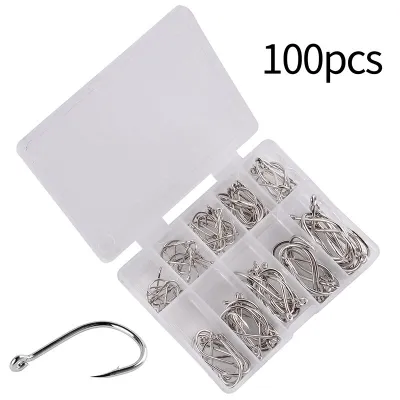
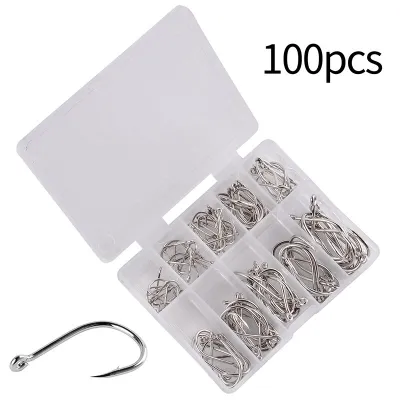
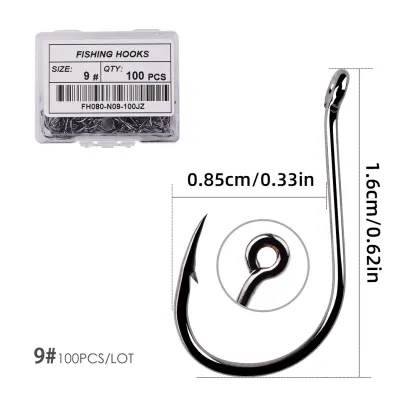
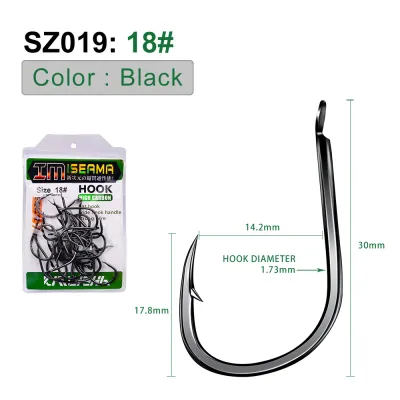
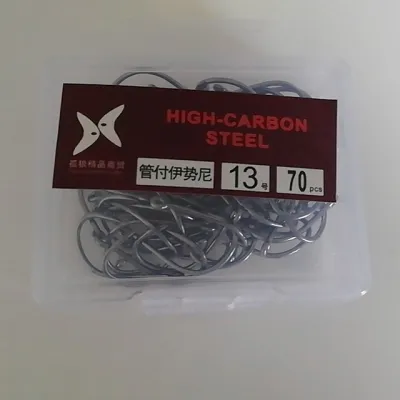
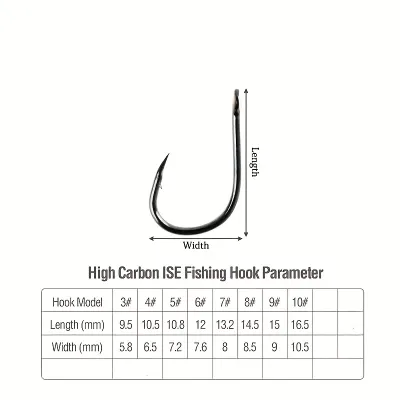
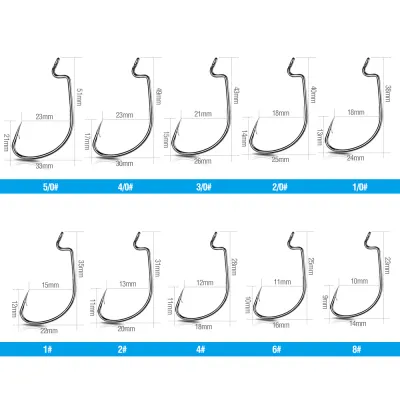
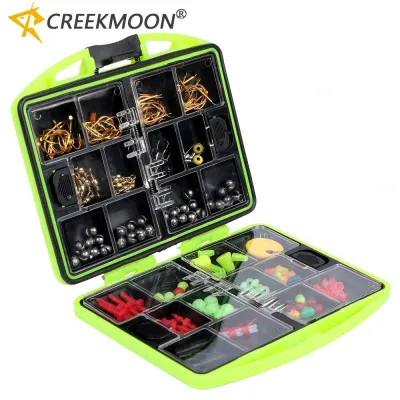
Prices are valid at publication and may change. Please refer to the product page for the latest price.
When selecting your first fishing hook set, paying attention to the barb design is crucial for safety and conservation. Standard barbed hooks are excellent for keeping bait secure, but they can be difficult to remove from a fish’s mouth or, in worst-case scenarios, your own skin. For beginners, choosing hooks with easily crushable barbs or opting for barbless hooks is highly recommended. This design choice ensures a much safer learning experience, facilitates quick catch-and-release, and helps you comply with local conservation guidelines in public fishing areas.
Essential Hook Shapes Every Starter Set Should Include
A versatile starter fishing hook set must include specific hook shapes designed to handle different fishing techniques and bait presentations. The first essential shape is the circle hook. Unlike traditional hooks, the point of a circle hook is curved sharply back toward the shank. This unique geometry prevents the hook from catching in the fish’s throat or stomach. Instead, as the fish takes the bait and swims away, the hook slides safely out of the throat and rotates, embedding itself firmly in the corner of the jaw. This self-setting mechanism makes circle hooks incredibly user-friendly for beginners, as you do not need to strike the rod to hook the fish.

The second shape your set should feature is the J-hook, specifically the baitholder variety. Baitholder hooks are classic J-shaped hooks that feature small, backward-facing slices on the shank. These additional slices are designed to hold soft, natural baits—such as live prawns, earthworms, or bread paste—firmly in place, preventing them from sliding down and bunching up at the bend. Baitholder hooks require an active hook set, meaning you must pull the rod tip upward firmly when you feel a distinct bite to ensure the point penetrates.
Understanding the difference between long-shank and short-shank hooks will also help you present your bait more naturally. Long-shank hooks provide more metal surface area, making them easier to grasp with pliers when unhooking toothy species or when a fish has swallowed the bait deeply. They are ideal for presenting long baits like marine worms. Short-shank hooks, on the other hand, are lighter and much easier to conceal inside small baits like dough balls or single pellets. This stealthy presentation is particularly effective in heavily fished waters where fish are easily spooked by visible hardware.
Matching Hooks to Common Singapore Fishing Environments
To get the most out of your fishing hook set, you must match the hook size and style to the specific environment you plan to fish. Different venues present unique challenges, from corrosive saltwater to strict local regulations.
| Fishing Environment | Target Species | Recommended Hook Type | Recommended Size Range |
|---|---|---|---|
| Coastal Jetties & Piers | Snappers, Groupers, Catfish | Saltwater-coated Circle or J-Hook | Size 4 to 1/0 |
| Managed Freshwater Ponds | Tilapia, Pacu, Patin | Barbless J-Hook or Circle Hook | Size 8 to 2 |
| Public Reservoirs | Peacock Bass, Tilapia | Short-shank J-Hook or Weedless Hook | Size 6 to 2 |
Always verify the specific rules of your chosen venue before rigging your gear, as regulations can vary significantly between public parks and private properties.
Coastal Jetties and Piers
Fishing from coastal structures like Bedok Jetty or Woodlands Jetty exposes your gear to harsh saltwater conditions and strong currents. The typical target species in these environments include snappers, groupers, and marine catfish, which possess tough, bony mouths. To successfully hook these species, your fishing hook set must feature hooks with robust, corrosion-resistant finishes. Look for packaging labels indicating coatings like black nickel, tin, or specialized saltwater alloys. Standard bronze hooks will degrade and rust rapidly when exposed to sea spray and saltwater.
For jetty fishing, hook sizes ranging from size 4 to 1/0 are generally the most effective. These sizes are large enough to hold substantial baits like whole prawns or squid strips while remaining small enough to fit into the mouths of common coastal species. Additionally, always check local fishing regulations regarding hook limits. Some public piers restrict anglers to a maximum of two hooks per line to prevent accidental snagging of swimmers, boaters, or non-target marine life.
Freshwater Ponds and Managed Reservoirs
Managed freshwater ponds and public reservoirs offer a completely different fishing experience, requiring a shift toward smaller, lighter tackle. Common freshwater targets in Singapore include tilapia, pacu, and peacock bass. Because these fish often feed on smaller organisms or organic matter, your starter set should include smaller hook sizes, specifically from size 8 to size 2. These smaller hooks allow for a much more natural bait presentation, which is essential when targeting wary fish in clear water.
Bait selection in freshwater environments often revolves around bread, dough, or commercial feed pellets. A heavy saltwater hook will cause these light baits to sink unnaturally fast or break apart upon hitting the water. Using a light-wire, short-shank J-hook ensures the bait behaves naturally in the water column. Furthermore, public reservoirs managed by national water agencies often have strict conservation rules. Many designated fishing zones require the use of artificial lures with single, barbless hooks to minimize injury to the fish, making it vital to check the specific guidelines of the reservoir before you cast.
Pre-Packaged Assortments vs. Building a Custom Starter Kit
When shopping for your first fishing hook set, you will likely face a choice between buying a massive, pre-packaged assortment box or building a custom starter kit from individual packets. Large commercial multi-piece sets are highly visible on online marketplaces, often boasting hundreds of hooks in a single plastic organizer. While these sets appear to offer excellent value, they frequently contain a vast majority of sizes that are either too small for local species or too large for beginner setups. Additionally, the steel quality in bulk assortments can be highly variable, with some hooks being brittle enough to snap under pressure or soft enough to bend straight when fighting a fish.
A more effective approach for a beginner is to build a custom starter kit by purchasing three to four individual packets of high-quality hooks from reputable manufacturers. With a modest budget of under S$30, you can acquire a highly curated selection of hooks tailored specifically to your target environment. For example, a versatile custom kit might consist of one pack of size 4 circle hooks, one pack of size 2 baitholder hooks, and one pack of size 6 light-wire J-hooks. This approach ensures that every single hook in your tackle box is of high quality and directly suited to your upcoming trip.
Before heading out, you can easily inspect the quality of your hooks using simple visual and tactile checks. To test sharpness, gently drag the hook point at a 45-degree angle across your thumbnail using only the weight of the hook. A sharp hook will catch and dig into the nail immediately, while a dull hook will slide off effortlessly. To check the steel temper, use a pair of pliers to apply gentle pressure to the bend of a sacrificial hook. A high-quality hook should flex slightly and spring back to its original shape; if it bends permanently with minimal effort or snaps abruptly, the steel temper is poor, and the hooks should not be used for larger fish.
Pre-Trip Rigging and Safety Checklist
Proper preparation before you reach the water is key to a successful and safe fishing trip. First, always match your hook size to your chosen line strength and leader material. Using a heavy, thick-wire hook on a light leader line (such as a 1/0 hook on a 4-pound monofilament line) will result in poor knot strength and frequent break-offs. Conversely, tying a tiny size 8 hook to a heavy 30-pound leader will prevent the hook from moving naturally, making fish highly unlikely to bite. As a general rule, pair smaller hooks (sizes 8 to 4) with lighter leaders (6 to 12 pounds) and larger hooks (sizes 2 to 1/0) with heavier leaders (15 to 25 pounds).
If your fishing hook set contains standard barbed hooks and you plan to fish in a catch-and-release area, take the time to pinch the barbs before rigging. Using a pair of long-nose pliers, grip the barb firmly and press it down flat against the shank of the hook. This simple modification makes hook removal incredibly easy, minimizing tissue damage to the fish and ensuring a much safer experience if you accidentally hook your finger or clothing during casting.
Finally, Singapore’s highly humid tropical climate poses a constant threat to metal tackle. To maintain the integrity of your hooks and prevent rust, store them in a dry, organized utility box. Always add a small packet of silica gel or a rust-inhibiting strip to the compartment to absorb airborne moisture. Never place wet, used hooks back into the same compartment as your unused hooks, as the moisture and salt residue will quickly contaminate the entire set, leading to rapid corrosion and weakened hook points.
Frequently Asked Questions (FAQ)
How do I safely remove a deeply swallowed hook?
If a fish has swallowed the hook deeply into its throat or stomach, attempting to pull it out forcefully can cause fatal internal injuries. If the hook is visible and you can reach it easily with long-nose pliers or a dedicated dehooking tool, gently twist the hook to back it out along the path of entry. However, if the hook is completely out of sight or firmly embedded in the throat, the safest action for the fish’s survival is to cut the leader line as close to the hook eye as possible. High-carbon steel hooks will naturally degrade and rust away over time in the fish’s digestive tract, allowing the fish to survive and recover.
Do I need to sharpen new hooks straight out of the package?
Most modern hooks produced by reputable manufacturers are chemically sharpened during production and are incredibly sharp right out of the package. You can verify this sharpness using the thumbnail test before your trip. If the hook point catches immediately on your nail, it is ready for use. Avoid using a hook file or sharpening stone on brand-new, chemically sharpened hooks. Doing so can strip away the protective anti-corrosion coating, exposing the raw steel to rapid rusting, and can actually dull the incredibly fine factory point rather than improving it.

Community discussion
Share your experience or ask a question. Comments are reviewed before publication.