
Finding the ideal OneTwoFit treadmill for a compact Housing & Development Board (HDB) flat requires balancing your fitness goals with the physical realities of limited square footage. Because HDB layouts prioritize efficient use of space, the best model is not necessarily the one with the highest top speed, but rather the one that integrates seamlessly into your daily living area without causing obstruction. For most residents, the choice comes down to two distinct design profiles: an ultra-slim, flat-folding walking pad that slides under a sofa, or a compact upright-folding treadmill that offers a handrail and higher speed limits but requires dedicated vertical storage space. To make the right decision, you must evaluate your primary exercise style—whether light walking during work or high-intensity running—against your home’s layout, storage options, and noise tolerance.
Measuring Your HDB Space and Clearance Needs
Before browsing online marketplaces for a OneTwoFit treadmill, you must accurately measure both your active workout area and your intended storage zone. The active running footprint refers to the space the machine occupies when fully unfolded and in use, which is significantly larger than its folded storage footprint. It is a common mistake to measure only the physical dimensions of the machine itself; you must also account for the clearance required to safely mount, dismount, and operate the equipment.
Delivery and transport within your home present another set of physical constraints. You need to measure the width of your HDB main door, bedroom doors, and any narrow hallways to ensure the boxed treadmill can be maneuvered into place. If your flat is located on a higher floor, verify that the building’s passenger lift can accommodate the length of the shipping box, as manual carrying up stairwells often incurs steep delivery surcharges. Additionally, check your ceiling height, especially if you plan to place the treadmill on a raised platform or if you are taller than average, as your head will rise several centimeters above your normal standing height when you are on the running deck.
Products mentioned in this guide
Prices are valid at publication and may change. Please refer to the product page for the latest price.
Safety margins are critical to prevent serious injury in the event of a slip or fall. Industry safety guidelines recommend maintaining a clear, unobstructed zone of at least 1.5 meters behind the rear of the treadmill deck. This safety buffer ensures that if you lose your footing, you are safely thrown clear of the moving belt rather than pinned against a wall or furniture. Furthermore, keep a clearance of at least 0.5 meters on both sides of the treadmill to allow for easy access and to prevent your arms or shoulders from striking nearby objects during high-intensity workouts.
Key OneTwoFit Features for Small Apartments
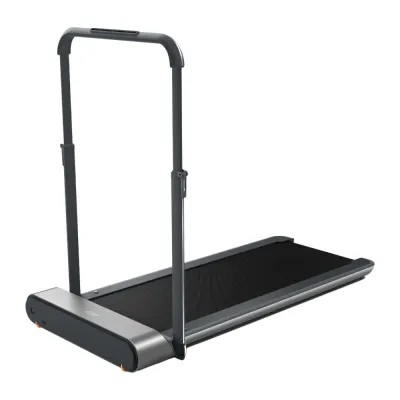
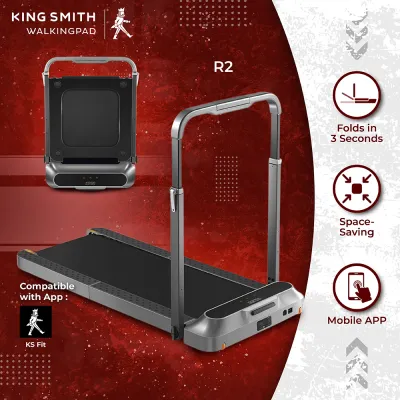
When evaluating OneTwoFit models, understanding the structural differences between flat-folding walking pads and traditional upright-folding treadmills is essential. Flat-folding walking pads are designed to lie completely flat, often measuring less than 15 centimeters in height when folded. This ultra-slim profile allows you to slide the unit under a bed, sofa, or TV console, making them highly suitable for studio apartments or smaller three-room flats. However, these models typically have lower speed limits and may lack physical handrails, which can affect stability during faster paces.

In contrast, traditional upright-folding treadmills feature a console and handrails that fold down or lock into an upright position. While they occupy a larger vertical footprint when stored, they offer a more robust frame, higher speed capabilities, and integrated safety keys. The choice between these two designs should align with your fitness routine. If your goal is to maintain a light walking routine while working at a standing desk, a flat walking pad is highly efficient. If you intend to engage in jogging or interval running, an upright-folding model with a sturdy handrail is necessary for safety and performance.
Deck dimensions directly influence both your comfort and the machine’s overall footprint. A longer and wider deck accommodates a longer running stride but requires more floor space. For walking and light jogging, a deck length of 100 to 120 centimeters is generally sufficient for average-height users. However, taller runners or those with a wider stride may require a deck length of 120 to 140 centimeters to prevent their feet from clipping the front motor cover or slipping off the back of the roller.
Finally, pay close attention to the manufacturer’s specifications regarding motor size, weight capacity, and operational noise. A motor with a continuous-duty rating (measured in continuous horsepower or CHP) is more durable than one rated only by peak horsepower. For quiet operation in close-quarters living, look for brushless motor designs, which tend to generate less mechanical friction and noise. Ensure the machine’s maximum weight capacity exceeds your body weight by at least 15 to 20 percent to prevent overloading the motor and belt, which can lead to premature wear and increased noise levels.
How to Compare Available Models for Your Shortlist
To narrow down your options on official retail channels, construct a comparison matrix based on physical specifications rather than marketing claims. Focus your comparison on three primary metrics: folded dimensions, net weight, and the complexity of the folding mechanism. Some models feature hydraulic folding assists that slowly lower the deck to the floor, while others require manual lifting and locking. If you plan to move the treadmill frequently, look for models equipped with built-in transport wheels, and verify that the net weight of the machine is manageable for you to tilt and roll independently.
Warranty coverage and post-purchase support are critical considerations when buying bulky fitness equipment online. Verify the duration of the warranty for the motor, frame, and electronic components, as these parts can be costly to replace. Check whether the seller offers on-site repair services in Singapore or if you are expected to transport the heavy machine to a service center yourself. Additionally, review the assembly requirements; some compact models arrive fully assembled out of the box, while others require basic tool assembly that may take an hour or more to complete.
Customer reviews on ecommerce platforms provide valuable real-world insights into how a treadmill performs in a compact home environment. When filtering reviews, look specifically for feedback regarding stability on tiled or vinyl flooring, the actual noise level during operation, and how easy the machine is to fold and store daily. Pay attention to comments from users who live in similar high-density housing, as they are more likely to highlight issues such as structural vibration or belt slippage that might not be apparent in a spacious showroom.
Minimizing Noise and Vibration in HDB Flats
Operating a treadmill in an HDB flat requires careful consideration of your neighbors, as structural vibrations can easily travel through concrete floors and shared walls. To mitigate this, place a high-density, heavy-duty rubber or PVC anti-vibration mat beneath the entire footprint of the treadmill. These specialized mats absorb the impact of your footsteps, dampening the low-frequency thuds that would otherwise reverberate through the building’s structure. Avoid thin yoga mats, as they lack the density required to absorb heavy mechanical impacts.
The placement of your treadmill within your flat also plays a significant role in noise management. Avoid positioning the machine directly against shared party walls that divide your home from your neighbor’s living room or bedroom. Instead, place the treadmill along an external wall or in a central area of the room. Ensure the room is well-ventilated, as compact spaces can quickly become hot and humid during a workout. Using a floor fan or positioning the treadmill near an open window can help maintain comfortable air circulation without relying solely on air conditioning.
Regular maintenance is essential to keep your treadmill running quietly and to extend its lifespan. Over time, the running belt can stretch or shift off-center, causing it to rub against the side rails and generate a squeaking or scraping sound. Check the belt alignment weekly and adjust the tension bolts according to the manufacturer’s instructions. Additionally, apply a high-quality silicone treadmill lubricant beneath the belt at regular intervals—typically every three to six months, depending on usage—to reduce friction between the belt and the deck, which minimizes motor strain and operational noise.
Frequently Asked Questions (FAQ)
Is it safe to keep a treadmill on an HDB balcony?
No, keeping a treadmill on an HDB balcony is generally not recommended unless the space is fully enclosed and climate-controlled. Singapore’s high humidity, frequent rain splashes, and intense direct sunlight can rapidly degrade the electronic console, rust the steel frame, and dry out the running belt. Exposure to moisture can cause electrical short circuits, posing a safety hazard and voiding the manufacturer’s warranty. Always check the manufacturer’s guidelines and IP (Ingress Protection) ratings; most home treadmills are rated strictly for indoor use and lack the weatherproofing required to withstand semi-outdoor environments.
Do under-desk walking pads provide the same workout as standard treadmills?
Under-desk walking pads do not provide the same workout intensity as standard treadmills due to differences in motor power, maximum speed, and deck construction. Walking pads are engineered for low-impact, steady-state cardio, typically capping speeds at 6 to 8 kilometers per hour, making them ideal for accumulating daily steps while working. Standard treadmills feature larger motors, sturdier frames, and longer decks that support running speeds of 12 kilometers per hour or more, along with incline options. If your fitness goals involve running, interval training, or cardiovascular conditioning, a standard folding treadmill is necessary to provide the required stability and speed range.

Community discussion
Share your experience or ask a question. Comments are reviewed before publication.