
Finding the right treadmill for a Singapore HDB flat requires balancing your fitness goals with the physical realities of high-rise, compact living. A practical machine fits comfortably within your designated room, folds away securely, and operates quietly enough to maintain good neighborly relations. Rather than searching for a universal model, you must evaluate how a machine’s physical footprint, folding mechanism, and motor specifications align with your specific floor plan, ceiling height, and workout intensity.
Measuring Your HDB Space and Layout Constraints
Before browsing online marketplaces or visiting a showroom, you must establish the exact spatial limits of your home. Start by measuring the floor area of your intended workout spot, whether that is a corner of the living room or a spare bedroom. Be sure to account for skirting boards, which can reduce usable floor width by a few centimeters, as well as the swing radius of built-in wardrobes and room doors.
Additionally, map out the nearest power outlet. Using extension cords for high-draw fitness equipment is generally discouraged by manufacturers, so your treadmill should sit within direct reach of a wall socket.
Products mentioned in this guide
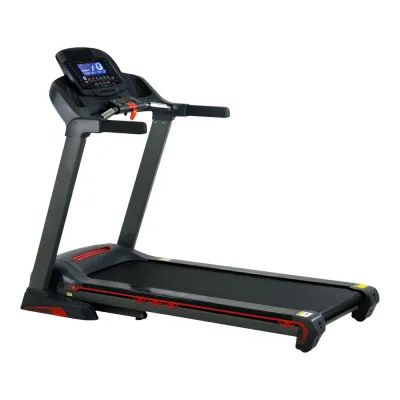
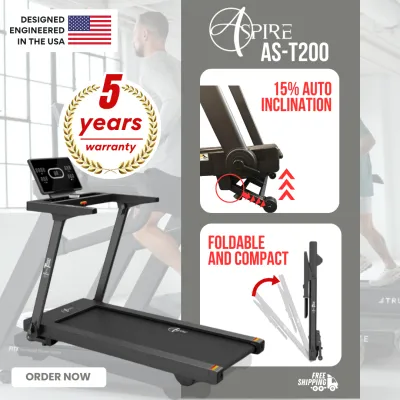
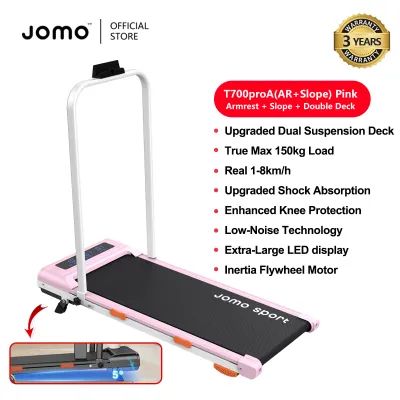
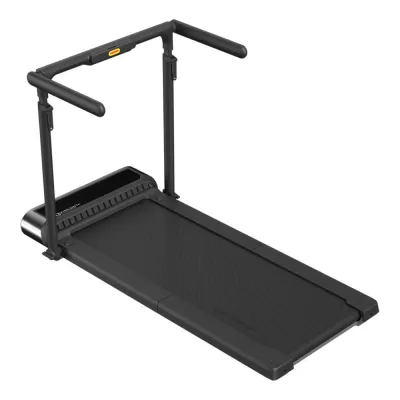
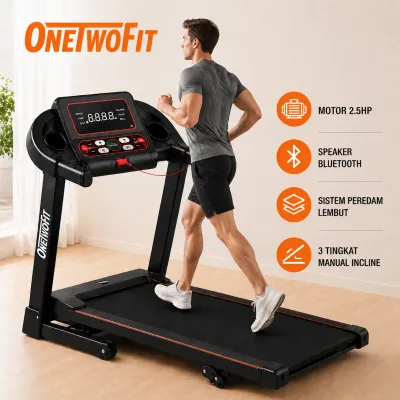
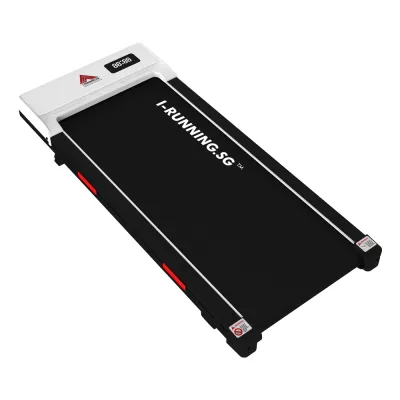
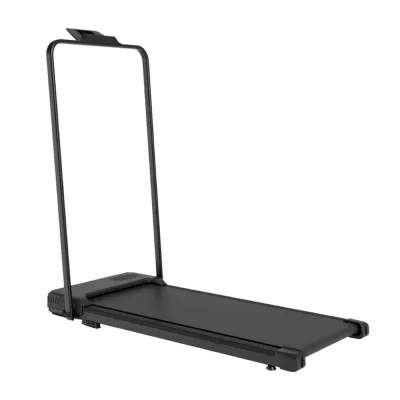
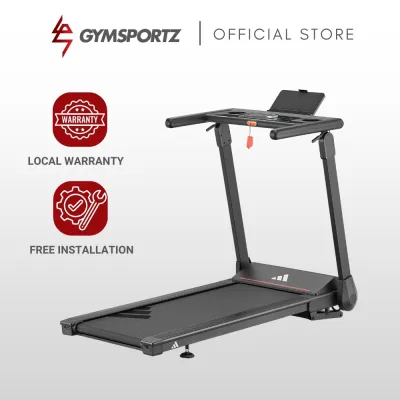
Prices are valid at publication and may change. Please refer to the product page for the latest price.
Equally important is the delivery pathway. A treadmill is a heavy, bulky item that arrives in a large shipping box. You must measure the width of your main entryway, internal doorways, and any tight corridor turns within your flat. Do not forget to check the dimensions of your estate’s elevator and the clearance of the lift lobby. If the boxed unit cannot clear these communal spaces or fit through your front door, you may face delivery failures or additional handling fees.
Finally, measure your ceiling height. While standard ceilings typically accommodate walking, taller runners or those planning to use high-incline settings must calculate the combined height of the treadmill deck at its maximum incline and their own height to avoid overhead fixtures or ceiling fans.
Understanding Treadmill Dimensions and Safety Clearances
When evaluating treadmill specifications, you must distinguish between three distinct spatial measurements: the stored footprint, the unfolded operational footprint, and the required safety clearance. The stored footprint is the space the machine occupies when folded upright or flat. The operational footprint is the actual physical space the machine covers when fully unfolded and ready for a workout.

However, the most critical measurement for user safety is the clearance zone surrounding the machine during operation. Safety guidelines recommend leaving an unobstructed area of at least two meters behind the treadmill and half a meter on both sides. This rear safety zone is vital; if you lose your footing, the moving belt will push you backward. Without clearance, you risk being pinned between the spinning belt and a wall, causing severe friction burns or impact injuries.
Furthermore, you must account for your own physical movement and stride length. A taller runner with a longer stride requires a longer running deck, which increases the machine’s overall operational footprint. If you plan to use the incline feature, remember that the deck rises as the angle increases. Verify that your head will remain a safe distance from the ceiling and any light fixtures when standing on the deck at its highest elevation.
Evaluating Space-Saving Features and Folding Mechanisms
For most HDB dwellers, a folding treadmill is a necessity. These machines generally fall into three categories: hydraulic drop-fold, manual fold-up, and flat-folding designs. Hydraulic assist systems, often called soft-drop mechanisms, are highly practical. They use gas shocks to help lift the heavy deck and slowly lower it to the floor hands-free, reducing physical strain and preventing the deck from slamming down.
Manual fold-up models require you to lift the deck yourself and secure it with a locking pin, which demands a reasonable level of physical strength. Flat-folding models fold completely flat to the ground or upright against a wall, allowing them to slide under a bed or stand in a narrow closet.
Mobility is another crucial factor if you plan to store the treadmill after every workout. Look for units equipped with multi-directional transport wheels. Because treadmills are heavy, moving them on two fixed wheels requires tilting the machine at a steep angle, which can damage delicate flooring like vinyl or laminate. Four-wheel systems allow you to push the upright machine flat across the floor with minimal effort.
However, space-saving designs can sometimes compromise structural stability. Before purchasing, check the manufacturer’s specified frame weight and user weight capacity. Extremely lightweight, ultra-folding treadmills may wobble or flex when you transition from a walk to a run. Ensure the locking mechanisms are robust and that the machine remains stable on its feet when folded, particularly if you have children or pets.
Balancing Compact Footprints with Running Surface and Performance
While a compact treadmill is easier to fit into a bedroom, reducing the machine’s size often means compromising on the running surface and motor performance. The running belt must be wide and long enough to accommodate your natural stride. For walking or light jogging, a belt length of 120 centimeters and a width of 40 centimeters may suffice. However, running or sprinting requires a belt that is at least 140 centimeters long and 50 centimeters wide to prevent your feet from stepping off the moving surface.
The motor is the heart of the treadmill, and its performance is measured in Continuous Horsepower (CHP). Do not confuse this with peak horsepower, which only represents temporary maximum power. For walking, a motor with 1.5 to 2.0 CHP is generally adequate. Jogging requires 2.0 to 2.5 CHP, while regular running demands 2.5 to 3.0 CHP or more. An underpowered motor will struggle, run hot, and wear out prematurely, especially in warm, humid indoor environments.
Additionally, compact treadmills often have smaller motor covers and less internal space for heat dissipation. When operating in a confined room, ensure the treadmill is positioned to allow adequate airflow around the motor housing. Check the manufacturer’s guidelines regarding ventilation clearances to prevent the motor from overheating during extended training sessions.
Common Space-Matching Mistakes to Avoid
One common mistake is ignoring the structural limits of your flooring. While modern high-rise apartments are built to high structural standards, placing a heavy motorized treadmill on unstable raised flooring, hollow platforms, or poorly supported laminate can cause structural creaking and damage. Always place the machine on a solid, level concrete floor base.
Another frequent oversight is the transmission of noise and vibration. The impact of your feet striking the deck creates low-frequency vibrations that travel easily through concrete slabs to the flat downstairs. Even if the motor itself is quiet, the structural thudding can cause significant disturbance to your neighbors. Using a dedicated anti-vibration mat is highly recommended to absorb these impacts.
Lastly, do not forget to plan for the physical routing of the power cord and the placement of the emergency safety key. The power cord should run directly to the outlet without crossing walkways where it could become a tripping hazard. The safety key tether must always be clipped to your clothing during use, allowing the machine to stop instantly if you fall or drift too far back.
Frequently Asked Questions (FAQ)
Do I need a special mat for a treadmill in an HDB flat?
Yes, using a dedicated equipment mat is highly recommended for high-rise living. A dense rubber or PVC mat protects your vinyl, parquet, or tile flooring from scratches and sweat. More importantly, it acts as a dampener, absorbing the impact vibrations of your running strides and significantly reducing the low-frequency noise that travels through the concrete floor to the neighbors living below you.
Can I place a treadmill directly against a wall?
You should never place a treadmill directly against a wall. Doing so eliminates the critical rear safety clearance, creating a severe hazard if you slip or fall while the belt is moving. Additionally, placing the front of the machine flush against a wall can block the motor’s ventilation vents, leading to overheating. Always maintain the manufacturer’s recommended clearances.
Are under-desk treadmills a practical alternative for small bedrooms?
Under-desk treadmills, or walking pads, are excellent space-saving alternatives if your primary goal is low-intensity walking. They are lightweight, fold easily, and fit under beds. However, they are not designed for running. They typically have smaller motors, lower speed limits, shorter belts, and lack the handrails, incline options, and structural stability required for safe, high-intensity running.

Community discussion
Share your experience or ask a question. Comments are reviewed before publication.