
Choosing your first Bearking spinning reel requires matching the reel’s size, gear ratio, and material specifications to your primary fishing environment and target species. As a beginner, starting with a versatile, medium-sized spinning reel offers the most balanced entry point for both freshwater reservoirs and light coastal fishing. By focusing on verification steps—such as checking line capacity, drag ratings, and rod compatibility—you can confidently select a model that fits your budget and learning curve.
Selecting a reel from online marketplaces can feel overwhelming due to the sheer volume of options and technical specifications. However, focusing on how you plan to fish allows you to filter out unsuitable models quickly. A well-chosen reel not only makes casting and retrieving smoother but also prevents mechanical failures that can cut a fishing trip short.
Identify Your Primary Fishing Scenario
Distinguish between urban freshwater environments and light saltwater areas before looking at specific reel models. Freshwater environments in Singapore, such as local reservoirs, canals, and managed fishing ponds, typically feature calmer waters and structures like concrete banks or floating pontoon edges. These areas require precise, short-to-medium casts and gear that can handle sudden runs from fish seeking cover under structures.
Products mentioned in this guide
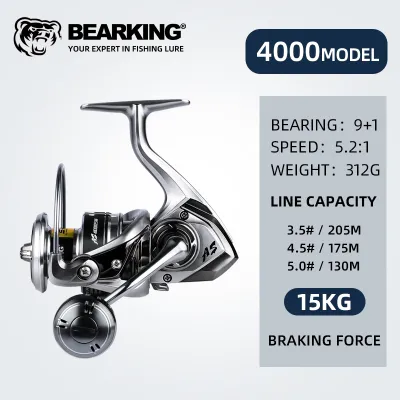
Prices are valid at publication and may change. Please refer to the product page for the latest price.
Light saltwater environments, including coastal jetties, estuaries, and sandy beaches, present different challenges such as tidal currents, wind, and corrosive salt spray. Fishing from a jetty or estuary requires gear that can handle slightly heavier weights to hold your bait or lure against the current. The fish in these environments also tend to be stronger and more aggressive, demanding a reel that can withstand sustained runs.
Identify the primary target species size and behavior to determine the necessary drag and line capacity. In local freshwater spots, you might target smaller species like peacock bass or tilapia, which do not require massive line capacity but demand quick, accurate lure presentation. In coastal saltwater settings, species like small snappers, groupers, or jacks require a stronger drag system to prevent them from diving into sharp rocks or barnacle-encrusted pilings.
Determine the typical casting distance and lure weight required for your chosen scenario to guide your subsequent size selection. If you plan to cast light lures, such as micro-jigs or small soft plastics weighing under 7 grams, you need a reel that pairs well with thin line and a light rod. For heavier bait rigs or larger lures used in deeper waters, a larger spool is necessary to accommodate thicker lines without sacrificing casting distance.
Match Reel Size and Gear Ratio to Your Target
Spinning reels are categorized by numerical sizes that indicate their physical dimensions and line capacity. A 1000 to 2000 size reel is lightweight and compact, designed primarily for ultra-light or light fishing setups. These are ideal for casting small lures in calm reservoirs or ponds where target fish are relatively small and heavy line is unnecessary.

A 2500 to 3000 size reel represents the sweet spot for versatility for most beginners. These mid-sized reels offer a larger spool capacity and stronger drag systems, making them suitable for both freshwater reservoirs and light saltwater jetty fishing. They balance well with medium-light to medium-power rods, allowing you to target a wider variety of fish species without feeling over-encumbered by heavy gear.
Define gear ratio basics and how they affect your lure presentation. The gear ratio, such as 5.2:1 or 6.2:1, indicates how many times the rotor spins around the spool for every single turn of the handle. A standard ratio around 5.2:1 is highly versatile, providing a balanced retrieval speed that works well for steady-retrieve lures like spinners, crankbaits, and soft plastics.
Higher gear ratios, such as 6.2:1 or above, retrieve line much faster. This is beneficial when you need to pick up slack line quickly—such as when fishing topwater lures or when a fish runs directly toward you—but it offers slightly less cranking power when fighting heavy resistance. For a beginner, a standard or moderate gear ratio is generally easier to manage across different techniques.
Instruct yourself to check the specific Bearking model’s line capacity specifications on the product page before purchasing. Line capacity is usually printed on the spool or listed in the product description, showing how many meters of a specific line diameter or pound-test the reel can hold. Ensure the reel’s capacity matches the line class you intend to use for your target species to avoid under-filling or over-filling the spool.
Evaluate Build Materials and Corrosion Resistance
Compare standard graphite or composite bodies with metal or specialized alloy constructions. Graphite and composite materials are highly popular for entry-level reels because they are lightweight, cost-effective, and naturally resistant to rust. They provide sufficient structural rigidity for light to medium fishing applications without adding unnecessary weight to your setup.
If you plan to fish in brackish or saltwater environments, corrosion resistance becomes a critical factor. Saltwater can quickly degrade internal gears, bearings, and drag washers if they are not protected. When browsing Bearking models, check the manufacturer’s specifications for features like stainless steel ball bearings, sealed drag systems, or specialized anti-corrosion coatings.
Keep in mind that “water-resistant” or “corrosion-resistant” claims do not mean a reel is completely impervious to salt damage. Even high-end reels can fail if salt crystals build up inside the mechanism. Therefore, beginners should look for models that explicitly state they are suitable for saltwater use, but always treat these claims as a secondary line of defense behind proper maintenance.
Establish a strict routine of rinsing any reel with fresh water after saltwater exposure, regardless of the stated material claims. Keep the drag tightened during the rinse to prevent water from entering the drag stack, avoid using high-pressure spray which can force salt deeper into the gears, and let the reel air dry completely in a shaded area before storing it.
Balance Your Beginner Budget Across the Setup
When starting out, it is easy to focus all your budget on a single high-spec component, but a balanced setup performs much better than an mismatched one. If you have a total beginner budget of, for example, S$120, a practical framework is to allocate approximately 40% to the reel, 40% to a compatible rod, and the remaining 20% to high-quality line and essential terminal tackle. This ensures that neither your rod nor your reel limits the performance of the other.
Understand the practical trade-offs of entry-level reels compared to mid-range options. Budget-friendly reels often utilize simpler composite bodies, which may feel slightly heavier or exhibit minor play in the handle compared to premium models. They also tend to feature basic bearing systems that, while smooth enough for learning, require more diligent cleaning and lubrication to maintain their performance over time.
Factor in the cost of essential accessories when calculating your total investment. Beyond the reel itself, you will need to purchase appropriate fishing line (such as braided line or monofilament), leader material, and basic maintenance tools like reel oil and grease. Some anglers also prefer to purchase a model that includes a spare spool, allowing them to quickly swap between different line weights depending on where they are fishing.
Pre-Purchase Verification and Compatibility Checklist
Before finalizing your purchase on an online marketplace, verify that the reel seat on your intended spinning rod is compatible with the reel foot of your chosen Bearking model. The reel foot must slide smoothly into the rod’s hood and lock securely without any wobbling or requiring excessive force to tighten, as an unstable connection will ruin your casting accuracy and sensitivity.
Check the maximum drag power specification of the reel against the breaking strain of your chosen fishing line. If you plan to use a light line, pairing it with a reel set to an excessively high drag can easily lead to line breakage if a fish pulls hard. Ensure your drag is adjusted correctly—typically set to about one-third of the line’s breaking strength—to protect both your line and the reel’s internal gears from sudden shocks.
Review the return policy, warranty terms, and after-sales support offered by the retailer or official brand store. Because budget reels purchased online can sometimes vary in quality control, buying from a seller that offers a clear return window or a basic warranty provides peace of mind. Check customer reviews specifically for feedback on shipping packaging to ensure the reel arrives without bent bails or cracked rotors.
Frequently Asked Questions (FAQ)
Do I need to buy a specific Bearking rod to match the reel?
No, you do not need to match brands when pairing a spinning reel with a rod. Spinning reels use standardized reel feet that fit almost any standard spinning rod reel seat, regardless of the manufacturer. Instead of focusing on brand matching, prioritize matching the reel size to the rod’s designated line weight and lure weight ratings. For example, a 1000-size reel pairs best with an ultra-light or light rod, while a 3000-size reel is better suited for a medium-power rod.
How often should I maintain an entry-level spinning reel?
Basic maintenance should be performed after every single fishing trip. This involves wiping down the exterior with a damp cloth to remove dirt, slime, or salt residue. If you fish in saltwater, a gentle freshwater rinse is essential after every outing. For deeper maintenance, such as applying reel oil to the bearings and grease to the main gears, consult the manufacturer’s manual for recommended intervals, which typically range from every few months to once a season depending on how frequently you fish.

Community discussion
Share your experience or ask a question. Comments are reviewed before publication.