
Starting out in Singapore’s diverse angling scene—from the high concrete seawalls of Bedok Jetty to the calm waters of Marina Reservoir—requires the right gear to secure your catch safely. While many beginners focus heavily on rods and reels, selecting a reliable landing net is just as critical to prevent losing a fish at the water’s edge. Because there is no single brand or model that suits every scenario, the best fishing net for a beginner is one that matches your specific fishing location, target species, and budget. When browsing local tackle shops or online marketplaces, you should focus on verifying key physical specifications—such as handle reach, mesh material, and corrosion resistance—rather than relying solely on brand names.
Key Factors to Consider When Buying Your First Fishing Net
To choose a net that will serve you well across local coastal and freshwater spots, you must evaluate three core dimensions: hoop size, handle length, and overall weight. Hoop size and shape should directly correspond to the target species you expect to encounter. For beginners targeting common local species like barramundi, toman (giant snakehead), or small coastal snappers, a teardrop or round hoop with a diameter of 40 to 50 centimeters offers excellent versatility without being overly bulky.
Handle length is another critical factor determined by your physical fishing environment. Singapore’s fishing spots vary dramatically in height; elevated structures like high seawalls, jetties, and canal railings require long, extendable handles to reach the water safely. Conversely, if you are casting from low shorelines, sandy beaches, or a kayak, a much shorter handle is preferred for easier maneuverability.
Products mentioned in this guide
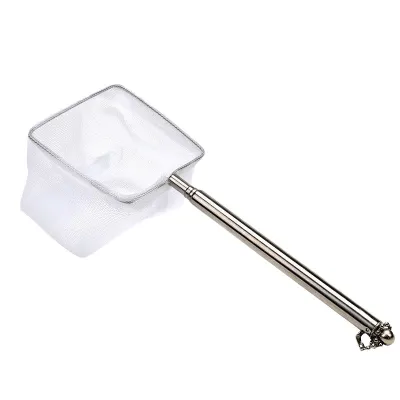
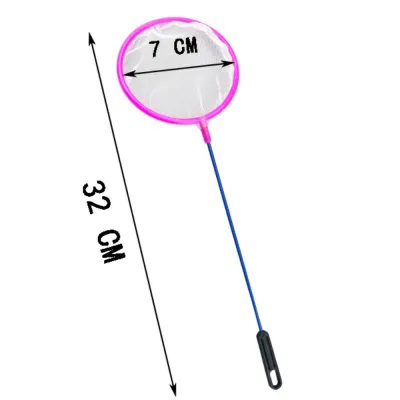
Prices are valid at publication and may change. Please refer to the product page for the latest price.
Finally, weight and balance play a major role in reducing arm fatigue during long sessions. A heavy, poorly balanced net is difficult to operate with one hand while holding a loaded fishing rod in the other. Beginners should look for lightweight materials that do not sacrifice structural stiffness, ensuring the net remains balanced and easy to control when fully extended.
Matching Net Types to Common Beginner Fishing Scenarios
Different fishing environments demand distinct net configurations to ensure a successful landing. Selecting the wrong type of net can lead to missed catches, damaged gear, or unnecessary physical strain. By matching your net’s design to your primary fishing style, you can ensure a smoother and safer landing process.

Long-Handle Landing Nets for Shore and Jetty Fishing
For anglers frequenting popular elevated spots like Bedok Jetty, Woodland’s Jetty, or various coastal park connectors, a long-reach net is indispensable. These locations often place you several meters above the water surface, making a standard short-handled net completely useless. For these high-altitude scenarios, telescopic handles that can extend from 3 meters to 5 meters are highly recommended.
Telescopic handles offer excellent portability, collapsing down to a manageable length of under 1 meter for easy transport on public transit or bicycles. However, they present clear trade-offs compared to fixed-length handles. While highly convenient, telescopic joints can trap salt water and debris, potentially leading to binding or structural failure if not properly maintained. Fixed-length handles offer superior structural strength and durability but are highly impractical for shore anglers traveling without a large vehicle.
When evaluating a telescopic net, pay close attention to the locking mechanism. A weak lock can cause the handle sections to collapse or twist under the weight of a fish, resulting in a lost catch or a broken pole. Look for robust twist-lock systems or heavy-duty push-button collars, and physically test them to ensure they hold firm under downward pressure.
Compact and Folding Nets for Kayak or Boat Use
If you plan to fish from a kayak, a small boat, or a stand-up paddleboard in places like Sentosa’s coastal waters or local reservoirs, space is your most valuable commodity. Large, long-handled nets are highly cumbersome in a confined cockpit and can easily snag on other gear. For these watercraft scenarios, compact nets with folding hoops and short, fixed handles are the ideal choice.
A folding hoop allows the net head to collapse in half or fold back against the handle, minimizing its footprint when not in use. Short handles, typically ranging from 30 to 60 centimeters, provide excellent one-handed maneuverability in tight spaces. Because gear dropped from a kayak is easily lost, look for nets that feature built-in buoyancy—such as foam-filled handles or floating hoop collars—and always secure the net to your craft using a coiled retrieval lanyard.
While highly convenient, compact nets have clear limitations. Their smaller hoop diameters make it challenging to scoop larger, more active sport fish like large toman or pelagic species. If you hook a fish that exceeds the hoop’s capacity, you will need to guide the fish head-first into the net with extreme precision, leaving very little room for error.
Rubber Mesh Nets for Catch-and-Release and Hook Protection
The material of the net mesh itself plays a massive role in both fish conservation and your overall fishing experience. Traditional knotted nylon nets, while cheap and lightweight, are highly abrasive. They can scrape away a fish’s protective slime coat and damage its scales, which significantly reduces its survival rate after release. If you practice catch-and-release in local reservoirs or coastal areas, rubber or rubber-coated mesh is the responsible choice.
Rubber mesh is smooth and flat, distributing the fish’s weight evenly and preserving its delicate slime layer. Beyond fish safety, rubber mesh offers a massive practical advantage for the angler: hook protection. Treble hooks on lures and multi-hook rigs can easily pierce and become hopelessly tangled in traditional braided nylon fibers, costing you valuable fishing time. Rubber mesh is virtually snag-proof, allowing you to quickly free hooks and return your line to the water.
However, rubber mesh does have some drawbacks. It is significantly heavier than nylon, which can make one-handed scooping more tiring. Additionally, solid rubber nets create more water resistance when swept through the water, requiring a deliberate, steady scooping motion rather than a rapid swipe.
Comparing Net Materials and Handle Features
To help you make an informed decision, it is helpful to compare the common materials used for both the mesh and the handle. The tables below outline how these materials perform across key criteria.
| Mesh Material | Fish Safety | Tangle Resistance | Durability | Relative Weight |
|---|---|---|---|---|
| Rubber | Excellent (Preserves slime coat) | Excellent (Snag-proof) | High (Resists rotting) | Heavy |
| Coated Nylon | Moderate (Better than bare nylon) | Good (Resists hook penetration) | Moderate (Coating can wear) | Medium |
| Bare Nylon | Poor (Abrasive to scales/slime) | Poor (Hooks snag easily) | High (Strong fibers) | Very Light |
| Handle Material | Weight | Stiffness | Saltwater Corrosion Resistance | Cost Tier |
|---|---|---|---|---|
| Aluminum | Medium | High | Moderate (Requires anodizing) | Budget to Mid-Range |
| Carbon Fiber | Extremely Light | Very High | Excellent (Non-metallic) | Premium |
| Fiberglass | Heavy | Moderate (Flexes under load) | Excellent (Non-metallic) | Budget |
When prioritizing these features, beginners should balance their primary fishing style against their budget. If you are starting out with shore casting along sandy beaches or low rocky shores, a budget-friendly fiberglass or aluminum handle with a coated nylon net offers a great entry point, often costing under S$40. If you plan to fish primarily from high jetties, investing in a stiffer, lighter carbon fiber telescopic handle is highly recommended, as it prevents the handle from bending excessively when lifting a fish several meters.
For lure anglers who frequently use multi-hook lures, prioritizing a rubber mesh net will save hours of frustration, regardless of the handle material chosen. While rubber mesh nets may carry a slight price premium, the time saved untangling hooks and the reduced harm to the fish make them a highly worthwhile investment for modern anglers.
Pre-Purchase Checks and Maintenance for Tropical Climates
Singapore’s tropical climate—characterized by high humidity, intense UV exposure, and highly corrosive saltwater environments—is incredibly harsh on fishing gear. To ensure your net lasts for years rather than months, you must perform thorough pre-purchase checks and establish a strict post-trip maintenance routine.
Before finalizing your purchase at a local tackle shop or accepting a delivery from an online marketplace, conduct a physical inspection of the net. Fully extend the handle and apply moderate downward pressure against a solid surface; the telescopic locks should hold firmly without slipping or twisting. Ensure the mesh is securely attached to the hoop frame with heavy-duty stitching or secure channel grooves, and run your fingers along the metal joints to check for sharp burrs or rough metal edges that could cut your fishing line.
After every saltwater session, a thorough freshwater rinse is mandatory to prevent salt corrosion on metal joints and screws. Collapse the handle fully and rinse it under running tap water, paying close attention to the joints and locking collars. Extend the handle fully to rinse the inner sections, removing any trapped salt crystals or sand particles that could scratch the material. Wash the mesh thoroughly with freshwater to remove fish slime, salt, and organic debris, which can cause unpleasant odors and rot the fibers over time.
Never store a wet net in a closed bag, car trunk, or dark cabinet, as the trapped moisture will rapidly lead to mold growth and weaken the mesh fibers. Hang the net in a well-ventilated, shaded outdoor area to dry completely before storing it indoors. Avoid leaving the net exposed to direct sunlight for extended periods when not in use; intense tropical UV rays will degrade nylon mesh, weaken rubber, and make plastic components brittle over time.
For your safety and the welfare of the fish, you must know when a net has reached the end of its service life. Retire and replace your net immediately if you observe deep cracks or splintering in a carbon fiber or fiberglass handle, which can cause the handle to shatter suddenly under load. You should also replace the net if you notice severe corrosion or seized locking mechanisms that prevent the handle from locking securely, or large tears in the mesh that could allow a fish to slip through.
Frequently Asked Questions (FAQ)
Do I need a fishing net if I am only targeting small fish?
While it is possible to lift very small fish directly by the line, using a small landing net is always the safer and more ethical choice. Lifting a fish by the line puts immense stress on its mouth and can cause the hook to tear free, injuring the fish and risking a line break. A small, lightweight net allows you to secure the fish safely in the water, reducing handling stress and ensuring a clean, injury-free release.
How do I measure the correct handle length before buying?
To determine the ideal handle length, visit your preferred fishing spot and measure the vertical distance from your typical standing position to the water’s surface. Always add a safety margin of at least 1 to 1.5 meters to account for low tides, wave action, and the need to keep your body safely back from wet, slippery edges. If your measurements show a 3-meter drop to the water, look for a telescopic net that extends to at least 4 or 4.5 meters to ensure comfortable and safe landing.
Can I use a freshwater net for saltwater fishing?
You can use a freshwater net in saltwater, but you must exercise extreme caution regarding material compatibility. Freshwater nets often use non-anodized aluminum or standard steel screws that will rust rapidly when exposed to marine environments. If you use a freshwater net in the sea, you must rinse it meticulously with freshwater immediately after your trip. To avoid premature failure, check the manufacturer’s label or specifications to ensure the metal components are rated for saltwater use.

Community discussion
Share your experience or ask a question. Comments are reviewed before publication.